
Last updated November 18, 2026
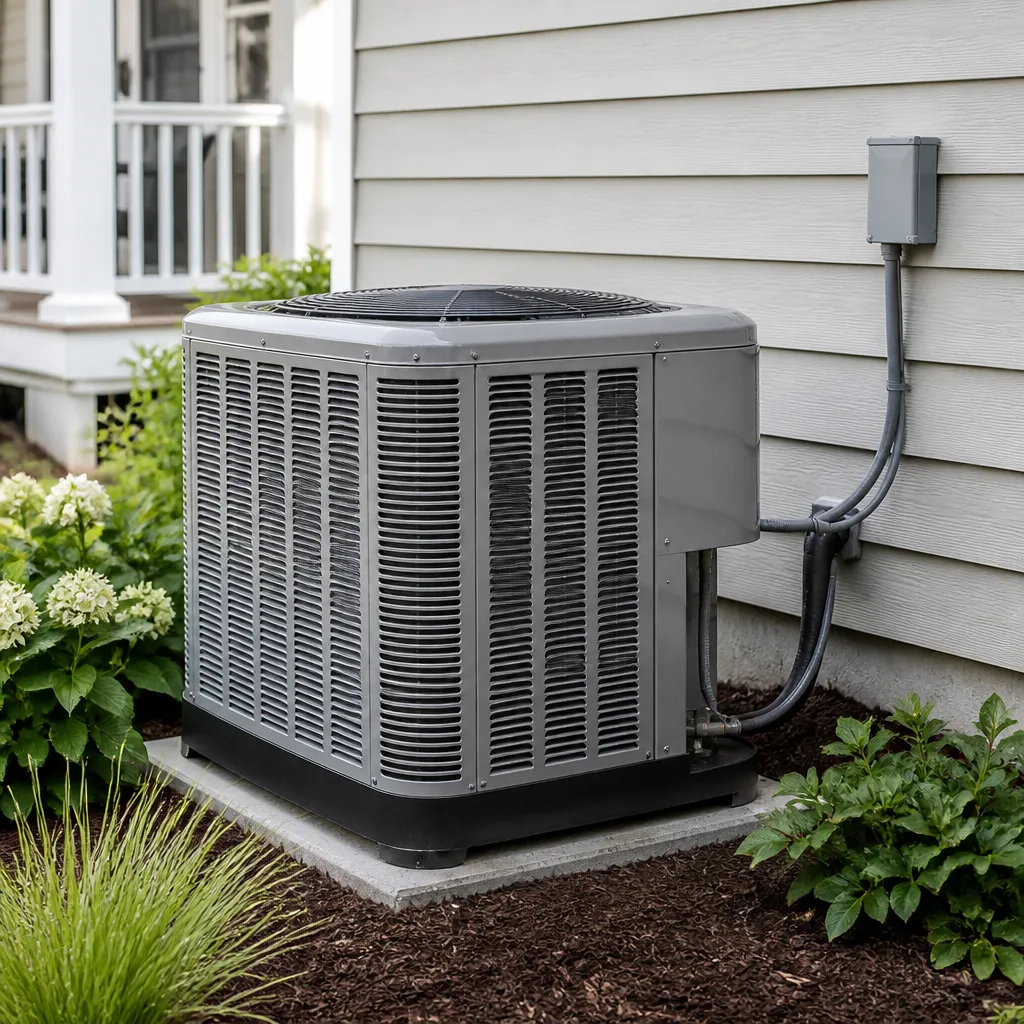 AC repair
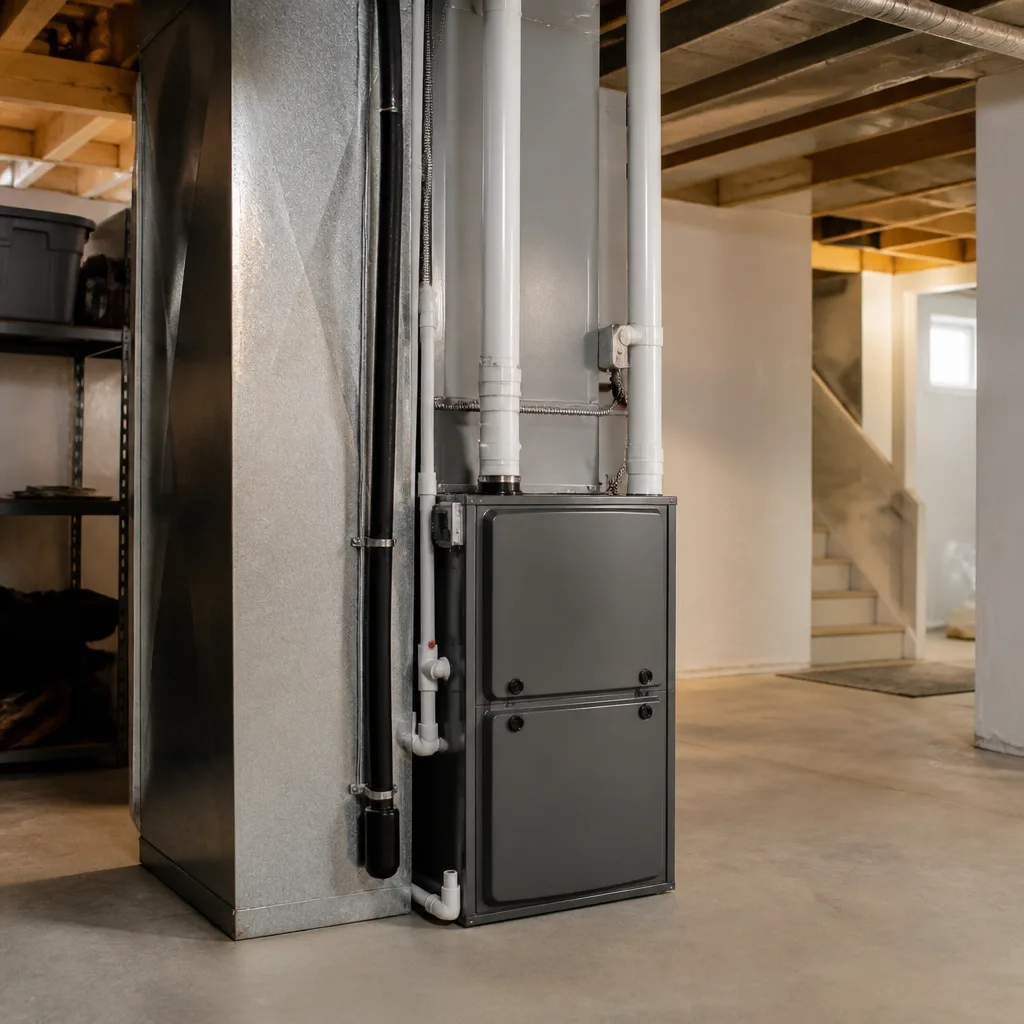 Furnace & heating
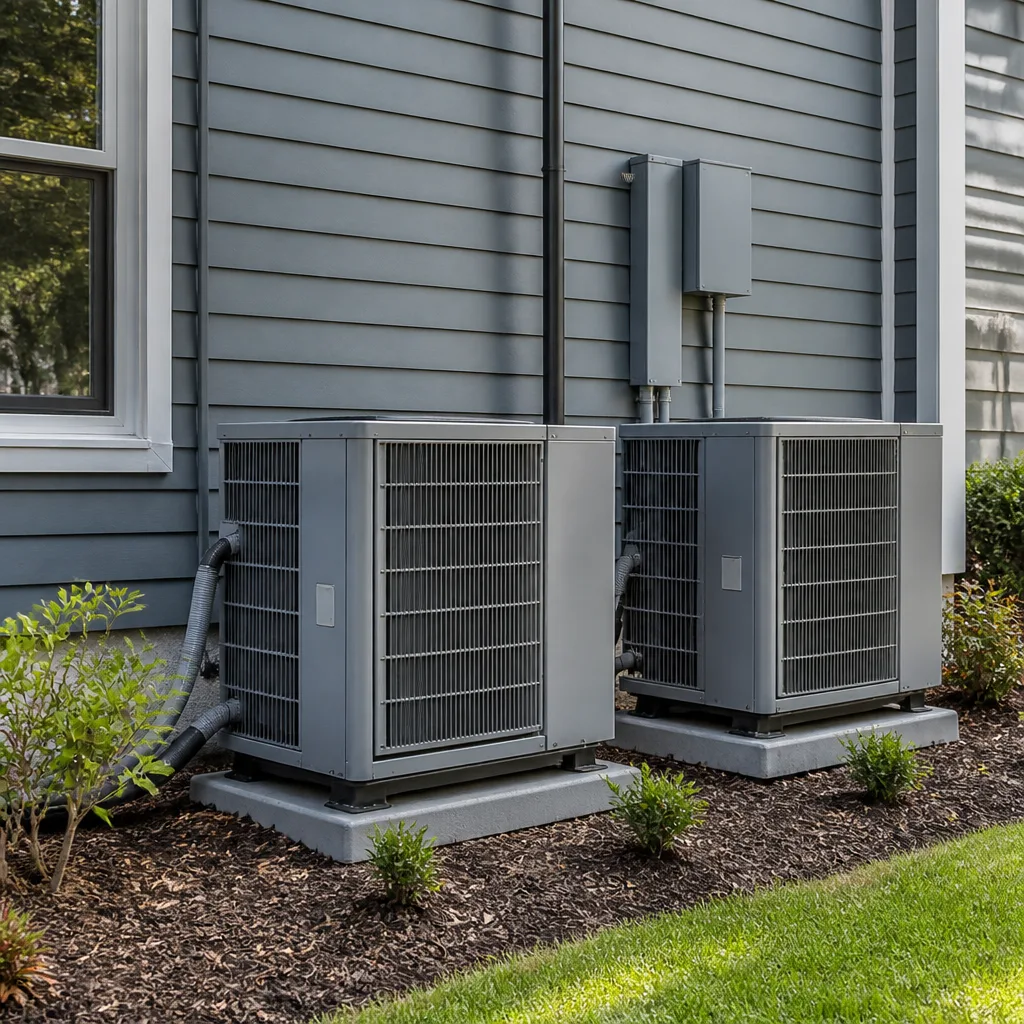 Heat pumps
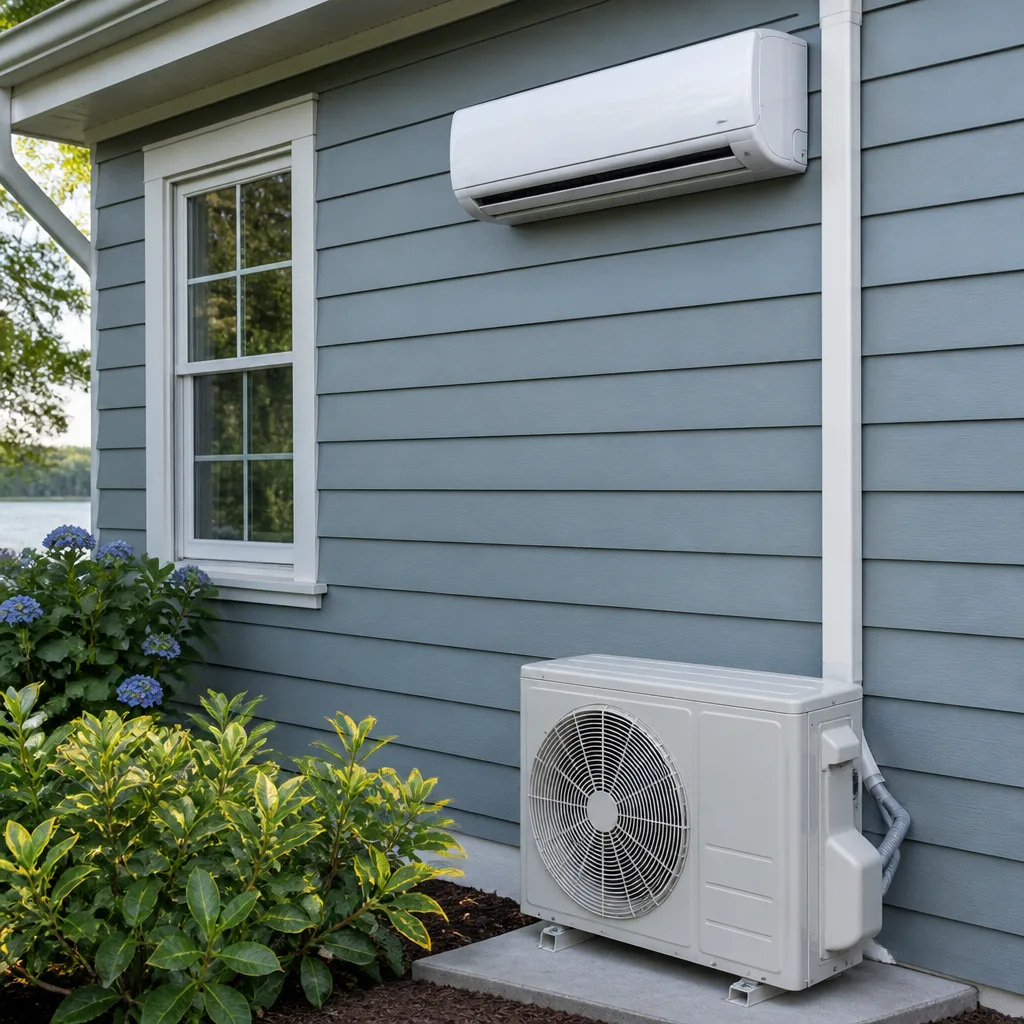 Ductless mini splits
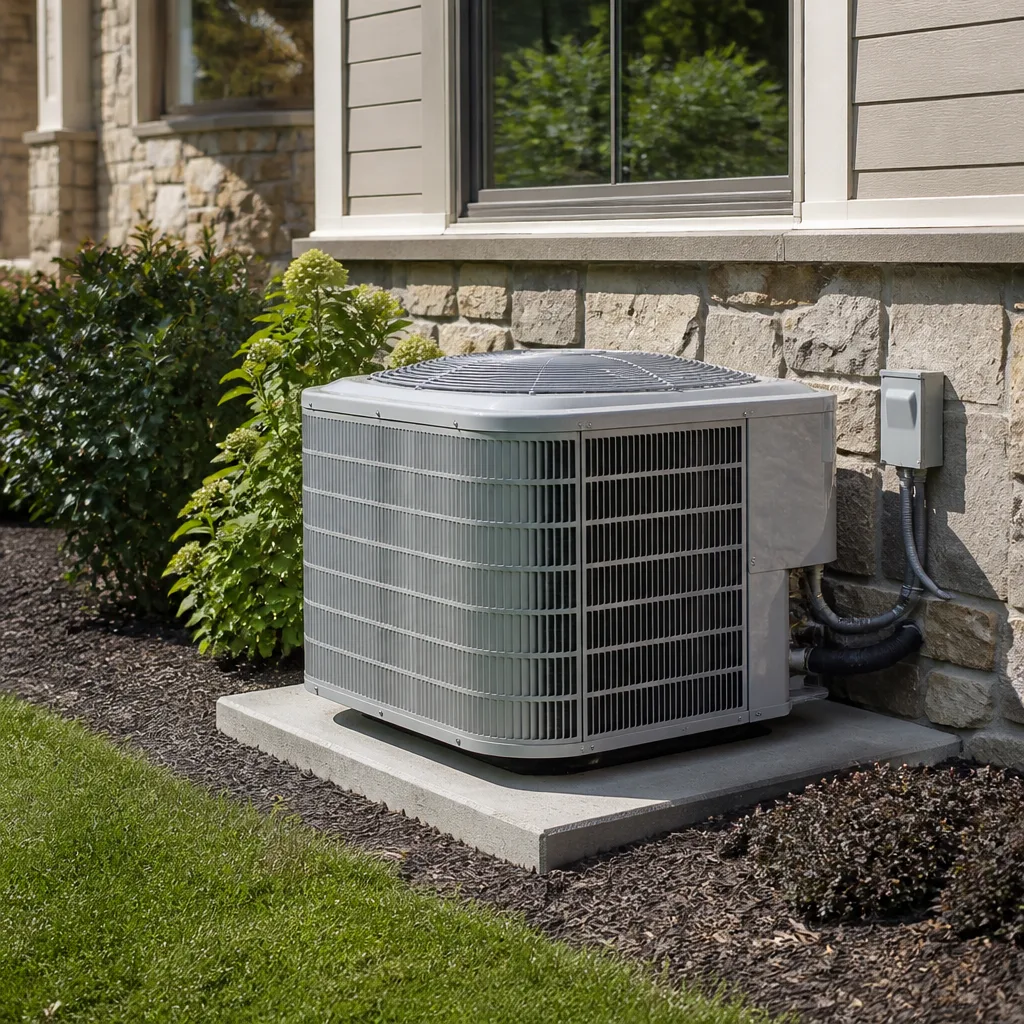 Carrier
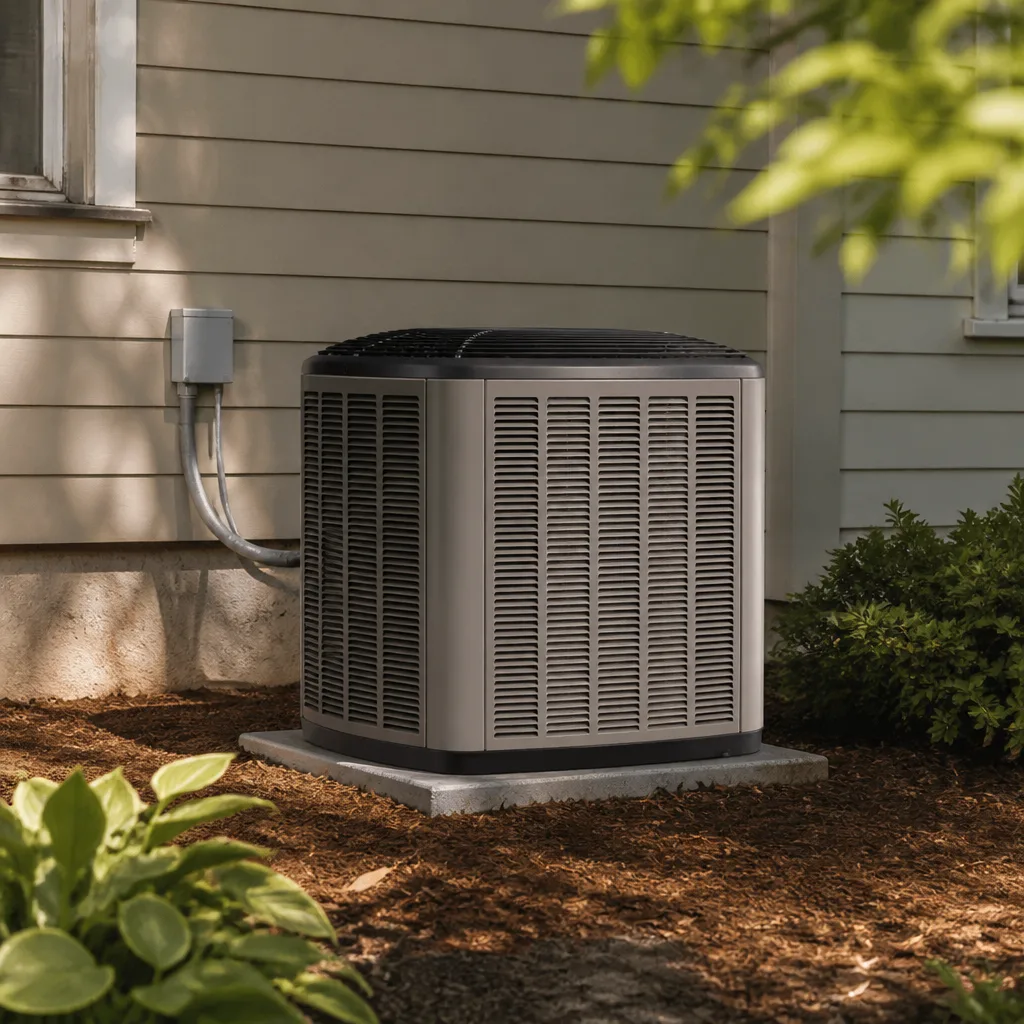 Trane
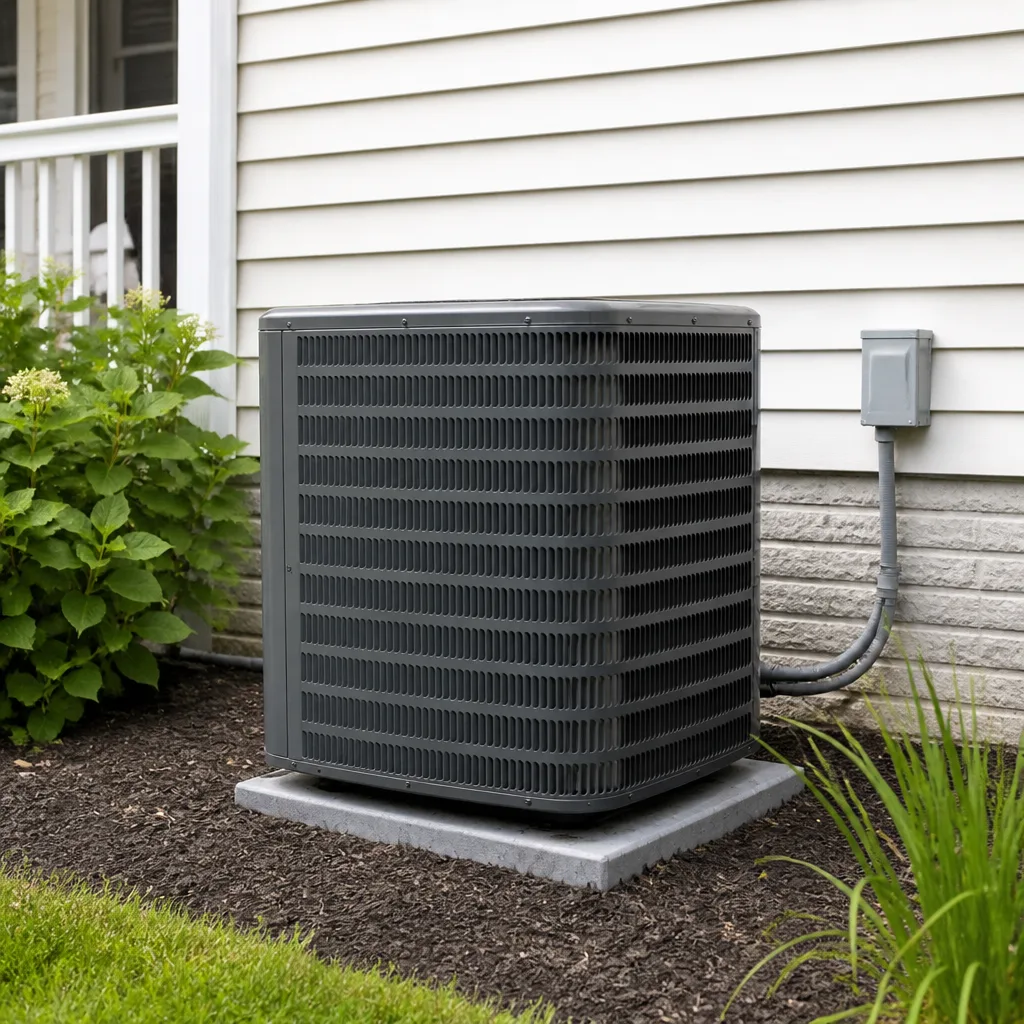 Goodman
Seasonal tune-up and full diagnostic on your Carrier, Trane, or Goodman system - readings shown to you before any repair is proposed
Diagnosis first, numbers second - you approve the repair price before a single part goes in.
Get your free estimateHow to Hire an HVAC Contractor in Boulder City: A Step-by-Step Guide
Nevada requires an HVAC contractor to hold a C-21 license, and almost every company that advertises to Boulder City homeowners has one. The license is the easy part. It doesn’t tell you whether a company has ever pulled a permit inside Boulder City limits, whether they know the difference between a Historic District review and a standard inspection, or whether they’ll still answer the phone in August when the repair they sold you in May is failing again. What separates a good hire here isn’t paperwork. It’s whether the contractor is accountable to this town specifically. This guide walks through the vetting that actually predicts that, step by step.
Quick Answer
To hire an HVAC contractor in Boulder City, verify the C-21 license on the Nevada State Contractors Board database, confirm the company has pulled permits through the city building department, and get a written warranty that names a term and a remedy rather than “satisfaction guaranteed.” Then benchmark the quote against a second written estimate, not against the cheapest bid, so you aren’t paying for a callback you’ll have to chase.
Styles & brands we work with
- AC repair
- Furnace & heating
- Heat pumps
- Ductless mini splits
- Carrier
- Trane
- Goodman
Table of Contents
- Why hiring HVAC in Boulder City is different from Las Vegas
- The five questions to ask before a contractor quotes a job
- How to verify a Nevada C-21 license and read disciplinary history
- What a written warranty should actually contain
- Why three bids can backfire in Boulder City, and what to do instead
- Red flags specific to desert HVAC work
- What a fair process looks like from first call to final invoice
- How to judge local accountability before you sign
Why Hiring HVAC in Boulder City Is Different from Las Vegas
Boulder City sits at roughly 2,500 feet in the Mojave, and the gap between here and the valley floor matters more than most homeowners realize. Summer highs run a few degrees cooler than Las Vegas, but winter mornings are colder by a wider margin, and the swings between afternoon heat and overnight cold in the spring and fall are sharper. A system that’s sized and tuned for a Vegas tract home isn’t automatically the right fit for a 1950s block house on Avenue B with single-pane windows and thin attic insulation.
The bigger difference is the contractor pool. In Las Vegas, an HVAC company can stay busy never leaving the valley. Boulder City is a drive, and it’s a smaller market, so a share of the companies that list it as a service area treat it as a route they fill when there’s nothing closer. That shows up in practical ways:
- Callbacks scheduled weeks out instead of days, because the customer is at the far edge of the map.
- Parts ordered and then delayed, because the truck that would normally carry the capacitor or blower motor already left.
- Permits pulled through the wrong jurisdiction, or not pulled, because the contractor doesn’t know how Boulder City handles its own building review.
- No genuine accountability when a May repair fails in July. The phone number still works, but nobody’s in a hurry.
We’ve seen this pattern repeatedly: the bid that came in lowest turns out to be the one from a company whose nearest scheduled stop was 30 minutes away. It isn’t about competence in the abstract. It’s about whether Boulder City is a place the contractor works or a place the contractor visits. For a deeper look at the repair side of this, see our page on AC Repair & Installation in Boulder City.
The Five Questions to Ask Before a Contractor Quotes a Job
These aren’t icebreakers. Each one is designed to produce an answer that separates a contractor who works in Boulder City from one who’s passing through. Ask them before anyone puts a number on paper.
- Have you pulled a permit through the City of Boulder City building department in the last year, and can you tell me who reviews HVAC permits there? A local contractor answers without hesitation. A drive-in contractor either can’t answer or pivots to how permits “aren’t really needed” for your job, which is a signal about how the whole project will go.
- How are you sizing this system? The right answer involves a load calculation and a square-footage measurement. The wrong answer is a rule of thumb based on the size of the old unit. In Boulder City’s older housing stock, this second answer costs homeowners real money in oversized systems that short-cycle and never dehumidify properly.
- What did you see in the attic and the ducts? If the contractor quoted without walking the attic, checking duct insulation, or looking for disconnected runs, they quoted a box, not a system. Desert attics routinely hit 140°F and above, and duct losses in Boulder City homes are a common reason a new unit underperforms.
- What does your warranty say in writing, and what’s the remedy if the repair fails? “Satisfaction guaranteed” is not a warranty. It’s a phrase. We’ll cover what real warranty language looks like below.
- If I call in August and the repair you did in May has failed, who answers and how fast do I see someone? This question tells you whether you’re hiring a company or a phone number. A live person who can commit to a callback window is worth more than a discount.
Ask all five, write the answers down, and compare. The differences will be stark, and they’ll have nothing to do with price.
How to Verify a Nevada C-21 License and Read Disciplinary History
Nevada’s C-21 classification covers heating, ventilation, and air conditioning contracting, and any company performing that work for hire in the state is required to hold it. Verifying it takes about five minutes and you should do it for every contractor you’re seriously considering, including the one your neighbor recommends.
- Go to the Nevada State Contractors Board website and open the license search.
- Search by the company’s legal business name, not the name on the truck. Marketing names and licensed entities frequently differ.
- Confirm the license status is active and the classification includes C-21.
- Check the monetary limit. This is the maximum single-project value the contractor is licensed to take on. If your replacement quote exceeds it, that’s a problem.
- Open the disciplinary history tab. Look for complaints related to workmanship, abandonment of a job, or failure to honor a warranty. A single old complaint with a resolved disposition reads differently than a pattern.
- Cross-check the qualifying individual listed on the license. That’s the person legally responsible for the work in Nevada. If the company can’t tell you who theirs is, that’s worth noting.
What disciplinary history looks like on the board database varies. Some entries are administrative and minor. Others are citations for contracting without a permit, working beyond the license limit, or failing to complete work after taking payment. Read the disposition, not just the presence of a record. The valuable signal isn’t that a contractor has zero history. It’s that the history, if any, doesn’t involve the failure modes you’re most exposed to: workmanship and warranty.
One thing the license will never tell you: whether the company has ever set foot in Boulder City on a job. That’s the gap the rest of this guide closes.
What a Written Warranty Should Actually Contain
Most HVAC warranties homeowners are shown fall into two categories. There’s the manufacturer’s parts warranty, which covers the equipment and is standard across brands like Carrier, Trane, and Lennox. And there’s the contractor’s labor warranty, which covers the work itself. The second one is where vague language does the most damage, because “satisfaction guaranteed” holds no one to anything specific.
A labor warranty worth the paper it’s printed on names four things:
- A term. How many days or months the work is covered. “For as long as you own your home” is not a term; it’s marketing.
- A remedy. What happens if the repair fails. Does the contractor return at no charge? Re-repair the same component? Refund the labor? The answer should be specific.
- A scope. What’s covered and what isn’t. A labor warranty on a compressor replacement should say whether the refrigerant charge, the filter-dryer, and the electrical components are included or excluded.
- A process. Who you call, how fast they respond, and whether there’s a charge to have them come out and look at a failure.
Ask for the warranty language in writing before the work starts. If a contractor can only describe it verbally, that’s not a warranty. It’s a conversation, and conversations get forgotten. Our own version is a 90-day written guarantee we call the Done Right Promise: if the work isn’t done right, we make it right, with no paperwork and no arguing. That’s a specific term and a specific remedy, which is the standard you should hold every contractor to, whether they call it a promise or a warranty.
For heating work specifically, the same standard applies, and the seasonal stakes are higher. A furnace that fails in January is an emergency in a way an AC failure in April usually isn’t. See Heating & Furnace in Boulder City for what that looks like on the repair side.
Why Three Bids Can Backfire in Boulder City, and What to Do Instead
The standard advice, get three bids, was written for metro markets where dozens of contractors compete on the same job. Boulder City isn’t that. With a smaller pool of genuinely local contractors, pushing for three often gets you one qualified bid, one bid from a Las Vegas company that will subcontract the work, and one bid from a company whose proposal is too thin to be useful. You end up comparing apples to invoices.
The alternative is to benchmark a fair price rather than shop for the cheapest one. That means:
- Get two written estimates, not three. Two is enough to catch an outlier. Both should itemize equipment, labor, permit fees, and disposal.
- Compare line items, not totals. A quote that’s $800 cheaper but omits the permit and the old-unit haul-away isn’t cheaper. It’s incomplete.
- Ask each contractor to explain what the other’s quote leaves out. A confident contractor will tell you, honestly, what to look for. Defensiveness here is a warning sign.
- Use a free second opinion as your benchmark. If you have one written estimate and you’re unsure whether it’s fair, a second company reviewing it is the reference point. We offer a free second opinion on any written estimate, no charge and no obligation.
What a fair price for Boulder City actually looks like varies with the equipment and the house, but the structure of a good quote doesn’t. It has a number for the equipment, a number for the labor, a number for permits, and a line for disposal. If any of those is a blank or a bundled lump, ask why. The bottom line you want is the one that comes with nothing left to discover on the day of installation.
Red Flags Specific to Desert HVAC Work
Some warning signs are universal to any trade. Others are specific to the desert, where the climate punishes shortcuts in ways homeowners feel within a year. Any of these should stop you from signing:
- A quote issued without measuring square footage. In a Boulder City summer, an oversized unit short-cycles, which dries out the air, wears the compressor, and raises the electric bill. A contractor who quotes from a glance at the old unit is guessing.
- A quote issued without asking about duct condition. Ducts in an uncapped, uncooled Mojave attic lose a large share of the cold air before it reaches the room. Replacing the unit without addressing ducts means paying for cooling you never feel.
- A quote issued without walking the attic. If the contractor never climbed up there, they never saw the insulation, the disconnected flex runs, or the water stains that hint at a coil issue. A number produced without looking is a placeholder.
- A recommendation to swap the whole system on the first visit. Repair-versus-replace is a real decision, but “you need a new one” without a diagnosis is a sales pitch, not an assessment. The honest answer is sometimes a repair, and a good contractor will tell you so.
- No permit on a system changeout. Boulder City requires permits for HVAC changeouts, and a contractor who talks you out of one is either unfamiliar with the process or avoiding inspection. Both are your problem later, at resale or at insurance time.
- Warranty language that exists only on the phone. If it isn’t written and shown to you before the job, treat it as absent.
Heat pump and mini-split work carries its own version of these flags. Sizing and refrigerant line routing matter even more with variable-capacity equipment, and the mistakes are quieter. See our page on Heat Pump & Mini Split in Boulder City for the details worth knowing.
What a Fair Process Looks Like from First Call to Final Invoice
A contractor who does this well follows a predictable sequence, and seeing it in order is one of the best signs you’ve hired the right one. Here’s the standard:
- First call answered by a person. Not a voicemail tree, not an automated callback. A live person who can book a visit and give you a real window.
- Assessment with measurements, not guesses. The technician measures the home, checks the attic and ducts, and asks about comfort history: which rooms run hot, which ones are freezing, whether the system runs short cycles or long ones.
- Upfront price before the work starts. You see the number and approve it before anyone turns a wrench. No surprises on the invoice.
- Permit pulled through the City of Boulder City. The permit should list the correct scope and the inspection happens before the job is closed out.
- Installation with the home treated carefully. Shoe covers, drop cloths, and a clean-up afterward. These things matter when the work is in a home someone has lived in for 25 years.
- Written warranty handed over. Not recited, handed. The term, the remedy, the scope, and the number to call.
- Follow-up after the seasonal change. A good contractor checks the system once the hardest season is over, not just when it goes in.
For the equipment side, we work on all nine major residential brands, including Carrier, Trane, Lennox, and Goodman. Familiarity with a brand isn’t a substitute for a good process, but it does shorten the parts-and-callback loop when something needs service after installation. For a wider view of who we are, the Fireside Heating & Air Co. Boulder City home page lays it out.
How to Judge Local Accountability Before You Sign
Accountability is the quality you can’t see in a proposal. It shows up after the work is done, when something fails or a question comes up, and it’s the one thing that distinguishes a local contractor from a drive-in. When you’re evaluating a Boulder City contractor, look for these signals:
- They answer the phone outside business hours. A failed AC in July or a dead furnace in January doesn’t wait for Monday. If the company’s after-hours number routes to voicemail, that tells you what to expect when you actually need them.
- They’ve done work here, and can talk about it. Ask where. A local contractor will name streets, neighborhoods, and specific system types they see in Boulder City homes. A drive-in contractor answers in generalities.
- They know the city’s inspection office. Not the phone number, but the process. Which permits, which inspections, which sequencing. This knowledge comes from jobs, and it prevents delays on yours.
- They write it down. Every promise, every estimate, every warranty. If it isn’t written, it isn’t a commitment.
- They back it in writing. A 90-day guarantee, a stated remedy, and a standing offer to make it right at no charge. Anything less and the burden shifts to you.
Background-checked, uniformed technicians who show up on time and treat the home the way they’d treat their own mother’s is the other half of this. You can only really judge that in person, but the first impression on the call and at the door tells you most of what you need to know.
Common Mistakes to Avoid
- Choosing the cheapest bid without reading the line items. The lowest number frequently omits the permit, the haul-away, or the duct work, and the difference reappears on the final invoice or in the first hot week of July.
- Skipping the license check because a contractor “seems professional.” Professional manner and a valid C-21 license are two different things. Checking the Nevada State Contractors Board database takes five minutes.
- Accepting a verbal warranty. If the term and the remedy aren’t written, they don’t exist. A guarantee you can’t produce in a dispute isn’t a guarantee.
- Letting the contractor skip the attic and the ducts in an older Boulder City home. Houses built in the 1940s through the 1970s often have duct losses that will undermine any new equipment. Skipping these checks is how a good unit underperforms.
- Getting three bids in a market that doesn’t reward it. In Boulder City’s smaller contractor pool, three bids often means one qualified and two that are hard to compare, which slows the decision without improving the outcome.
- Not asking who answers the phone after hours. The answer determines whether a mid-summer failure is a same-day problem or a multi-day one.
- Assuming the drive-in contractor will be accountable because the price was right. The savings often get spent on callbacks, delays, and a fight over warranty coverage that a local contractor would have resolved without argument.
See the difference
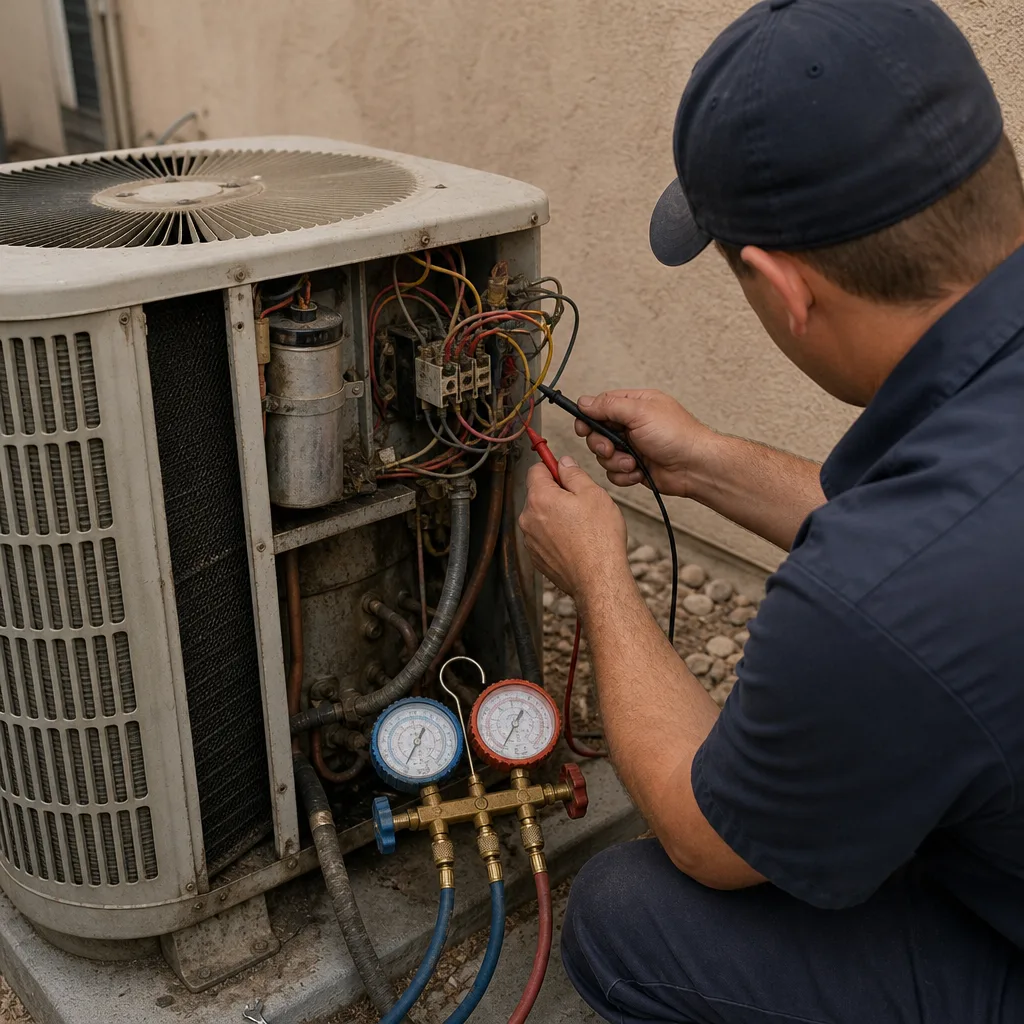 Before
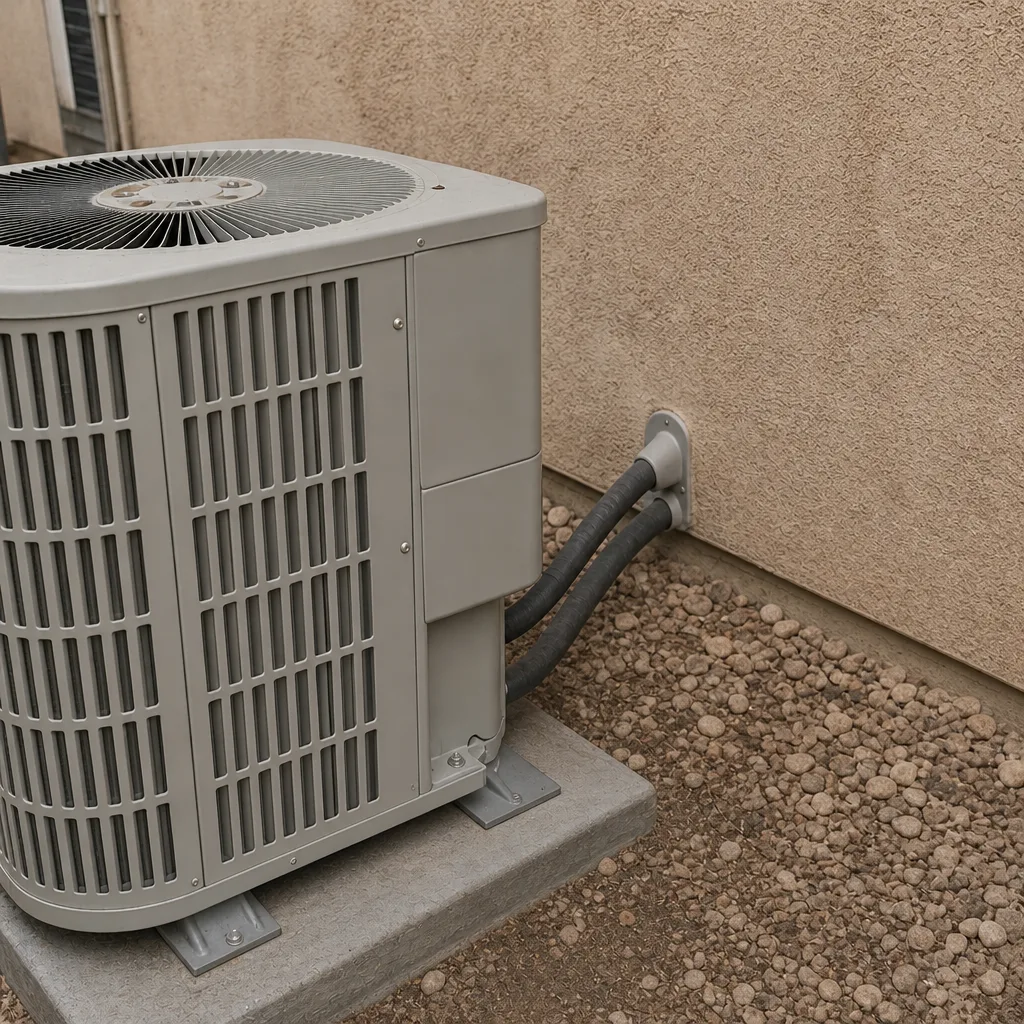 After
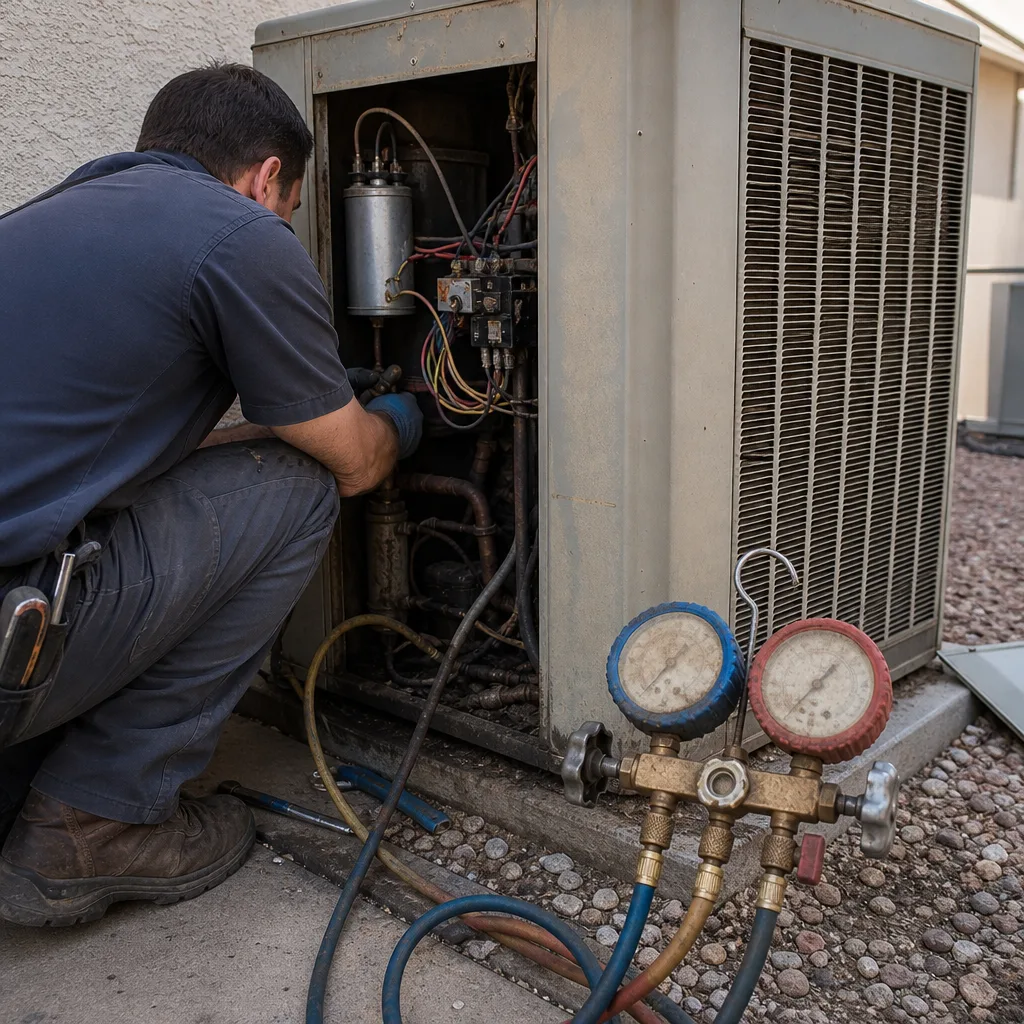 Before
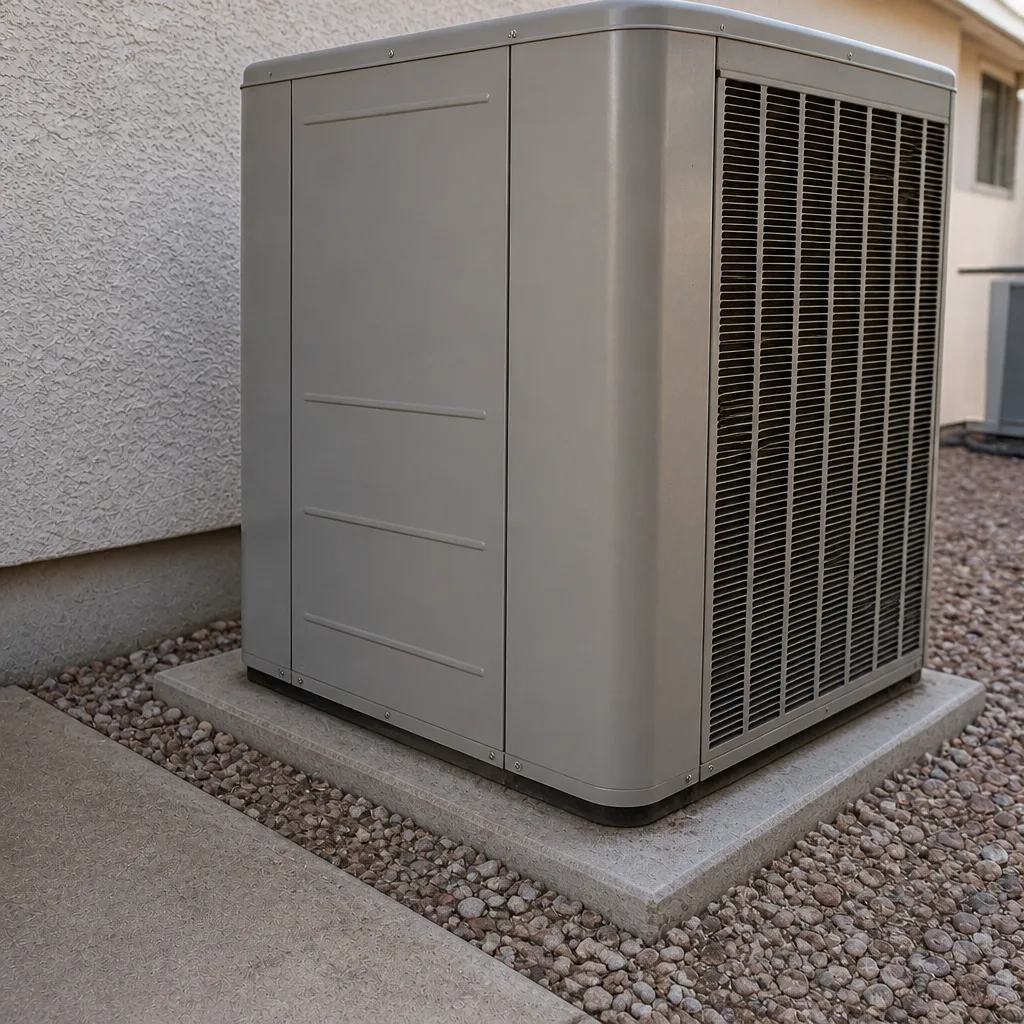 After
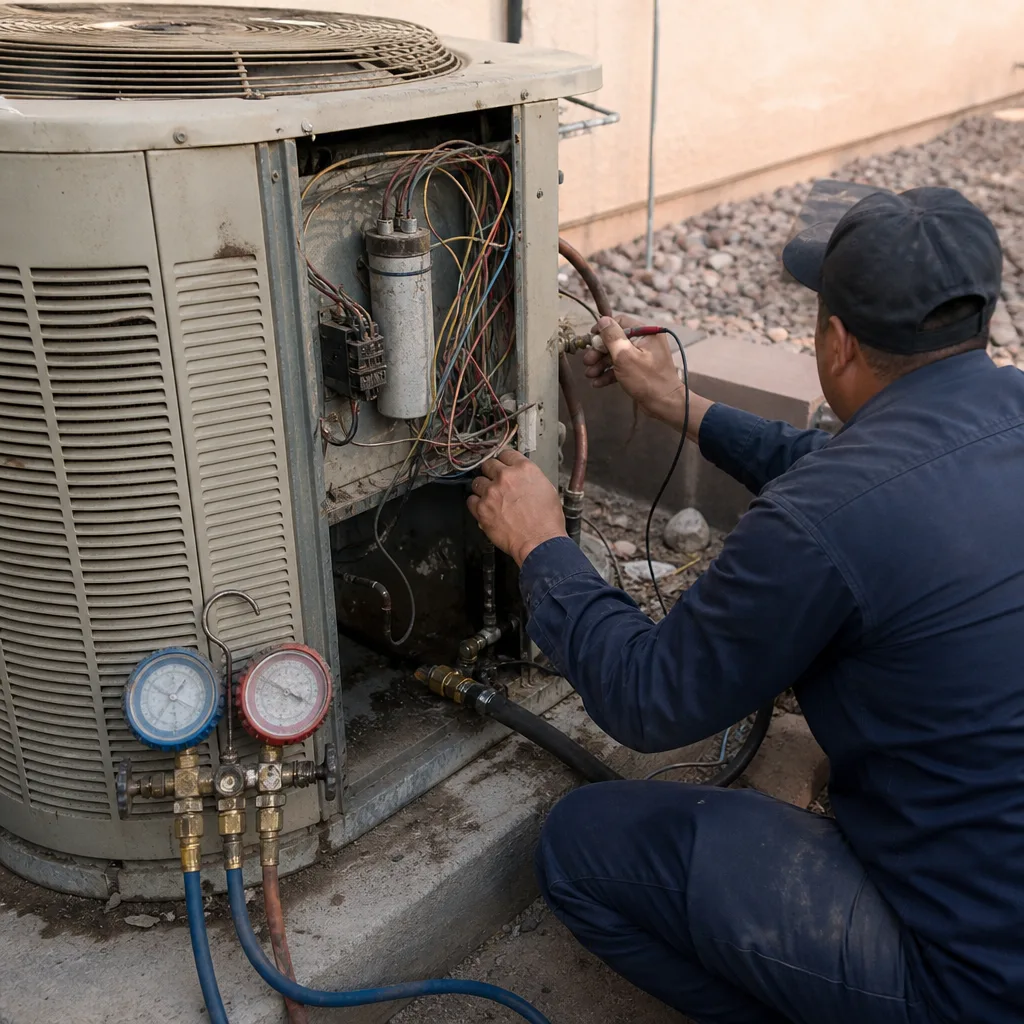 Before
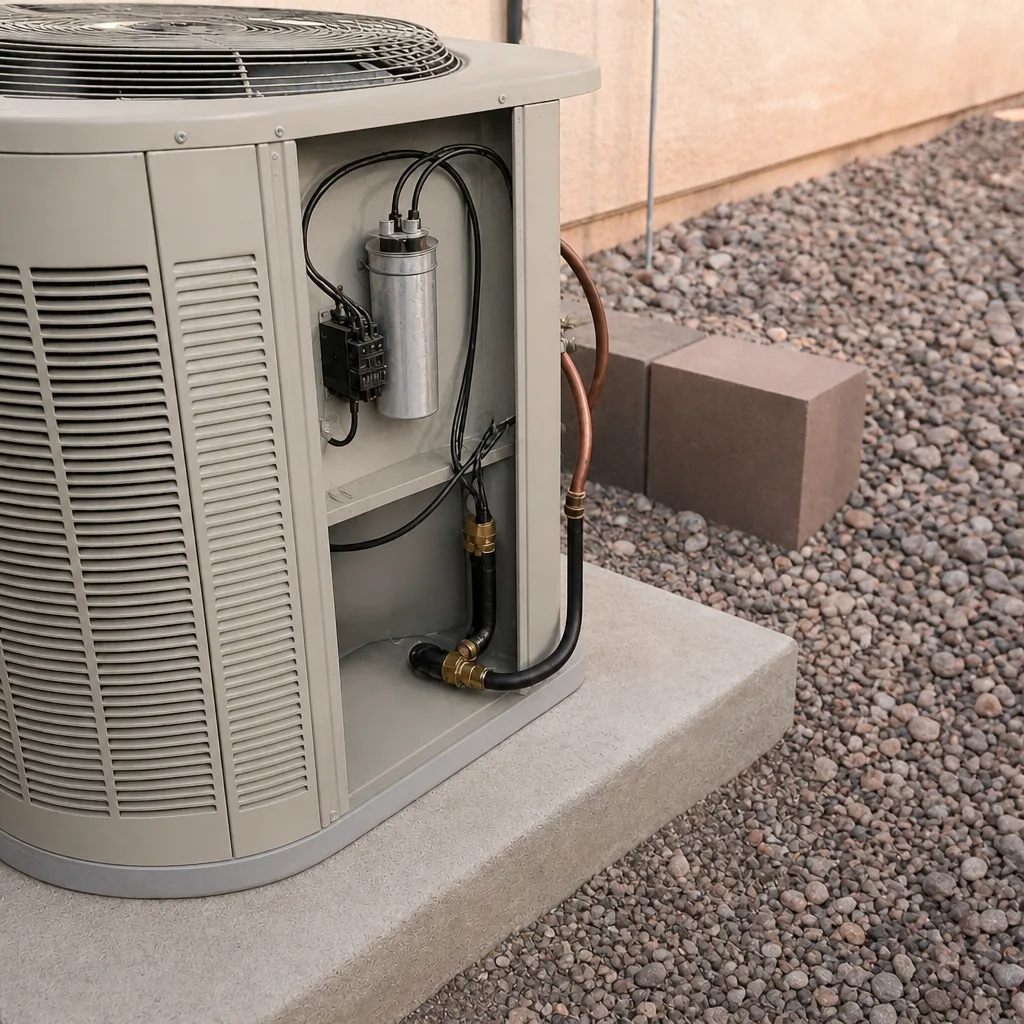 After
When to Call a Professional
Some HVAC problems are worth watching. Others need a call today. Call a professional if your system is blowing warm air during a heat wave, if you smell gas or burning near a furnace, if you see ice on the refrigerant lines, if the unit trips the breaker repeatedly, or if a repair from earlier in the season has failed. Any of these is more than an inconvenience in Boulder City’s summer or winter. On the heating side, a failed furnace during a cold snap is a genuine safety and health concern, not a wait-and-see. For rapid help with a system that’s down, AC repair and heating service are where to start. Fireside Heating & Air Co. Boulder City offers free estimates in Boulder City. Call (844) 312-0133.
Frequently Asked Questions
Search the company’s legal business name on the Nevada State Contractors Board database, confirm the status is active and the classification includes C-21, check the monetary limit against your project value, and read the disciplinary history for workmanship or warranty complaints. The license doesn’t confirm Boulder City experience, so ask about local permit history separately. Call (844) 312-0133 for a free estimate from a company that lives in this market.
Yes. HVAC changeouts and many repairs require a permit through the City of Boulder City building department, and the inspection happens before the job is closed out. A contractor who talks you out of a permit is either unfamiliar with the local process or avoiding inspection, and both create problems at resale or insurance time. Call (844) 312-0133 to ask how we handle permits on your project.
Repair usually makes sense if the system is under 10 to 12 years old, the repair costs a fraction of replacement, and the equipment otherwise performs well. Replacement tends to make more sense past 15 years, or when the repair quote approaches half the cost of a new system. The honest answer comes from a diagnosis, not a first-visit upsell. Call (844) 312-0133 for a straight-talk assessment.
Because they’re quoting a box, not a system. Duct losses and insulation gaps in older Boulder City homes routinely cause a properly sized new unit to underperform, and a contractor who doesn’t check can’t account for them. A quote issued without walking the attic is incomplete. Call (844) 312-0133 for a full assessment that includes the ducts and the attic.
Two is usually enough. In a smaller contractor market, three bids often produces one qualified estimate and two that are hard to compare, which slows the decision without improving the outcome. Compare line items, not totals, and use a free second opinion as your benchmark if you’re unsure. Call (844) 312-0133 for that free second opinion on any written estimate.
Within a day or two in normal weather, faster in a heat wave or cold snap when the failure is a health concern. The response speed you get after a failure depends on whether the company answers its phone outside business hours, so ask before you hire. We answer every call with a live person, day or night. Call (844) 312-0133 for a free estimate.
The Bottom Line
Hiring an HVAC contractor in Boulder City comes down to local accountability. Verify the C-21 license on the state board database. Ask the five questions before anyone quotes a number. Insist on a written warranty with a named term and a remedy, not “satisfaction guaranteed.” Get two written estimates, compare line items, and benchmark the price rather than shopping for the cheapest bid. Watch for the desert-specific red flags: no square-footage measurement, no duct check, no attic walk. Do those things and you’ll hire a contractor whose work holds up, and who answers the phone when it doesn’t.
Fireside Heating & Air Co. Boulder City has worked in this town for more than four decades, and our technicians have up to 8 years of experience across nine major brands. We answer the phone around the clock, we quote a price we stand behind, and we back it in writing for 90 days. Call (844) 312-0133 for a free estimate.
Written by the team at Fireside Heating & Air Co. Boulder City.