
Last updated November 18, 2026
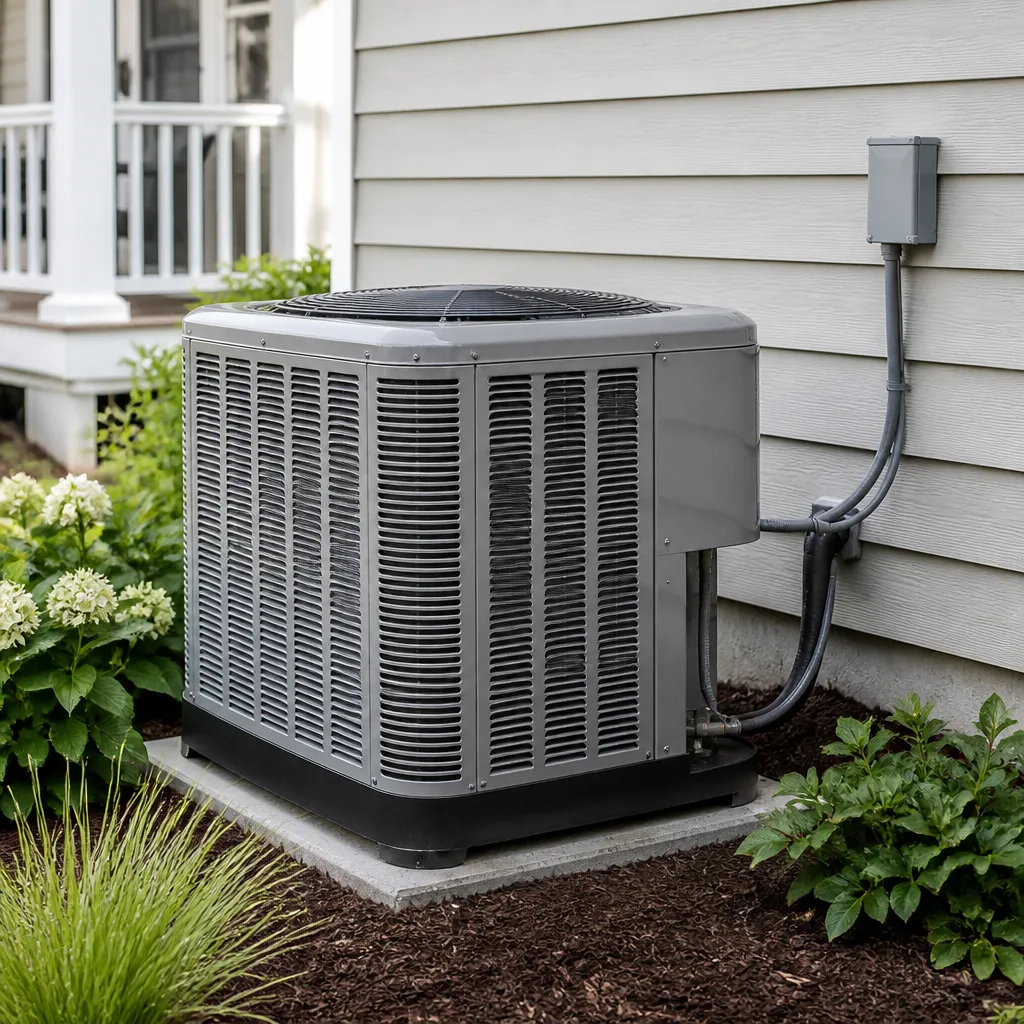 AC repair
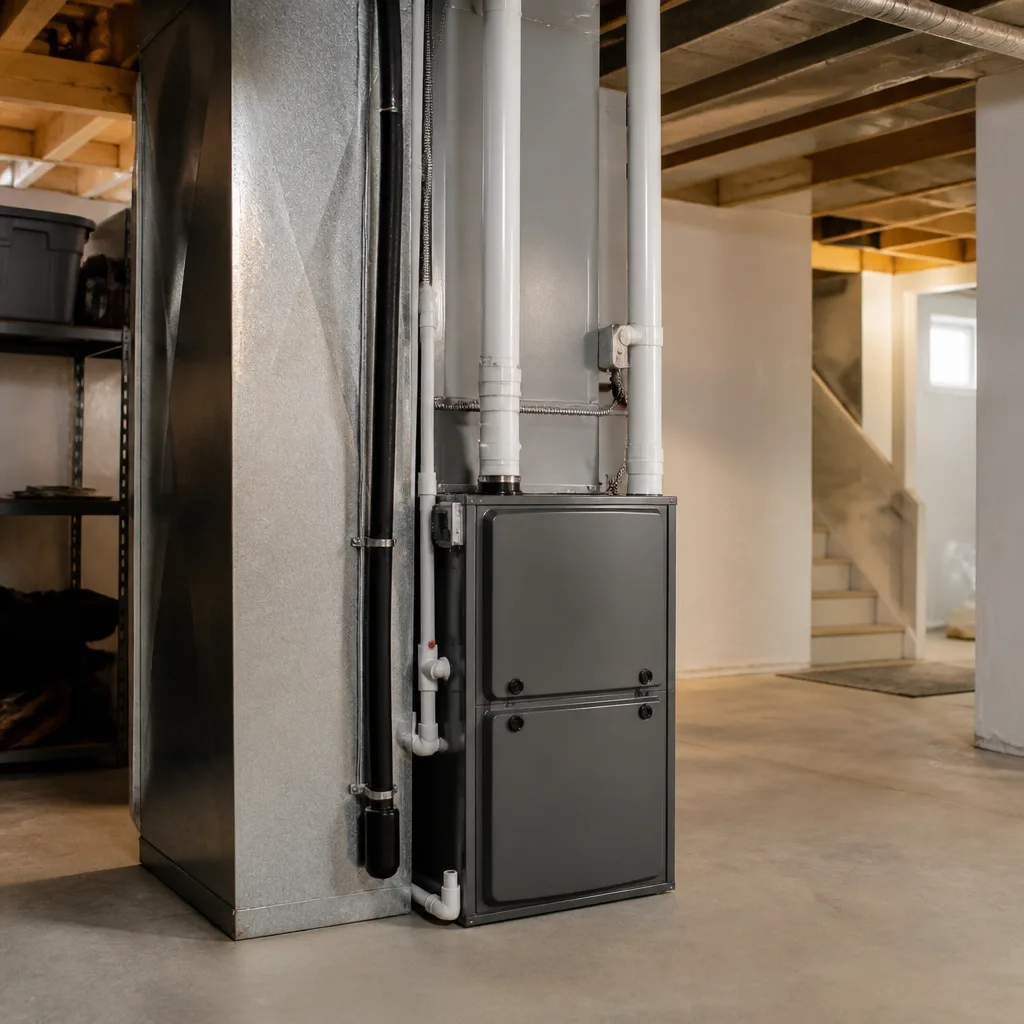 Furnace & heating
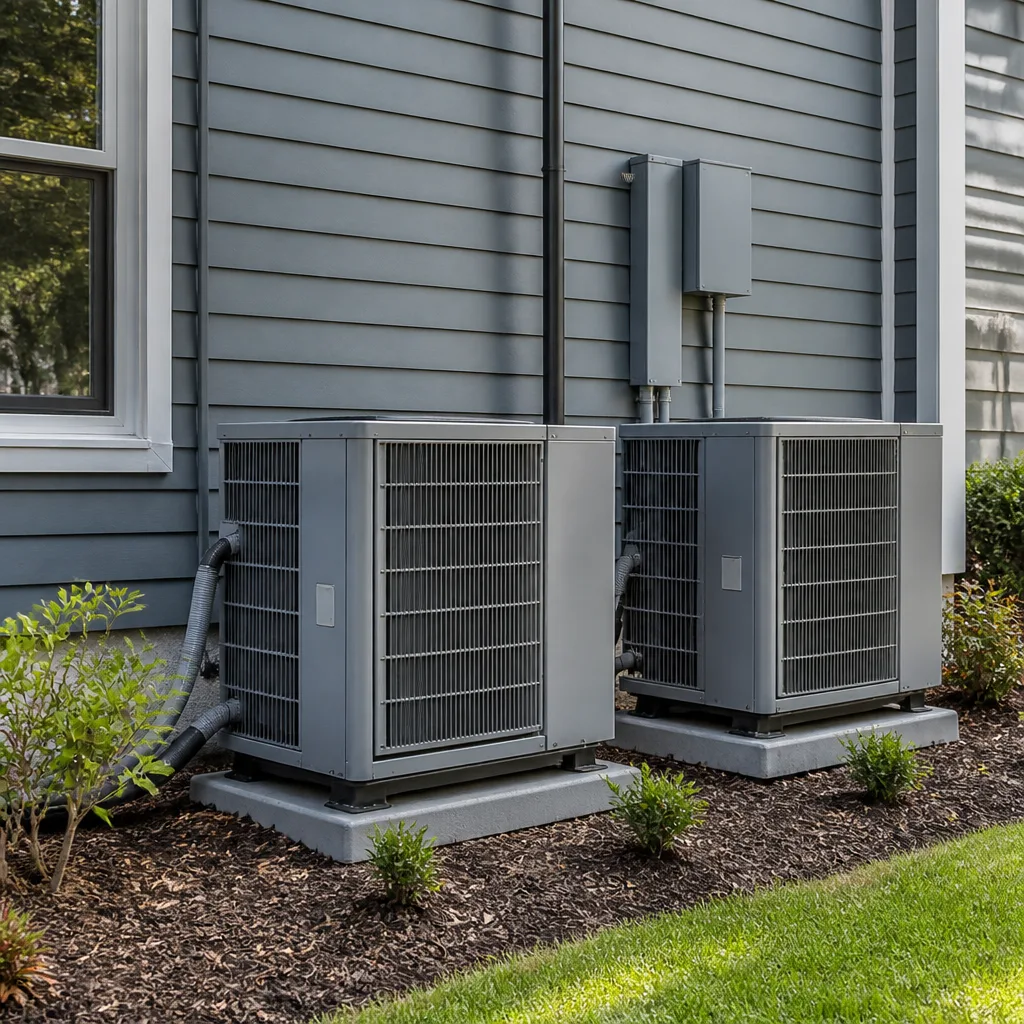 Heat pumps
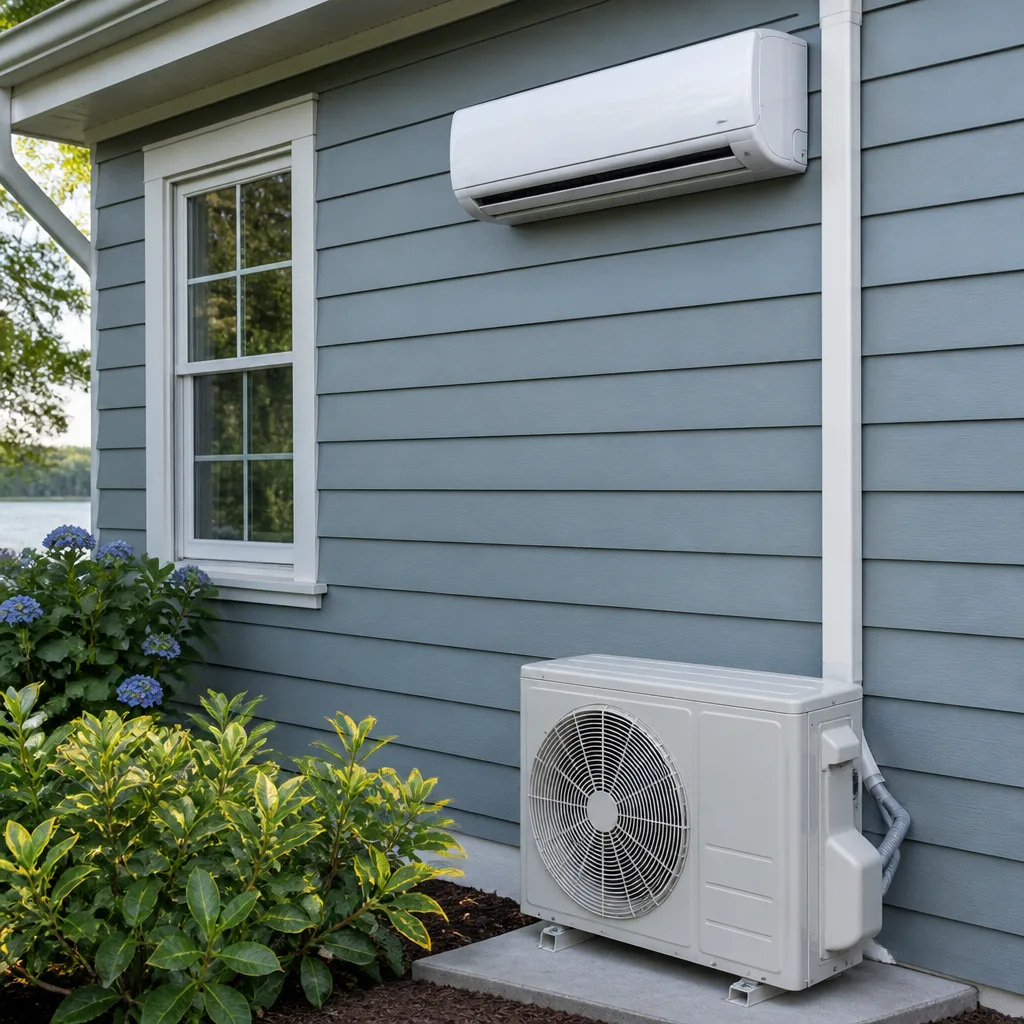 Ductless mini splits
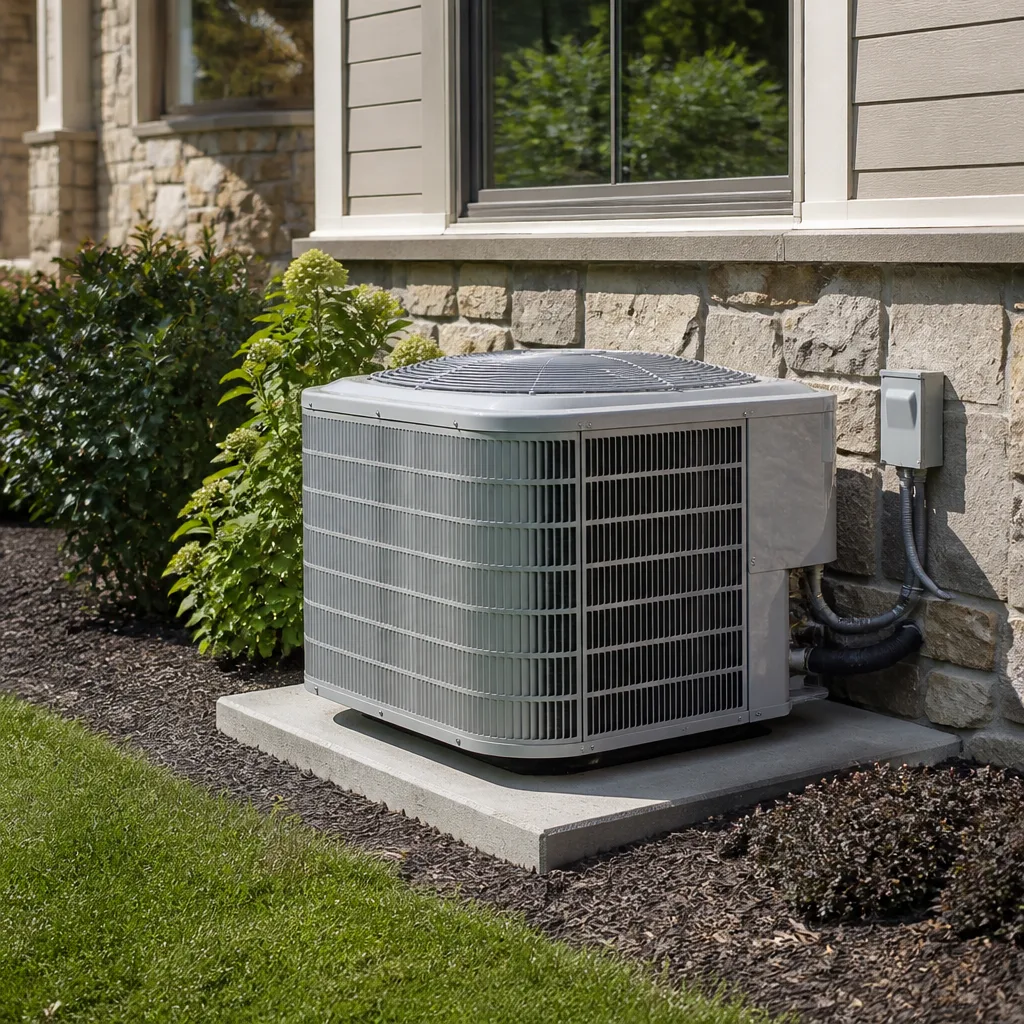 Carrier
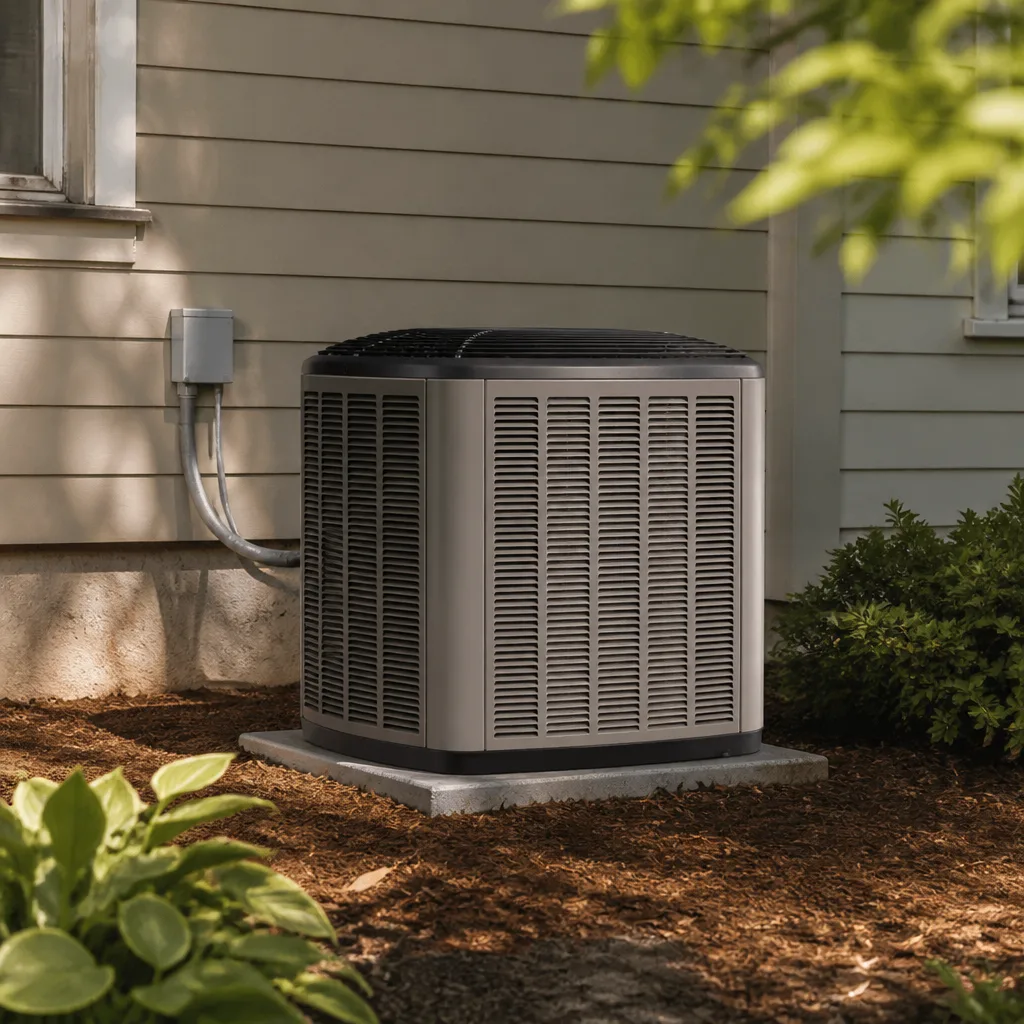 Trane
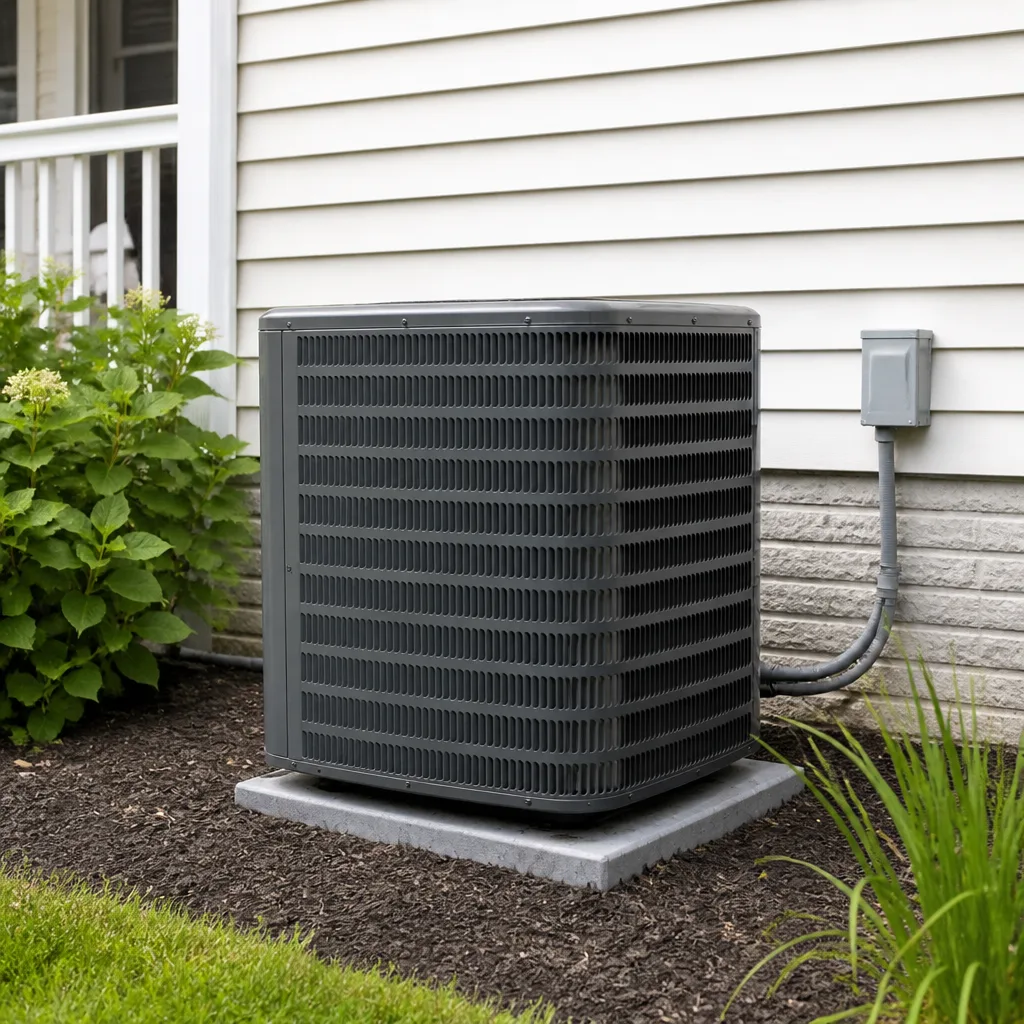 Goodman
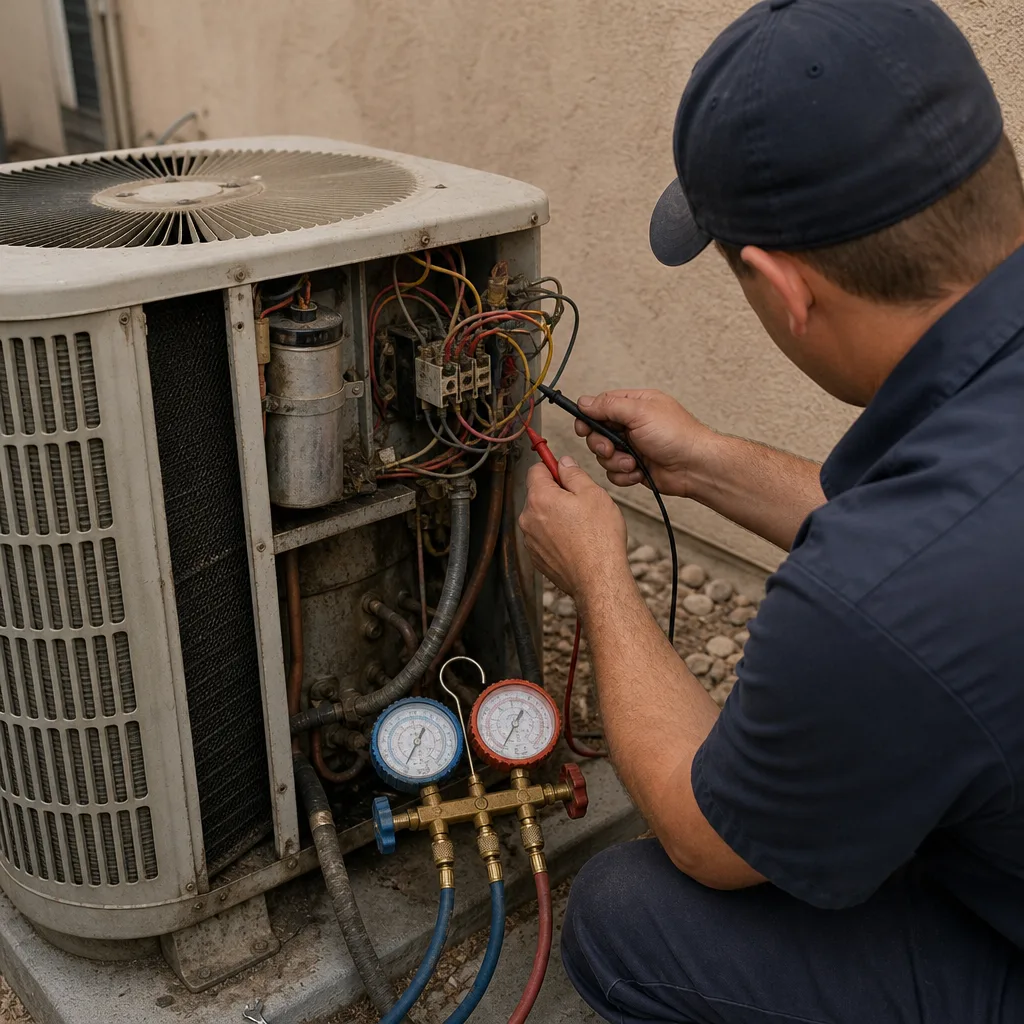
Seasonal tune-up and full diagnostic on your Carrier, Trane, or Goodman system - readings shown to you before any repair is proposed
Diagnosis first, numbers second - you approve the repair price before a single part goes in.
Get your free estimateHVAC Emergency Preparedness Guide for Boulder City Homes
Boulder City recorded 48 days above 105°F in a recent summer. A home without air conditioning at 4 p.m. on one of those days can exceed 95°F indoors within 90 minutes – a temperature range where heat exhaustion risk begins for adults over 65, a demographic that makes up a substantial share of Boulder City’s population. That’s not a maintenance inconvenience. It’s a medical timeline.
This guide treats HVAC failure the way you’d treat any other household emergency: with a written plan, a phone number you’ve already verified, and the supplies on hand before you need them. You’ll learn what to do in the first 30 minutes of a failure, how to tell a real 24/7 HVAC company from one that routes you to voicemail at 9 p.m., which interim cooling measures actually work when the outdoor air is 108°F, and the late-April prep steps that keep most Boulder City homes out of trouble entirely.
Quick Answer
HVAC emergency preparedness in Boulder City means three things: a verified 24/7 phone number you’ve tested before summer, a written household plan that tells you who to call and when to leave the house, and pre-season service completed by late April before the first 105°F stretch. Most summer emergencies we see in Boulder City trace back to a skipped spring tune-up or a capacitor that failed in the first heat wave – both preventable, both cheap to fix when caught early.
Styles & brands we work with
- AC repair
- Furnace & heating
- Heat pumps
- Ductless mini splits
- Carrier
- Trane
- Goodman
Table of Contents
- The First 30 Minutes of an HVAC Failure
- How to Verify a Real 24/7 HVAC Company in Boulder City
- Interim Cooling That Works in a Desert – and What Doesn’t
- Pre-Season Preparation for Boulder City’s Late-April Ramp-Up
- What to Have Ready Before You Call
- Heat Risk in Boulder City: When to Leave the Home
- Common Mistakes to Avoid
- When to Call a Professional
The First 30 Minutes of an HVAC Failure
The first half hour after your system quits determines how the rest of the day goes. Working through a fixed sequence keeps you from making panic calls, opening panels you shouldn’t, or waiting three hours on a heat-soaked house before you realize nobody’s coming.
- Check the thermostat first (2 minutes). Confirm it’s set to COOL, the fan is on AUTO, and the batteries aren’t dead. In Boulder City we find a surprising number of “no-cool” calls in July that trace to a thermostat in a sunbaked hallway reading the wall temperature instead of the room.
- Check the breaker at the panel (2 minutes). A tripped 240-volt breaker at the air handler is common after a brownout. If it trips again after reset, stop. Don’t keep resetting it.
- Check the filter (3 minutes). A clogged filter in a Boulder City home during a dust event can starve airflow enough to freeze the coil within an hour. Swap it if it’s gray.
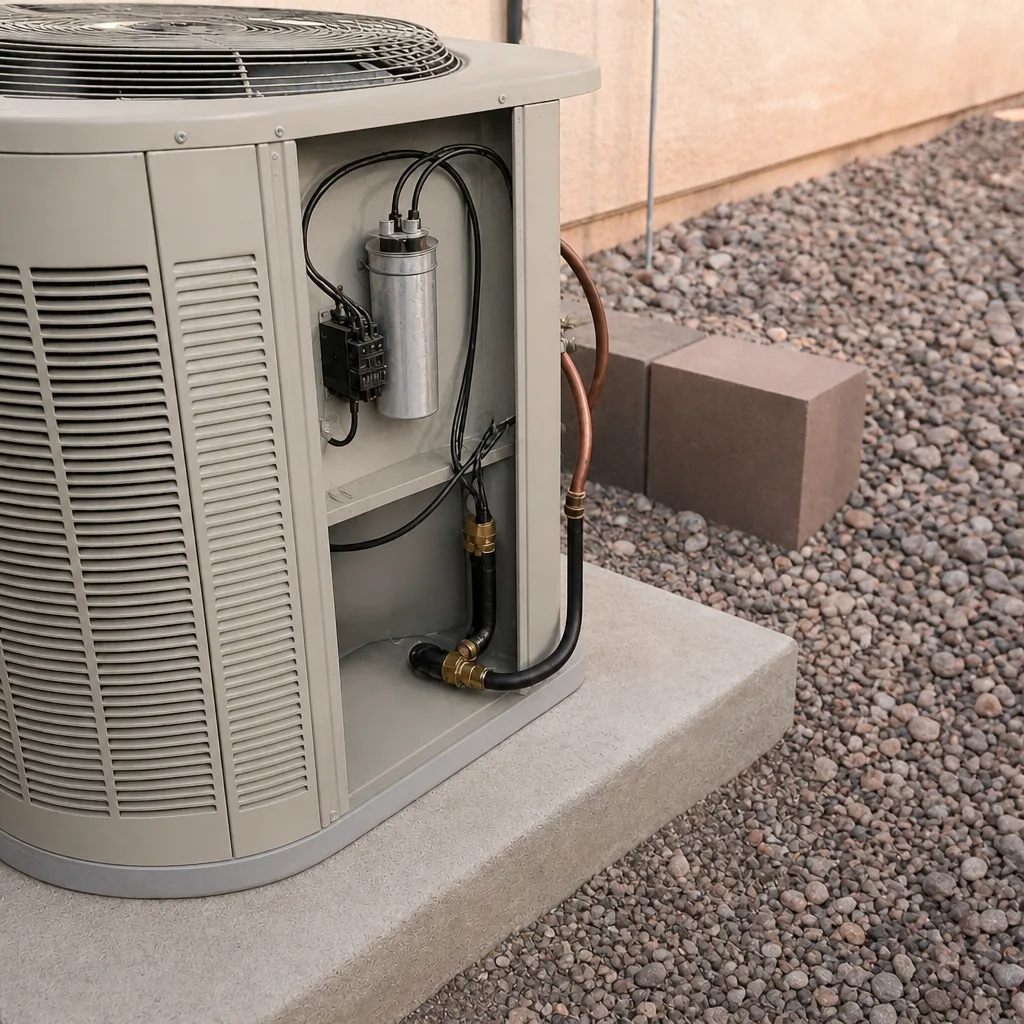
- Check the outdoor condenser (3 minutes). Look for a tripped disconnect, debris against the coil, or a fan that isn’t spinning. Don’t open the electrical panel cover.
- Call your verified 24/7 number (5 minutes). Give them the symptom, the model, and your address. A live person should answer. If you get voicemail during a heat emergency, move to the next number on your list.
- Start interim cooling (10 minutes). Close blinds on sun-facing windows, run ceiling fans, and move family members to the coolest interior room on the lowest floor.
That’s the whole sequence. Fifteen minutes of methodical checking, then a phone call. What you don’t do is start pulling panels, spraying water on the condenser, or propping the furnace door open hoping to “reset” something.
How to Verify a Real 24/7 HVAC Company in Boulder City
Plenty of HVAC companies in Boulder City list 24/7 emergency service on their website. Far fewer actually answer at 2 a.m. on a Sunday in July. This matters because when your AC dies on a Friday evening and the weekend forecast is 112°F, a voicemail greeting is effectively a three-day wait.
The verification takes five minutes and should happen in May, not July.
- Call the after-hours number on a weeknight at 8:30 p.m. and count the rings. A live person should pick up within four or five rings. If you get a recording that says “please leave a message and we’ll call you back during business hours,” that number doesn’t serve emergencies.
- Ask who you’re speaking with and whether they can dispatch tonight. The answer tells you whether you’re talking to a dispatcher or a call center that will take your information and forward it in the morning.
- Ask for the after-hours diagnostic price. Companies that genuinely run overnight service can quote it on the phone. Companies that don’t will deflect.
- Confirm there’s no overtime surcharge on weekends. A company that answers live at 2 a.m. and then charges double is a company you want to know about in advance.
- Save the verified number in every household phone and stick it on the refrigerator. Don’t rely on Google at 2 a.m. on a dying phone.
We’ve answered the phone live around the clock for over four decades, including the 2 a.m. no-heat and no-cool calls. It’s one reason customers who call us once tend to call us for the next twenty years. You can reach our team at (844) 312-0133 – the line is answered by a person, day or night.
Interim Cooling That Works in a Desert – and What Doesn’t
Interim cooling advice written for a humid climate falls apart in the Mojave. What works in Houston can make a Boulder City home hotter. Here’s what actually helps when the outdoor air is 108°F and the indoor air is climbing.
What works:
- Close every blind and draw the curtains on the west and south sides of the house from about noon onward. In a Boulder City home with single-pane or older dual-pane windows, direct sun load through west-facing glass is the largest single heat source.
- Run ceiling fans on medium in occupied rooms. A fan doesn’t drop the air temperature, but it drops the perceived temperature by three to five degrees and helps skin cool itself. Turn off fans in empty rooms.
- Move to the lowest floor and the most interior room. In two-story Boulder City homes, the difference between the upstairs bedroom and the ground-floor interior hallway routinely runs eight to twelve degrees.
- Do wet-towel or cool-shower cooling for elderly family members if indoor temperatures exceed 95°F. Cool water on the wrists, neck, and ankles is far more effective than drinking cold water alone.
- Use a battery-powered or rechargeable fan in the designated cool room, and keep phone batteries topped up during the day in case power fails later.
What doesn’t work, and what’s counterproductive:
- Opening windows during the day. When outdoor air is 108°F, you’re just letting 108°F inside. Windows stay closed until well after sunset when outdoor air has dropped below indoor air.
- Swamp coolers or evaporative coolers on a monsoon-humid day. These units lose most of their cooling capacity once relative humidity climbs past about 30%, which happens repeatedly in July and August.
- Box fans pulling air from outside. Same problem as open windows, just faster.
- Closing off rooms entirely. This creates pressure imbalances that push the compressor harder.
- Spraying water on the outdoor condenser. This is genuinely dangerous around electrical components and can crack a hot compressor.
Interim measures buy you hours, not days. For anything beyond a same-day fix, a proper repair from a trained technician is the only real solution. Our AC repair and installation in Boulder City team handles most no-cool calls in a single visit.
Pre-Season Preparation for Boulder City’s Late-April Ramp-Up
Boulder City’s cooling season doesn’t ease in. It arrives the last week of April when the first 95°F days hit and everyone turns on their system the same afternoon. A system that sat idle through March either spins up cleanly or reveals the weakness that has been waiting since last fall.
That gap – the stretch of six or eight weeks between the last cool day and the first heat wave – is when every preventable emergency gets either caught or missed. Here’s the preparation sequence that reliably lowers summer call volume in our experience.
- Book a spring tune-up for mid-to-late April. A tune-up checks refrigerant charge, amperage draw, capacitor health, contactor condition, and airflow. It catches about three-quarters of the failure causes we see in June.
- Replace the air filter the day of the tune-up and write the date on the new one. In a desert climate with dust events, filters load faster than the packaging suggests. Plan on changing every 60 to 90 days during cooling season.
- Rinse the outdoor condenser coil in early April with a garden hose on low pressure. Boulder City’s spring wind brings fine dust that packs into coil fins, and a loaded coil raises head pressure and shortens compressor life.
- Clear two feet of space around the condenser. Shrubs, stored lumber, or a leaning trash can will starve the unit of airflow by June.
- Test your smoke and CO detectors and confirm your emergency contact list is current. Furnace failure in winter is just as serious as AC failure in summer, and the same household plan should cover both.
- Schedule any known-repair work in April or May, not July. A compressor that’s on its last legs will fail eventually – better on your calendar than on the hottest afternoon of the year.
Our $89 seasonal tune-up is a flat price with a written report of what was actually found. Our technicians aren’t paid on what they sell, so the report reflects the system, not a sales pitch. The heating and furnace in Boulder City team runs the same tune-up schedule for winter readiness in October.
What to Have Ready Before You Call
The difference between a repair finished in one visit and a repair that takes two is often the information you have on hand when you make the call. A technician who knows the model, the symptom, and the history can load the right parts before leaving the shop. In a heat emergency, that’s the difference between a fix this afternoon and a fix tomorrow morning.
Put these six items on a single index card, tucked inside or near your thermostat or the air handler closet:
- System make and model. On the outdoor condenser data plate and on the indoor air handler. Both counts.
- Serial numbers. Same two data plates. A serial number tells the manufacturer and the manufacturing date, which tells us the system’s age without guesswork.
- Approximate age and install date. If you don’t remember, a service record or the date of the original permits (for Boulder City installs, that’s a city record) will give you the year.
- Last service date and what was done. A tune-up receipt or sticker works. Note any parts that were flagged as nearing end of life.
- Symptom description in plain language. “Not cooling, outdoor fan not spinning, indoor unit running” is far more useful than “it’s broken.” Note whether the breaker tripped.
- Thermostat setting and current indoor temperature. This helps the dispatcher classify urgency correctly.
One more item worth having on the card: what refrigerant your system uses. Boulder City homes with systems installed before 2010 are likely on R-22, which is phased out and expensive to top off. Homes with newer systems use R-410A or R-32. If your system is due for major repair, that detail alone tells you whether repair or replacement is the smarter move. Our heat pump and mini split in Boulder City team can talk through the alternatives if a replacement decision is on the horizon.
Heat Risk in Boulder City: When to Leave the Home
There is a point when staying in a hot house stops being uncomfortable and starts being dangerous. For adults over 65, that line is lower than most people realize.
Once indoor temperature passes about 95°F and is still climbing, and especially when it stays above 90°F overnight, the human body’s ability to cool itself degrades. Heat exhaustion symptoms – headache, nausea, dizziness, heavy sweating, cool clammy skin, muscle cramps – mean it’s time to leave the house. Confusion, slurred speech, or a body that stops sweating in extreme heat are signs of heat stroke, which is a 911 call.
The window to leave is earlier than you’d think. Once a home is at 92°F indoors at 6 p.m. on a 115°F day with no repair coming until morning, the interior temperature may climb into the mid-nineties overnight and only get worse through the next afternoon. Get the family to a cooled location – a neighbor’s, a family member’s, a hotel, or a cooling center if one is open – before you feel symptoms. In Boulder City, the closest hospital is Boulder City Hospital on Adams Boulevard, and an unnecessary drive to a friend’s house beats an emergency room visit.
For family members with heart conditions, diabetes, or mobility limitations, consider leaving earlier. We’ve seen homes where one family member was fine at 90°F indoors and another was exhausted. Age and health don’t negotiate with a thermometer.
Common Mistakes to Avoid
- Waiting to call until after dark on a hot Friday. By 7 p.m. on a Friday, the after-hours queue is already full. Calling your verified number as soon as the symptom appears – rather than trying to tough it out – puts you at the front of the line.
- Calling an HVAC company for the first time during an emergency. The time to test whether a company answers at 2 a.m. is April, not July. Verify the number ahead of the season.
- Skipping the spring tune-up because “it worked fine last year.” Systems don’t fail by degrees – a capacitor that reads 5 microfarads in March will run one more day and then fail hard at the first triple-digit afternoon.
- Opening a panel or pulling the thermostat off the wall to “check.” The 240-volt circuit feeding the air handler is lethal, and the refrigerant lines are pressurized. Leave the covers on.
- Blocking the outdoor condenser with a shade sail or umbrella. This is a specific, frequent mistake in Boulder City where the outdoor coil sits on a sunny side of the house. The unit needs full airflow, and worse, throwing shade over it doesn’t lower the coil temperature the way it lowers the ambient.
- Buying a portable AC and betting the whole summer on it. Portable units are useful for one room, not a 1,800-square-foot house. Use them as an interim measure, not a strategy.
- Ignoring a refrigerant leak because “it worked until now.” If a technician had to add refrigerant last year and you’re adding again this year, the system has a leak. Keep topping it off and the compressor will fail on the hottest day of the season, usually within the 90-day guarantee window if the work was recently done – which is exactly the kind of problem we test for before we recommend repair.
When to Call a Professional
Some HVAC problems need a technician. A few don’t. The dividing line is whether the fix requires opening a panel, handling refrigerant, or diagnosing electrical components. If it does, call a professional: the risks are serious, and the tools (manifold gauges, voltmeter, refrigerant recovery equipment) aren’t in most garages.
Specific scenarios that require a call:
- Outdoor unit not starting, especially if the breaker trips a second time after reset
- Warm air from vents but the fan runs and the breaker is on – likely a refrigerant or compressor issue
- Any burning smell, unusual noise, or moisture where moisture shouldn’t be
- System short-cycling (turning on and off every few minutes)
- Furnace producing no heat in winter, or anything that smells like gas
- Indoor temperatures climbing past 92°F with the system running
Fireside Heating & Air Co. Boulder City offers free estimates in Boulder City, takes calls around the clock, and backs every job with the 90-Day Done Right Promise – if it’s not done right, we make it right, in writing. Call (844) 312-0133 for a free estimate or an emergency dispatch.
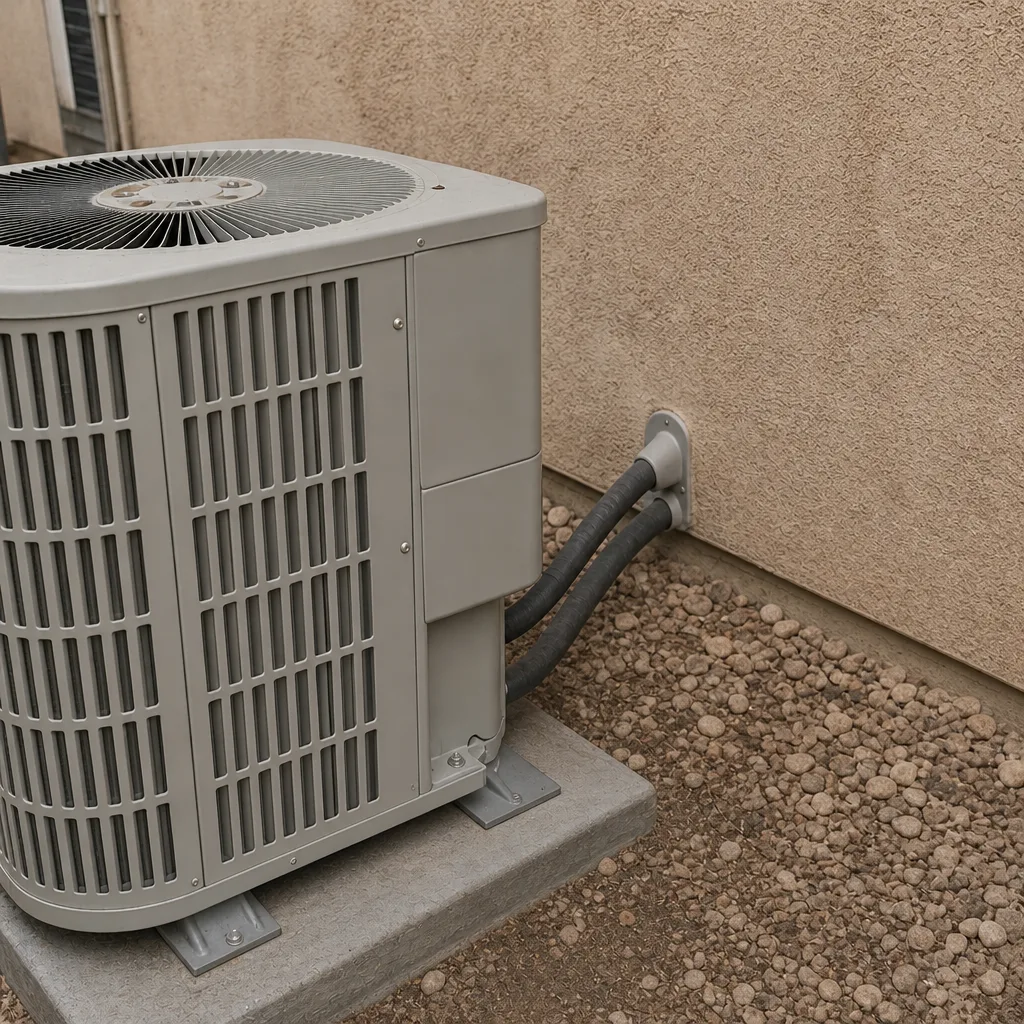
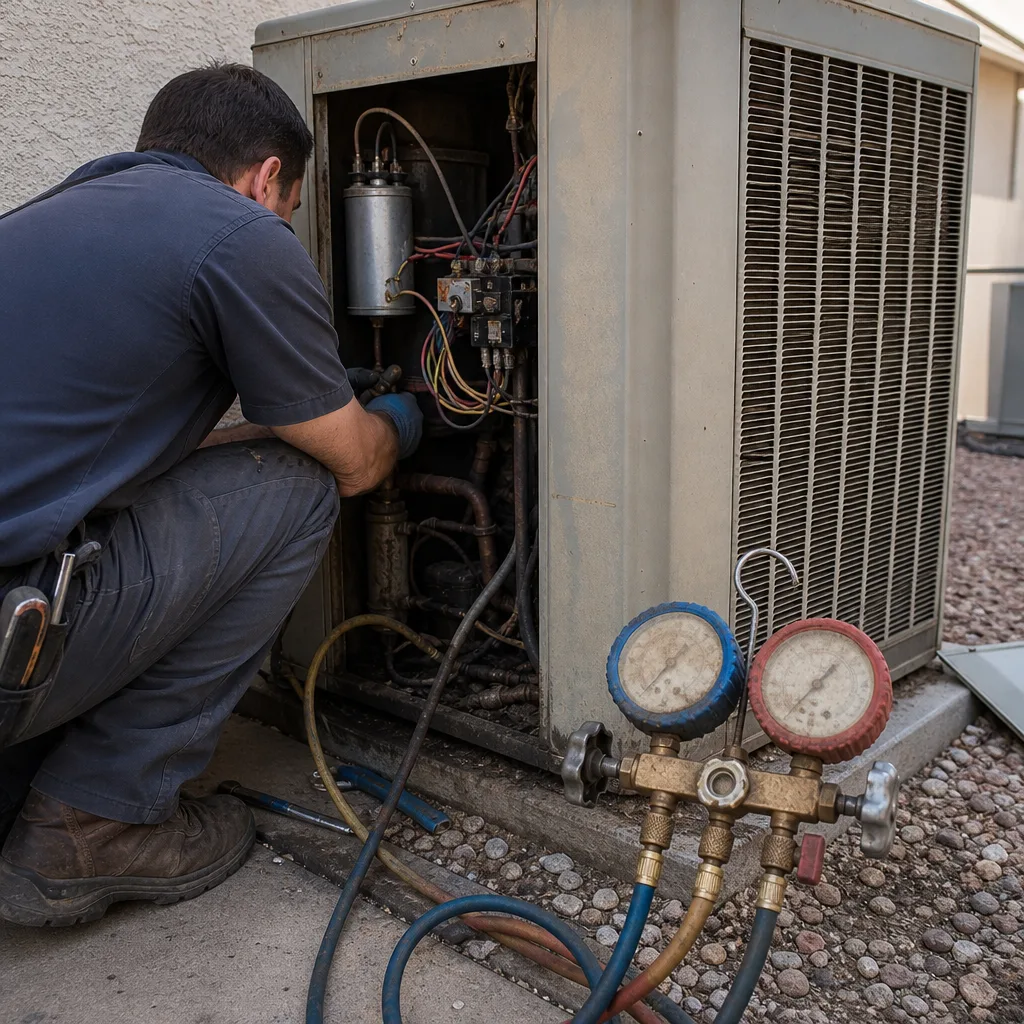
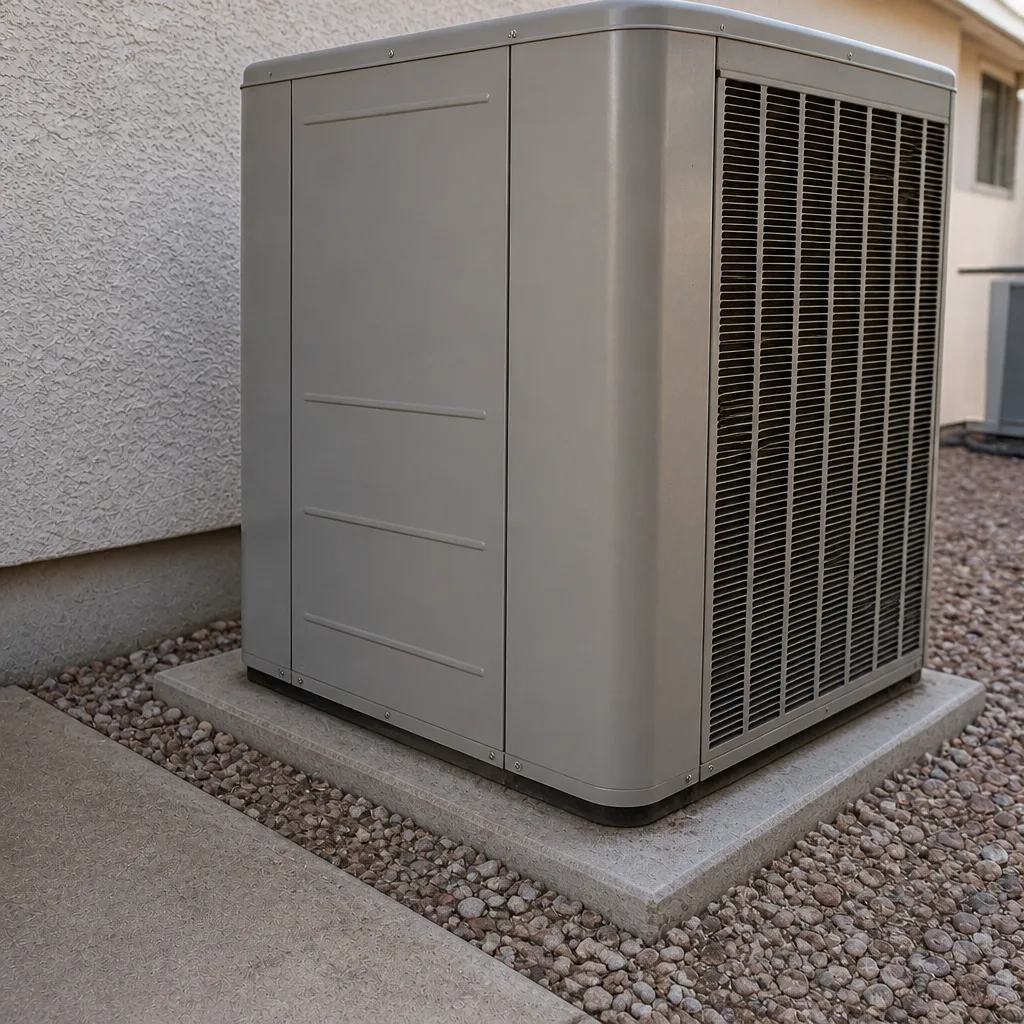
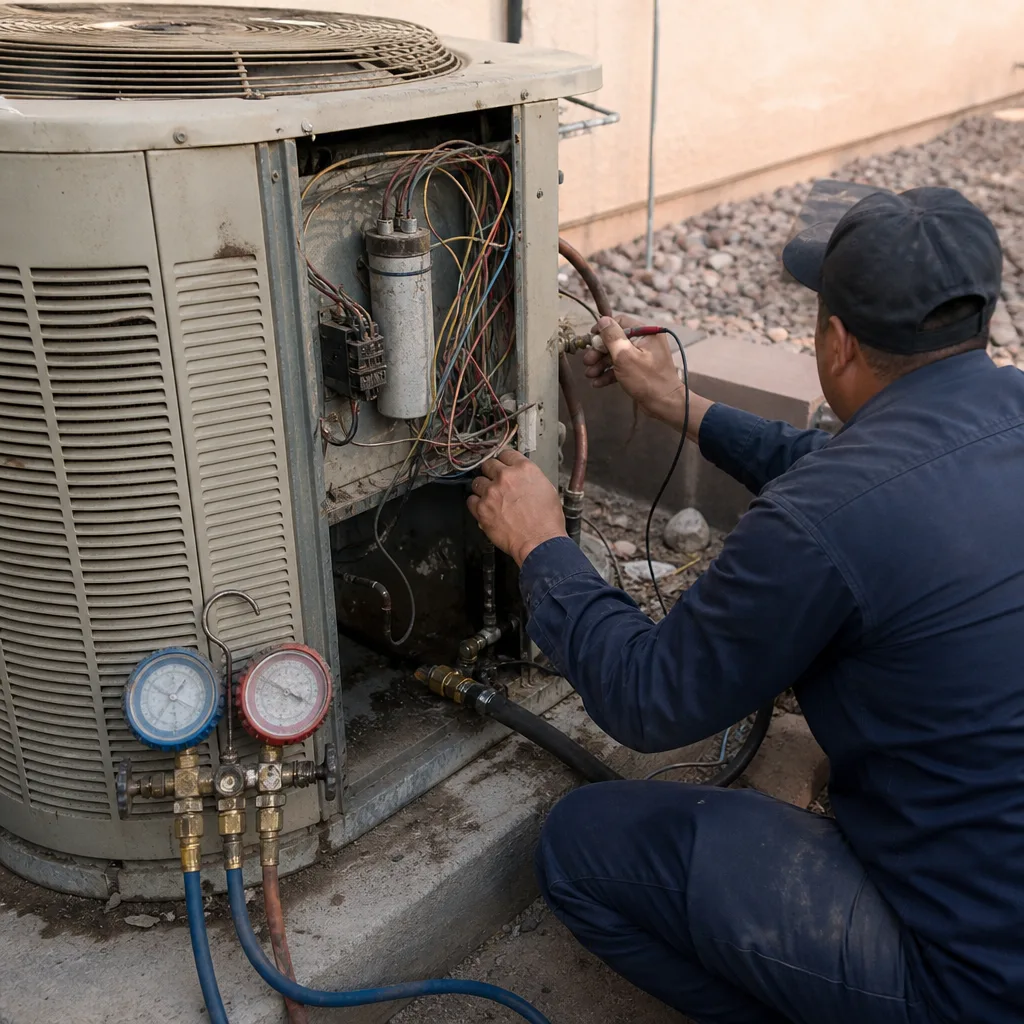
See the difference
 Before
 After
 Before
 After
 Before
 After
Frequently Asked Questions
Check the thermostat setting and batteries, check the breaker at your panel for a tripped circuit, check or change the air filter, and look at the outdoor condenser for a tripped disconnect or a fan that isn’t spinning. Then call your verified 24/7 number. Don’t keep resetting the breaker if it trips twice, and don’t open any equipment covers – the 240-volt circuit and pressurized refrigerant lines are dangerous. Call (844) 312-0133 for an exact quote or emergency dispatch – estimates are free.
Call the after-hours number on a weeknight at 8:30 p.m. and count the rings. A company that truly dispatches overnight will have a live person pick up within four or five rings; one that just lists 24/7 on its website will send you to voicemail. Ask what the after-hours diagnostic price is and whether there’s an overtime charge, and save the verified number in every household phone before the season starts.
A portable unit will cool one room reasonably well, especially a bedroom kept closed-off from the rest of the house. An evaporative cooler loses most of its cooling capacity once humidity climbs past about 30%, which happens repeatedly in July and August during monsoon season. Use either as an interim measure for a few hours; neither is a substitute for repair when a 108°F day is forecast for the rest of the week.
Once indoor temperatures pass roughly 95°F and are still climbing, and especially when overnight lows stay above 90°F indoors, adults over 65 should leave the home. Heat exhaustion symptoms include headache, nausea, dizziness, and muscle cramps. Confusion, slurred speech, or a stop in sweating in extreme heat is a heat stroke emergency – call 911. When in doubt, leave; a night at a relative’s house is far better than an ER visit.
Most emergency diagnostic fees in the Boulder City market fall in a moderate range, but the total repair depends on the part – a failed capacitor is a modest repair, a compressor is a major one. We quote the price before we start and stand behind it. Call (844) 312-0133 for an exact quote – estimates are free, and the $50 off any repair over $250 standing offer applies to most emergency work.
A spring tune-up in April, a fresh air filter the same day, a rinsed condenser coil, and a cleared two-foot buffer around the outdoor unit prevent most true summer emergencies. Tune-ups catch failing capacitors, low refrigerant charge, and dirty coils – the three most common causes of no-cool calls we see in Boulder City. Our $89 seasonal tune-up includes a written report of what was found. Call (844) 312-0133 to schedule before the April ramp-up.
The Bottom Line
HVAC emergency preparedness in Boulder City isn’t a maintenance checklist – it’s a household safety plan, especially for the many residents over 65 whose heat risk begins within hours of an indoor temperature climb. Three actions matter most: a verified 24/7 phone number you’ve tested ahead of the season, a spring tune-up completed by late April before the first 105°F stretch, and a family decision about when to leave the home if cooling fails. Everything else – interim cooling, call information, what to check first – serves those three. Work through the plan once in May, and July takes care of itself. The team at Fireside Heating & Air Co. Boulder City home can answer questions about any of this, day or night.
For a free estimate or an emergency dispatch anywhere in Boulder City, call (844) 312-0133. A live person answers around the clock, every day of the year, and every job is backed in writing by the 90-Day Done Right Promise – if it’s not done right, we make it right, no arguing, no paperwork.
Written by the team at Fireside Heating & Air Co. Boulder City.