
Last updated November 18, 2026
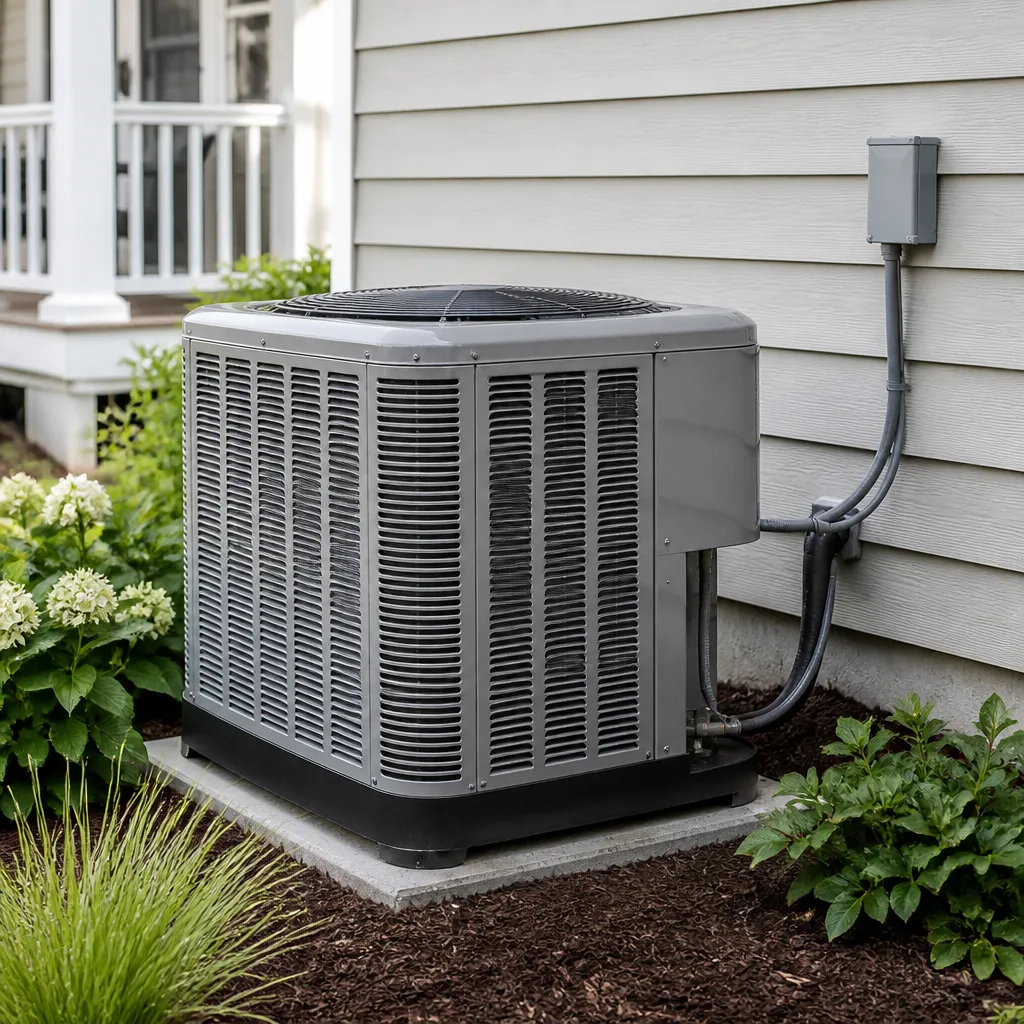 AC repair
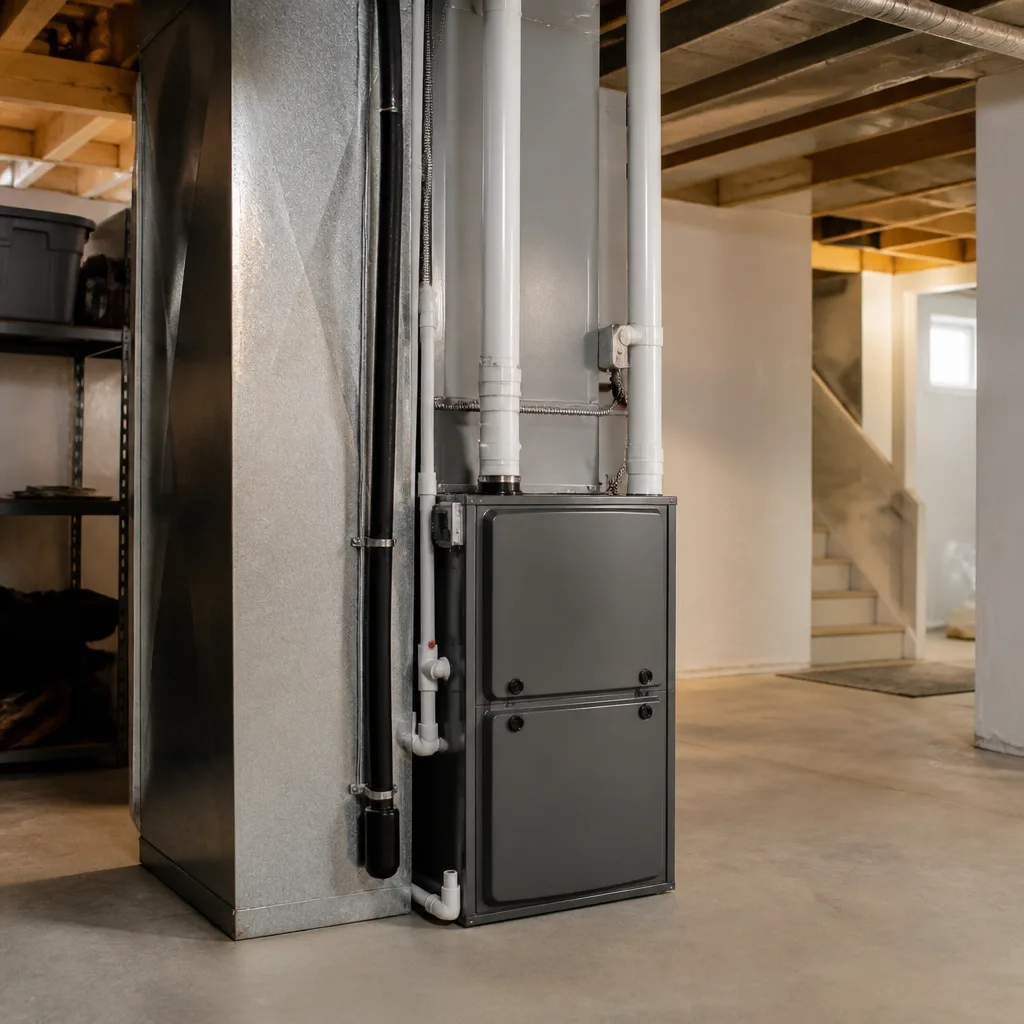 Furnace & heating
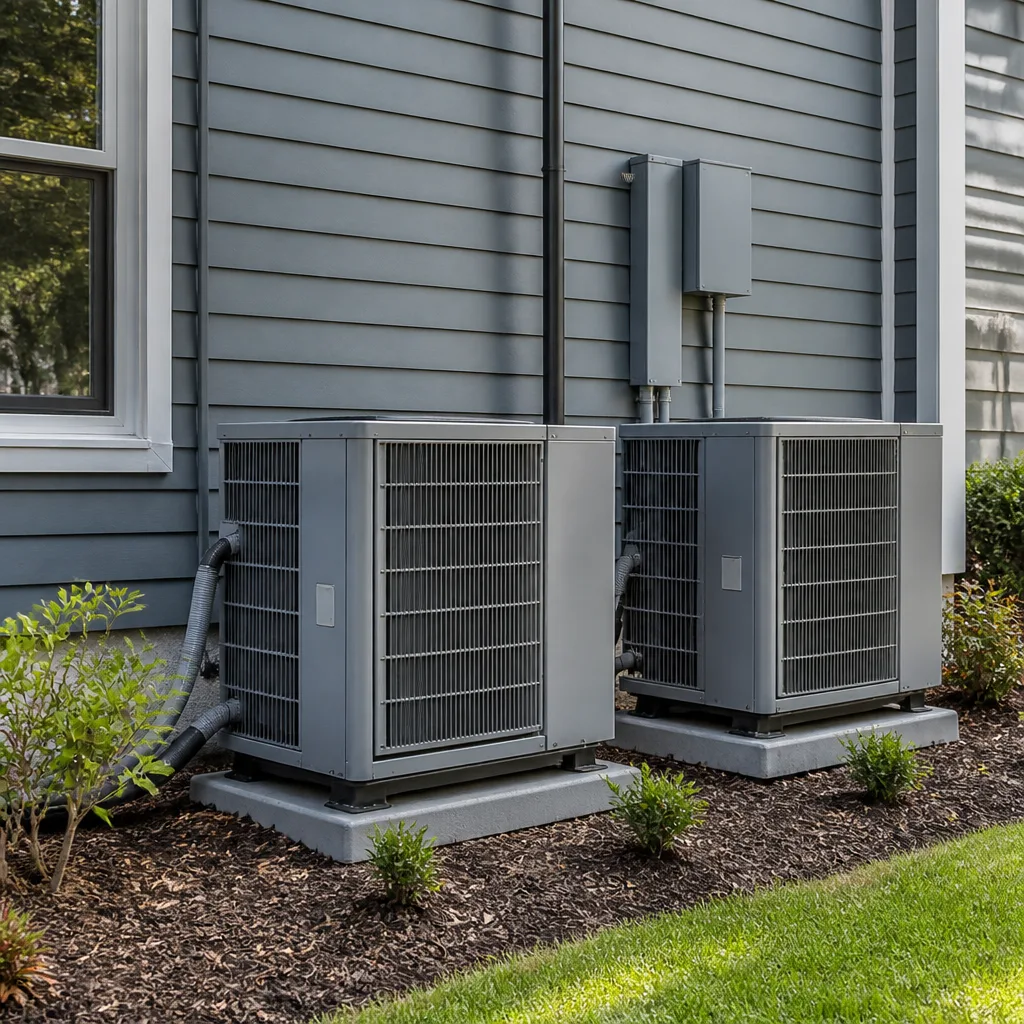 Heat pumps
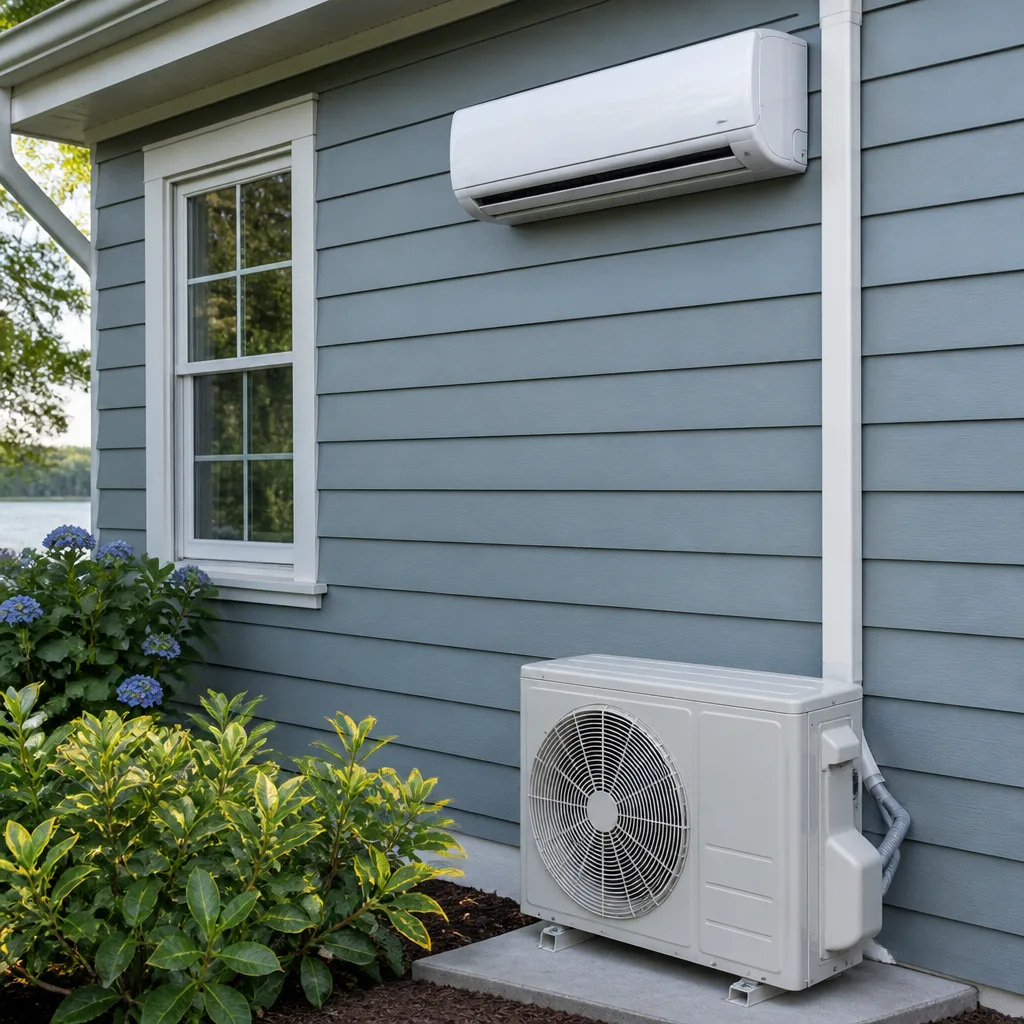 Ductless mini splits
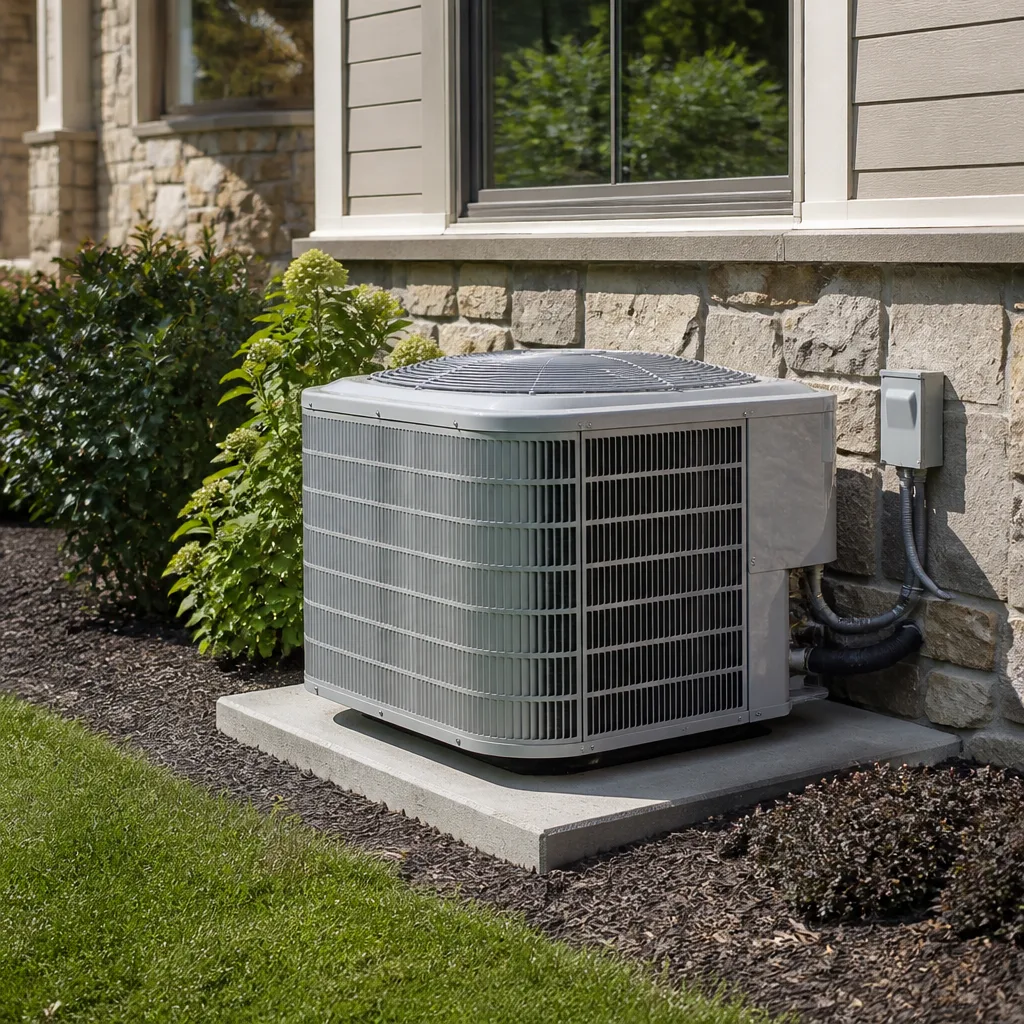 Carrier
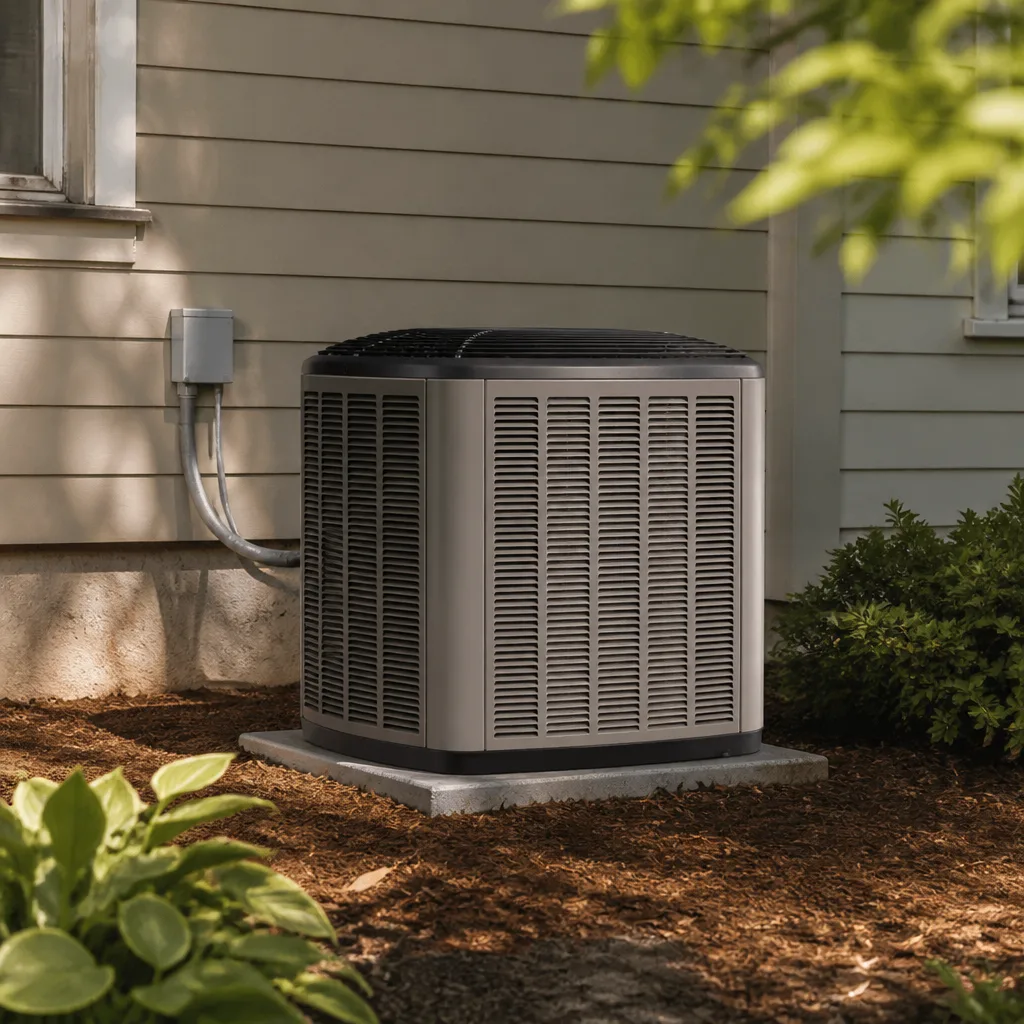 Trane
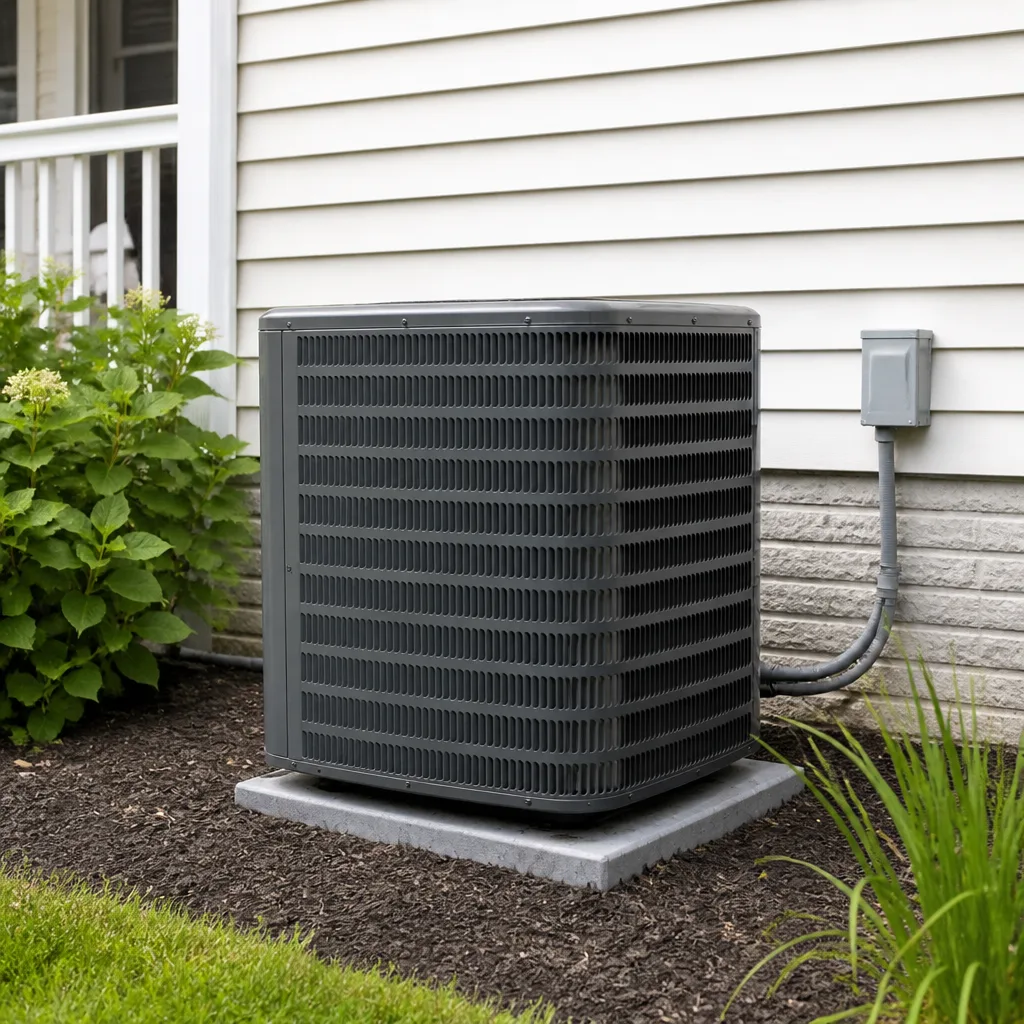 Goodman
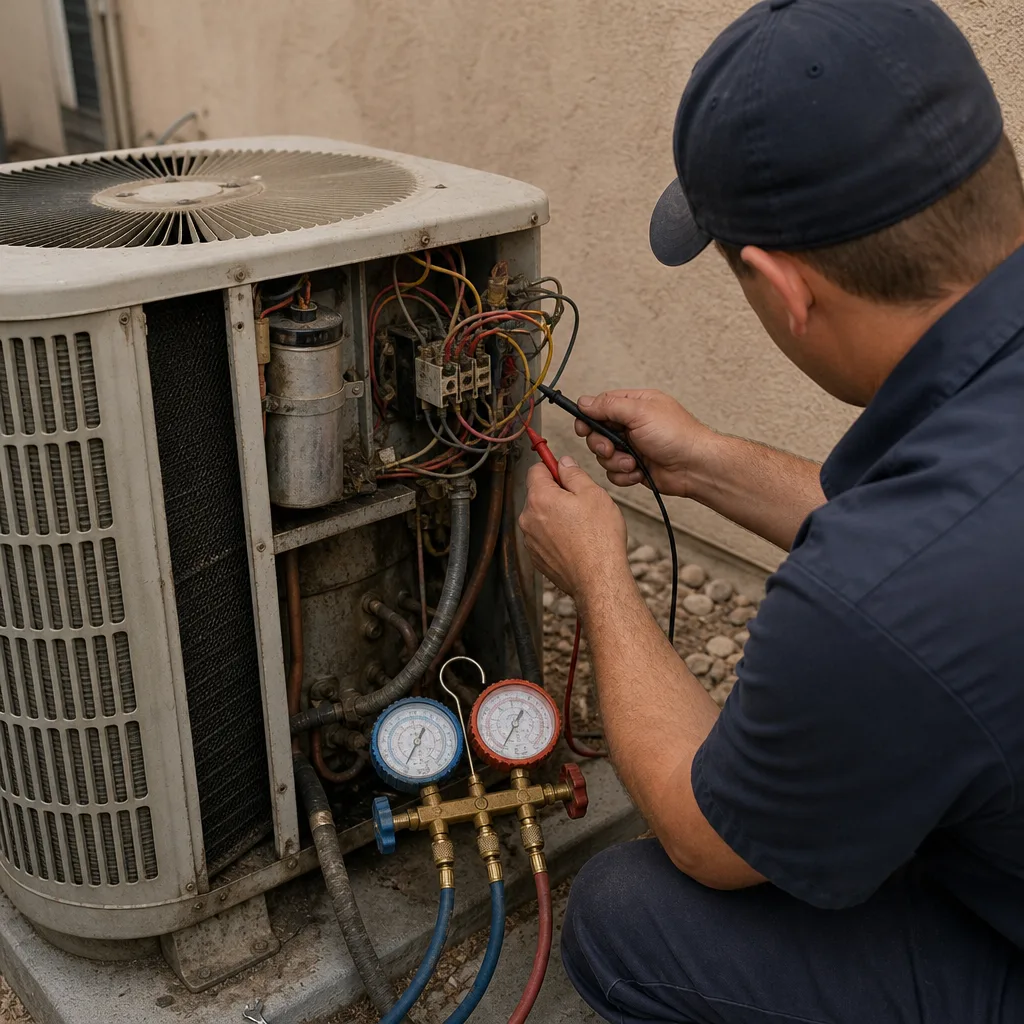
Seasonal tune-up and full diagnostic on your Carrier, Trane, or Goodman system - readings shown to you before any repair is proposed
Diagnosis first, numbers second - you approve the repair price before a single part goes in.
Get your free estimateEmergency & Commercial HVAC Troubleshooting: Common Problems and How to Fix Them
Roughly 30 percent of the emergency HVAC calls we handle end with a reset breaker or a cleared condensate drain. No failed compressor. No dead blower motor. Just something small that shut the system down, fixed in under five minutes by a homeowner who knew where to look. That number isn’t a knock on anybody. It’s an invitation. Before you spend money on a service call, there are six diagnostic steps you can safely work through yourself. If they solve the problem, you saved a bill. If they don’t, the information you gather helps a technician arrive with the right parts and fix it in one trip instead of two. This guide walks you through it, from a Boulder City shop that has seen just about every failure these systems produce.
Quick Answer
Most emergency HVAC problems come down to one of a few failures: a tripped breaker, a clogged condensate drain, a dirty filter, a frozen coil, a dead capacitor, or a failed ignitor. You can safely check and reset the first three yourself. A frozen coil you can identify but not repair. Failed capacitors and ignitors are licensed work. The single most useful thing you can do is run a calm, step-by-step sequence before you call, then tell the technician exactly what you observed. That cut down on misdiagnosis and usually trims the bill too.
Styles & brands we work with
- AC repair
- Furnace & heating
- Heat pumps
- Ductless mini splits
- Carrier
- Trane
- Goodman
Table of Contents
- How to diagnose a no-cooling problem
- How to diagnose a no-heat problem
- No-airflow problems and what they tell you
- The three resets homeowners can do safely (and where to stop)
- What to tell a technician so they arrive with the right parts
- Telling a refrigerant leak, a frozen coil, and a dead compressor apart
- Common misdiagnoses and the questions that expose them
- Commercial and light-commercial problems
How to Diagnose a No-Cooling Problem
When the house stops cooling, work from the outside in. Start at the thermostat and move toward the machine. That order matches how the system actually thinks, and it keeps you from crawling around the outdoor unit before you’ve checked the obvious.
- Thermostat first. Confirm mode is set to COOL, not FAN or AUTO-flipped. Set the target 5 degrees below room temperature. Fresh batteries in a battery-powered thermostat solve a surprising share of “dead system” calls.
- The filter. Pull it. Hold it up to a light. If you can’t see through it, replace it. A choked filter starves the coil of airflow and can freeze it solid.
- The breaker. Both the indoor air handler and the outdoor condenser have their own breakers. A tripped breaker that won’t stay reset is an electrical fault, not a nuisance. Stop and call.
- Is the outdoor fan running? Listen and look. Compressor humming with a still fan points to a bad capacitor or fan motor.
- Check the drain pan and line. A float switch on a full condensate pan will shut the whole system down to protect your floor. Clear the line and the switch resets.
In Boulder City, summer afternoons push 110 degrees, and systems that ran fine in May start tripping breakers in July when the compressor works hardest. A breaker that trips once on a hot afternoon is worth watching. A breaker that trips twice is worth a call. We’ve seen plenty of both, and the second trip is usually the honest warning.
How to Diagnose a No-Heat Problem
No-heat is the one call where the clock matters most. During a Boulder City cold snap, nights drop into the twenties and a house without heat turns cold fast. Work these steps before you assume the furnace is finished.
- Thermostat in HEAT mode, set above room temp. Sounds obvious. It’s the answer more often than anyone admits.
- Gas furnace: check the shutoff valve and the breaker. The gas valve should run parallel to the pipe. The furnace breaker is separate from the air handler breaker in many homes.
- Ignitor and flame sensor. A furnace that clicks, tries to light, then shuts off after a few seconds is often a dirty flame sensor. You can hear the sequence repeat. That detail is gold for the technician.
- Heat pump: check for a defrost cycle. On a cold morning a heat pump may look idle while it clears frost from the outdoor coil. Give it ten or fifteen minutes before you panic.
- Air filter again. Restricted airflow overheats a furnace and trips its high-limit switch. The furnace runs a minute, shuts off, runs again. That rhythm is almost always airflow, not a failed part.
If you smell gas, leave the house and call from outside. No troubleshooting step is worth that risk. Our team handles heating and furnace work in Boulder City and knows these systems well enough to ask the right questions on the phone before anyone drives out.
No-Airflow Problems and What They Tell You
Weak airflow is a different animal from no-cooling or no-heat. The machine may be running fine. The problem is that the air can’t get where it needs to go, or can’t move at all. Get airflow right first, because every other diagnosis depends on it.
- Filter choked. The single most common cause. A filter more than 90 days old in a Boulder City home is suspect, and during dust season it fills faster.
- Closed or blocked registers. Furniture or drapes over a return grille can starve the whole system. Walk the house and open every supply and return.
- Blower motor failing. A weak blower hums but pushes little air. A dead blower is silent. Either one is licensed work.
- Duct leaks or disconnects. In attics that hit 150 degrees in summer, flex duct can separate at a joint. You’d feel cool air in the attic and not much in the house.
- Undersized return. In older homes remodelled over the years, the return is sometimes too small for the equipment added later. That shows up as a system that runs long but never quite gets comfortable.
The Three Resets Homeowners Can Do Safely (and Where to Stop)
Here’s where DIY begins and where it ends. Three components are safe for a homeowner to inspect and reset. Everything else belongs to a licensed technician, plain and simple.
- The breaker. Turn it fully off, then back to on. If it trips again within minutes, stop. Two trips means a fault that needs an electrician or a technician, not a third try.
- The condensate pan and float switch. If the pan under the air handler is full, the float switch has shut the system off. Clear the drain line, empty the pan, and the switch resets. A wet-vac on the drain line outdoors solves most clogs.
- The air filter. Replace a clogged filter with the same size and MERV rating. Going higher than the system was designed for can actually reduce airflow.
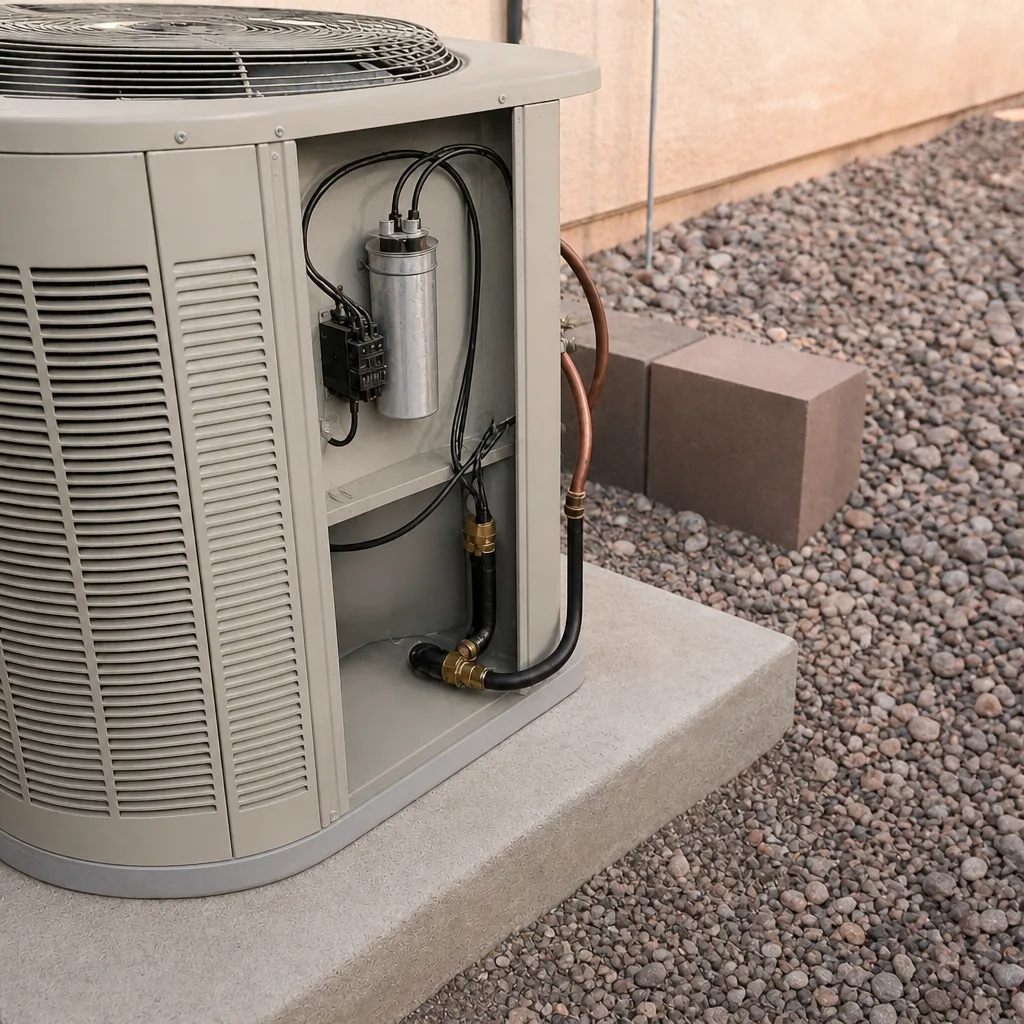
The stop point is clear: anything involving the electrical panel beyond flipping a breaker, refrigerant lines, gas piping, the compressor, or the heat exchanger is off-limits. Refrigerant is handled under EPA regulations, and high-voltage capacitors hold a lethal charge even after power is off. A contractor we won’t name once told a Boulder City homeowner to swap her own capacitor. That’s how dangerous and careless advice spreads. Call us for that work. Our technicians carry up to 8 years of experience and handle it safely.
What to Tell a Technician So They Arrive With the Right Parts
Here’s the detail that saves you money. A technician who knows what failed before leaving the shop brings the part. A technician who arrives blind has to diagnose, then order or fetch the part, then come back. That’s two trips billed as one job. Give us this information on the call and we’ll bring what we need.
- Brand and model. The data plate on the outdoor unit or furnace tells you. Write it down. We’re trained on Carrier, Trane, Lennox, Goodman, Rheem, York, Daikin, Bryant, and American Standard.
- The exact symptom and when it started. “No cooling since Tuesday” tells us less than “the outdoor fan runs but the compressor doesn’t kick on.”
- What you already checked. Filter, breaker, thermostat. Say what you tried and what it did.
- Whether it’s run once, twice, or not since the last visit. Repeat failures are worth knowing upfront.
- Any sounds, smells, or water you’ve noticed. A hiss, a burning smell, or water pooling are diagnostic clues we take seriously.
In our years of Boulder City calls, a homeowner who came prepared cut the odds of a second visit dramatically. That’s part of why our AC repair and installation work in Boulder City is aimed at a one-visit fix whenever the problem allows.
Telling a Refrigerant Leak, a Frozen Coil, and a Dead Compressor Apart
These three problems feel similar from the thermostat but look very different in the details. You don’t need gauges to tell them apart. You need observations.
- Refrigerant leak. Symptoms include ice on the indoor coil plus warm air at the registers, and the system runs nonstop without cooling. Sometimes you’ll hear a faint hiss or see oily residue on the copper lines at the outdoor unit. It starts slow and gets worse over weeks.
- Frozen coil. Clearly visible ice on the indoor coil or the refrigerant lines, often with liquid draining out when it melts. This is usually an airflow or refrigerant problem underneath, not a failure of the coil itself. Run the fan only (not COOL) to thaw it, then check the filter.
- Dead compressor. Outdoor unit running with no cooling, compressor not starting, sometimes a breaker that trips repeatedly, or a total silence at the outdoor unit even with the thermostat calling. A loud hum that ends with a click and no start is a capacitor or compressor issue.
Between the three, a leak and a frozen coil look closest. Here’s the tell: a frozen coil thaws and refreezes based on cycles and airflow. A leak gets steadily worse no matter what you do. That difference alone is worth telling us about. The heat pump and mini-split work in Boulder City leans on this same diagnostic thinking, since heat pumps freeze in winter and leak in summer.
Common Misdiagnoses and the Questions That Expose Them
We’ve seen homeowners pay for unnecessary repairs, and it usually comes down to a technician who jumped to a part before finishing the diagnosis. A few questions catch that pattern before the invoice does.
- Replacing a compressor when the real problem is a capacitor or contactor. Ask: “Did you check the capacitor and the start components first?” A dead compressor is rare and expensive. Those two parts fail in a few minutes each.
- Topping up refrigerant without finding the leak. Ask: “Where’s the leak, and are you going to fix it?” Refrigerant doesn’t evaporate on its own. If a system is low, it leaked. Adding refrigerant without fixing the leak means it will leak again.
- Blaming a thermostat for a system-wide failure. Ask: “How did you verify it’s the thermostat and not the control board?” A quick wire-jumper test verifies it.
- Replacing a whole coil for a dirty one. A coil can be cleaned. Ask: “Is cleaning an option for this coil?”
- “Your furnace needs replacing” after a failed ignitor. Ignitors are inexpensive parts. Ask what parts were tested, not what failed.
Boulder City’s older homes vary widely in equipment vintage, and we’ve seen this on systems from the 1990s still running alongside newer installs. A spare ignitor, a spare capacitor, and a spare thermostat wire are cheap insurance. Bring a second opinion on any written estimate; ours accepts one for free.
Commercial and Light-Commercial Problems
Commercial systems fail differently. Where a house has one furnace and one condenser, a light-commercial building has multiple zones, economizers, and controls that affect each other. The same method applies, just with more moving parts.
- Rooftop units (RTUs). Check the economizer damper, the belt, the filter, and the condenser coil. A dirty economizer damper will draw in hot outside air and mask the actual cooling system as fine.
- Split systems serving multiple zones. A zone valve stuck closed makes one office hot and the rest comfortable. That pattern usually points at controls, not refrigerant.
- Building-wide no-cooling. Check the roof breakers and the main disconnect before assuming compressor failure. Commercial rooftops often trip a breaker after a long hot week.
- Refrigerant circuits shared. Multiple RTUs on one circuit mean a compressor trip on one unit can cascade. Diagnose one unit at a time.
For a light-commercial property, put a written schedule together: what to check weekly (belt tension, filter pressure drop), what to leave to a technician monthly or quarterly. Ours tend to be simple lists rather than elaborate programs, and that’s on purpose. Straight talk about repair versus replace is a better deal than a contract that adds line items you didn’t ask for.
Common Mistakes to Avoid
- Resetting a tripped breaker more than twice. A breaker is a safety device, not a repair. If it trips again, the fault underneath is still there, and the next try may not be free.
- Topping up refrigerant without fixing the leak. Refrigerant doesn’t leave a closed system on its own. A recharge without a leak repair just pays for the same problem again next season.
- Running the AC with a frozen coil. Frozen coils on a system still calling for cool means ice builds until something is damaged. Turn the thermostat to OFF or FAN-only and thaw it.
- Ignoring the filter until a breakdown. In Boulder City, clogged filters kill more systems in July than any single component. A quarterly filter change is the cheapest maintenance on the list.
- Calling a “how much to replace” quote before the problem is diagnosed. Replacement is the right call sometimes. A capacitor or contactor is not the reason for it.
- Accepting a phone diagnosis. A technician who quotes a price over the phone and won’t come look at the machine isn’t diagnosing. They’re guessing at your expense.
- Dismissing the second trip. A breaker that trips once is a warning. Twice, it’s telling you what’s coming. Call before it fails completely.
See the difference
 Before
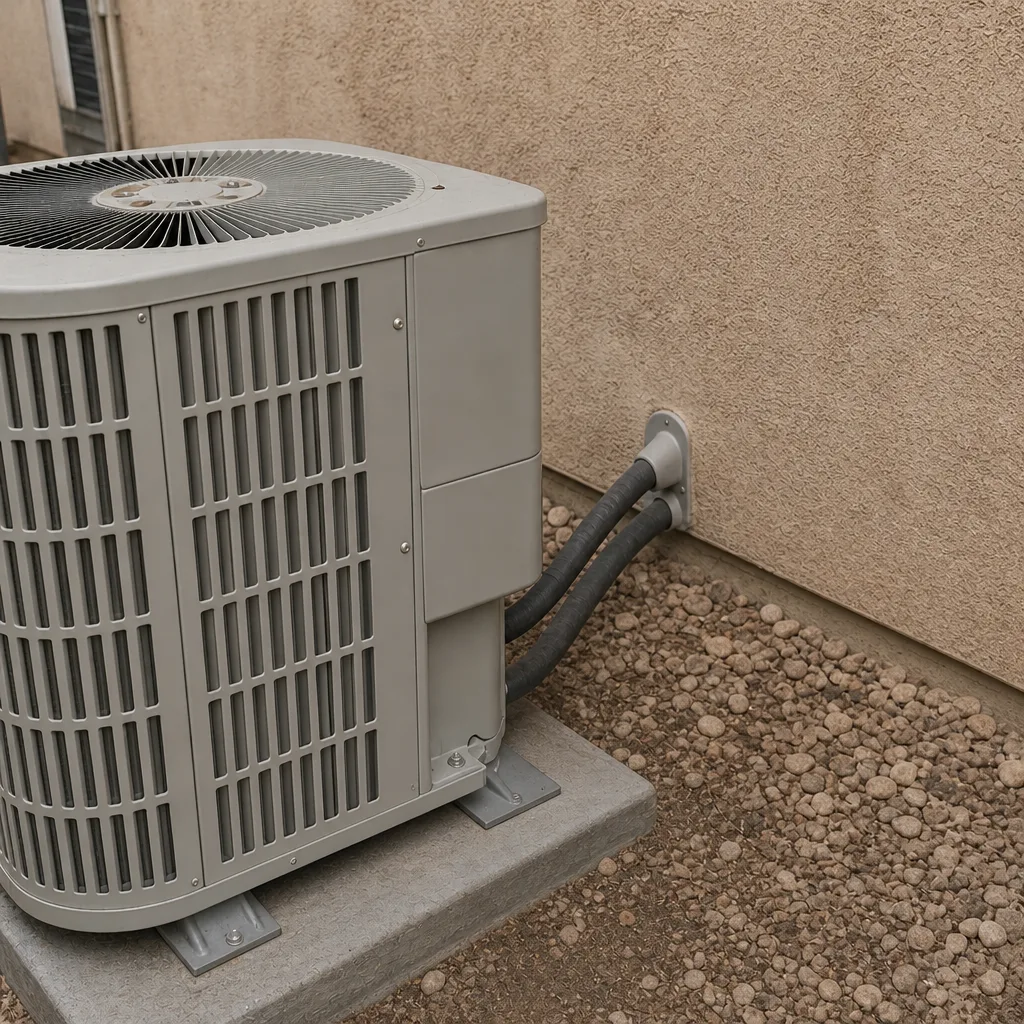 After
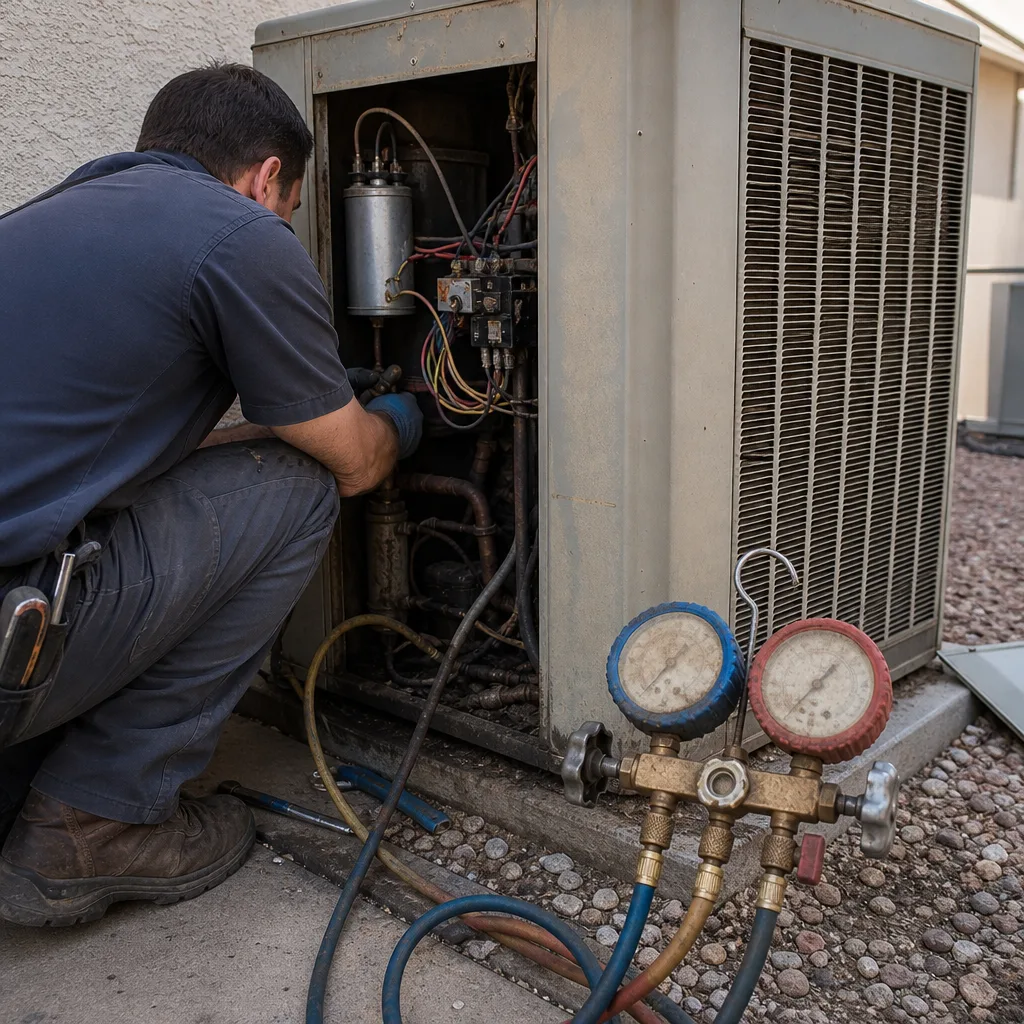 Before
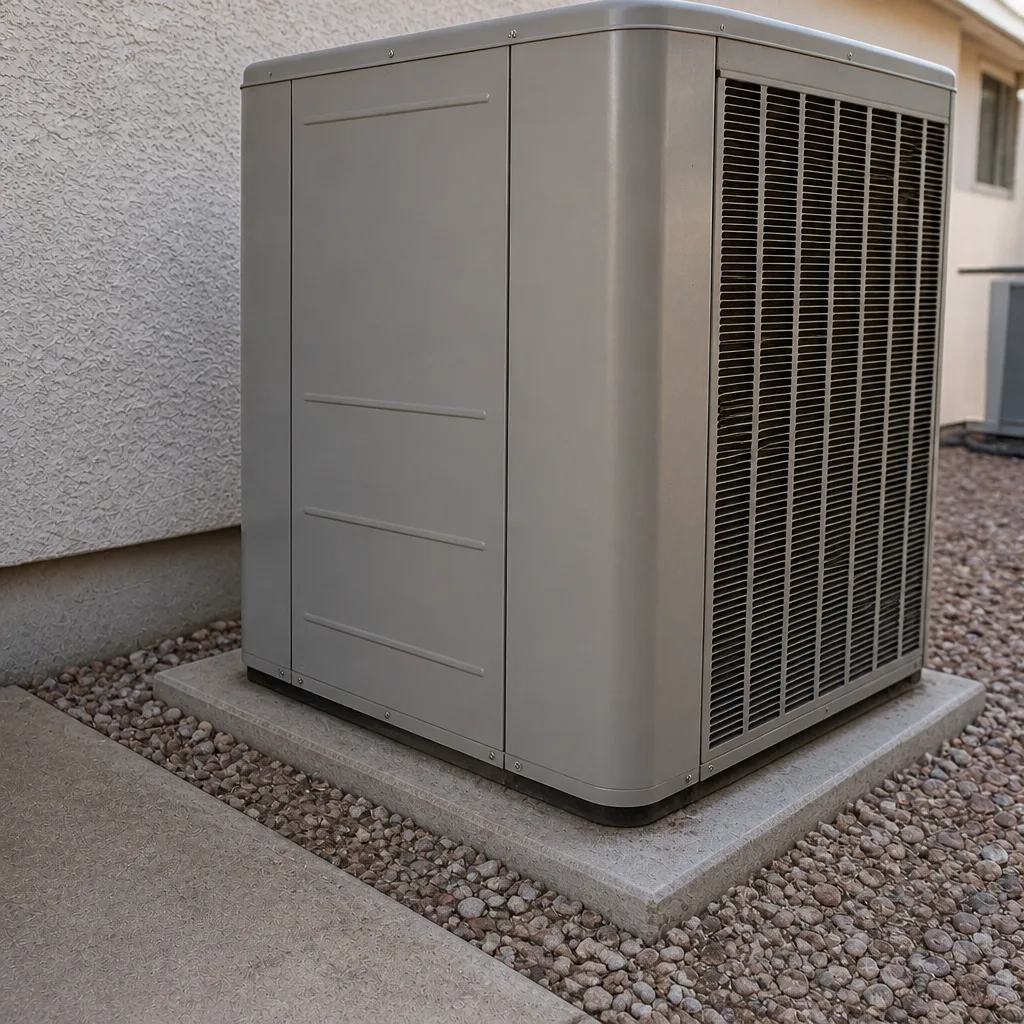 After
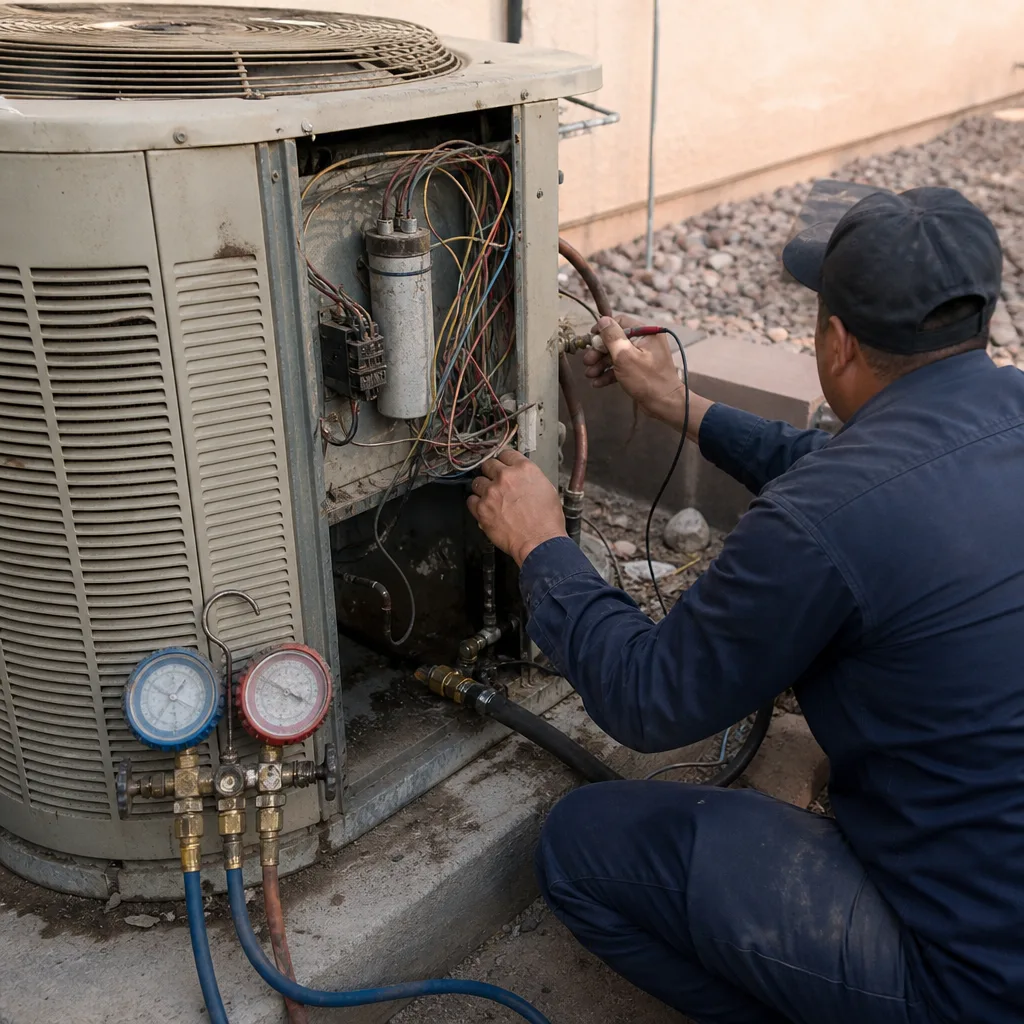 Before
 After
When to Call a Professional
Call a licensed technician when the problem involves refrigerant, gas, high-voltage electrical components, or your breaker tripping more than once. Also call if the system won’t respond to the basic reset sequence above, if you smell gas or burning, or if any symptom points to the heat exchanger. A cracked heat exchanger can leak carbon monoxide into the home, and it is not something to poke at with a flashlight and a guess. Commercial rooftop systems and any job that involves a control board or compressor deserve a professional too. Fireside Heating & Air Co. Boulder City offers free estimates in Boulder City. Call (844) 312-0133 and we’ll talk it through with you. We answer the phone with a live person, every time.
Frequently Asked Questions
A breaker that trips once may have tripped from the heat load on a 110-degree afternoon. A breaker that trips twice is telling you something is failing: a shorted compressor, a bad capacitor, a bad contactor, or a wiring problem. Stop resetting it and call a technician to test the components. That’s a diagnosis question, not a fuse question.
Yes, three things: the breaker, the condensate float switch, and the air filter. Anything involving refrigerant, gas, the compressor, the heat exchanger, or capacitors inside the unit is off-limits for a homeowner. Capacitors hold a lethal charge after power is cut. Call us for the rest, and we’ll bring what’s needed.
A frozen coil shows visible ice on the indoor coil or refrigerant lines, and often a puddle when it thaws. A system that’s simply not cooling runs and blows warm air with no ice. If you see ice, switch the thermostat to FAN-only to thaw it, then check the filter. If it freezes again after a thaw, it’s likely a refrigerant or airflow problem that needs a technician.
A click followed by no flame and a shutdown after a few seconds is usually a dirty flame sensor or a failed ignitor. Both are inexpensive parts. The pattern you describe helps the technician arrive with the right one. Tell us the brand, the model, and how often the click sequence repeats when you call.
Brand, model, the exact symptom, and what you’ve already tried. Mention whether it’s the first time or a repeat, and whether you noticed any sounds, smells, or water. Specific detail on the front end is the difference between one visit and two. That’s the whole reason to keep it written down while you diagnose.
Mostly, with more zones. On a light-commercial rooftop, check the economizer damper, belt, filter, and coil first. A stuck damper drawing outside air can look like a failing compressor. Call us and we’ll diagnose a unit at a time rather than assume the worst.
For system-specific service, start with our Boulder City home page or reach the team directly. If your written estimate needs a check, we’ll take a free second opinion on any written estimate.
The Bottom Line
Most HVAC emergencies come down to one of six failures, and the first three are within a homeowner’s reach: breaker, condensate drain, and filter. Work through the sequence calmly, note what you find, and call when you reach the stop point. The information you gather, from brand and model to what you tried and what it did, is what turns a two-trip repair into a one-visit fix. That specificity is the real money saver. Boulder City homeowners who run this checklist come to the call prepared, and we show up with the part already in hand. Done right, or we make it right, in writing for 90 days. Straight talk about repair versus replace, and a square deal on every invoice.
Call Fireside Heating & Air Co. at (844) 312-0133 for a free estimate. We answer live, day or night, and the price quoted is the price paid.
Written by the team at Fireside Heating & Air Co. Boulder City.