
Last updated November 18, 2026
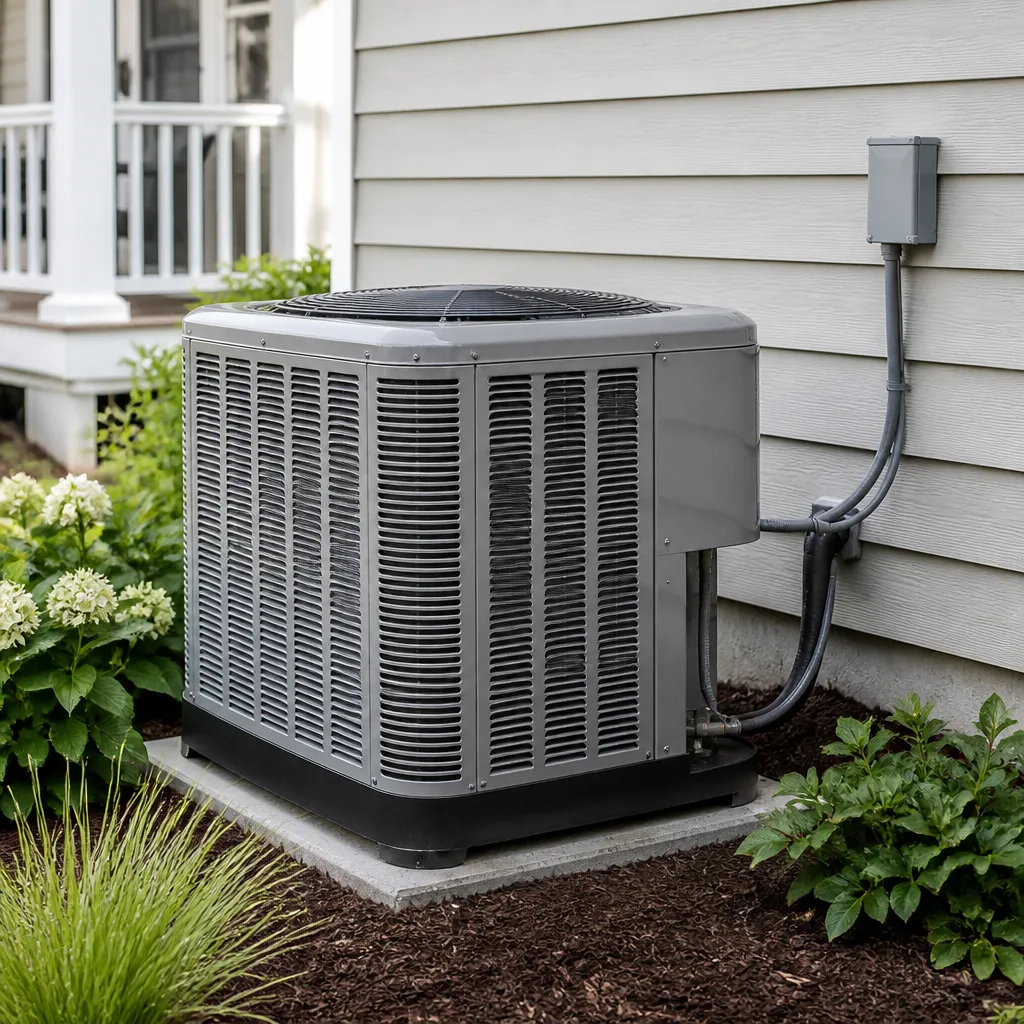 AC repair
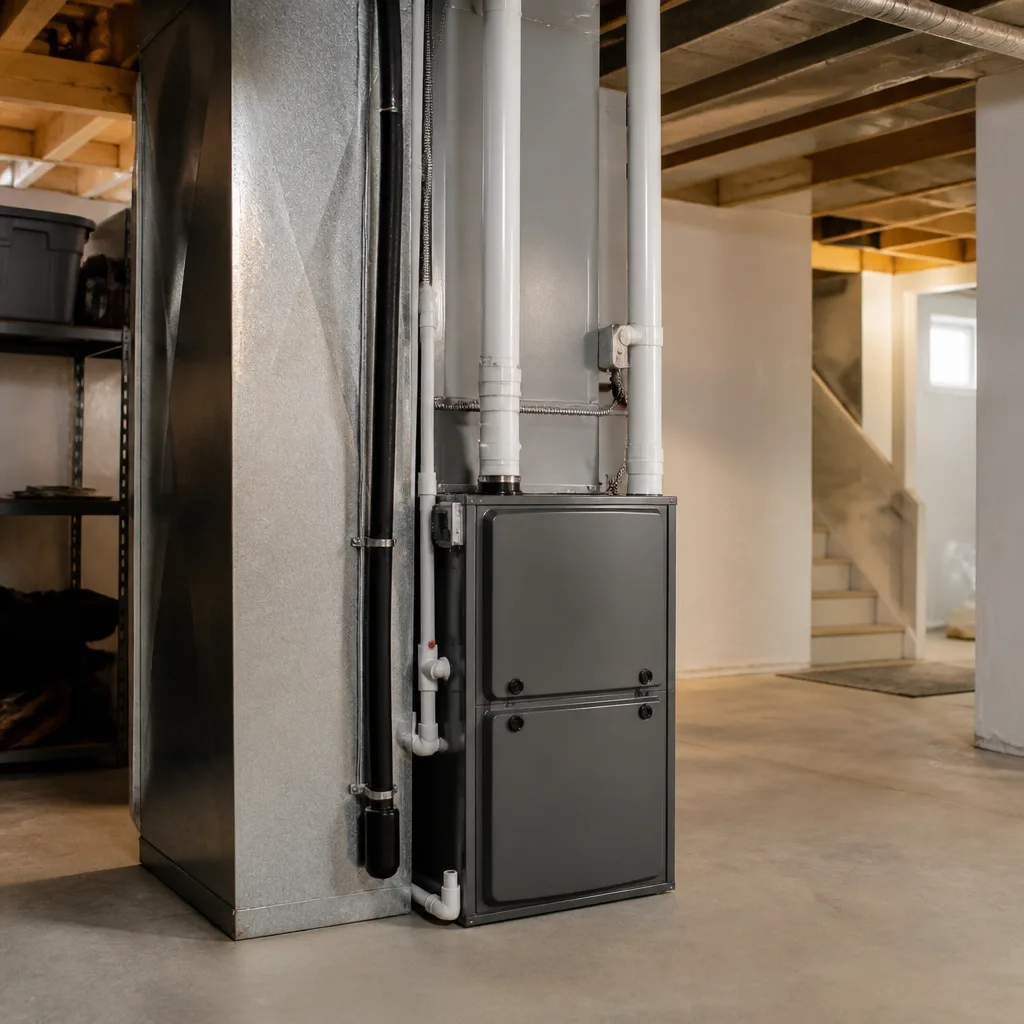 Furnace & heating
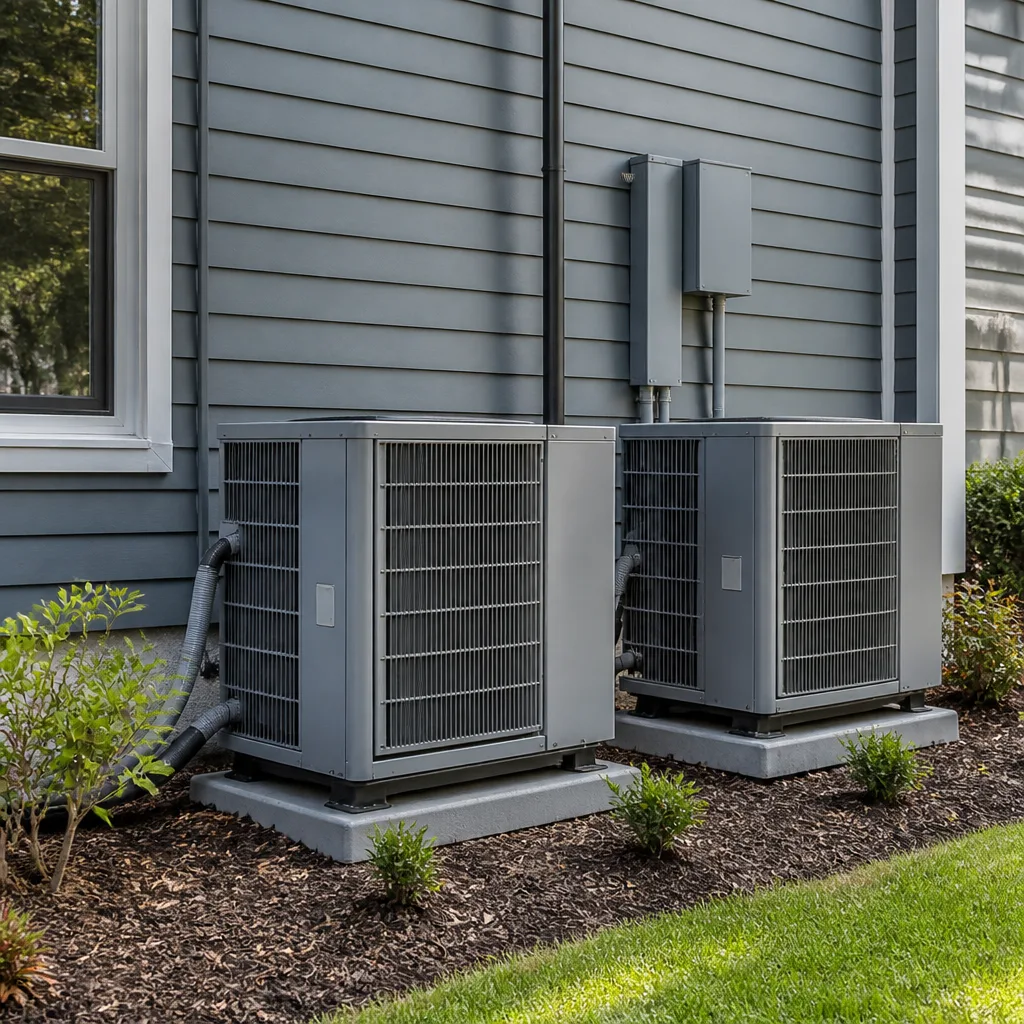 Heat pumps
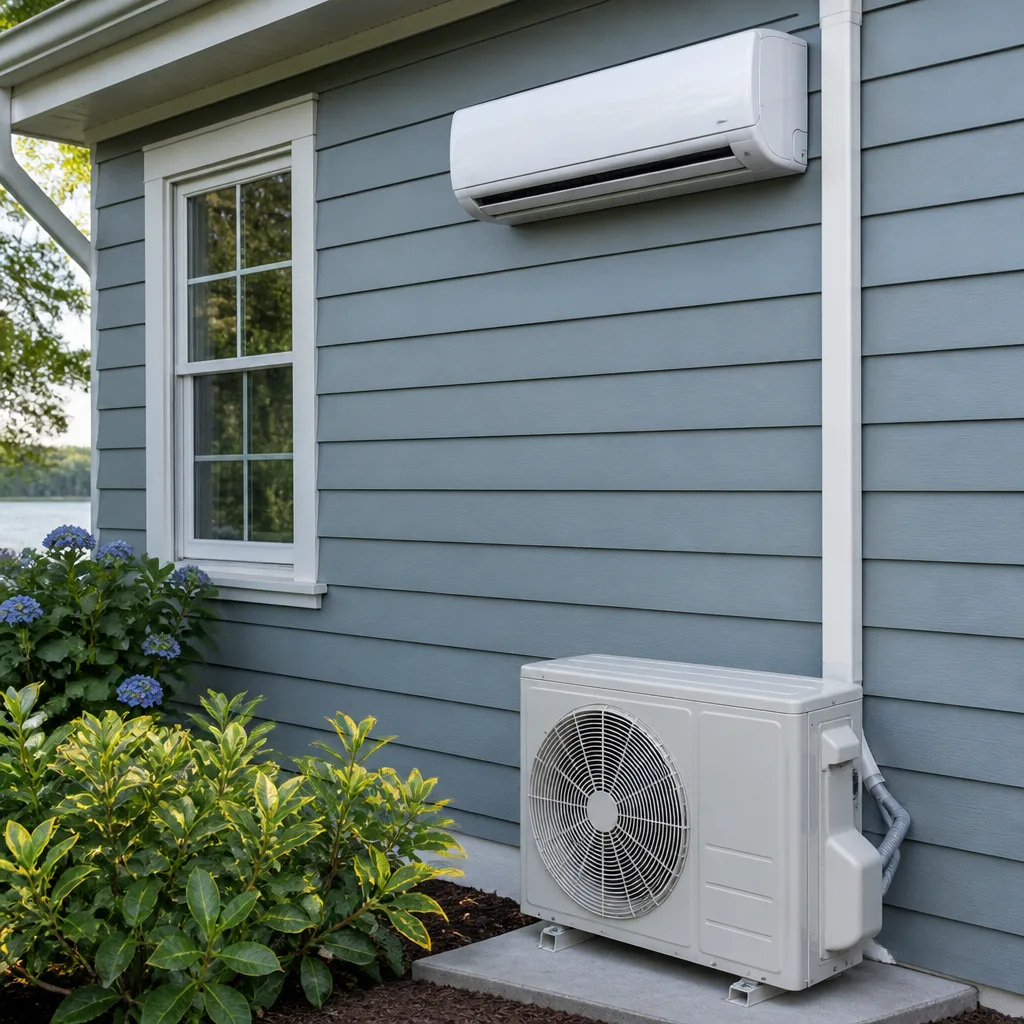 Ductless mini splits
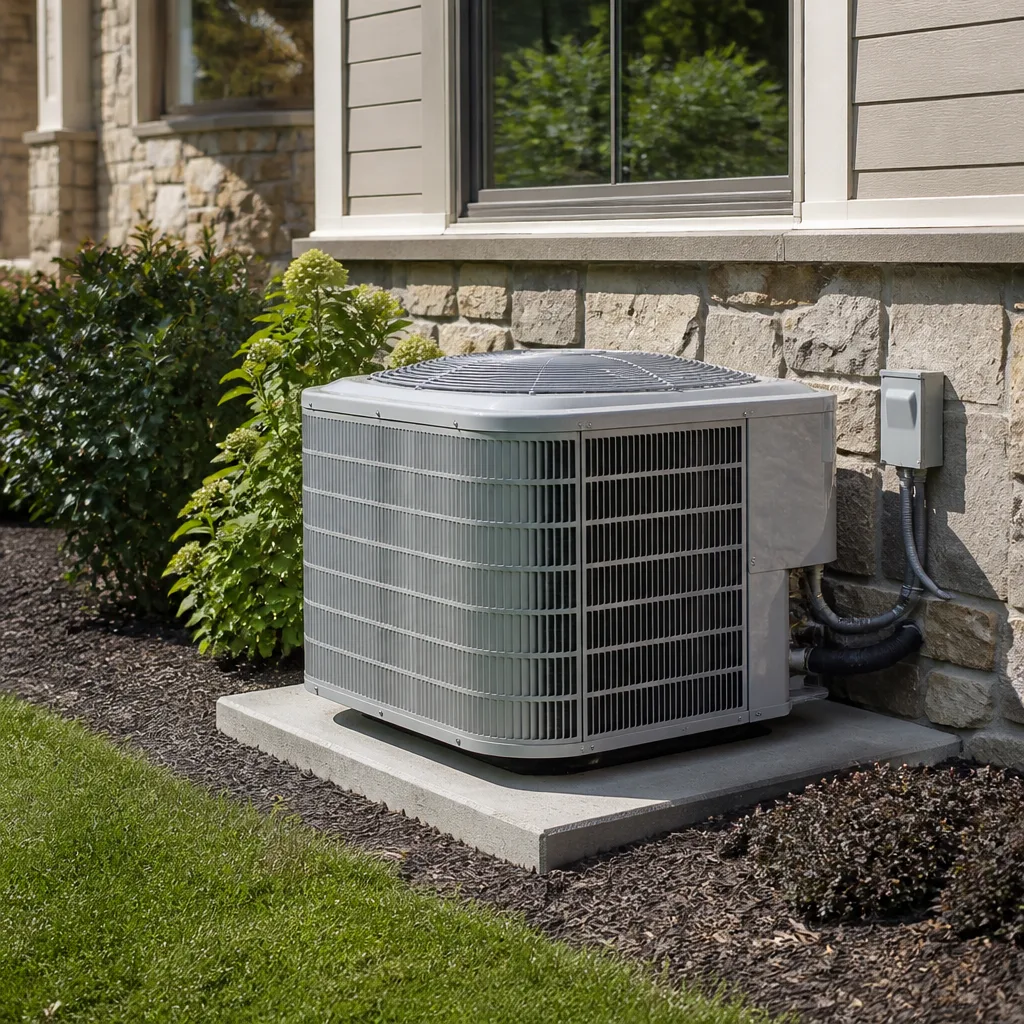 Carrier
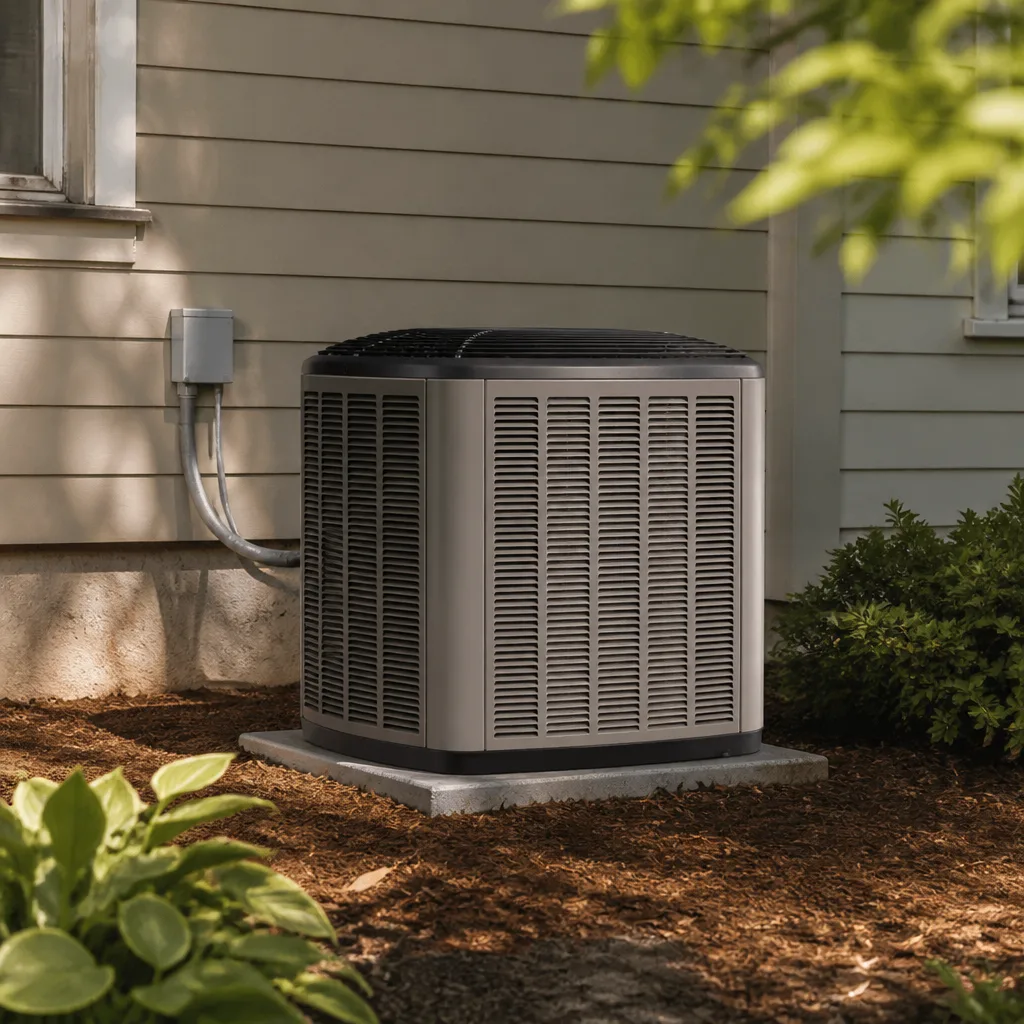 Trane
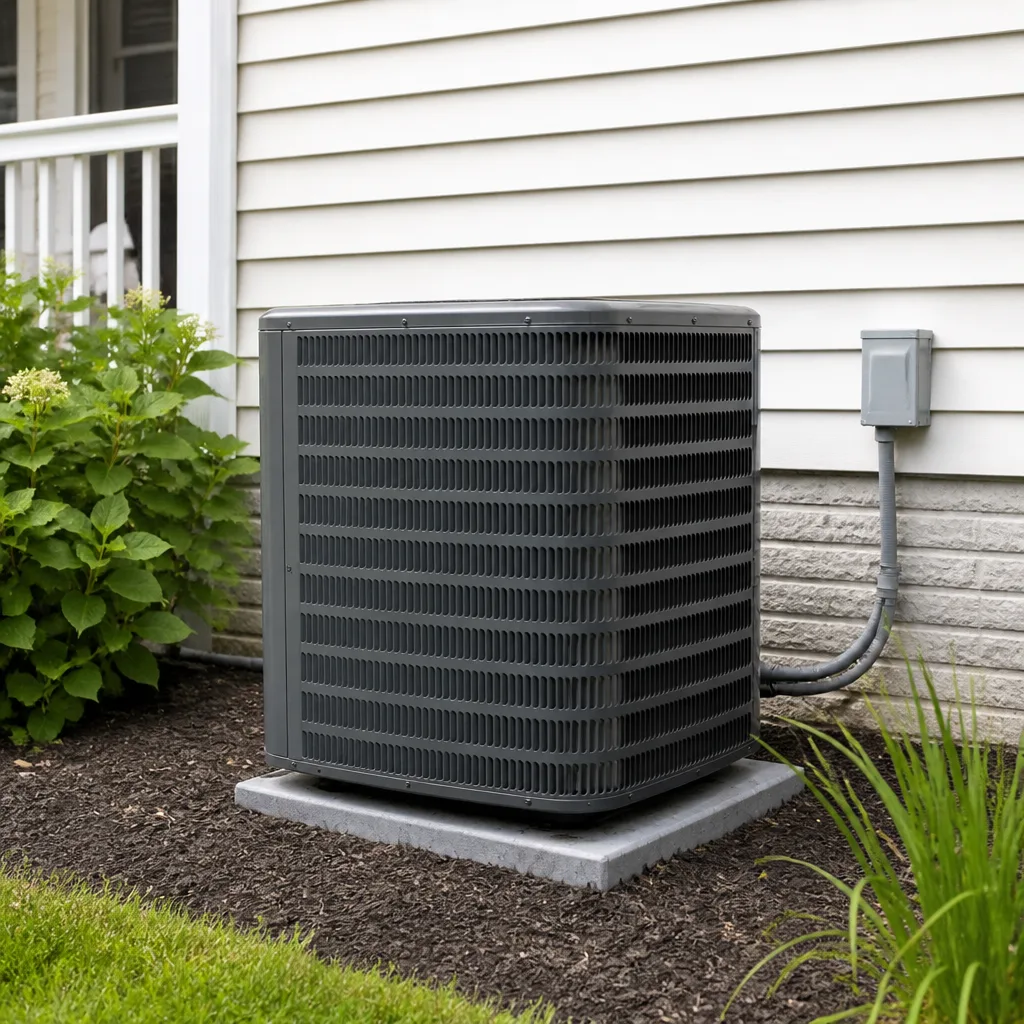 Goodman
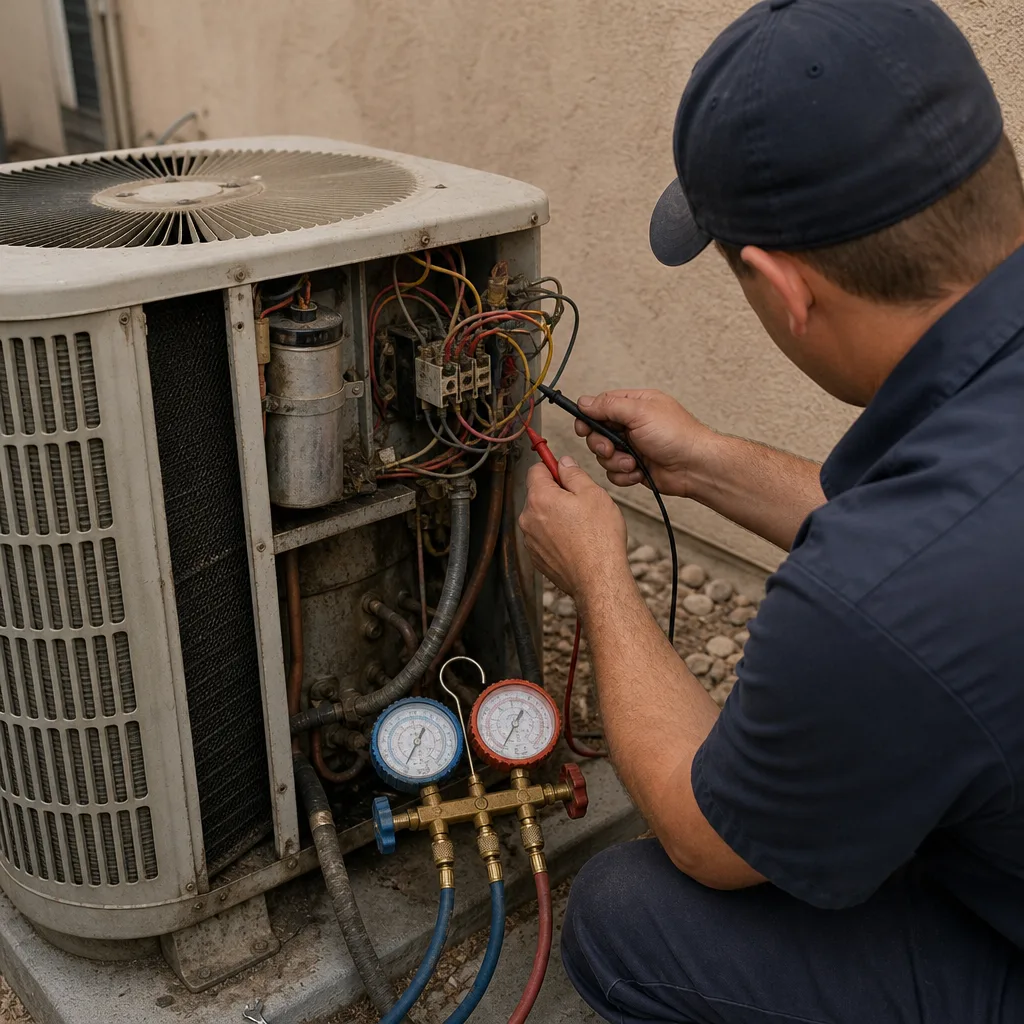
Seasonal tune-up and full diagnostic on your Carrier, Trane, or Goodman system - readings shown to you before any repair is proposed
Diagnosis first, numbers second - you approve the repair price before a single part goes in.
Get your free estimateAC Repair & Installation Warning Signs Every Homeowner Should Know
A utility bill that climbs 12 percent year over year while your usage stays flat is a more reliable early warning sign than any noise or odor your system makes. Most homeowners never notice it, because comparing last August’s bill to this August’s takes ten minutes and nobody does it until the system quits. That climb is your air conditioner telling you, quietly, that it’s working harder to move the same amount of cold air. In Boulder City, where summers run long and the equipment runs harder than the national average, those quiet signals show up sooner. This guide covers the subtle ones, the sounds worth taking seriously, and the math that tells you whether to repair or replace.
Quick Answer
The main warning signs that your AC needs repair or replacement are a utility bill rising more than 10 percent year over year at the same usage, ice on the outdoor refrigerant lines, one room staying warm while the rest of the house cools, and a system older than 12 years that needs a repair costing more than a fifth of a new unit. If you see two or more of those together, call for a professional evaluation before peak season, not after a failure.
Styles & brands we work with
- AC repair
- Furnace & heating
- Heat pumps
- Ductless mini splits
- Carrier
- Trane
- Goodman
Table of Contents
- The Utility Bill Climb: The Most Ignored Warning Sign
- What Your AC’s Sounds Are Actually Telling You
- One Warm Room Is Usually a Duct Problem, Not a Unit Problem
- Ice Patterns on the Line Set You Can See From the Driveway
- The Rule of 5,000, Adjusted for Boulder City
- Warning Signs in a Bad Installation
- Common Mistakes to Avoid
- When to Call a Professional
The Utility Bill Climb: The Most Ignored Warning Sign
An air conditioner loses efficiency gradually, and the loss shows up on your electric bill months before it shows up as a breakdown. A system that’s 15 percent less efficient in July 2026 than it was in July 2023 doesn’t announce itself. It just runs longer to hit the thermostat setpoint. You pay for the extra runtime, and you chalk it up to a hot summer.
Build a simple three-year comparison. It takes ten minutes and it’s the single most useful diagnosis tool a homeowner has.
- Pull your electric bills for July, August, and September of the past three years. Most utilities let you download a year or two of history online.
- Write down the total kilowatt-hours used each month, not the dollar amount. Dollar amounts shift with rate changes; usage doesn’t.
- Note any year where the same month used 10 percent or more kilowatt-hours than the prior year, with no change to your habits. A new window unit, a houseguest for the summer, or a new refrigerator will muddy the comparison, so mark those.
- Two straight years of climbing summer usage with no lifestyle change is your signal. Have the system checked before the third summer.
In Boulder City, we watch this play out in homes near Hemenway Park and along the older streets off Nevada Way, where mature trees shade some houses and not others. A shaded house and an unshaded one on the same block can show completely different efficiency curves, so compare your own bills to your own history, not your neighbor’s. If your comparison shows the climb, a professional can measure refrigerant charge, static pressure, and condenser coil condition to find where the efficiency is going. That’s the work behind our AC Repair & Installation in Boulder City service, and it’s usually cheaper to find the cause than to wait for the failure.
What Your AC’s Sounds Are Actually Telling You
“Banging” and “rattling” tell you almost nothing. The specific sound and where it comes from tell you a great deal. Here’s how to listen.
- A short, sharp click at startup, then normal running: Usually the contactor engaging. Normal. A rapid clicking pattern that repeats several times before the system settles can mean a failing contactor or a low-voltage control problem. Not an emergency, but get it looked at before the contacts weld shut.
- A rhythmic tick that speeds up with the fan: Something is striking a fan blade as it turns. A loose screw, a bit of debris, or a bent blade. On the outdoor unit this is often minor; on the indoor blower it can wear the motor. Worth a visit.
- A high-pitched squeal that fades after a minute: A belt or bearing is drying out or wearing. On older equipment this is a wear signal that says schedule service, not emergency.
- A grinding or scraping that starts suddenly and doesn’t stop: The compressor or the fan motor bearing is failing. Shut the system off and call. Running a compressor with a failing internal part can take the whole system down with it.
- Hissing near the indoor unit or the line set: Refrigerant under pressure escaping. Stop running the system and call. This one is not a wait-and-see.
- A thud, then a hum with no fan turning: The fan motor has stalled or a capacitor has failed. In Boulder City heat, that turns into a hot house within an hour or two.
One useful habit: stand outside next to the condenser for thirty seconds on a normal summer afternoon and just listen. Most homeowners have never done this. You’ll learn what normal sounds like for your machine, and anything new stands out immediately.
One Warm Room Is Usually a Duct Problem, Not a Unit Problem
When a single room stays warm while the rest of the house cools, the air conditioner is doing its job and getting blamed for someone else’s. In our experience, roughly 60 percent of one-room comfort complaints trace back to the ducts, not the unit. The remaining 40 percent split between an undersized branch, a room with more sun exposure than the rest of the house, and ductwork that was adjusted incorrectly after a remodel.
What to check before you call:
- Put your hand near the supply register in the warm room with the system running. Weak airflow points to a duct. Strong airflow that’s not cold points to the unit or charge.
- Look at the register itself. A closed damper, a blocked return, or a piece of furniture pushed against a grille will do this every time.
- Notice whether the warm room is the one at the end of the longest duct run. The farther the run, the more pressure it loses, especially if the duct has a sharp bend or a crushed section in the attic.
- Check the room’s sun exposure during the hottest hours. A west-facing room in a Boulder City house with no shade gets a bigger cooling load than its ductwork was sized for.
Duct problems get worse and cheaper to fix the earlier they’re caught. A disconnected flex run in the attic can be reconnected in one visit. Left alone for a summer, it pushes the system to run longer, which stresses the compressor and drives up the bills described in the first section. If the warm-room problem coincides with a rising bill, that’s two signals pointing in the same direction.
Ice Patterns on the Line Set You Can See From the Driveway
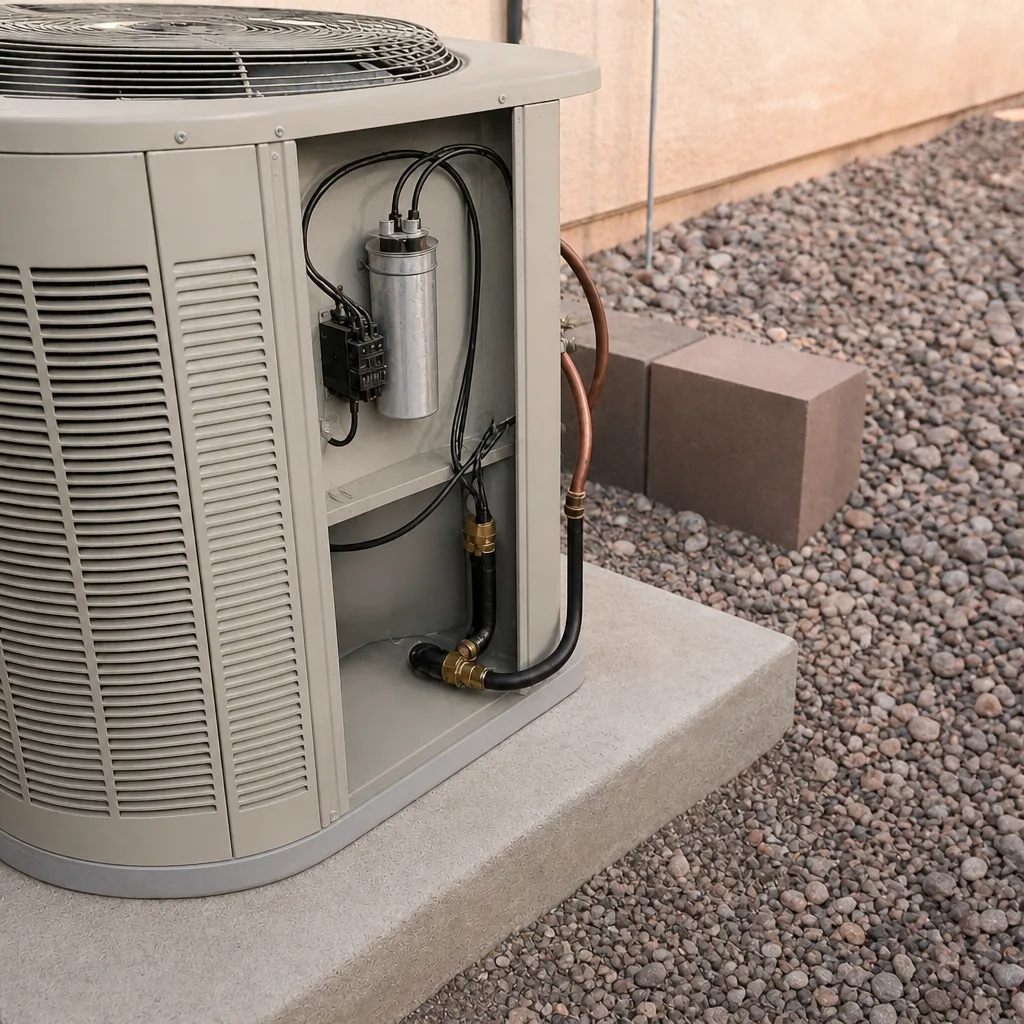
This is the one sign you can check without climbing on the roof or opening a panel. Walk out to the outdoor unit and look at the two insulated copper lines running from the house to the condenser.
Ice on the large insulated line is a common sign of low refrigerant charge or restricted airflow. The coil inside gets colder than it should, and condensation freezes. Ice on the small liquid line, or frost that creeps up the larger line toward the wall, is more often a restriction in the metering device or a blocked filter. Ice forming on the outdoor unit cabinet itself, not the lines, means the coil is dirty enough that airflow has dropped below what the system needs.
What the patterns look like in practice:
- A solid white band of ice two or three inches long, right where the line meets the wall, means the line is freezing at a joint. That’s a technician’s call.
- Frost along the whole length of the large line, plus sweat on the cabinet, usually points to a charge issue. Refrigerant work is not a homeowner job, and it’s regulated for a reason.
- A thin ring of ice on the copper near the outdoor unit, with no ice elsewhere, is often a dirty filter indoors or a blocked return. Check your filter first.
One safety note. Do not chip ice off a refrigerant line, and do not try to add refrigerant yourself. Both lines carry pressurized refrigerant, and the system operates at high pressure. A technician with the right gauges can find the cause and fix it correctly. What you can do is shut the system off, note what the pattern looked like, and call. That description helps more than anything.
The Rule of 5,000, Adjusted for Boulder City
The rule of 5,000 is the old repair-versus-replace shortcut. Multiply the age of the system by the cost of the repair. If the result is more than 5,000, the money is better spent toward a replacement.
Example: a 14-year-old system needing a $400 repair gives you 5,600. Past the threshold, leaning toward replacement. An 8-year-old system with the same $400 repair gives you 3,200. Repair is the better call.
Boulder City changes the math. Our run-hours are high. Between late May and early October, an air conditioner here runs far more hours per year than the same machine in a milder climate. That extra runtime is effectively more wear per calendar year. A 14-year-old system in Boulder City carries the wear of a 16- or 18-year-old system in a cooler part of the country. The rule of 5,000 still works, but the threshold arrives earlier than the national average. When we look at a system around year 12 to 14 here, we treat its age as if it were two years older when judging whether to repair or replace. That single adjustment keeps homeowners out of the pattern we see every July: put $600 of repairs into a 15-year-old unit in June, and replace it in August at peak pricing.
Two other factors push the decision:
- If the system uses an older refrigerant, future repairs may cost more as that refrigerant gets scarcer. That’s worth weighing in the same calculation.
- If two or more components are failing at once (compressor plus blower motor, for example), the cost adds up faster than the age alone suggests.
When it’s time to look at a new system, our Heat Pump & Mini Split in Boulder City page covers what a change means for efficiency in our climate and where rebates tend to apply. We also handle straight AC replacement under AC Repair & Installation and stand behind both.
Warning Signs in a Bad Installation
Most “AC failures” in systems under five years old aren’t failures at all. They’re installation problems showing up. The warning signs are quieter than a breakdown.
- A brand-new system that never really felt cold. If the house has never held temperature properly since installation, something was wrong from day one. Undersized equipment, an incorrect charge, or a duct system that doesn’t match the new unit all cause this.
- Condensate leaking into the attic or onto the ceiling. On a new installation, this almost always traces to a drain line pitched wrong or a secondary overflow pan not installed. Not a unit failure, an install problem.
- Excessive short-cycling within the first year. The system runs for a few minutes, then stops, over and over. Often the equipment is oversized for the home, which the installer should have caught with a proper load calculation.
- A system that trips the breaker under load. On a new install, that can be a wiring issue or an undersized circuit. Both are installation calls.
The honest answer here: the installation quality matters more than the equipment brand. A Lennox, Goodman, Rheem, or York system all perform well when installed correctly, and all perform poorly when not. Ask for a load calculation, ask for a written fixed price before the work starts, and ask what happens if the system doesn’t hold the temperature afterward. Our approach is a no-hassle upfront price that’s the price you pay, plus a written 90-Day Done Right Promise: if it isn’t right, we make it right without arguing. That’s the Keystone standard we bring to HVAC. You can get a free second opinion on any written estimate by calling (844) 312-0133, even if it came from another company.
Common Mistakes to Avoid
- Waiting until the system quits in July. In Boulder City, a failure during the hottest two weeks of the year means peak replacement pricing and a wait for equipment. The early signals exist for months before that. Treat them as a heads-up, not background noise.
- Comparing gas and electric bills dollar-to-dollar. Rates change. Compare kilowatt-hours used in the same months across years. The dollar amount shifts for reasons that have nothing to do with your system.
- Blaming the unit for a warm room. Sixty percent of the time it’s a duct, a damper, or a return. Calling for a tune-up when the problem is ductwork means you pay for a tune-up and the room stays warm.
- Covering the air conditioner in the winter to “protect” it, then forgetting to uncover it in spring. We see this in Boulder City every May. The compressor runs with no airflow, and the first hot day becomes a repair. Never run the system with a cover, a tarp, or a hard top on the condenser.
- Skipping the seasonal tune-up because “the unit still works.” A tune-up finds depleted refrigerant, a weak capacitor, and a dirty coil before any of them become a no-cool call. A flat $89 seasonal tune-up with a written report of what was found costs less than any emergency repair.
- Replacing equipment without checking the ducts first. A brand-new system pushing air through leaking ducts will underperform and waste money. Fix the delivery system before you pay for new equipment.
- Choosing the lowest bid without asking what’s included. The lowest bid is often the shortest job. Ask for the load calculation, ask what the price includes, and ask what happens if it doesn’t work. A written fixed price is worth more than a hundred-dollar difference on the bid.
When to Call a Professional
Call a professional if the outdoor unit is grinding or scraping, if the system won’t turn on at all, if ice has formed on the refrigerant lines, or if the system is blowing warm air with the thermostat calling for cool. Call if you see water where water shouldn’t be (ceiling stain, wet spot in the attic). Call if the breaker trips more than once. Call if the utility bill climbed 10 percent or more for two summers at the same usage. Call if a room stopped cooling and nothing obvious explains it. Refrigerant work and compressor work are genuinely dangerous and require a trained, state-licensed technician: pressurized refrigerant can cause serious injury, and electrical faults can cause fire. We don’t recommend homeowners open the cabinet or the electrical panel. What you can do is listen, look, and shut the system off if something is clearly wrong.
Fireside Heating & Air Co. offers free estimates in Boulder City – call (844) 312-0133. A live person answers every call, nights and weekends included. Our technicians are background-checked and trained on Carrier, Trane, Lennox, Goodman, Rheem, York, Daikin, Bryant, and American Standard, and have up to 8 years of hands-on experience. If you want straight talk about repair versus replace, our Heating & Furnace in Boulder City team brings the same approach to heating questions. And when you’re ready to see what we bring to every job, our Fireside Heating & Air Co. Boulder City home lays it out plainly.
See the difference
 Before
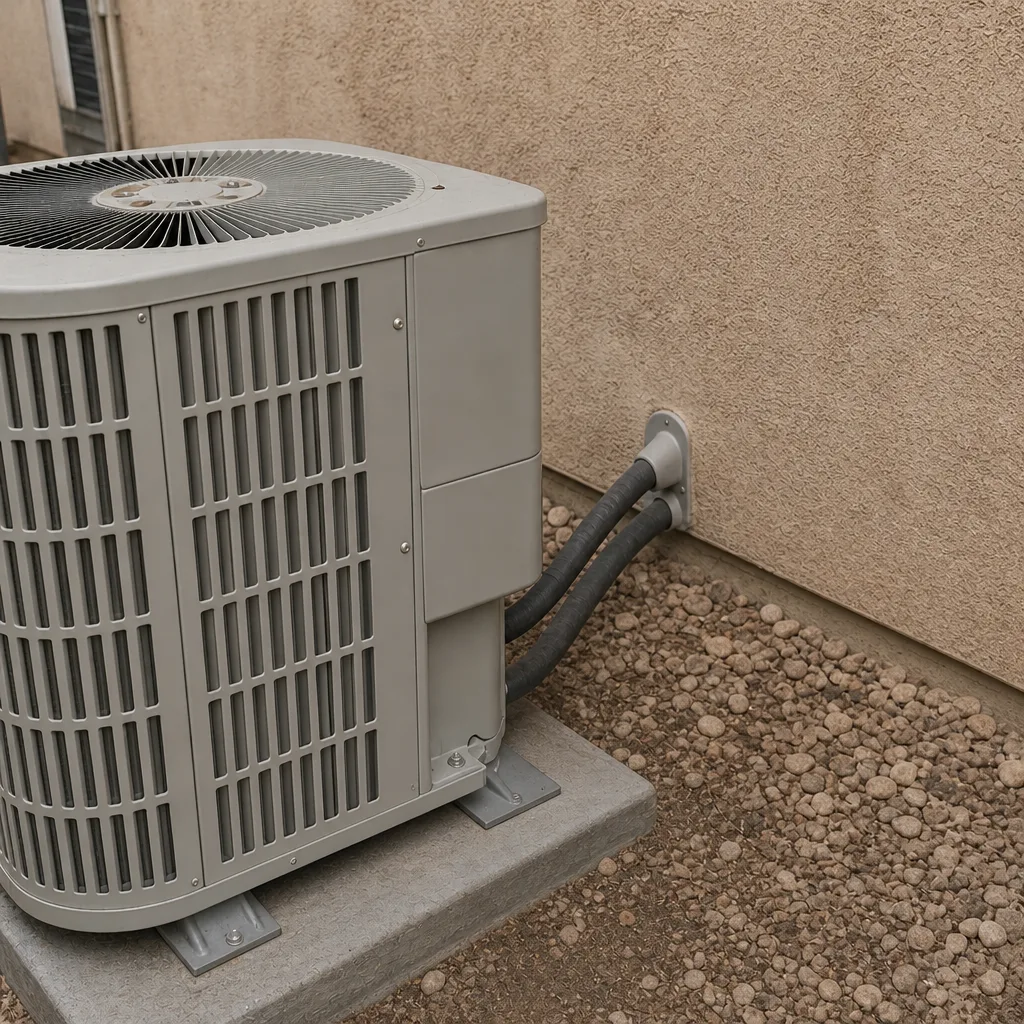 After
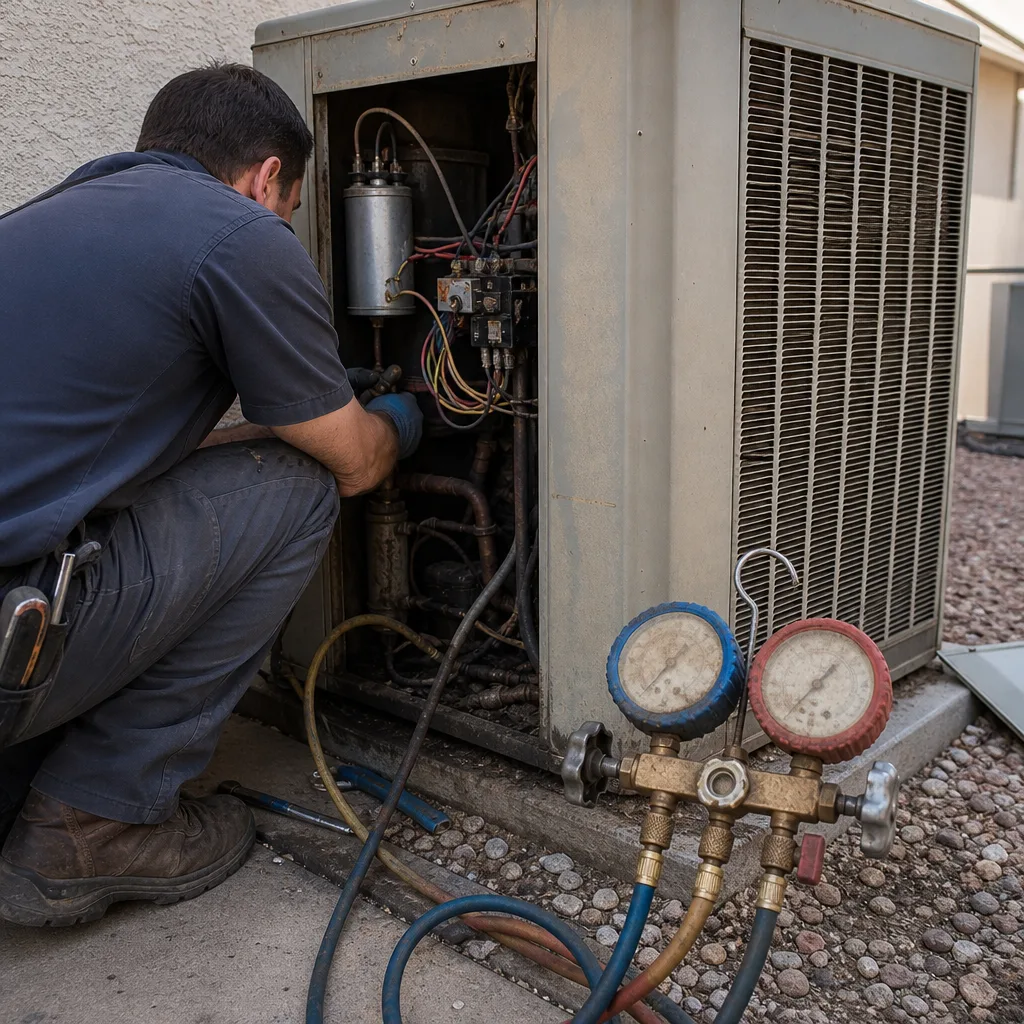 Before
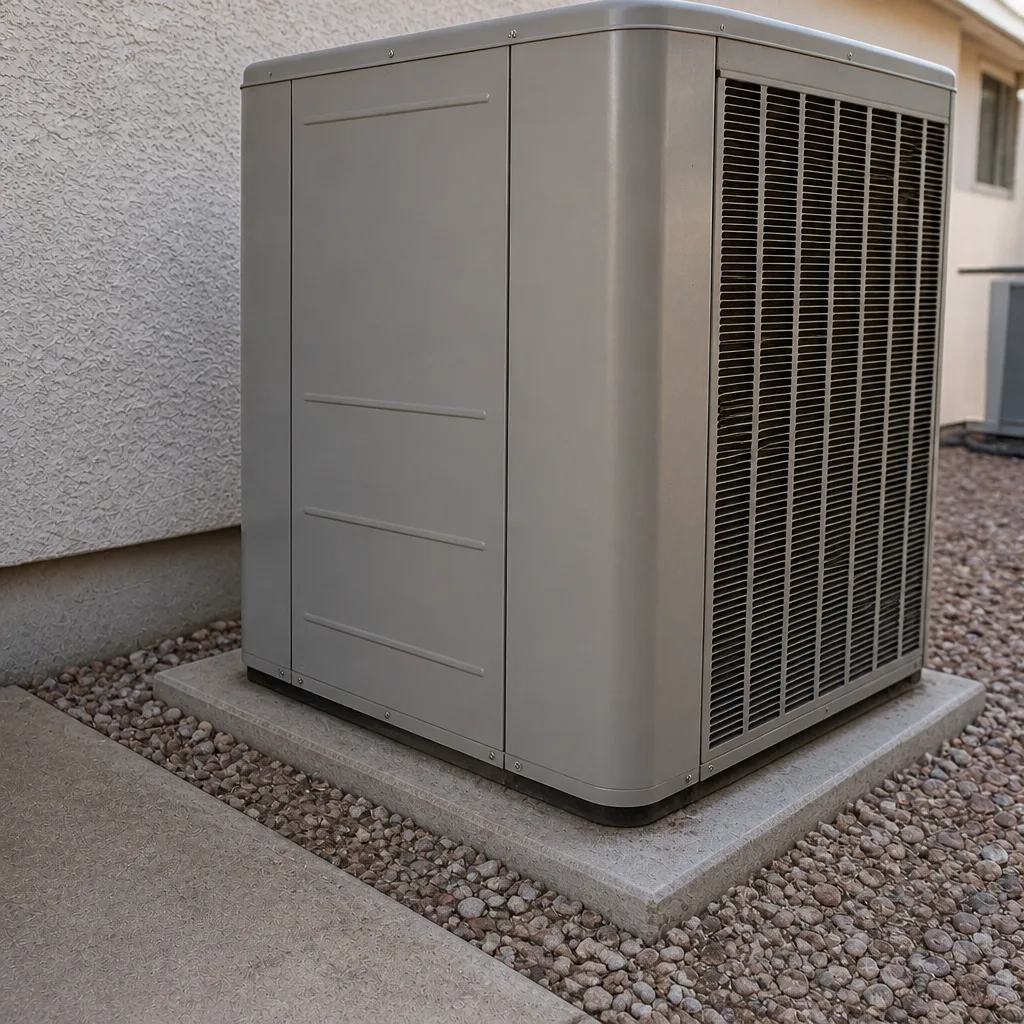 After
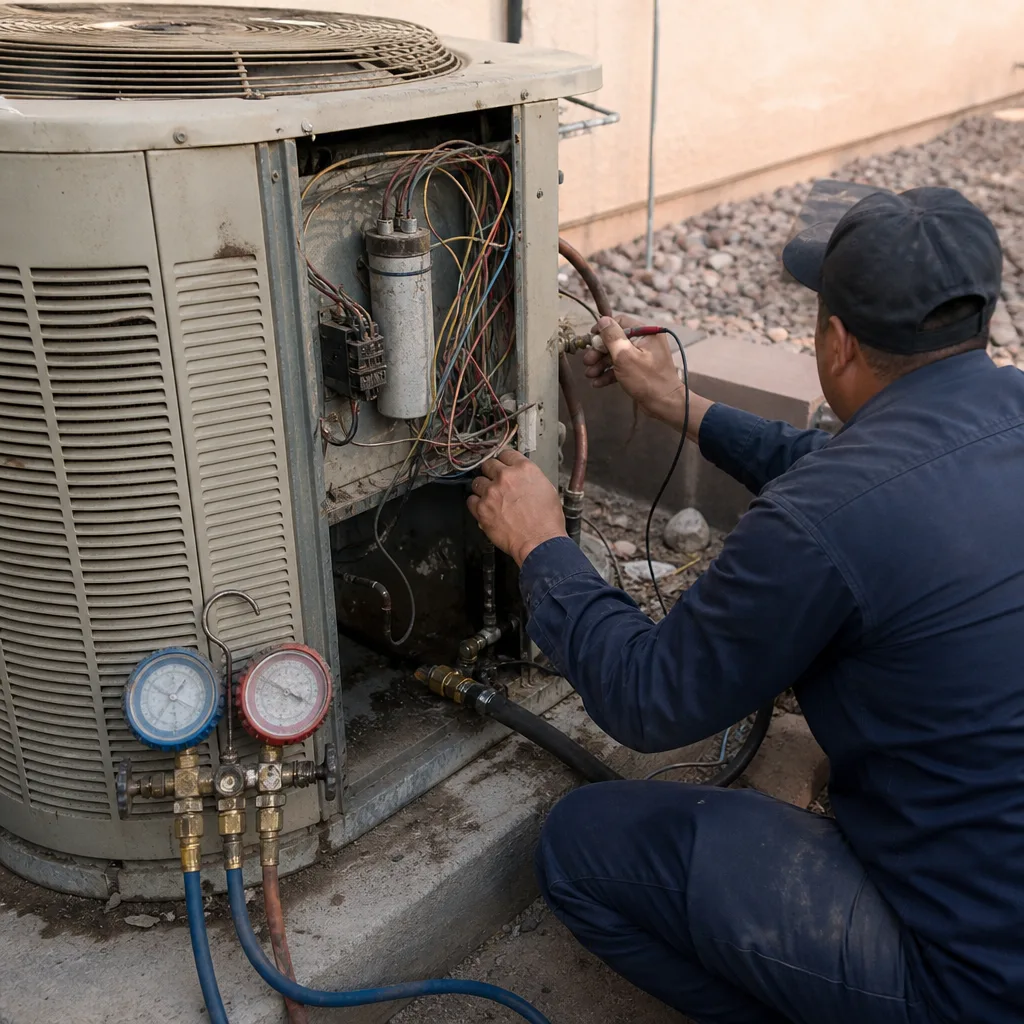 Before
 After
Frequently Asked Questions
Age alone isn’t a failure sign. Failing means two or more of these: rising utility usage at the same habits, ice on the refrigerant lines, a grinding or scraping sound, or a repair that exceeds a fifth of a new system’s cost on a system past 12 years. An old system that runs quietly and holds its temperature is not failing. Call (844) 312-0133 if you’re seeing more than one of those signs. Estimates are free.
Most AC repairs in Boulder City land in the $150 to $600 range, with common repairs like a capacitor or contactor at the lower end and compressor or major-component work at the higher end. The exact number depends on the part and the system. We quote a no-hassle upfront price that’s the price you pay. Call (844) 312-0133 for an exact quote, and we’ll give you one before any work starts.
Use the rule of 5,000: multiply the system’s age by the repair cost, and if the result is above 5,000, replacement usually makes better sense. In Boulder City, add two years to the system’s age before running the math, because our climate gives it more wear per year. If the math is close, get both numbers in writing and decide with your budget in hand.
Yes, for no-cool emergencies we handle same-day service in Boulder City whenever possible, and a live person answers the phone around the clock, including the 2 a.m. call. Our technicians are background-checked. Call (844) 312-0133 and we’ll give you a real arrival window, not a range we can’t keep.
Rebates and tax credits change year to year, but high-efficiency systems and certain heat pumps commonly qualify for both. We walk through what’s available, handle the paperwork, and give you a fixed price that reflects the net cost after any rebate. Call (844) 312-0133 to find out what applies to your system, and we’ll put the numbers in writing.
A sudden grinding, a metal-on-metal scraping that doesn’t stop, or a hiss near the indoor unit: shut it off and call. Those indicate a failing compressor, a failed motor bearing, or a refrigerant leak, and running the system can make each one more expensive. A rhythmic tick, a short click at startup, or a brief squeal is a “schedule service this week” sound, not an emergency.
The Bottom Line
The quiet signs matter more than the loud ones. A bill that climbs 12 percent at the same usage, ice on the line set, one room that never quite keeps up, and an age-plus-repair number past 5,000 are the real warnings. In Boulder City, every one of them arrives sooner than the national average because the system runs more hours per year. Compare your own bills year over year, listen to your equipment in July, look at the lines on your way to the mailbox, and call before the failure. We’ve served homeowners here for over 42 years, and the pattern never changes: the early catches cost less and last longer. The late ones happen in the worst week of the year.
Contact
Call (844) 312-0133 for a free estimate. A live person answers every call, day or night, and we’ll give you straight talk about repair versus replace, with a no-hassle upfront price before any work starts. If it isn’t done right, we make it right – in writing, for 90 days.
Written by the team at Fireside Heating & Air Co. Boulder City.