
Last updated November 18, 2026
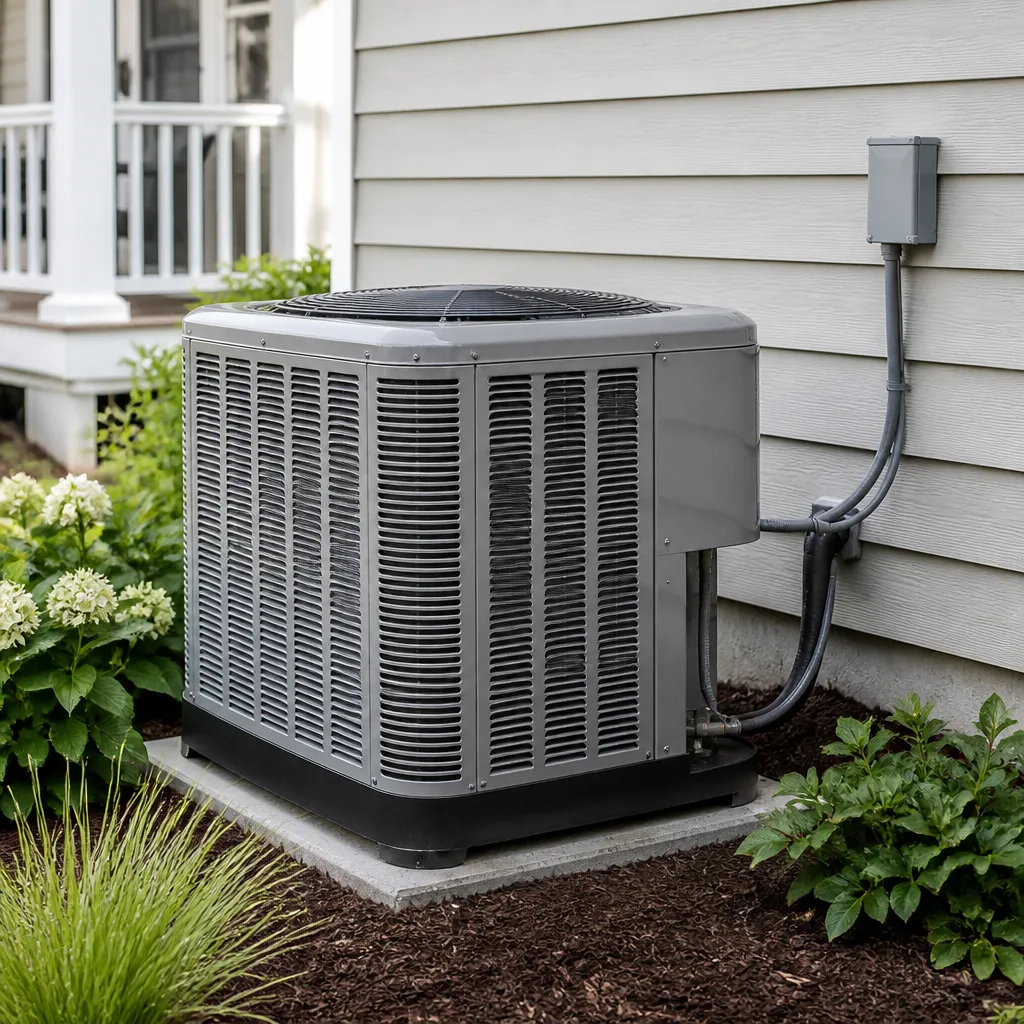 AC repair
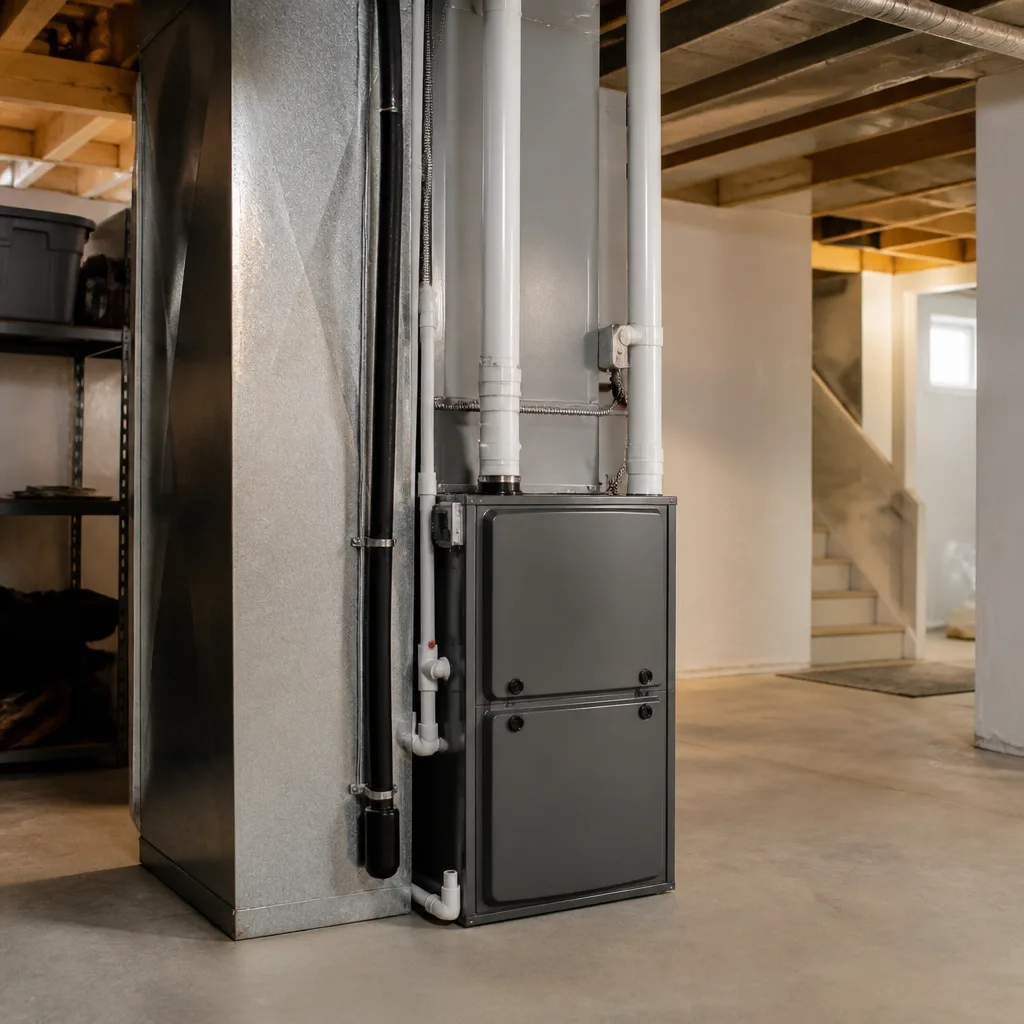 Furnace & heating
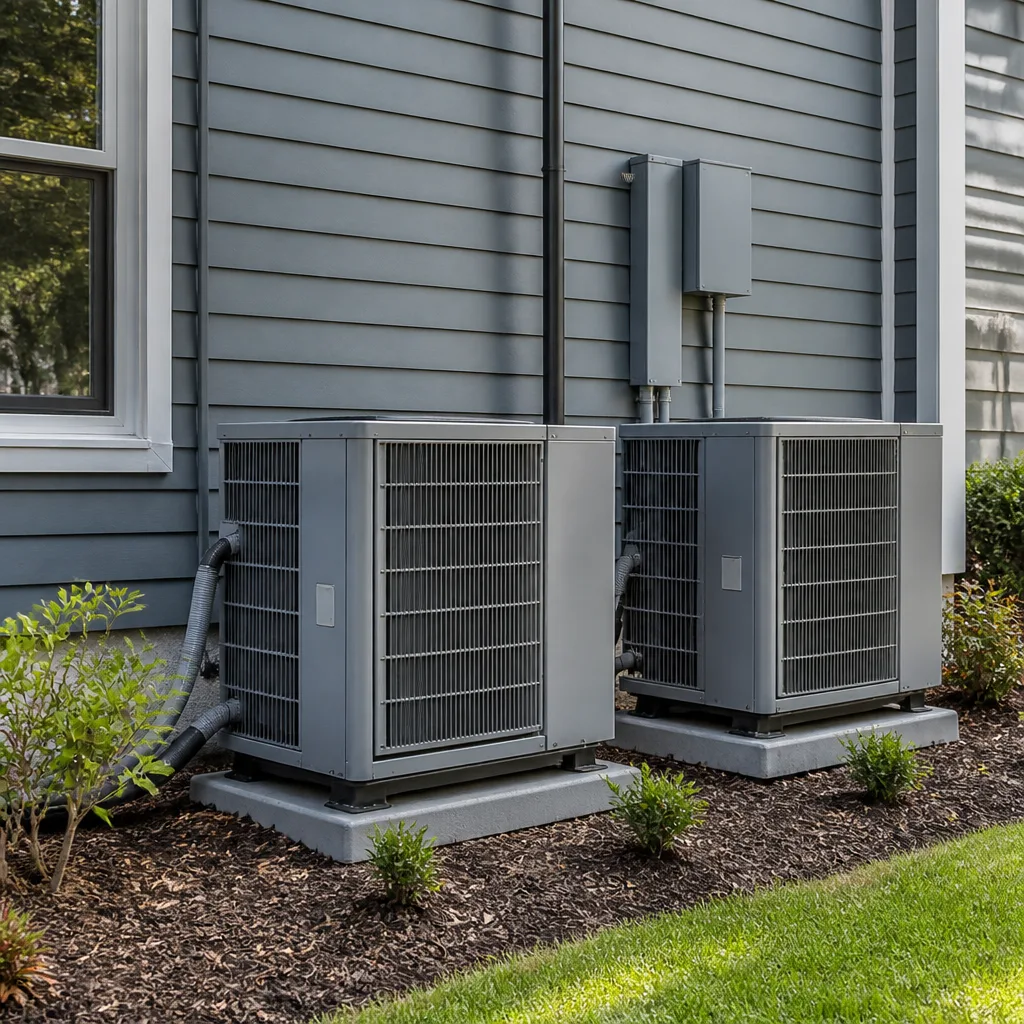 Heat pumps
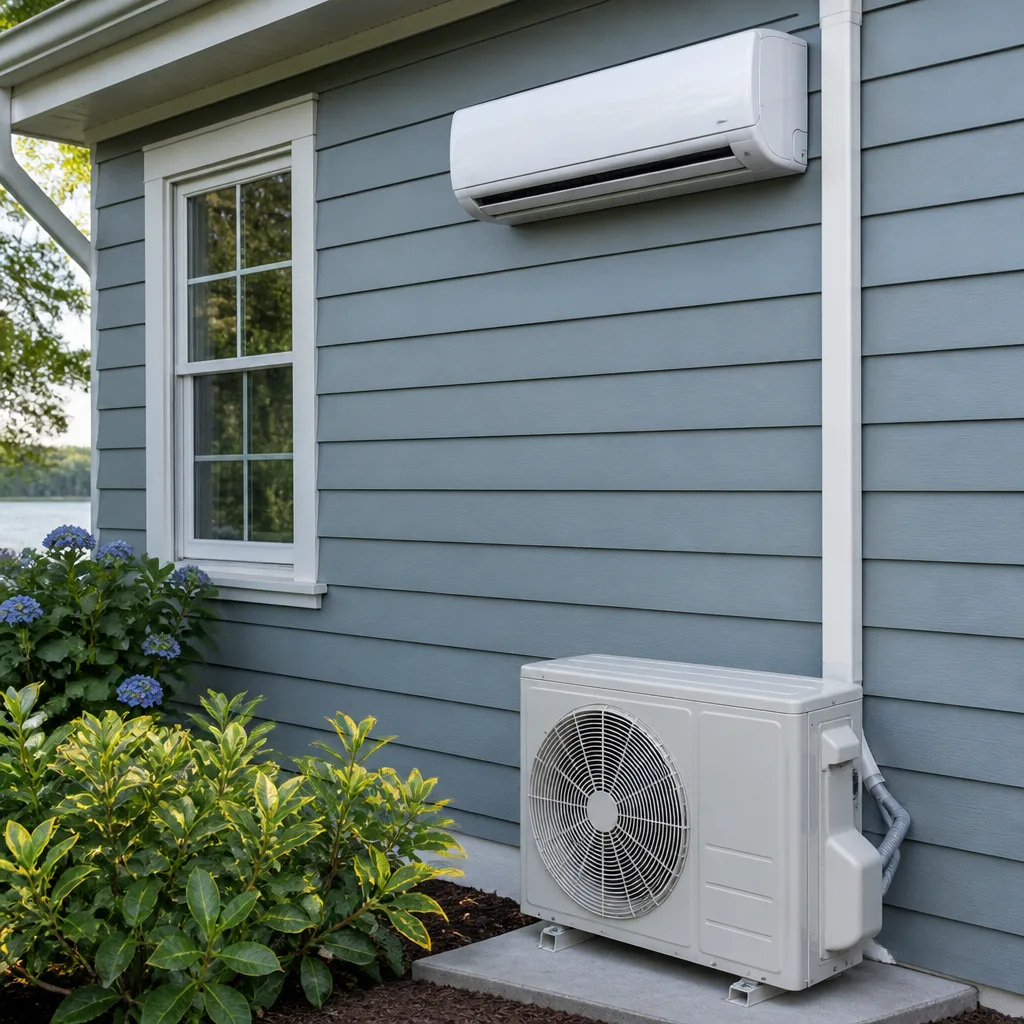 Ductless mini splits
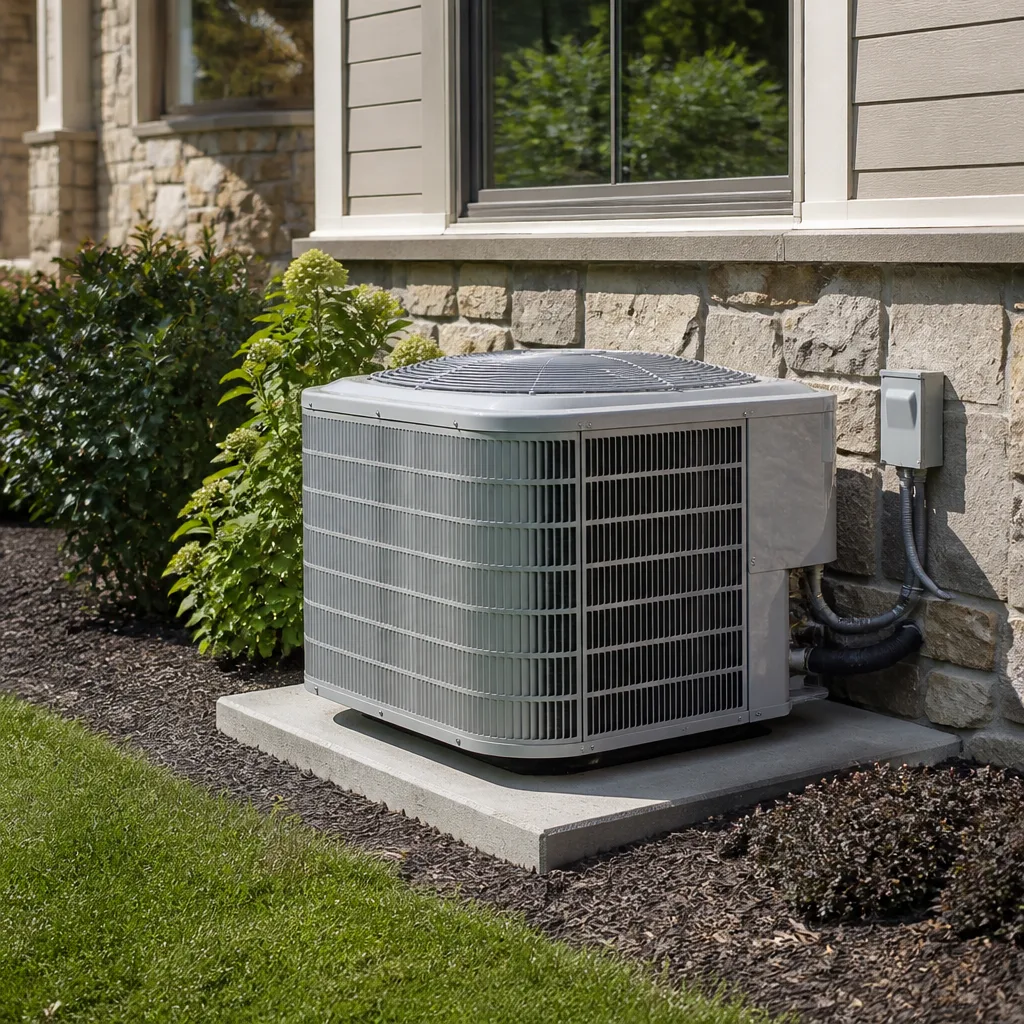 Carrier
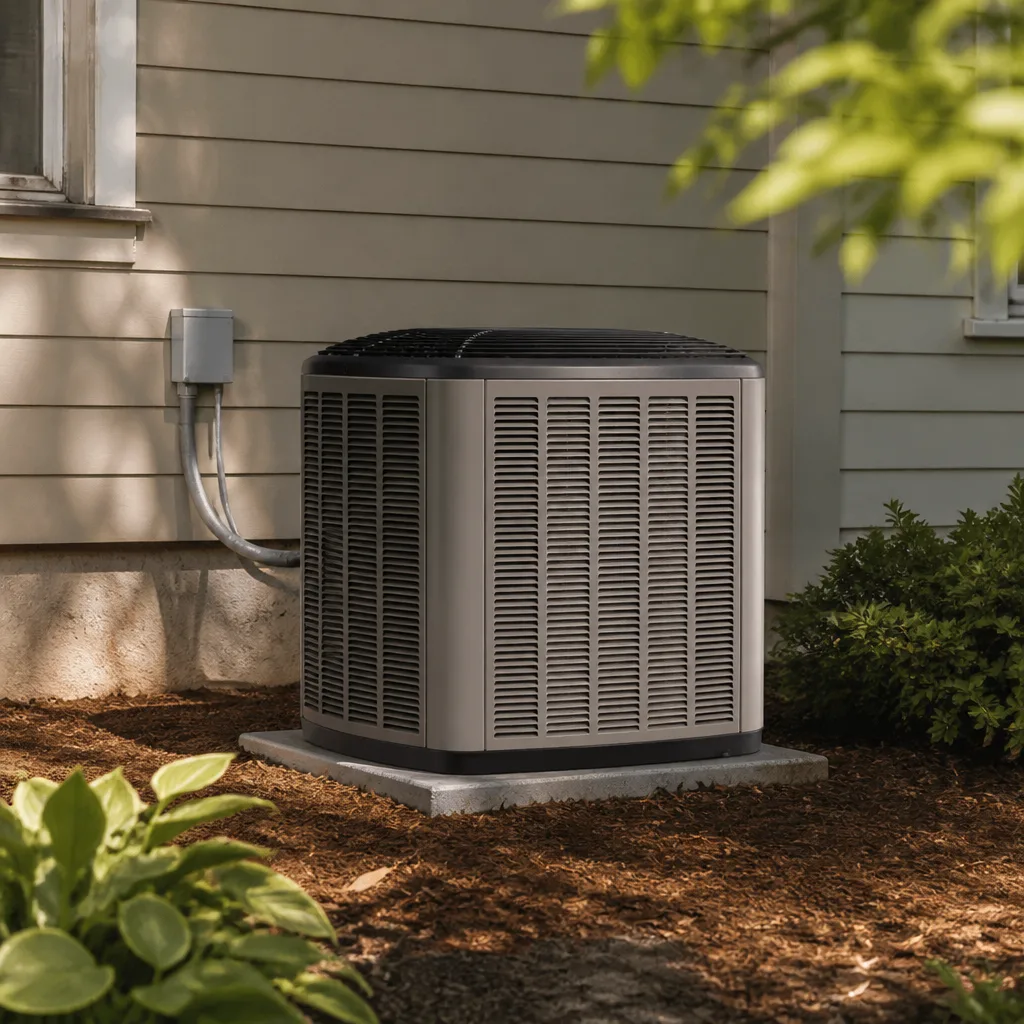 Trane
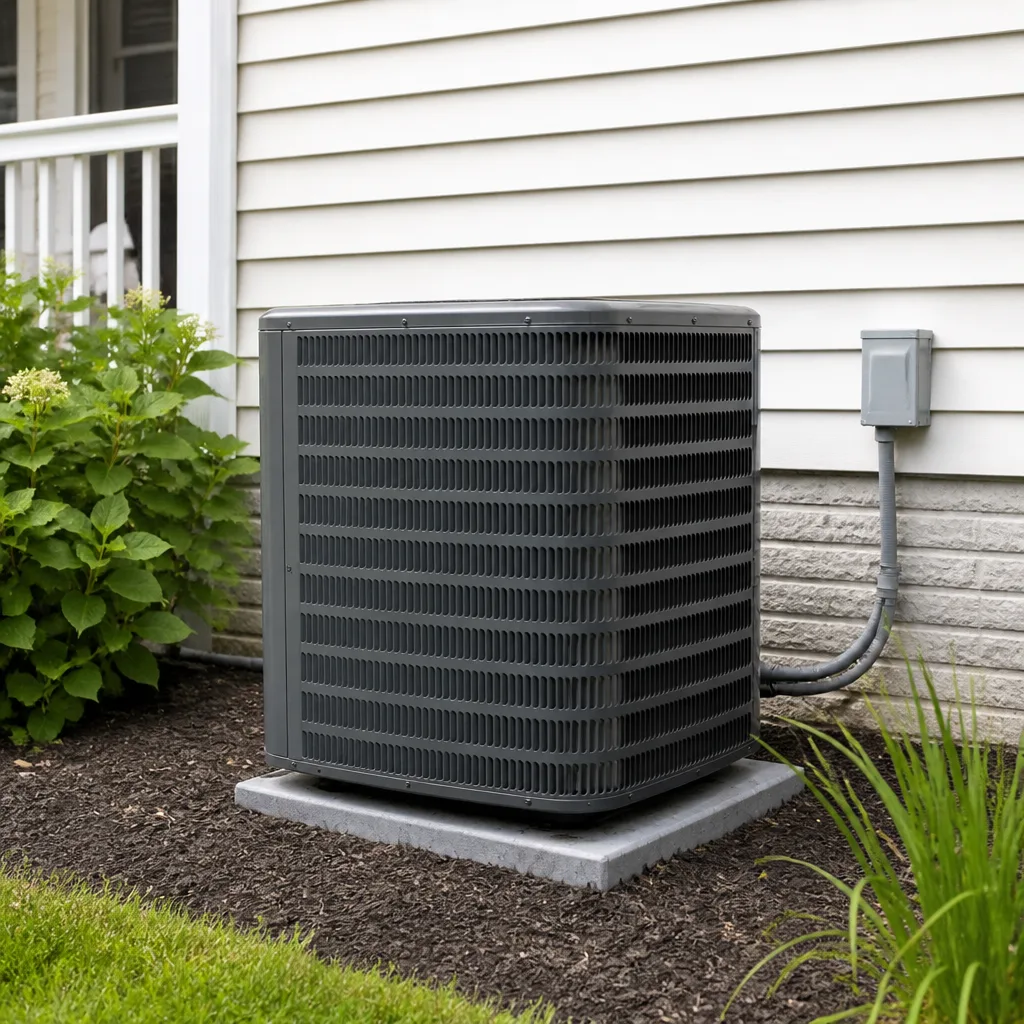 Goodman
Seasonal tune-up and full diagnostic on your Carrier, Trane, or Goodman system - readings shown to you before any repair is proposed
Diagnosis first, numbers second - you approve the repair price before a single part goes in.
Get your free estimateHow Long Does AC Repair & Installation Take? Timelines and What to Expect
A Boulder City AC installation quoted at “four to six hours” can stretch into two days. It happens when the pad isn’t level, the electrical panel isn’t up to current code, or the permit inspector can’t get out until Thursday. None of that shows up in the estimate you were handed. A tune-up that sounds like forty-five minutes turns into a half day once we find a failing capacitor and a coil packed with dust. The timeline conversation is really a trust conversation: can you plan around this, will the crew show up and finish, and is the hours estimate real. This guide answers all three with honest ranges, the Boulder City permit timeline most contractors skip, and how to structure your day around the work.
Quick Answer
A standard AC tune-up takes 45 minutes to 1.5 hours, a capacitor swap or single-part repair runs 1 to 2 hours, coil cleaning takes 2 to 4 hours, a refrigerant recharge takes 1 to 3 hours, and a full system replacement takes 6 to 10 hours of labor, usually spread over one to two days once permits and inspection are counted. In Boulder City, add time for the permit and inspection step that most written estimates leave out.
Styles & brands we work with
- AC repair
- Furnace & heating
- Heat pumps
- Ductless mini splits
- Carrier
- Trane
- Goodman
Table of Contents
- Realistic Timelines for the Five Most Common AC Jobs
- The Boulder City Permit and Inspection Timeline
- What Legitimately Extends a Job vs. What Should Worry You
- How to Structure Your Day Around an Installation
- Questions to Ask the Morning Of
- Why Flat-Rate Quoting Beats an Hours Estimate
- Common Mistakes to Avoid
Realistic Timelines for the Five Most Common AC Jobs
The single biggest source of frustration we hear about is a number that was too optimistic. Here’s what the work actually takes, with honest best-case and worst-case brackets for a Boulder City home. These aren’t sales numbers. They reflect the calls we run every summer, when desert heat pushes systems to their limits and uncovers weak parts that ran fine in April.
- Seasonal tune-up: 45 minutes to 1.5 hours. Best case is a clean system that just needs a filter and a check. Worst case is a unit that hasn’t been serviced in years and needs the coil rinsed and a weak capacitor replaced on the spot.
- Capacitor or single-part repair: 1 to 2 hours. Straightforward once the part is identified, but a failing capacitor often points to a struggling compressor, which means a longer diagnostic and a second decision.
- Coil cleaning: 2 to 4 hours. Boulder City’s dust and cottonwood load packs an evaporator coil faster than homeowners expect, and a coil that hasn’t been cleaned in three seasons takes real time to do right.
- Refrigerant recharge: 1 to 3 hours. A quick top-off is fast. Finding and sealing the leak that caused it is not, and we won’t recharge a system without locating the leak first.
- Full system replacement: 6 to 10 hours of labor, plus permit and inspection. Most replacements land on a single long day, but a pad that needs rebuilding, electrical that needs upgrading, or a Thursday inspection can push completion into day two.
If you want the fuller picture of what each of these repairs involves, our page on AC repair and installation in Boulder City walks through the diagnostic process behind each one.
The Boulder City Permit and Inspection Timeline
Most written estimates quote labor and skip the paperwork. That’s where the estimate breaks down. A like-for-like swap of an existing condenser can sometimes move without a separate permit, but a new system, a change in equipment, or electrical work tied to the install usually requires a permit and a passing inspection before the job is truly closed out. In Boulder City, that means a trip through the city’s building department, and the inspector’s availability sets the pace.
Here’s the sequence that determines whether your install finishes in a day or stretches to two:
- Permit application. The contractor files for the mechanical and electrical permit. Turnaround depends on the department’s schedule that week.
- Equipment ordering. A unit in stock moves fast. A special-order size or brand adds days before the crew ever arrives.
- Install day. The bulk of the labor happens here, 6 to 10 hours for a full replacement.
- Inspection. The city inspector signs off. If that slot isn’t available until later in the week, the system may run but the job isn’t formally closed.
Ask any contractor point-blank: does your written estimate include the permit and inspection timeline, or just the labor hours? A crew that can’t answer that is guessing. Plan for a two-day window on a replacement in Boulder City even when the labor itself is a single day. The comfortable answer is the honest one, and we’d rather tell you two days and finish early than tell you one and leave you waiting on an inspector.
What Legitimately Extends a Job vs. What Should Worry You
Some delays are just the reality of working on a system that’s been sitting in desert heat for fifteen years. Others tell you the crew in your driveway wasn’t set up to finish. Knowing the difference keeps you from panicking over a slow afternoon and from tolerating a crew that’s clearly over its head.
Legitimate reasons a job runs long:
- The equipment pad isn’t level and has to be rebuilt before the new unit sits right.
- The electrical panel or disconnect doesn’t meet current code and needs upgrading to pass inspection.
- The coil is heavily fouled from Boulder City’s dust and the cleaning takes longer than a rough-visual suggested.
- A leak has to be located and sealed before any refrigerant goes back in.
- A permit or inspection slot simply isn’t available until a later day.
Signs a crew is under-equipped or under-staffed:
- They arrive without the parts or equipment needed and make multiple supply runs, leaving your home half-open in the heat.
- They’re working without a written scope and keep discovering “extras” that change the price mid-job.
- No one on site can tell you who is pulling the permit or when the inspection is scheduled.
- They quote a low number over the phone without ever looking at your system, then rewrite it on arrival.
A single technician alone on a full system replacement is a warning sign. It’s a two-person job in most cases, and a crew that shows up short is a crew that will be there past dark. The same discipline applies to heating work, which you can read about on our heating and furnace page.
How to Structure Your Day Around an Installation
You don’t need to spend the whole day watching. You do need to be available for a few specific moments, and knowing which ones lets you get on with your morning.
- Be home at arrival. You’ll want to meet the crew, confirm the scope, and show them where the thermostat and disconnect are.
- Stay reachable during the day. A decision about a failed part or an unexpected electrical issue needs your yes before the work continues.
- Expect the power to be off briefly. A disconnect or panel work means part of the house loses power for a stretch. Plan around anything that needs to stay running.
- Be there for the walkthrough. The final pass where the crew shows you the new system and how to run it takes maybe twenty minutes and is worth your time.
- Clear access ahead of time. A path to the indoor unit, the attic hatch, and the outdoor pad saves real time and keeps the crew moving.
Everything between arrival and the walkthrough is work you don’t need to supervise. A good crew is background-checked, uniformed, and puts on shoe covers without being asked. That’s the standard we hold to, and it’s the reason you can trust the process to run without you hovering.
Questions to Ask the Morning Of
The morning of an install is the last easy moment to catch a surprise. Five questions cover almost everything:
- What’s the plan and the expected finish today? A crew that gives you a clear order of operations and an honest finish time is a crew that has done this before.
- Who pulled the permit, and when is inspection? If nobody has a permit number and an inspection slot, ask why.
- What could change the price, and will I be told before it does? The answer should be that any change gets your approval first, not a surprise on the invoice.
- Will the system come with a warranty in writing? Equipment warranty plus the 90-Day Done Right Promise in writing is what protects you.
- What do I do if something feels off after you leave? The answer should be a phone number and a real person, not a ticket system.
If you’re weighing a repair against a replacement, that decision changes the timeline entirely. Our guide to heat pump and mini-split systems in Boulder City covers when a switch to a different system type makes sense for a home that’s staying in the family for years.
Why Flat-Rate Quoting Beats an Hours Estimate
When a contractor quotes by the hour, every hour matters to their bottom line. A rushed crew skips the coil rinse, cuts the corner on the electrical check, and moves on to the next call. That’s the incentive an hours estimate builds in.
Flat-rate quoting removes it. The price quoted is the price paid, whether the job takes two hours or four. Nobody on the crew is paid on what they sell or penalized for taking the time a job actually needs. That’s why we can promise a written fixed price up front and stand behind it for 90 days. Done right, or we make it right. A system that was installed slowly and correctly runs longer and quieter than one that got the six-hour rush, and the person who lives with it for the next fifteen years feels the difference.
In Boulder City’s heat, a rushed install shows up the first week of July, not the first week of April. Flat-rate quoting means the crew has no clock to beat. The job gets done at the pace it deserves.
Common Mistakes to Avoid
- Accepting a phone estimate without an in-person look. A number quoted without seeing the system is a number that gets rewritten on arrival. Insist on an on-site assessment before a price.
- Assuming the labor hours are the whole timeline. The permit and inspection in Boulder City can add days. The estimate that omits them isn’t the real timeline.
- Booking the cheapest bid without checking what’s excluded. A low quote that skips the pad rebuild or the electrical upgrade costs more once the inspector shows up.
- Recharging refrigerant without finding the leak. A top-off buys a few weeks and then the gas is gone again. Find the leak first, every time.
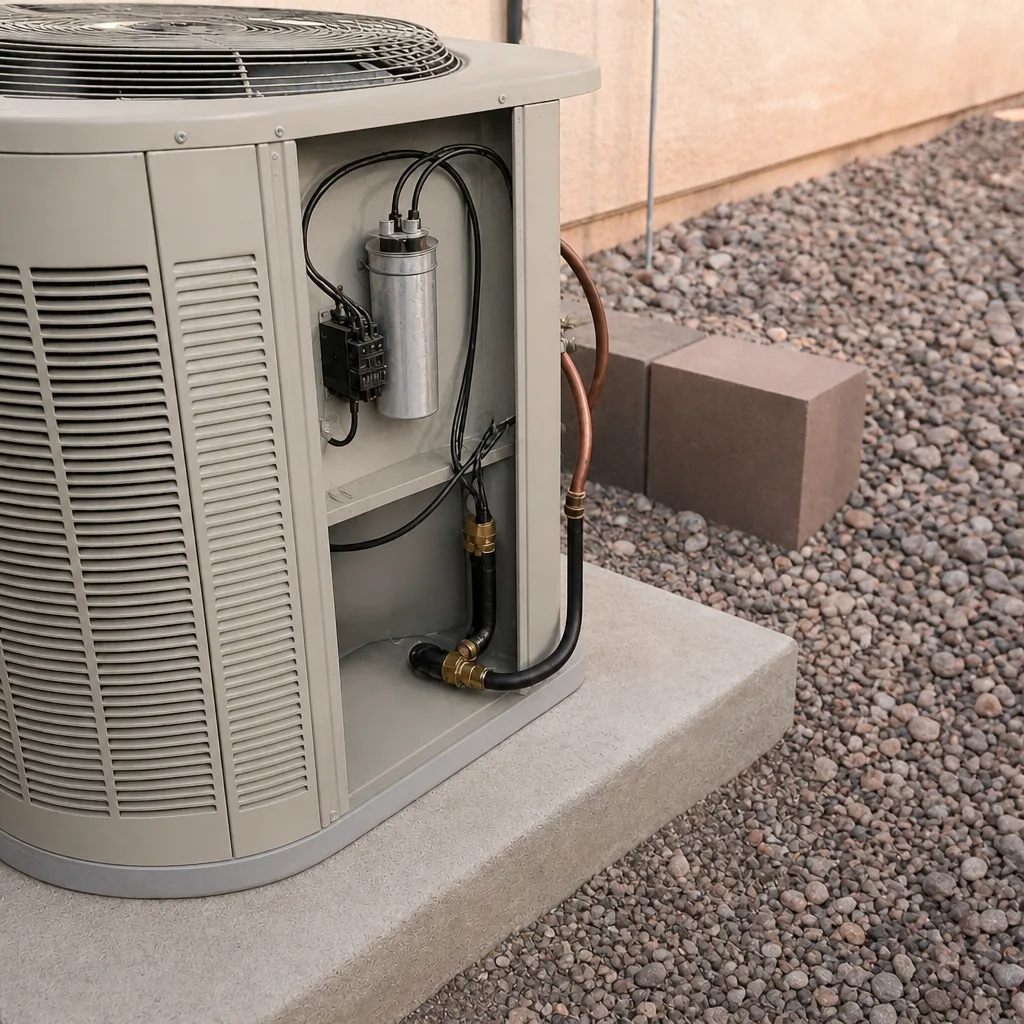
- Skipping the seasonal tune-up and turning a $89 service into a replacement. In desert heat, an unserviced coil is the difference between a repair and a new unit.
- Not getting the finish time and warranty in writing. Verbal assurances fade. A written price and promise hold up when you need them.
- Letting a crew leave without walking you through the new system. The walkthrough costs twenty minutes and saves a season of guesswork about how to run it.
We’ve watched these mistakes turn a manageable repair into an emergency repair call at the worst possible time. Most of them start with a timeline that was never real in the first place.
See the difference
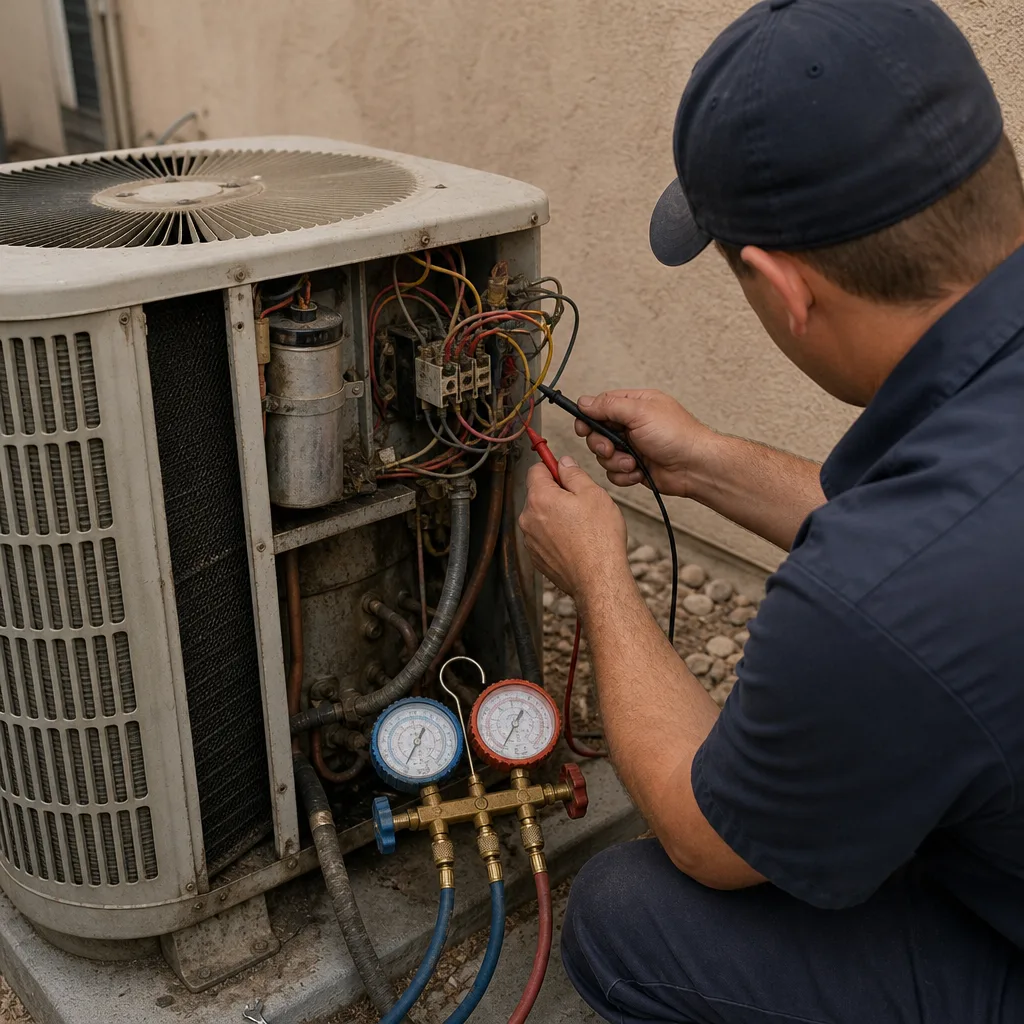 Before
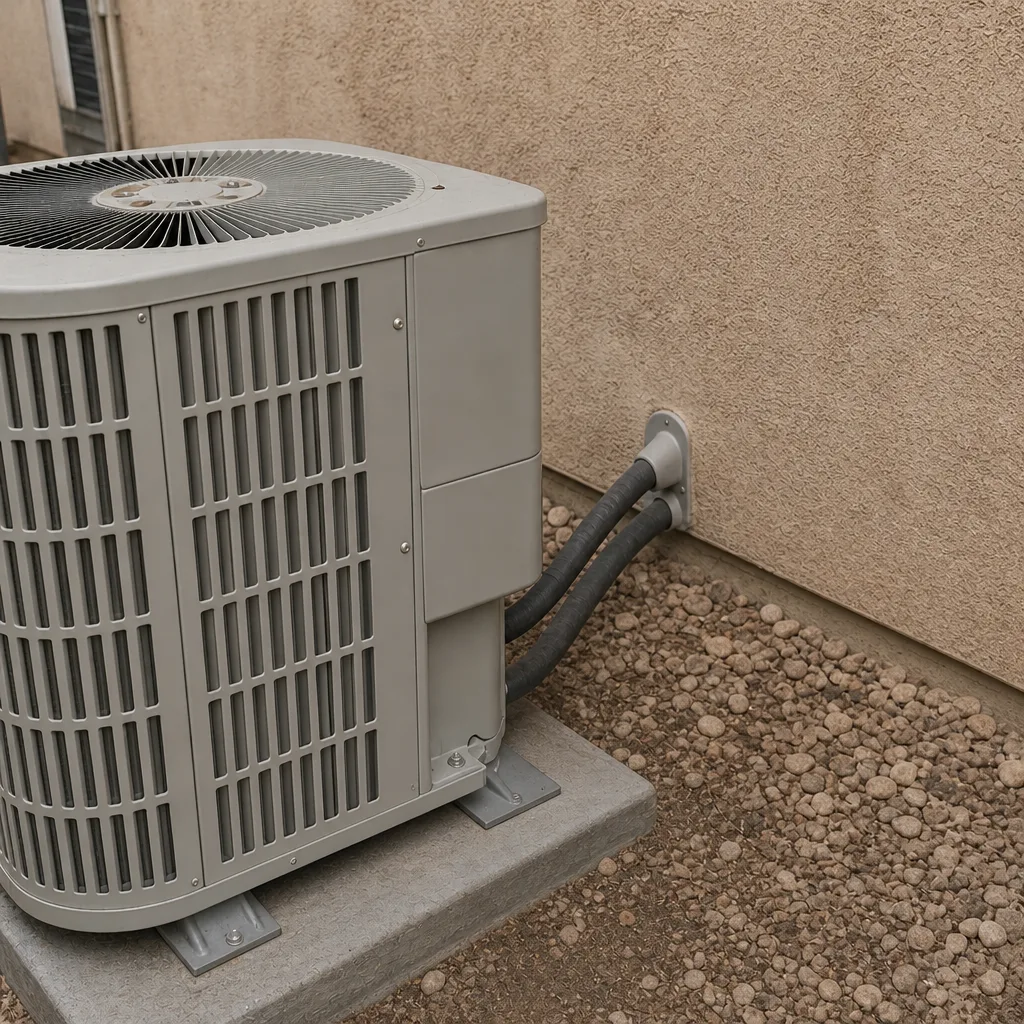 After
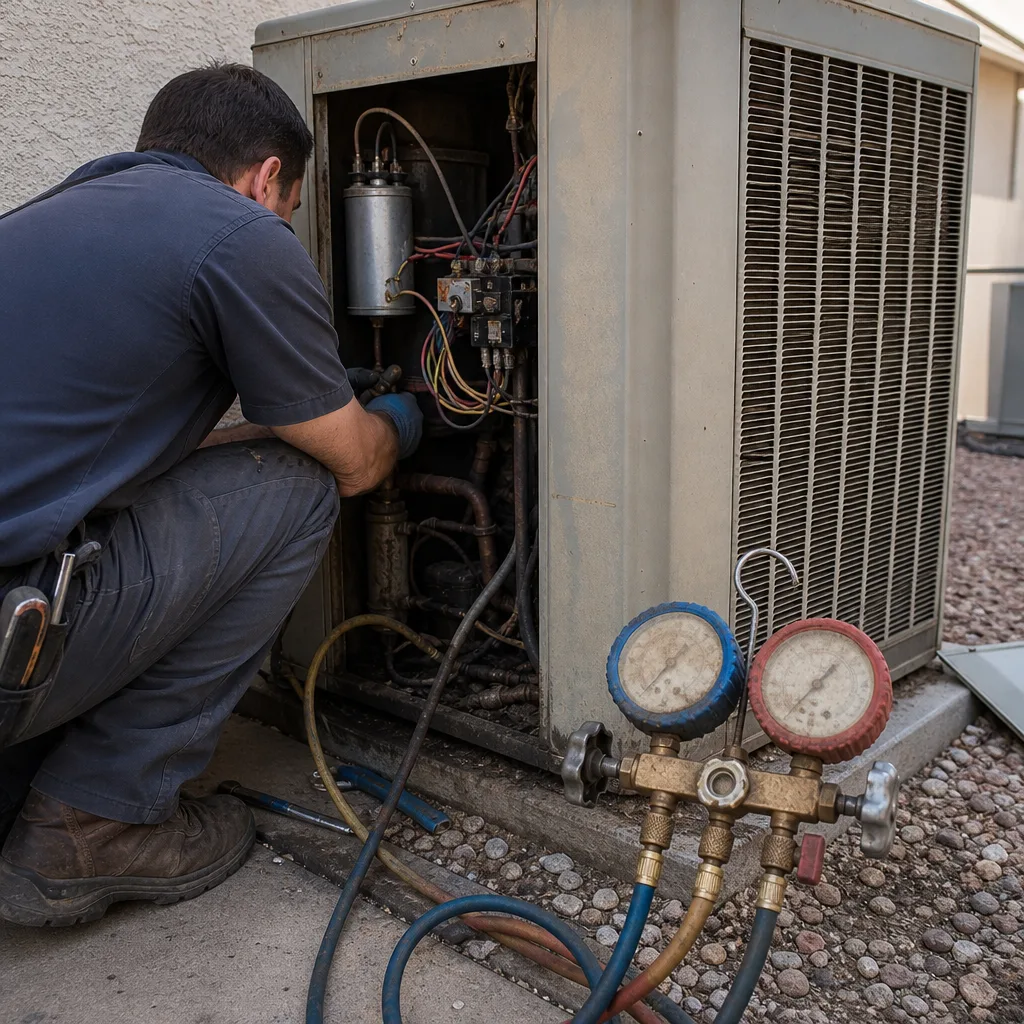 Before
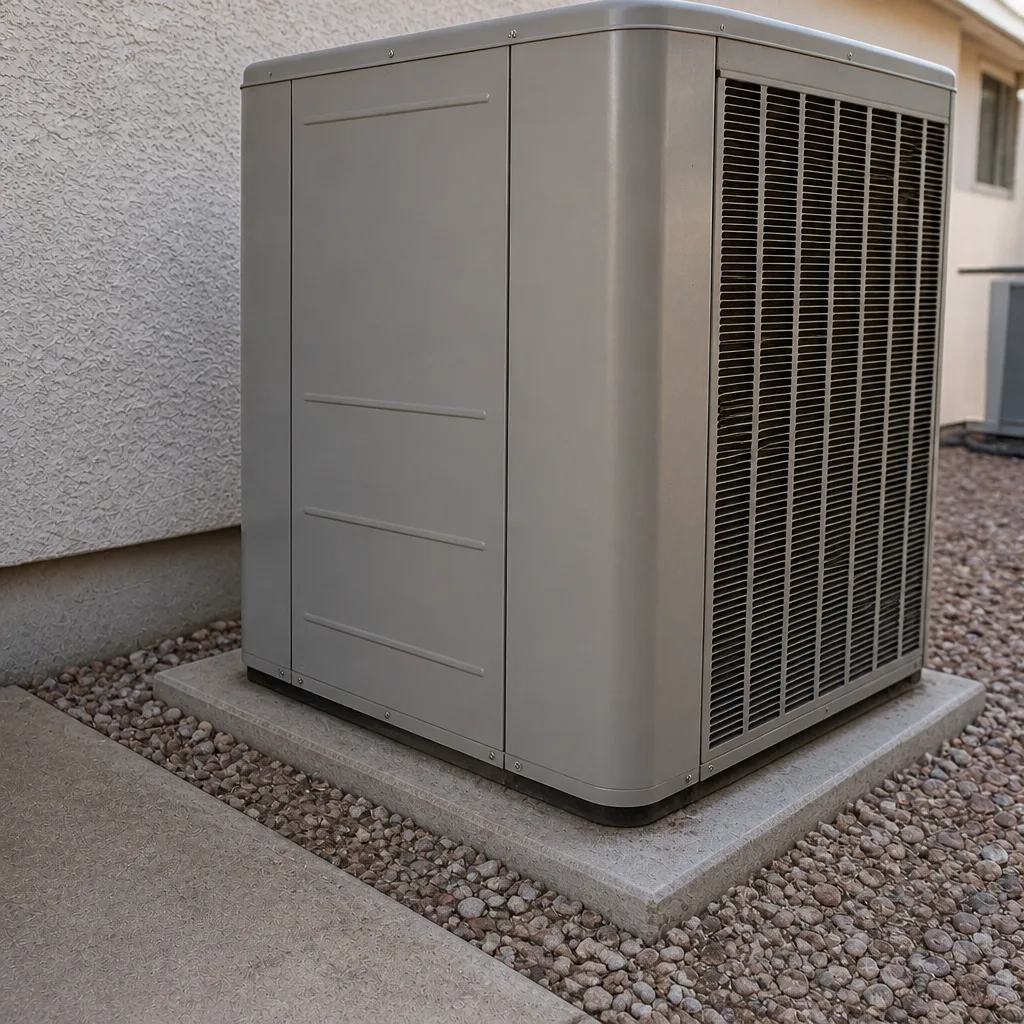 After
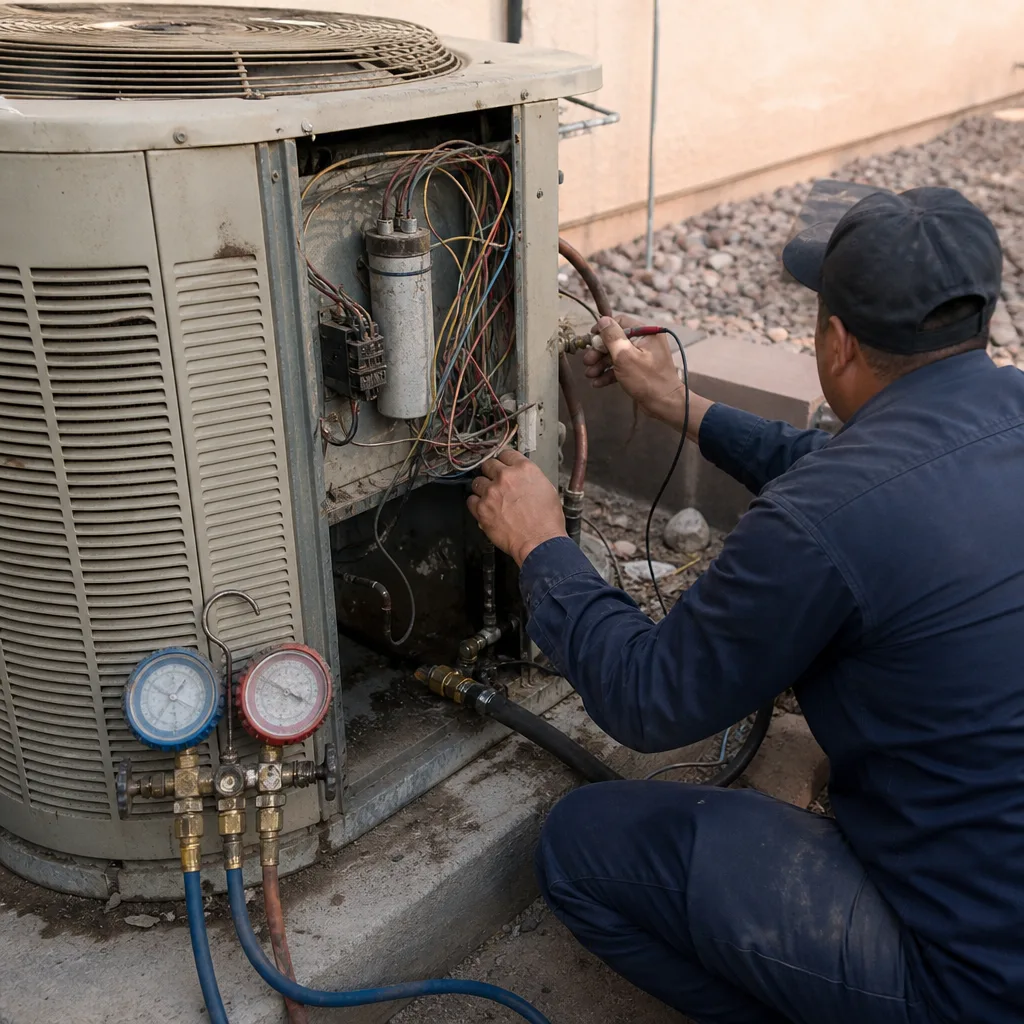 Before
 After
When to Call a Professional
If your AC is blowing warm air, short-cycling, or tripping the breaker, stop troubleshooting and call. Refrigerant work and electrical panel connections on a cooling system are genuinely dangerous, and the wrong move around a live circuit or a pressurized line can seriously hurt you. A system that’s been sitting in a Boulder City summer running nonstop is a system a trained technician needs to look at, not something to fix with a YouTube video. Here’s when the call is urgent: no cooling during a heat wave, a breaker that won’t stay on, ice on the indoor coil, or a burning smell near the unit.
Fireside Heating & Air Co. Boulder City offers free estimates in Boulder City, and a live person answers the phone around the clock, including the 2 a.m. no-heat call in winter. Our technicians have up to 8 years of experience and are trained to service the major brands, including Goodman, Rheem, York, and Daikin. When a system needs to come out, a new one goes in with a written fixed price and an install date that sticks. Call (844) 312-0133 for a free estimate.
Frequently Asked Questions
A full AC installation takes 6 to 10 hours of labor, usually finished in one long day, but plan a two-day window once the Boulder City permit and inspection step is counted. A pad that needs rebuilding or electrical that needs upgrading can push completion into the second day, which is why an honest estimate includes the paperwork, not just the labor hours.
Most single-part repairs and tune-ups can be handled in a single visit the same day, and we answer the phone with a live person around the clock so an after-hours no-cooling call doesn’t wait for a voicemail tree. Full replacements are scheduled, never rushed same-day. Call (844) 312-0133 for a free estimate.
Because the four-hour quote left out permits, inspection scheduling, equipment pad issues, and electrical upgrades that the job actually required. The labor may only be a day; the permit and inspection in Boulder City is often what stretches it. Ask any contractor whether the estimate includes permit and inspection time before you book.
You need to be home for arrival, reachable for any mid-job decision, and present for the final walkthrough, but you don’t need to supervise the whole day. Expect a brief power interruption during electrical work and clear access to the indoor unit and outdoor pad. A well-run crew treats your home like their mother’s and keeps you informed without needing a shadow.
If a unit needs more than one major repair in a single cooling season, or the repair cost approaches half the price of a new system, replacement starts to make financial sense. A system that runs hard through Boulder City summers and needs a capacitor, a recharge, and a compressor in the same year is telling you something. Call (844) 312-0133 for a free second opinion on any written estimate.
Yes. When the price is fixed up front, the crew has no clock to beat and no incentive to cut the coil rinse short to make the next call. That’s why a written fixed price and the 90-Day Done Right Promise matter more than the hours quoted. The job gets the time it needs, and you get the price you were told.
The Bottom Line
Timelines are trust in disguise. A tune-up is under 90 minutes, most repairs land between one and three hours, and a full replacement is a single long day of labor plus a Boulder City permit and inspection window that most estimates quietly drop. The number that matters isn’t the lowest hours quoted, it’s whether the crew shows up when they say, finishes what they start, and charges the price you agreed to. Flat-rate quoting means nobody is rushing to beat a clock. If you want a timeline you can plan around and a price that holds, call (844) 312-0133 for a free estimate. Read more about our Boulder City home service and the standards we hold to.
Written by the team at Fireside Heating & Air Co. Boulder City.