
Last updated November 18, 2026
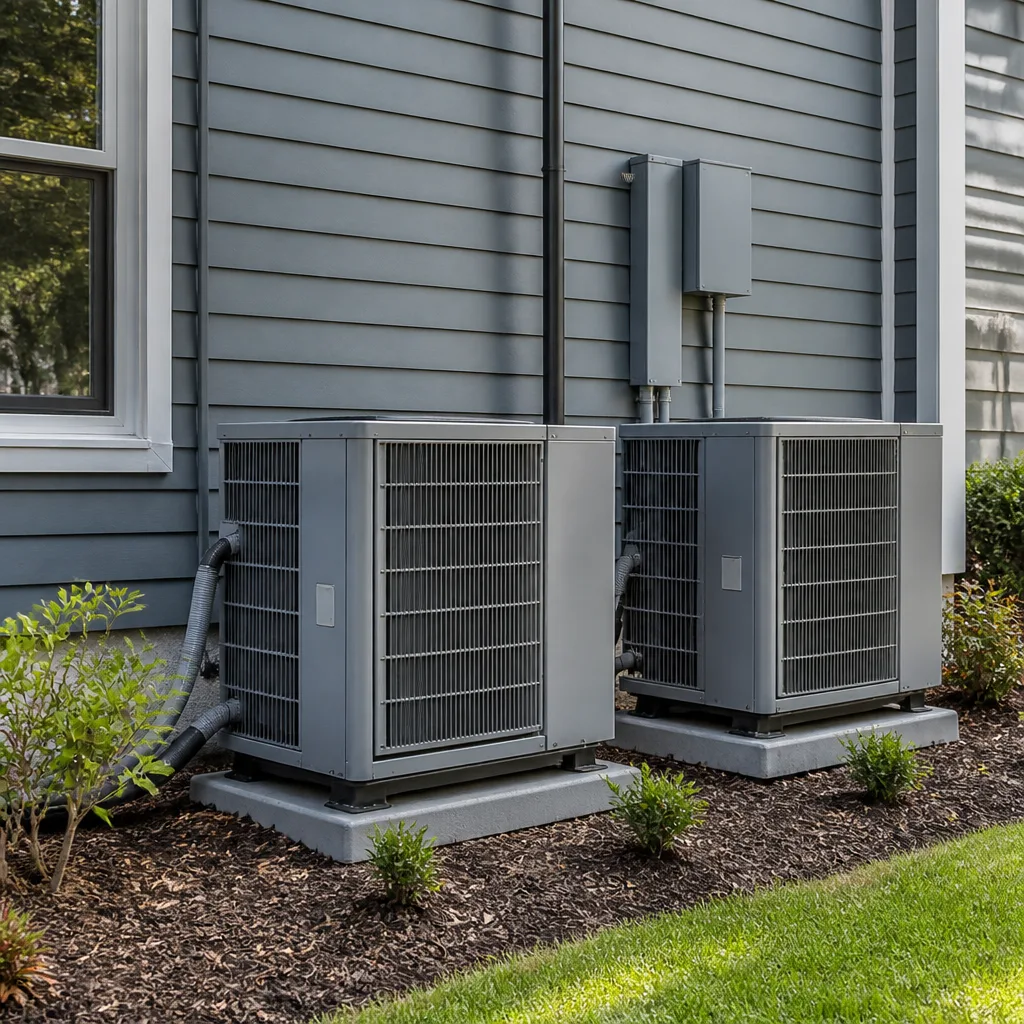 Heat pumps
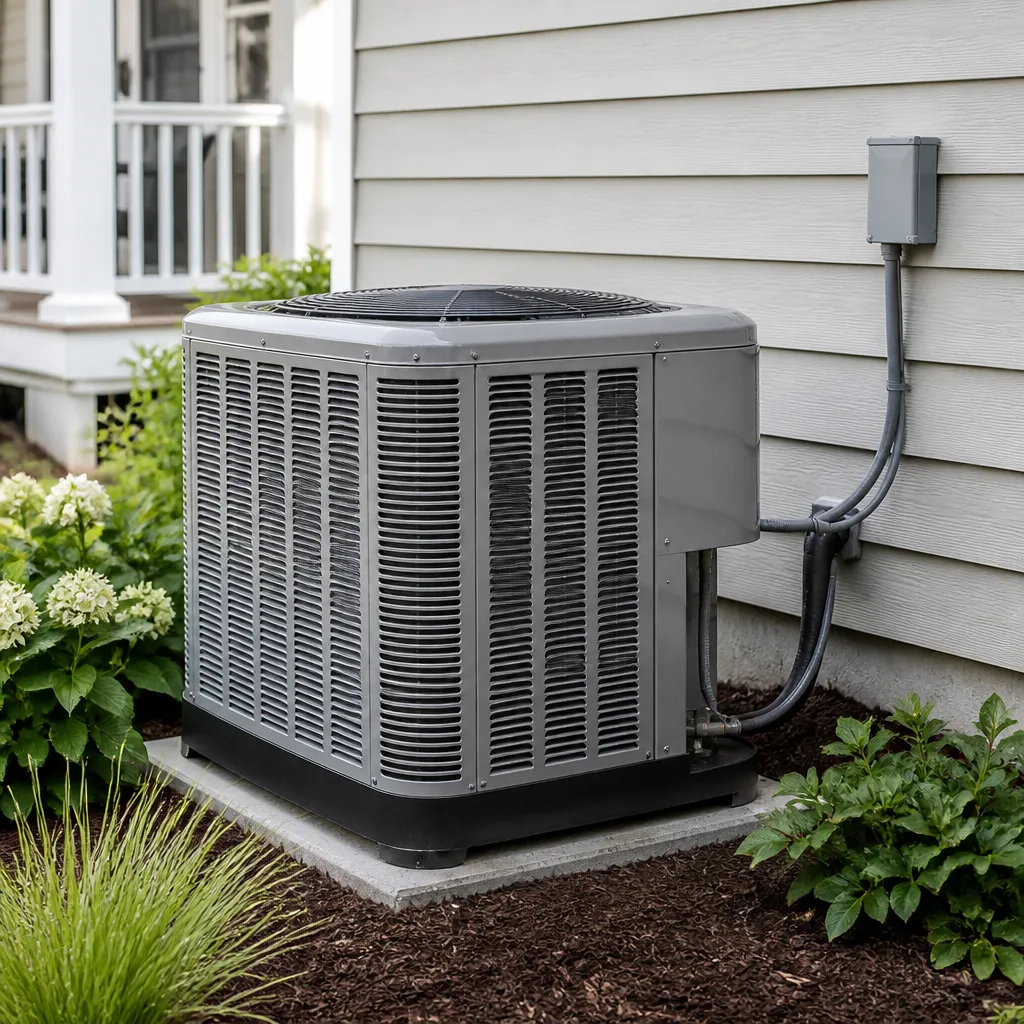 AC repair
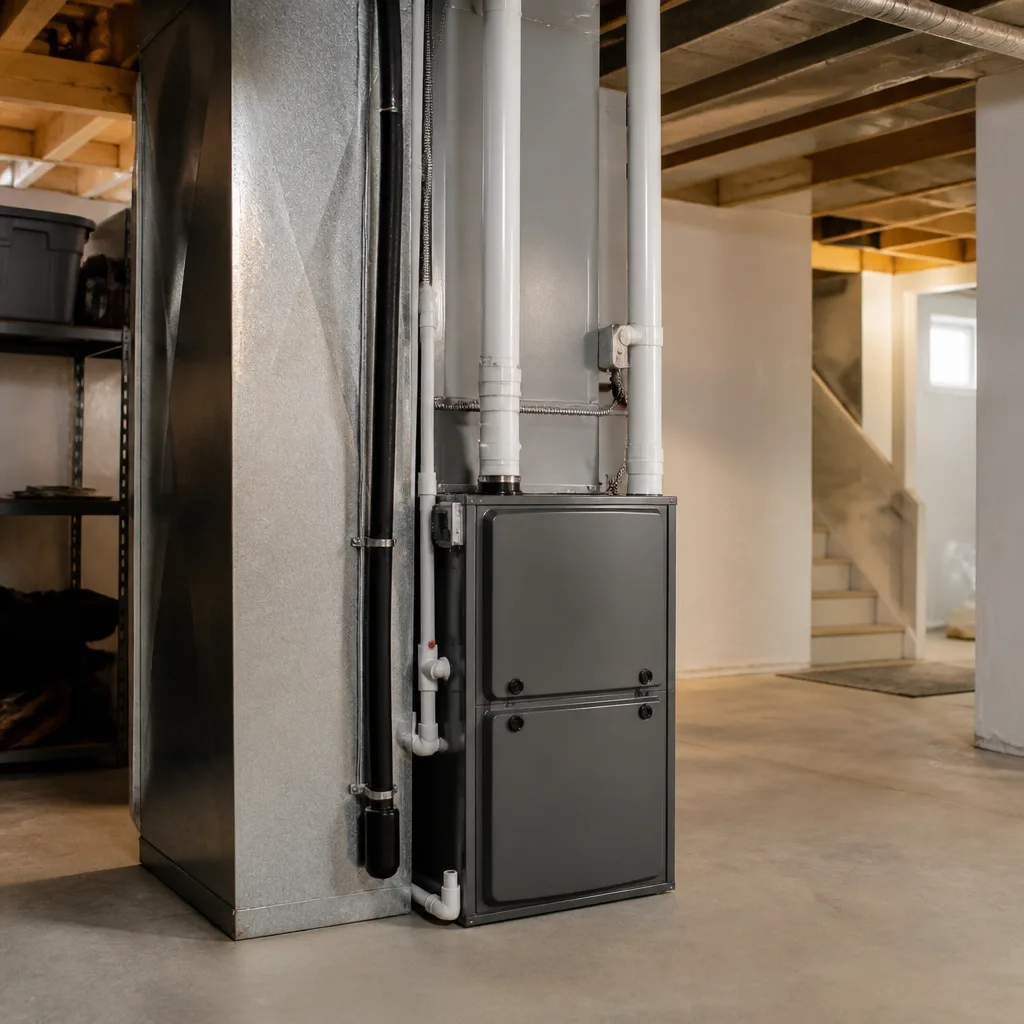 Furnace & heating
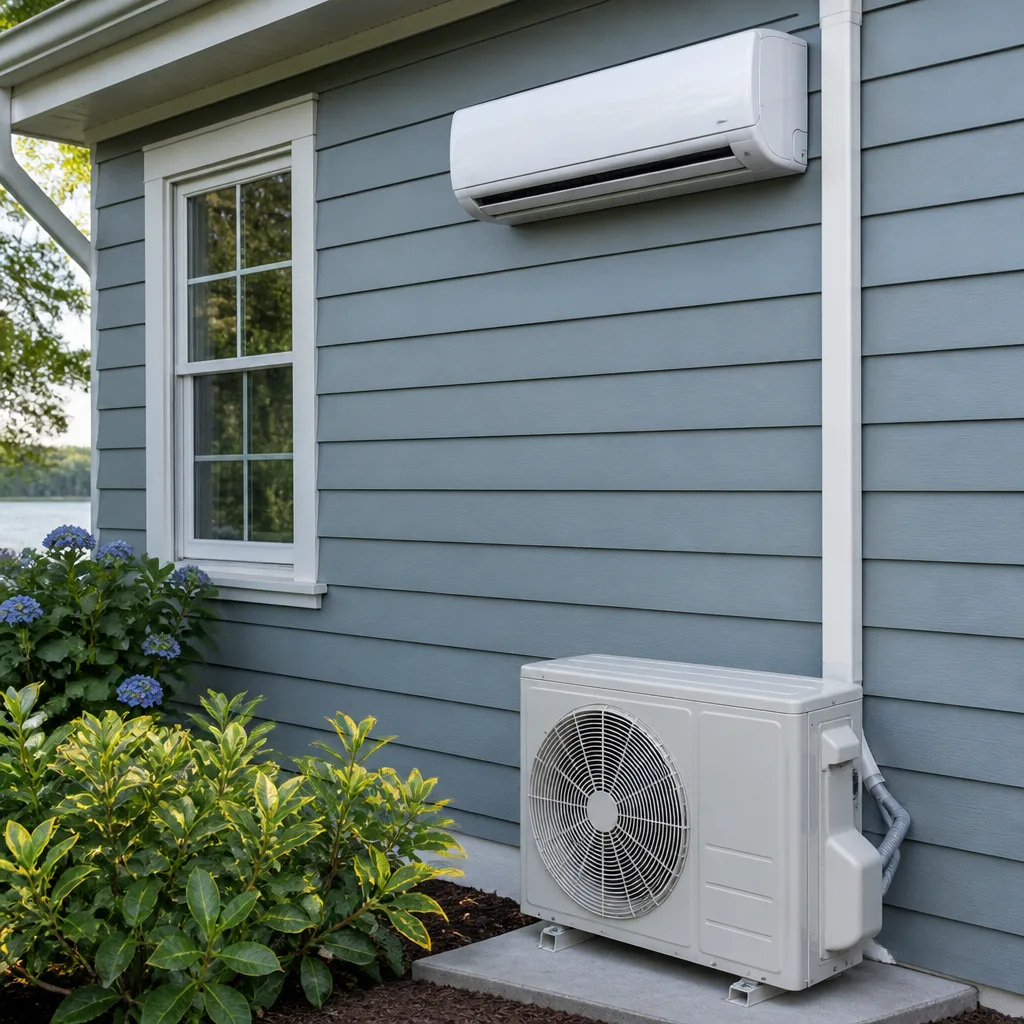 Ductless mini splits
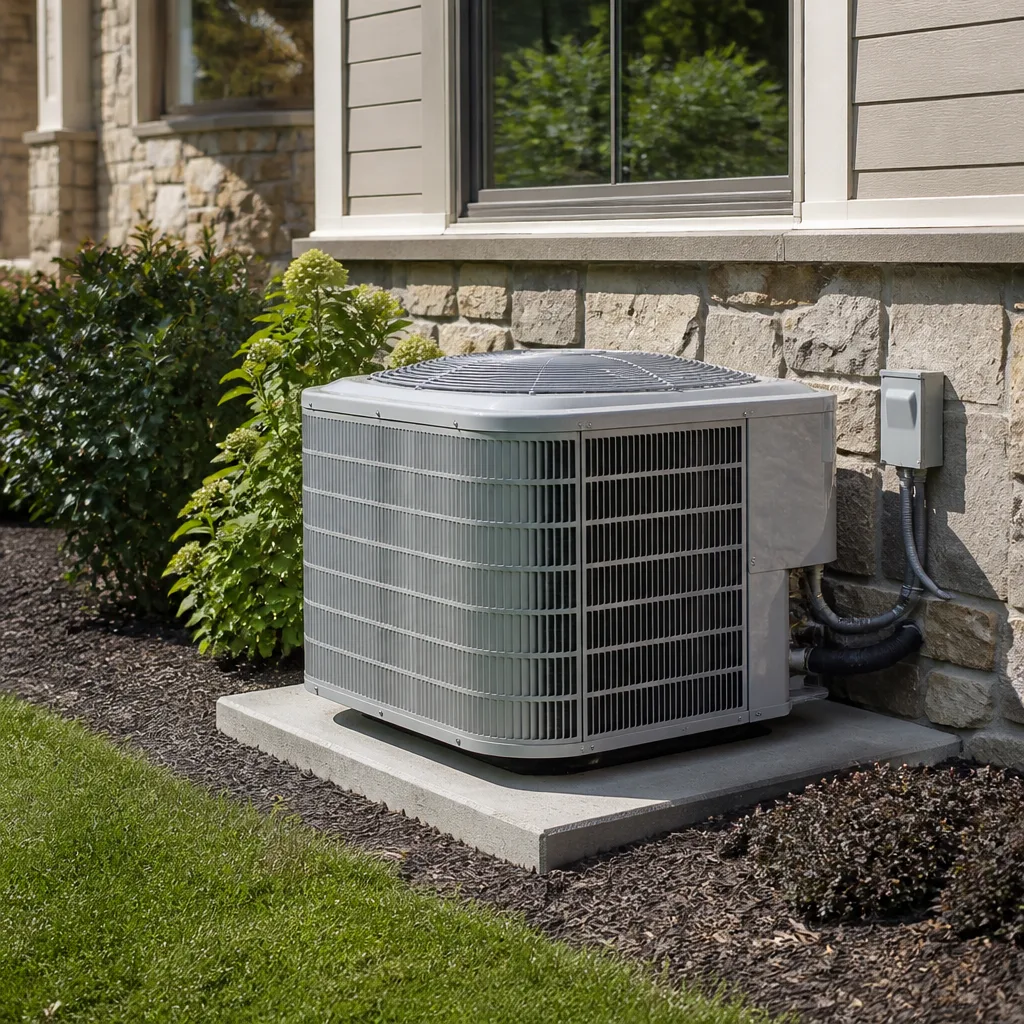 Carrier
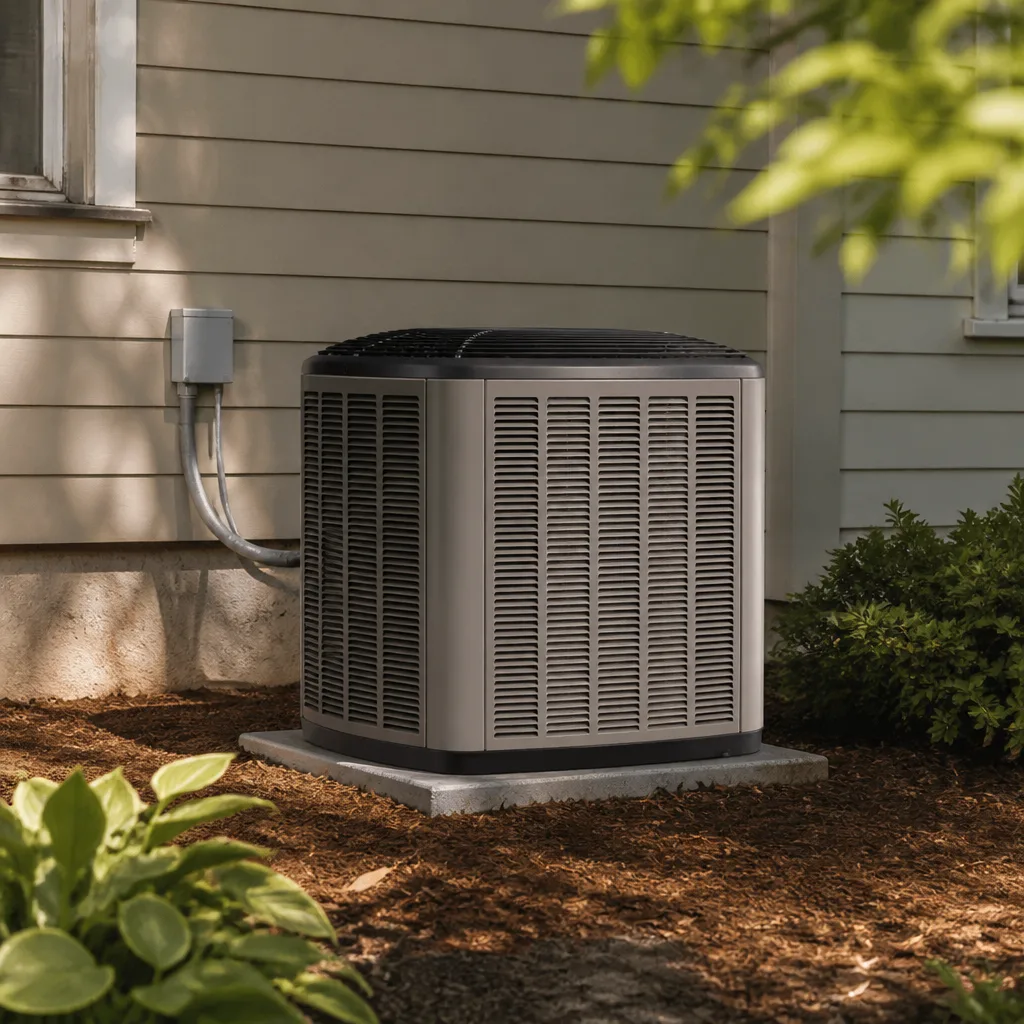 Trane
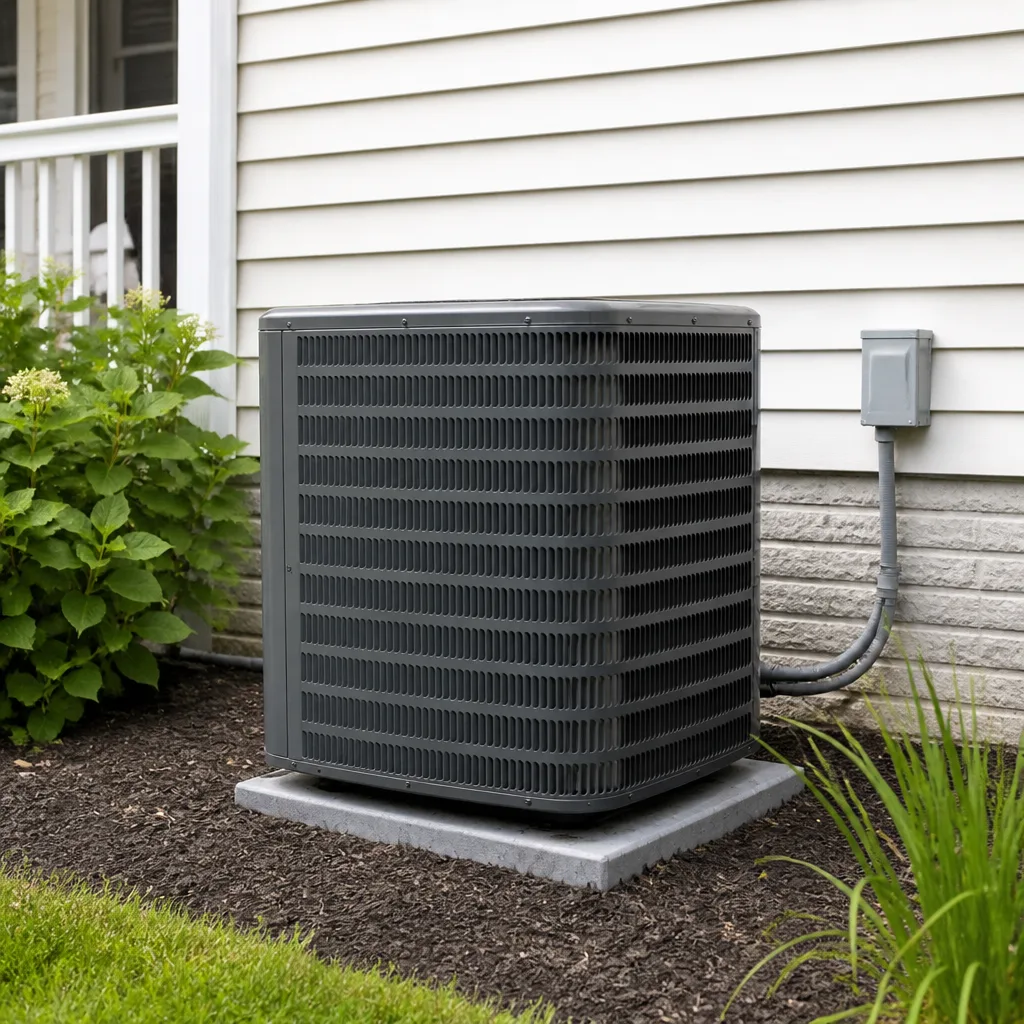 Goodman
Seasonal tune-up and full diagnostic on your Carrier, Trane, or Goodman system - readings shown to you before any repair is proposed
Diagnosis first, numbers second - you approve the repair price before a single part goes in.
Get your free estimateThe Complete Heat Pump & Mini Split Guide for Boulder City Homeowners
Here’s a number worth sitting with: the government tests heat pump efficiency at 95°F. Boulder City spends much of July, August and September well past 105°F, and it isn’t unusual to see a 112°F afternoon. That gap between the testing lab and your back patio is where most heat pump disappointment begins. The brochure shows a SEER2 rating; it doesn’t show you what the unit actually does at 110°F. In this guide we’ll walk through the parts of the decision that matter for a Boulder City home: how extreme heat really affects capacity, why an old single-story layout changes the zone math, where the outdoor unit should sit, when a hybrid setup makes sense, and what NV Energy is willing to pay toward the change. You’ll finish with enough to ask a contractor harder questions – and understand the answers.
Quick Answer
For most older single-story homes in Boulder City, a correctly sized and properly placed heat pump or mini split will cut summer cooling bills compared to an aging central AC, but you should expect actual capacity at 110°F to run 10-20% below the rated output on the spec sheet. The winning combination here is a variable-speed system, shade and airflow clearance for the outdoor unit, and a careful room-by-room sizing load calculation rather than a rule-of-thumb guess. Get those three right and the system lasts; skip them and you’ll chase comfort complaints for years.
Styles & brands we work with
- AC repair
- Furnace & heating
- Heat pumps
- Ductless mini splits
- Carrier
- Trane
- Goodman
Table of Contents
- How Extreme Heat Affects Heat Pumps in Boulder City
- Choosing a Heat Pump vs. a Mini Split
- Single-Zone vs. Multi-Zone: Reading Your Layout
- Placement Rules for Outdoor Units in Desert Conditions
- The Hybrid (Dual-Fuel) Option for Homes with Gas
- NV Energy Rebates and Nevada Incentives
- Sizing and Installation: What “Done Right” Means
- Keeping a Desert Heat Pump Running for the Long Haul
How Extreme Heat Affects Heat Pumps in Boulder City
A heat pump moves heat. It doesn’t create it. In cooling mode it takes heat from inside your house and pushes it outside, and the hotter the outside air, the harder it is to dump that heat. That’s the whole story of why Boulder City summers test a system differently than a coastal California summer would.
When ambient air climbs to 110°F or higher, three things happen at once. First, the compressor works against a higher pressure differential, which pulls more amps and produces more heat inside the equipment cabinet. Second, the outdoor coil has less temperature headroom to shed heat, so the refrigerant can’t reject it as efficiently. Third, the system’s effective capacity drops – typically 10-20% below rated output in this range for standard single-speed equipment, less for variable-speed inverter units that can ramp to hold capacity.
What this means in practice for a Boulder City homeowner:
- Size to the design day, not the average. A load calculation run on a 95°F summer design temperature will undersize a system for Boulder City. We use local design temperatures that reflect real afternoon peaks.
- Variable-speed wins here. An inverter-driven compressor can run at 80-100% of rated capacity on a 112°F afternoon where a single-speed unit is already maxed out and losing ground.
- Don’t trust “up to” efficiency claims. Seasonal ratings are averages. Your peak-hour performance is what keeps the house comfortable in August.
- Insulation and shade aren’t optional. The best heat pump in the world fights a losing battle against a hot attic and unshaded west-facing windows.
We’ve walked into homes off Nevada Way where a two-year-old heat pump “stopped working” in July. It hadn’t failed. It was undersized for the house and fighting a west wall with no shade. The fix wasn’t a new unit; it was a load calculation and a shade structure over the condenser.
Choosing a Heat Pump vs. a Mini Split
A heat pump and a mini split are the same technology. The difference is how the air gets delivered. A heat pump typically uses your existing ductwork to condition the whole house through a central air handler. A ductless mini split uses one or more wall, floor or ceiling cassettes that each serve a single room or zone, with no ducts at all.
Which one fits a Boulder City home depends less on preference than on what you already have:
- Choose a central heat pump if: you have usable ductwork, you want to condition the whole house from one thermostat, and you’re replacing an aging central AC or furnace.
- Choose a ductless mini split if: your attic is too tight or the duct runs are in bad shape, you have rooms that are chronically hot or cold, you’re adding conditioned space to a garage or sunroom, or you don’t want to tear up walls to run duct.
- Choose a hybrid of both if: the house has ducted cooling in the main living area but a master bedroom or bonus room that never gets comfortable. A single-zone mini split can solve one problem room without replacing the whole system.
We install both approaches and we’ll tell you plainly which one fits your house rather than which one has a better spiff. For a 1,800-square-foot single-story with decent ducts, a central heat pump usually wins. For a 1,200-square-foot home with a sagging 1970s duct system in a 110°F attic, ductless is often cheaper and more comfortable.
Our Heat Pump & Mini Split in Boulder City page covers the specific models we install from brands like Daikin and Goodman, if you want to narrow that part down first.
Single-Zone vs. Multi-Zone: Reading Your Layout
Most of Boulder City’s housing stock is older single-story construction – a lot of it built during the dam-building years and the decades that followed. Those homes share two traits that shape mini split decisions: low-pitch roofs with limited attic space, and a floor plan that tends to run long and narrow with one central hallway.
The zone math for a typical layout here:
- Count the rooms that need independent control. Master bedroom, main living area, kitchen, maybe a home office. That’s usually two to three zones, not four or five.
- Check whether the thermostat lives in the worst possible place. A hallway thermostat surrounded by 105°F afternoon air will misread the house. Multi-zone mini splits solve that by giving each room its own sensor.
- Match outdoor capacity to the real total, not the rated total. A 36,000 BTU multi-zone system rated at 95°F will deliver less in July. We size at 110°F to leave margin.
- Decide if you want heads on the same outdoor unit or separate. One outdoor unit with two or three indoor heads is simpler and cheaper up front. Separate systems give you redundancy – if one goes down, the other still runs.
For a 1,400-square-foot ranch home in Boulder City, two zones (living area and master) usually satisfy the whole house. Four-zone systems tend to be over-specified here and cost more than they deliver.
Placement Rules for Outdoor Units in Desert Conditions
The outdoor unit is the part everyone wants to hide, and in Boulder City that instinct fights you. A condenser unit that can’t breathe in July will underperform the spec sheet, work harder, and age out faster. Placement matters as much as sizing.
Rules we follow every time:
- Keep it out of the west sun. A condenser in direct afternoon sun works in air 10-15°F hotter than the ambient air. A shaded pad – east side of the house, north wall, or under a shade cover that doesn’t block airflow – is measurably better in the dead of summer.
- Respect airflow clearance. Most manufacturers want 12-24 inches on all sides, more on the service panel side. We’ve pulled units that were installed with the back coil six inches from a block wall. That unit was starving for air.
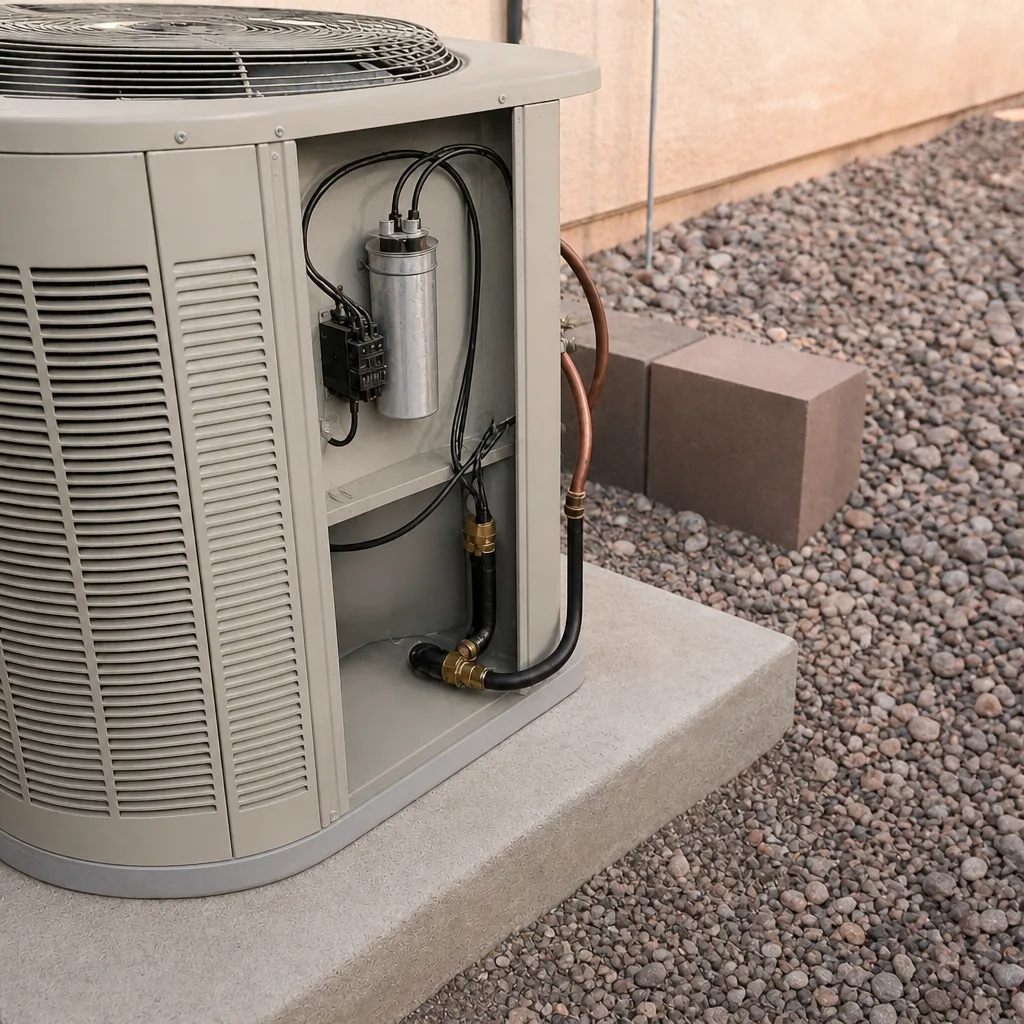
- Watch what’s under the unit. Gravel is common here because it survives wildfire-wise and looks good, but gravel radiates heat straight up into the coil. Concrete pads or a raised stand help; some homeowners lay light-colored pavers around the unit to reduce reflection.
- Elevate off the ground. A pad stand lifts the unit above dust accumulation – a real problem in a part of the Mojave where wind lifts sand off the surrounding desert.
- Consider a small misting line or evaporative boost only with manufacturer approval. Some setups accept it, some don’t. Ask before adding anything aftermarket; it can void a warranty.
A condenser sitting in full Boulder City west-side sun on a gravel pad with a block wall behind it is the worst-case setup. Moving it ten feet can change the performance by a real margin.
The Hybrid (Dual-Fuel) Option for Homes with Gas
If your Boulder City home already has natural gas running to it – and plenty here still do – a hybrid heat pump setup is worth understanding. The idea is simple: a heat pump handles cooling and mild-weather heating, and a gas furnace kicks in as a backup during the rare cold snaps and provides redundancy during extreme heat events when the grid is stressed.
Why this matters in Boulder City specifically:
- Summer redundancy. If the heat pump suffers a compressor failure on a 112°F Saturday, a hybrid setup with a gas backup lets you limp through on whatever auxiliary cooling or ventilation you’ve planned, rather than a full emergency call.
- Winter efficiency. Heat pumps are more efficient than gas furnaces in mild weather, and Boulder City winters are mild. The crossover point – the outside temperature where it makes sense to switch to gas – is set in the thermostat.
- Rebate leverage. A qualified heat pump install qualifies for utility incentives even in a hybrid setup. The gas furnace is just the backup heat source.
We set the switchover temperature individually for each home based on the equipment performance curve. A lot of installers leave the default settings in the thermostat; that’s how hybrid setups get bad reputations, running gas when they should be running the pump and vice versa. Our technicians walk through the settings with you at the end of the job so you know what’s happening when the season turns.
NV Energy Rebates and Nevada Incentives
Nevada utility programs have been generous toward heat pump installations in recent years, and Boulder City homeowners can tap both NV Energy programs and federal tax credits. The exact amounts shift with utility program cycles, so treat any specific dollar figure as a starting point to confirm at the time of your install rather than a permanent number.
What to plan around:
- Confirm your utility provider. Boulder City is served by a mix of utility setups. Check whether your service address is on Boulder City’s municipal electric system or NV Energy before you look at any rebate program.
- Get the equipment qualified. Rebates typically require a minimum SEER2 rating, often 15.2 or higher for standard heat pumps. Variable-speed inverter units from brands like Daikin or Rheem almost always clear that bar; builder-grade equipment sometimes doesn’t.
- Keep the paperwork. Rebates usually need the equipment model and serial numbers, the contractor’s invoice, and proof of install date. A good installer hands you all of it in one folder at the end of the job.
- Check federal tax credits separately. The federal 25C credit has covered a portion of qualified heat pump costs in recent years and has its own efficiency threshold.
- Ask about utility bill impacts. A heat pump lowers summer cooling cost but can raise winter electric use. NV Energy’s time-of-use rates can shift the math – a programmable thermostat set to run hard in the morning and coast through the 2-7 p.m. peak can matter more than the rebate.
We’ll walk through the current rebate stack during a free estimate and put the number on the written quote. Fireside doesn’t mark up rebate paperwork and doesn’t hold back the customer rebate – what you qualify for, you get.
Sizing and Installation: What “Done Right” Means
Almost all the complaints we hear about heat pumps in Boulder City trace back to sizing and installation, not the equipment itself. A correctly sized, carefully installed unit from a mid-tier brand will outperform an oversized premium unit every time.
The install checklist we hold ourselves to, and that you should expect from any contractor:
- Room-by-room Manual J load calculation. Not a square-foot rule of thumb. Not “you had a 3-ton before, so 3-ton.” The actual load for every room, with the actual insulation, window area and orientation.
- Duct inspection. Duct leakage of 20-30% is common in older Boulder City homes. Fixing the ducts before sizing the equipment often changes the equipment size you need.
- Manual S selection. Match the equipment’s actual rated capacity at design-day temperatures to the calculated load – not its nominal tonnage to the old unit’s tonnage.
- Line set and electrical sized correctly. Undersized line sets are a common hidden cost. The liquid and suction lines need to match the manufacturer’s spec, and the breaker needs to match the unit’s rated draw.
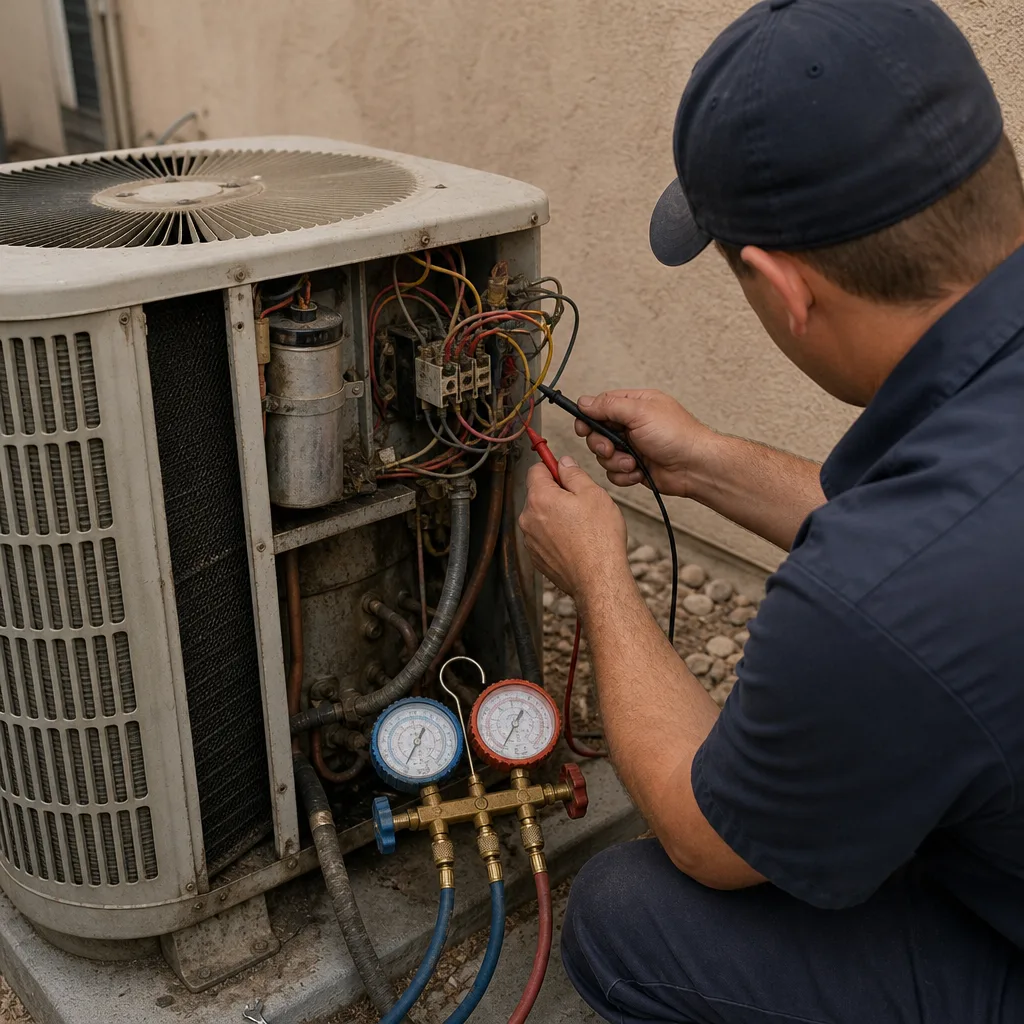
- Commissioning and verification. Refrigerant charge verified by weight or subcooling, airflow verified with a manometer, static pressures checked. We leave a written report of what was measured.
- Walkthrough at the end. Filter changes, thermostat settings, what the “aux heat” indicator means, what to do if the system shuts off on a 112°F day.
Our AC Repair & Installation in Boulder City page goes into more detail on what to expect from an install, and our Fireside Heating & Air Co. Boulder City home page has an overview of how we work with homeowners.
Keeping a Desert Heat Pump Running for the Long Haul
Dust and heat are the two things that wear out a heat pump in Boulder City faster than in other climates. A filter that would last three months in a moderate climate can clog in six weeks here during a windy spring. Coils accumulate dust from the surrounding desert. The condenser fights higher ambient temperatures for four months a year.
What actually extends the life of the system:
- Change filters every 60-90 days, and more often during windy stretches. This one change alone prevents more compressor strain than any other maintenance task.
- Rinse the outdoor coil at the start of summer. A garden hose on low pressure, condenser off, from the inside out. Not a pressure washer; you’ll bend the fins.
- Schedule a seasonal tune-up before the first 100°F day. Not in July when everyone else is calling for emergency service. Our $89 Seasonal Tune-Up catches capacity problems before they turn into a no-cooling call on a Saturday.
- Keep vegetation and clutter clear of the outdoor unit. Even a decorative shrub heavy against the side of the condenser costs efficiency.
- Watch the electric bill for changes. A system that has stopped performing is easier to catch in a $40 month-to-month swing than in a single breakdown.
- Schedule professional service every year. A properly maintained heat pump lasts 15-20 years. An ignored one often doesn’t make 12.
We check refrigerant charge, electrical connections, capacitor condition and airflow at every tune-up, and we hand you a written report of what we found. Our technicians aren’t paid on what they sell, so the report tells you what the system needs – not what would be convenient to sell.
Common Mistakes to Avoid
- Sizing by the old unit’s tonnage. A 3-ton replacement for a 3-ton removal assumes the original was right, and in a Boulder City home that’s often not the case. Insulation, windows and duct sealing have changed since the original was installed.
- Putting the condenser in full west sun on a gravel pad. Two placement decisions that each cost 5-10% capacity on the hottest days. Easy to avoid, hard to fix later.
- Walking away from a Manual J. If a contractor quotes you a system without a load calculation, ask for it. If they wave it off as overkill, they’re guessing. Guessing is the most common cause of comfort complaints.
- Choosing a mini split without considering the whole house. A single-zone system in the master bedroom that leaves the living room hot in July solves half the problem. Zones need to be planned together.
- Overlooking the rebate stack. A $3,000 difference in net cost between two quotes can disappear or flip once you account for rebates and tax credits properly. Ask what’s qualifying and what’s not.
- Mixing brands within one system. An outdoor unit from one manufacturer piped to an indoor unit from another can technically work but strains the warranty. Stick with one manufacturer – Carrier, Trane, Lennox, Goodman, Rheem, York, Daikin, Bryant or American Standard – throughout a single system.
- Setting the thermostat down to 60 to “cool faster.” It doesn’t work on any air conditioner or heat pump. It just drags the system, and likely your bill. Set it to the temperature you actually want.
The other mistake we see: treating a 112°F afternoon compressor-shutoff as a total failure. Modern heat pumps have high-pressure safety cutouts, and a unit that shuts down on a record-temperature day may simply be protecting itself. Get it checked; don’t replace it on the spot before diagnosis.
See the difference
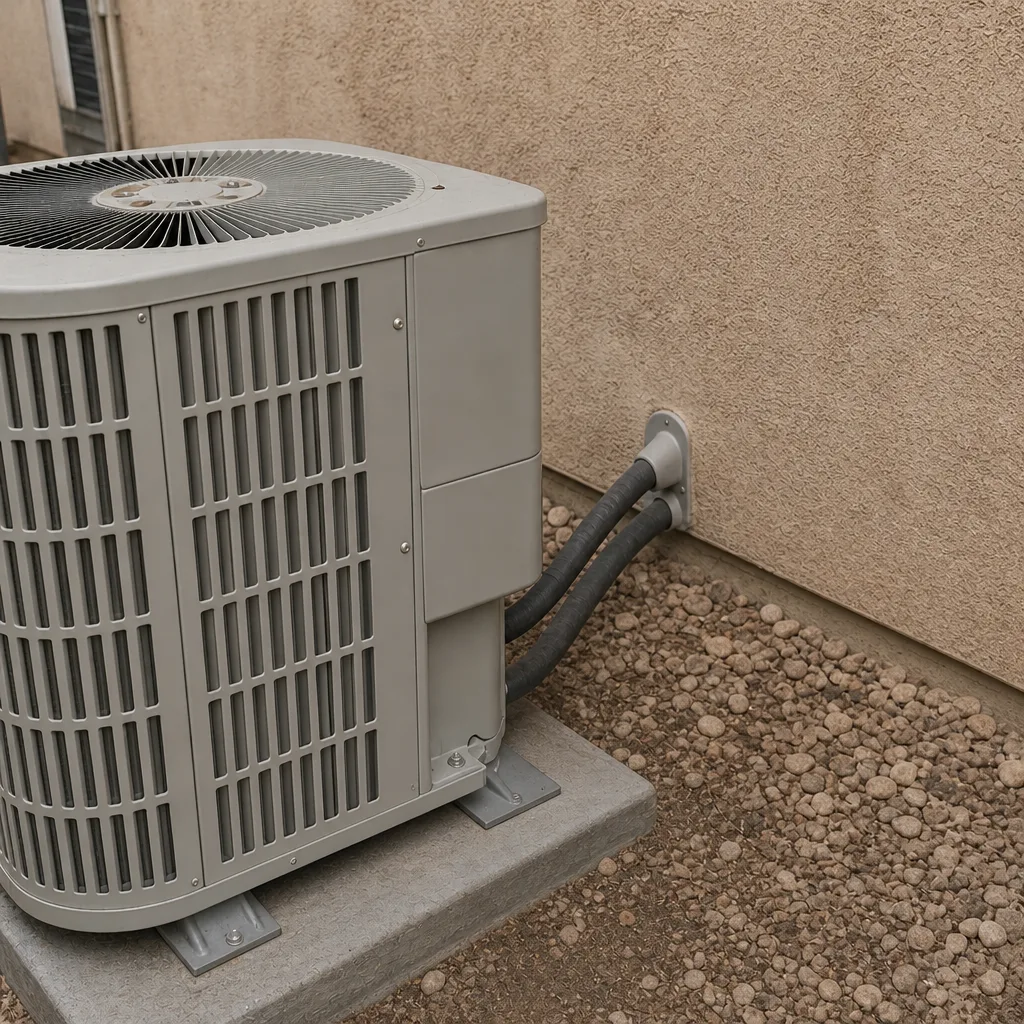
 Before
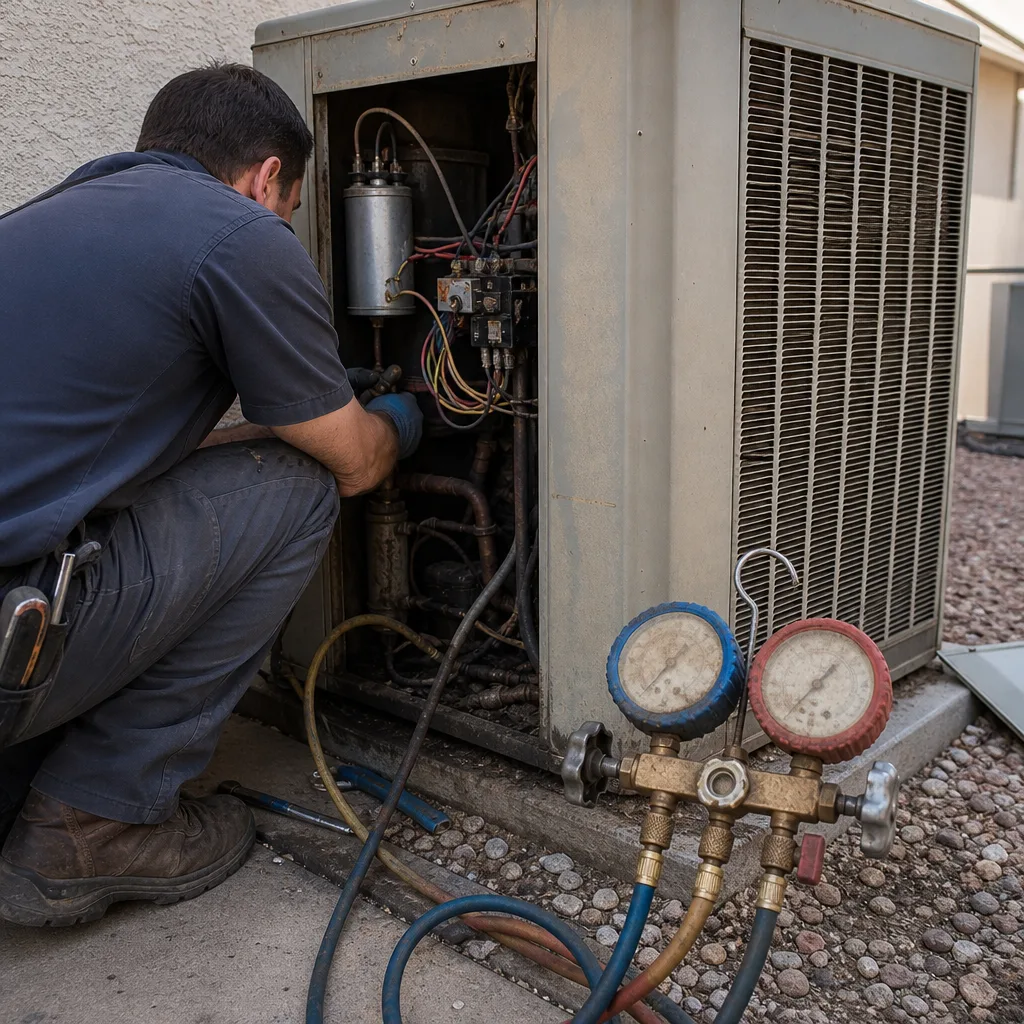
 After
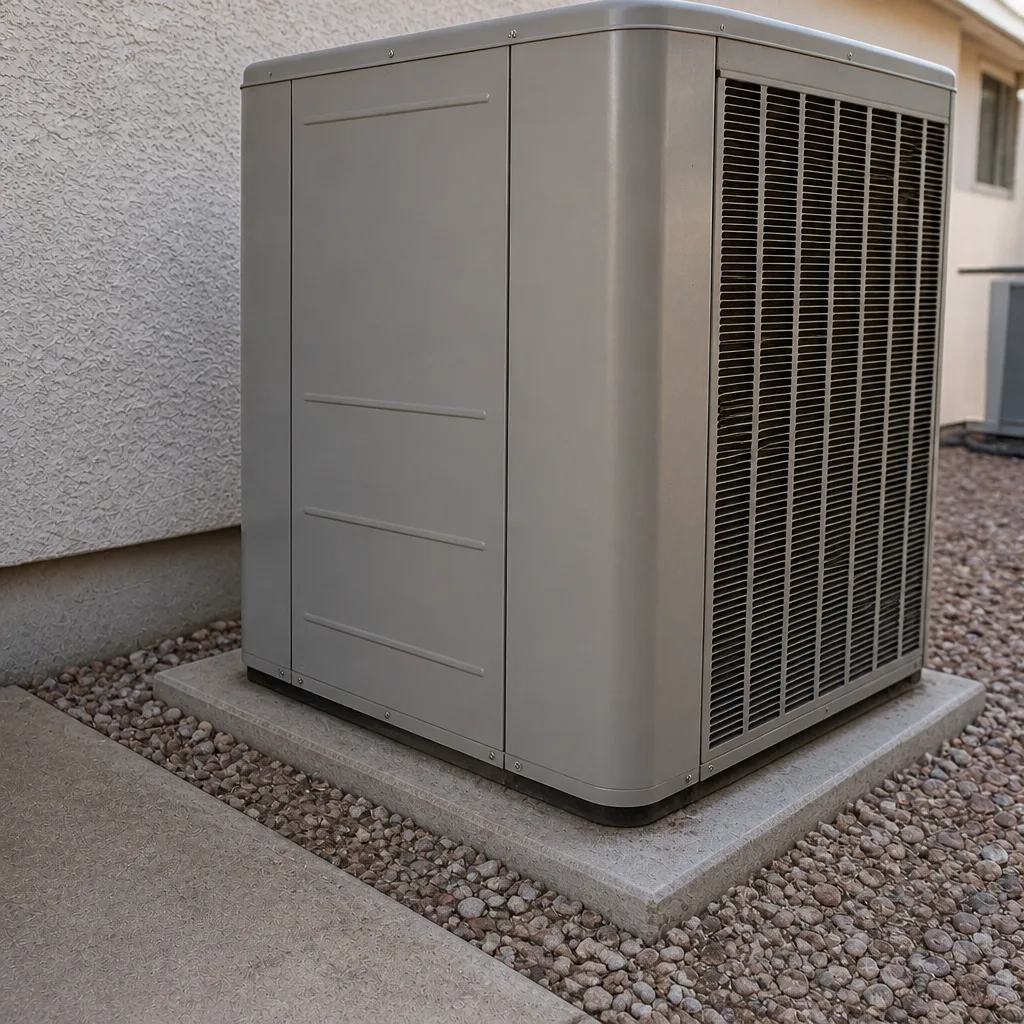
 Before
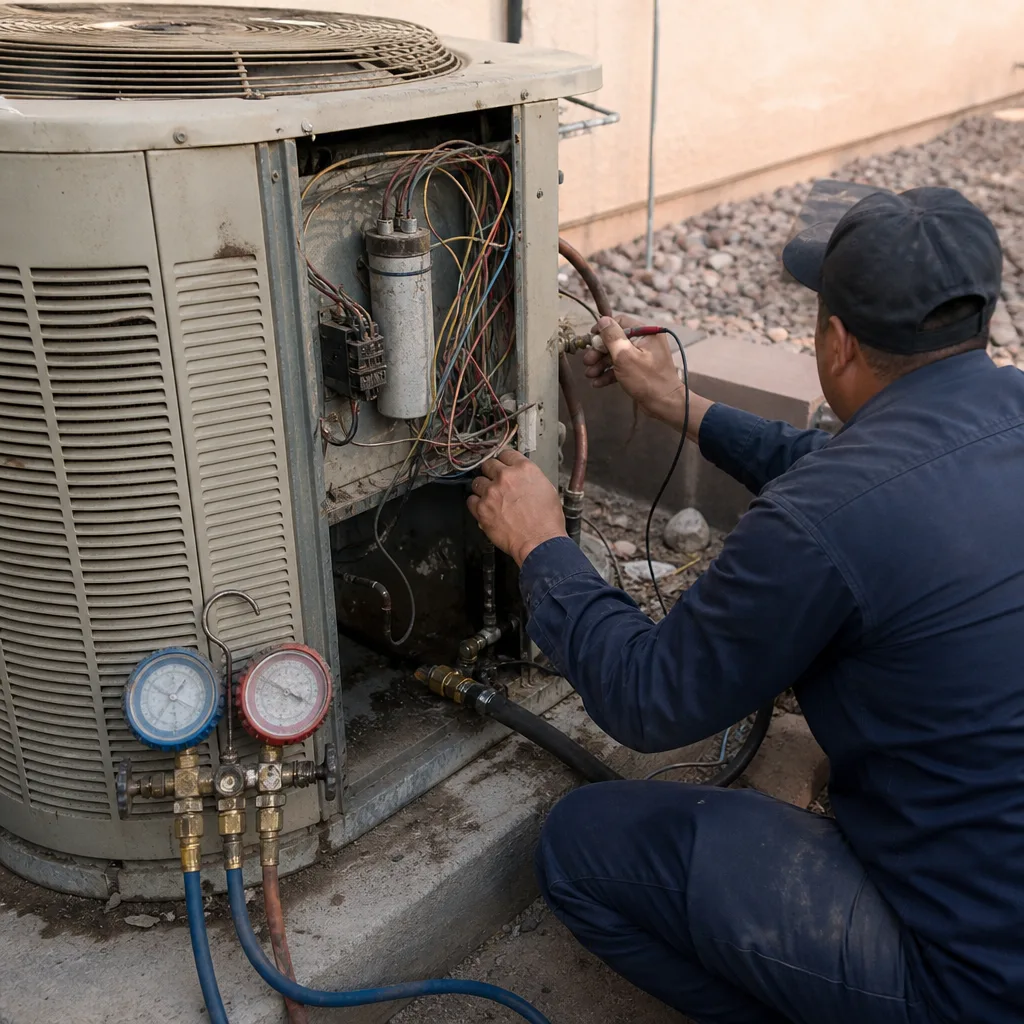
 After
 Before
 After
When to Call a Professional
Some things a homeowner can handle: filter changes, outdoor coil rinsing, and the general habit of keeping clutter away from the condenser. Almost everything else in a heat pump system involves refrigerant, high voltage, or gas – and those are not the tools of a Saturday afternoon project.
Call us when:
- Your system shuts off unexpectedly on a hot afternoon and won’t restart.
- You’re seeing ice on the indoor coil or refrigerant lines (yes, on a 110°F day, that usually points to a refrigerant charge problem).
- Your electric bill jumps 20% or more month over month with no lifestyle change.
- One room never gets comfortable no matter what the thermostat is doing.
- You’re getting ready to install or replace a system – even if you’re not sure yet which equipment is right.
- You’re sorting through rebate eligibility or need a second opinion on a written estimate from another contractor.
We answer the phone with a live person 24 hours a day, including the 2 a.m. no-cooling call. Fireside Heating & Air Co. Boulder City offers free estimates in Boulder City – call (844) 312-0133. If you’ve already got a quote from another contractor, we’ll give you a free second opinion on it, in writing, before you sign anything.
Frequently Asked Questions
Yes, but the honest answer is that they work well when they’re correctly sized and placed, and poorly when they’re not. At 110°F or above, expect 10-20% less actual capacity than the rated spec for a standard single-speed heat pump, and less for a variable-speed unit. The critical variables are the load calculation, the outdoor unit’s shade and airflow clearance, and duct tightness. Get those right and a heat pump keeps a Boulder City home comfortable through August; skip them and the system will feel like it’s failing when it’s just overwhelmed.
A ductless mini split often works better in Boulder City homes because it avoids the attic-duct heat loss that plagues older single-story homes. A ducted system running through a 140°F attic loses a real share of its capacity before the air reaches the room. Mini splits deliver air directly to the room, so the same BTU arrives at the register. The tradeoff is more wall-mounted hardware to look at, and you need to plan the zones carefully so nothing is left out.
Most residential heat pump replacements in Boulder City land in the $8,000 to $18,000 range depending on system size, variable-speed vs. single-speed, duct condition and any electrical upgrades. Single-zone ductless mini splits typically run $3,500 to $7,000; multi-zone systems go higher. Those figures are a starting point, not a quote – the real number depends on your home, and we put it in writing before any work begins. Call (844) 312-0133 for a free estimate on your specific house.
NV Energy has offered heat pump rebates in recent years tied to qualifying SEER2 efficiency minimums, typically 15.2 or higher. Not every Boulder City address is on NV Energy’s service territory – some are on Boulder City’s own electric system – so the first step is confirming your provider. The federal 25C tax credit is a separate program with its own efficiency threshold and should be checked alongside utility rebates. Our team walks through the current rebate stack at estimate time and provides the equipment model and serial numbers for the paperwork. Call (844) 312-0133 if you’d like help confirming what you qualify for.
If your current AC is under 12 years old and the repair is under $1,500, repair usually wins. Once a system is 15 years or older and facing a repair over $1,500, the math often favors replacing it with a heat pump – especially since the heat pump also handles heating, offsetting your winter gas or electric bill. We look at age, refrigerant type, efficiency, and current repair history before recommending anything. The worst answer is the one that assumes replacement just because it’s easier to sell. Call (844) 312-0133 for a straight assessment.
A standard central heat pump replacement usually takes one long day, sometimes two if electrical or ductwork changes are needed. A single-zone ductless mini split is often a one-day install; multi-zone systems can take two to three days depending on line routing through walls. Our technicians schedule the install date in writing at the estimate, and if we’re running late we call – not the other way around. We also complete the commissioning report before we leave, so you have the airflow, charge and settings documented in writing.
The Bottom Line
Heat pumps and mini splits are genuinely good equipment in Boulder City, and a well-planned install here will run for 15-20 years while cutting summer cooling costs over an aging central AC. The equipment matters less than the sizing load calculation, the placement of the outdoor unit and the duct condition. Expect 10-20% less rated capacity at 110°F than the spec sheet says – adjust your expectations and the system will keep up. Look at NV Energy rebates and the federal tax credit as part of the net cost, not as an afterthought. If you already have gas, look at the hybrid setup for summer redundancy. And get every promise in writing, including the install date, the price, and the commissioning report. Done right – or we make it right.
Ready to sort out what your Boulder City home actually needs? Call (844) 312-0133 for a free estimate on a heat pump or mini split, and we’ll put the numbers in writing before any work begins.
Written by the team at Fireside Heating & Air Co. Boulder City.