
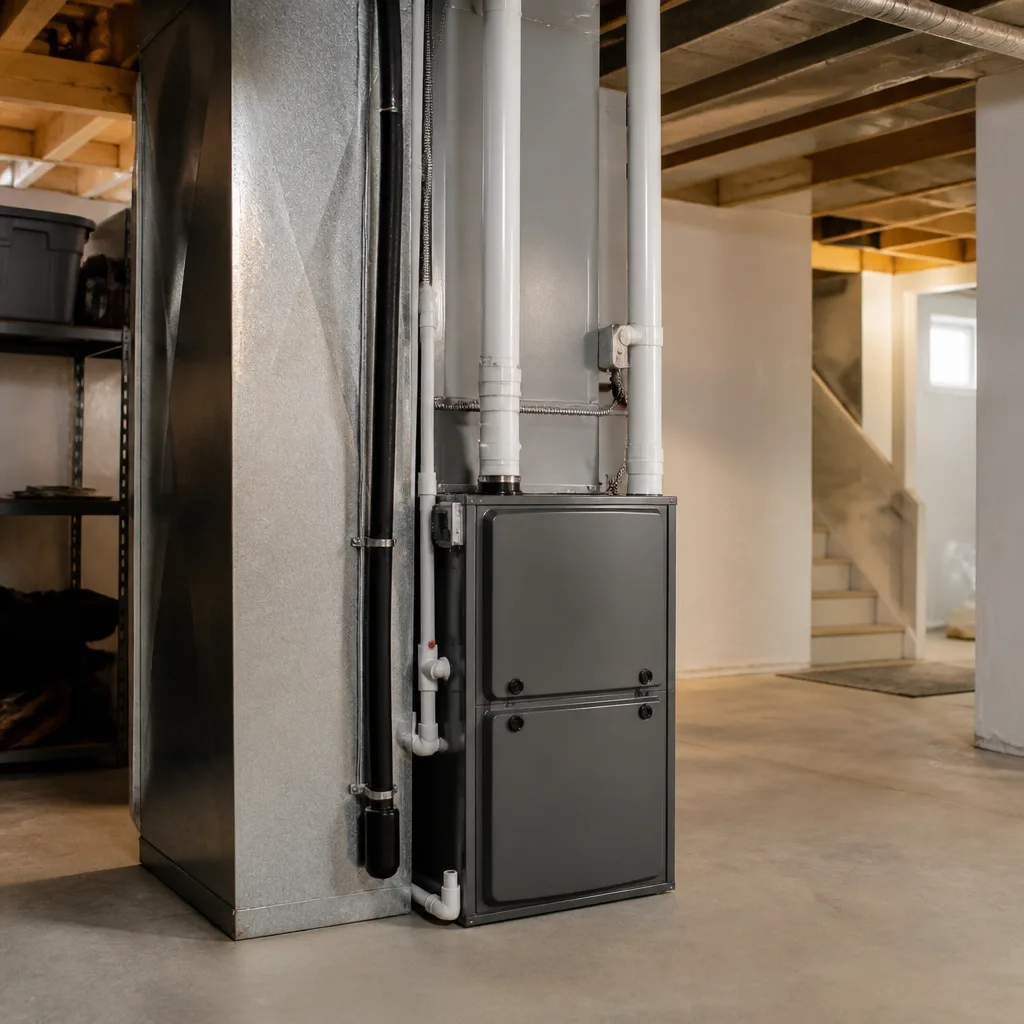
 Furnace & heating
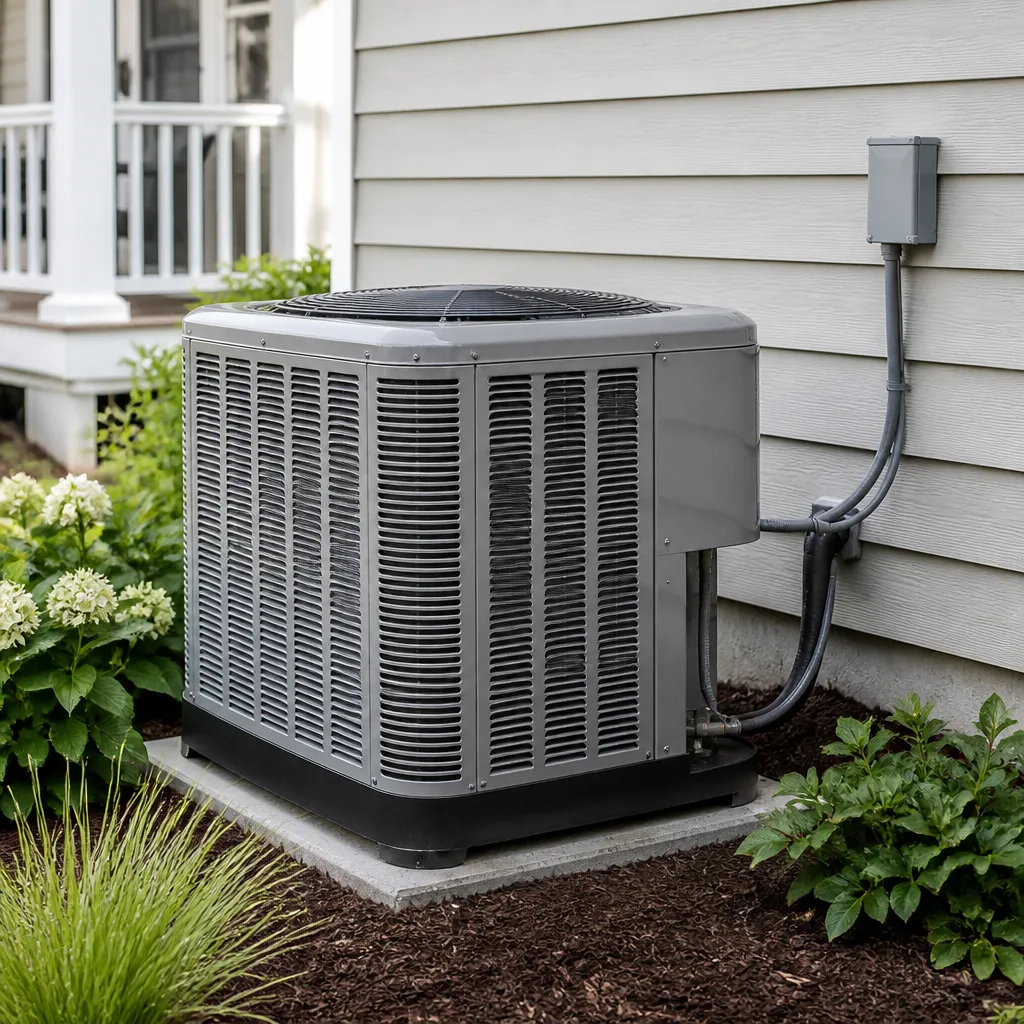 AC repair
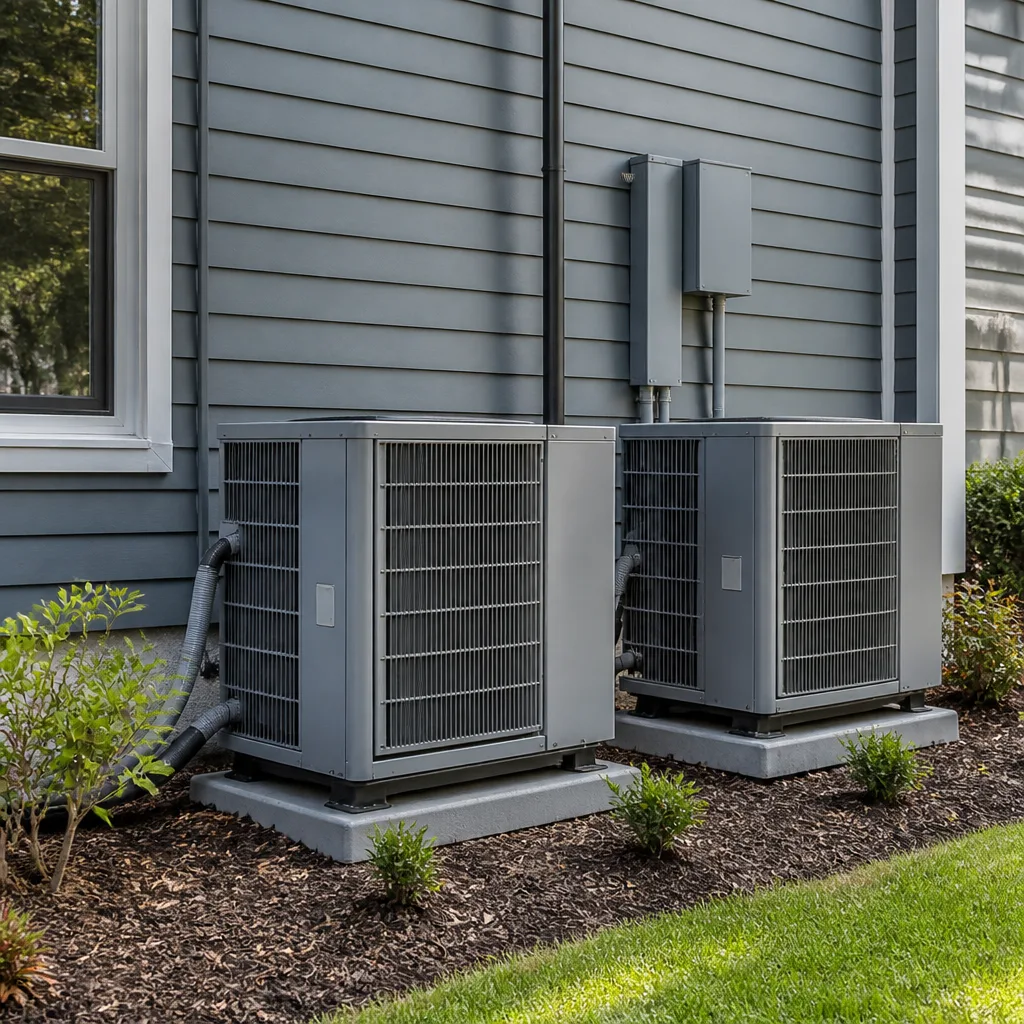 Heat pumps
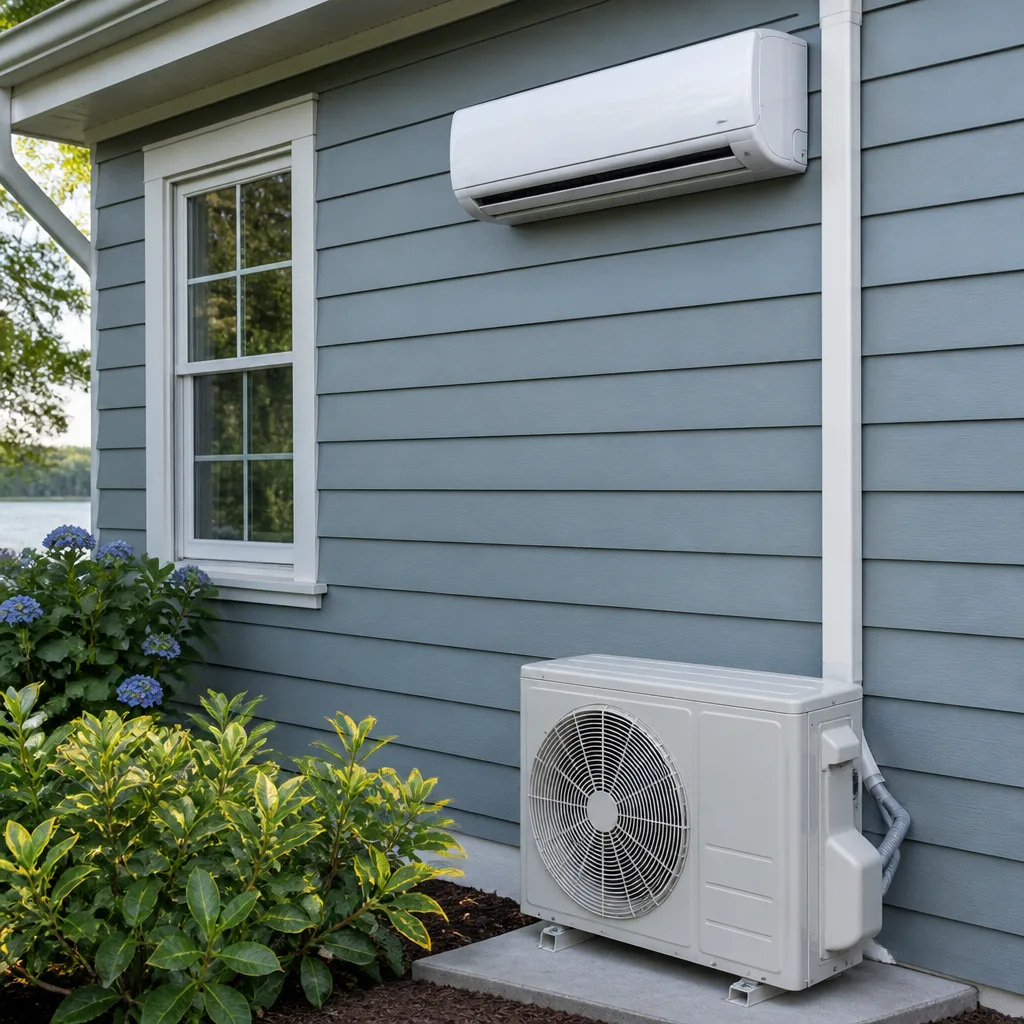 Ductless mini splits
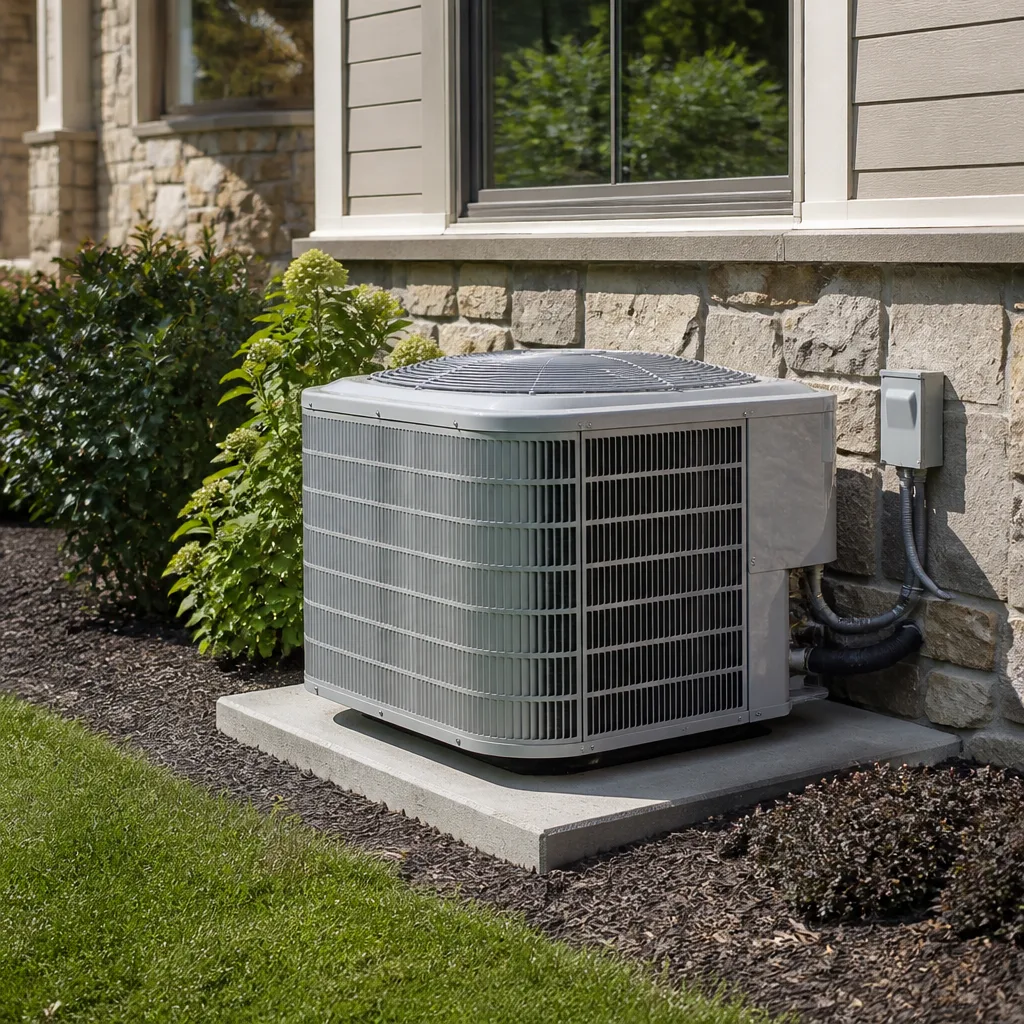 Carrier
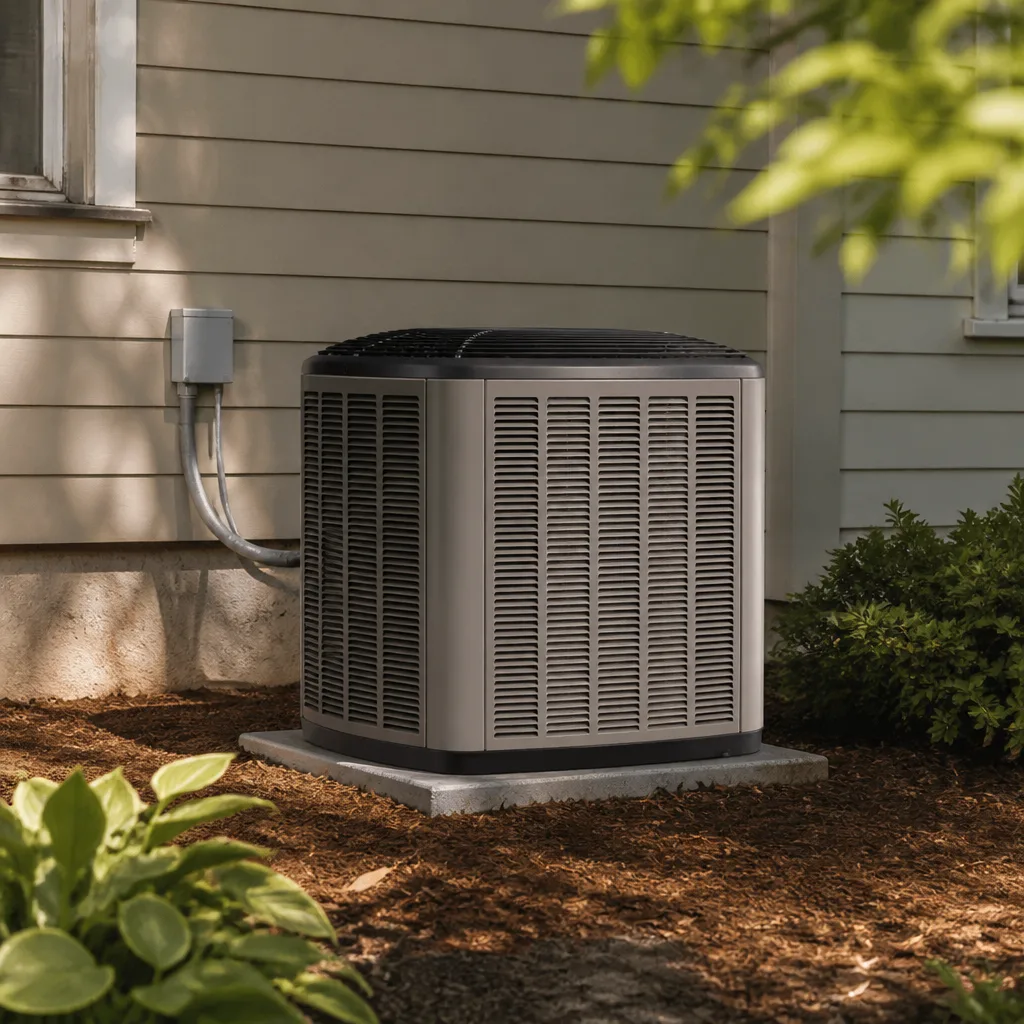 Trane
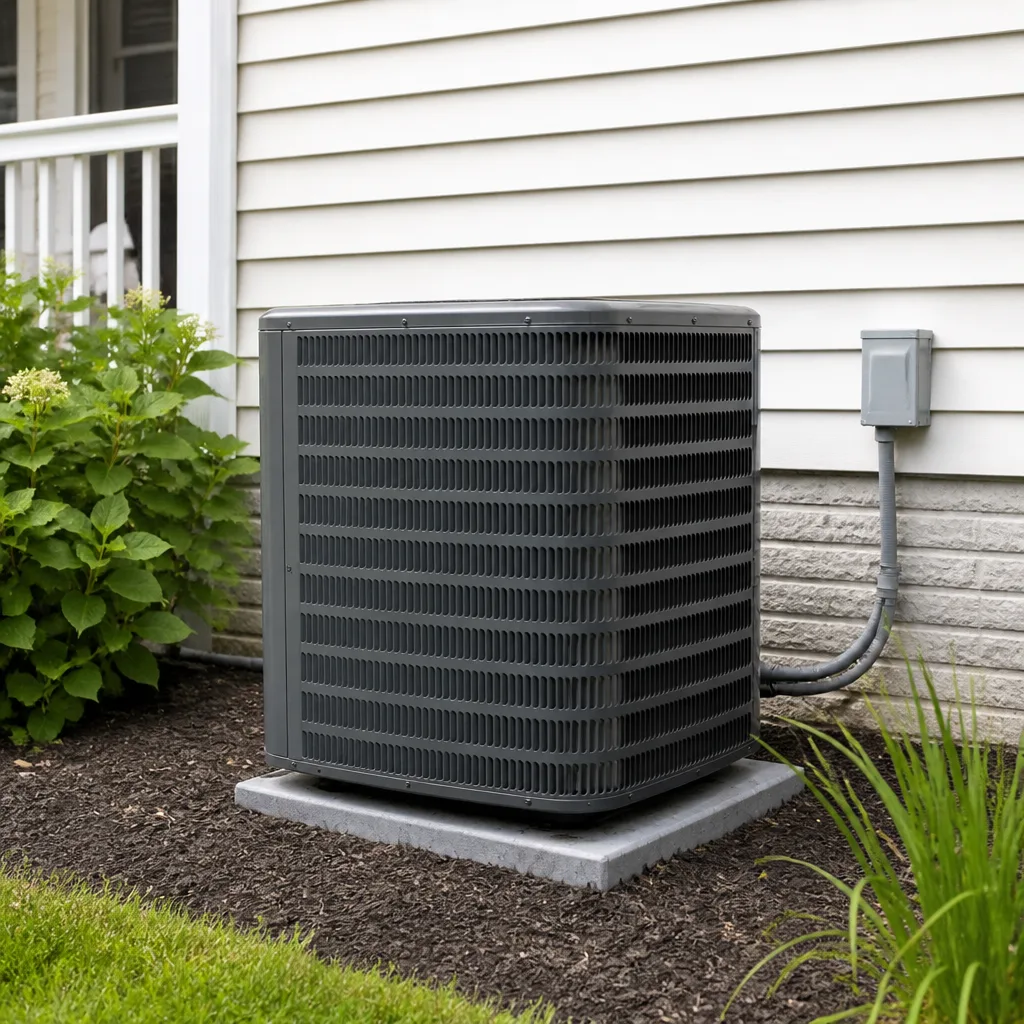 Goodman
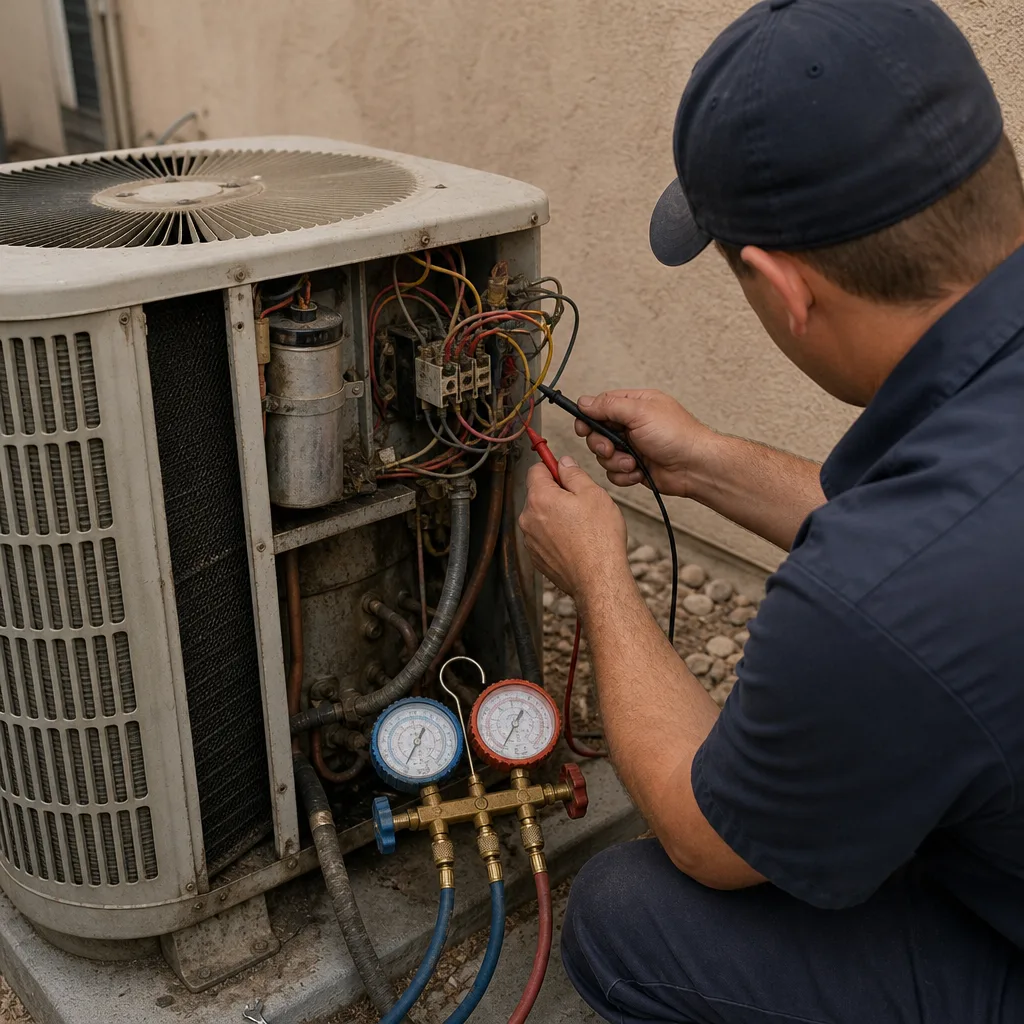
Seasonal tune-up and full diagnostic on your Carrier, Trane, or Goodman system - readings shown to you before any repair is proposed
Diagnosis first, numbers second - you approve the repair price before a single part goes in.
Get your free estimateStyles & brands we work with
- AC repair
- Furnace & heating
- Heat pumps
- Ductless mini splits
- Carrier
- Trane
- Goodman
See the difference
 Before
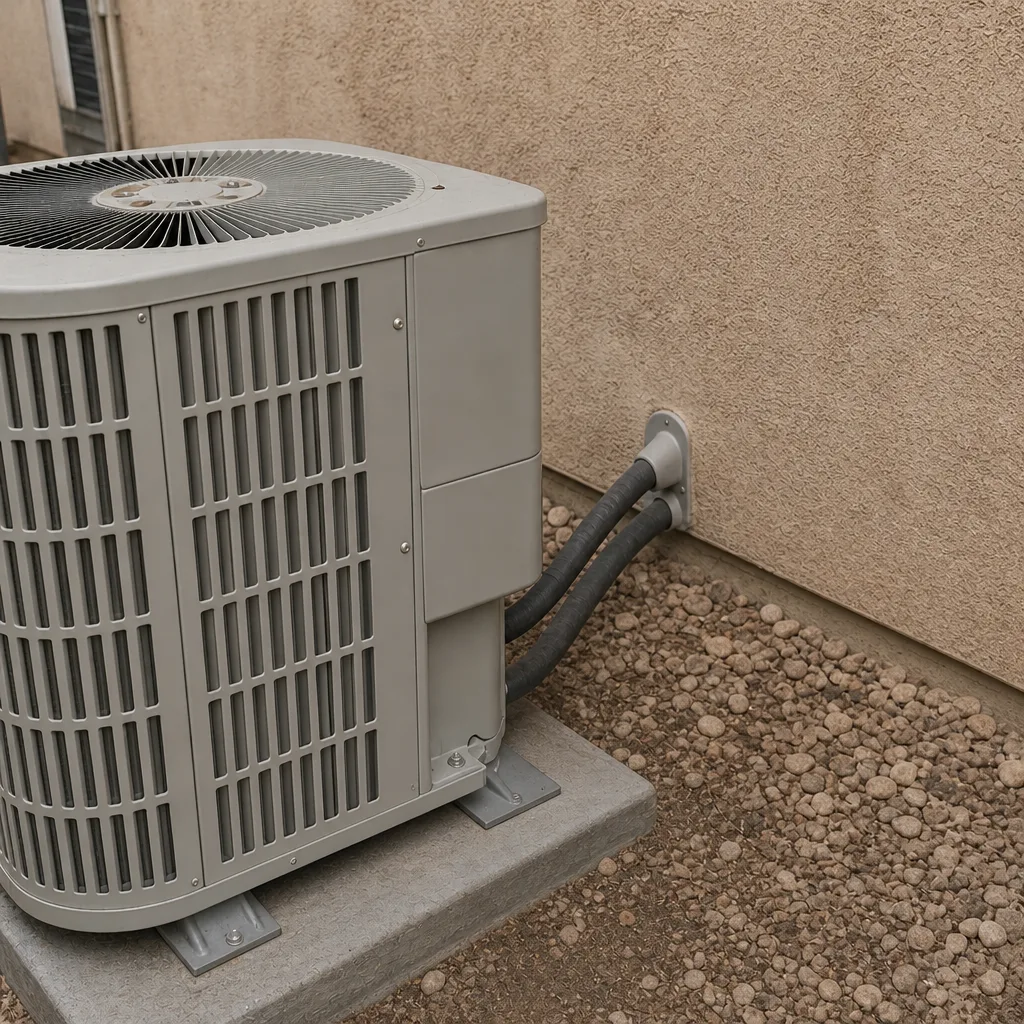 After
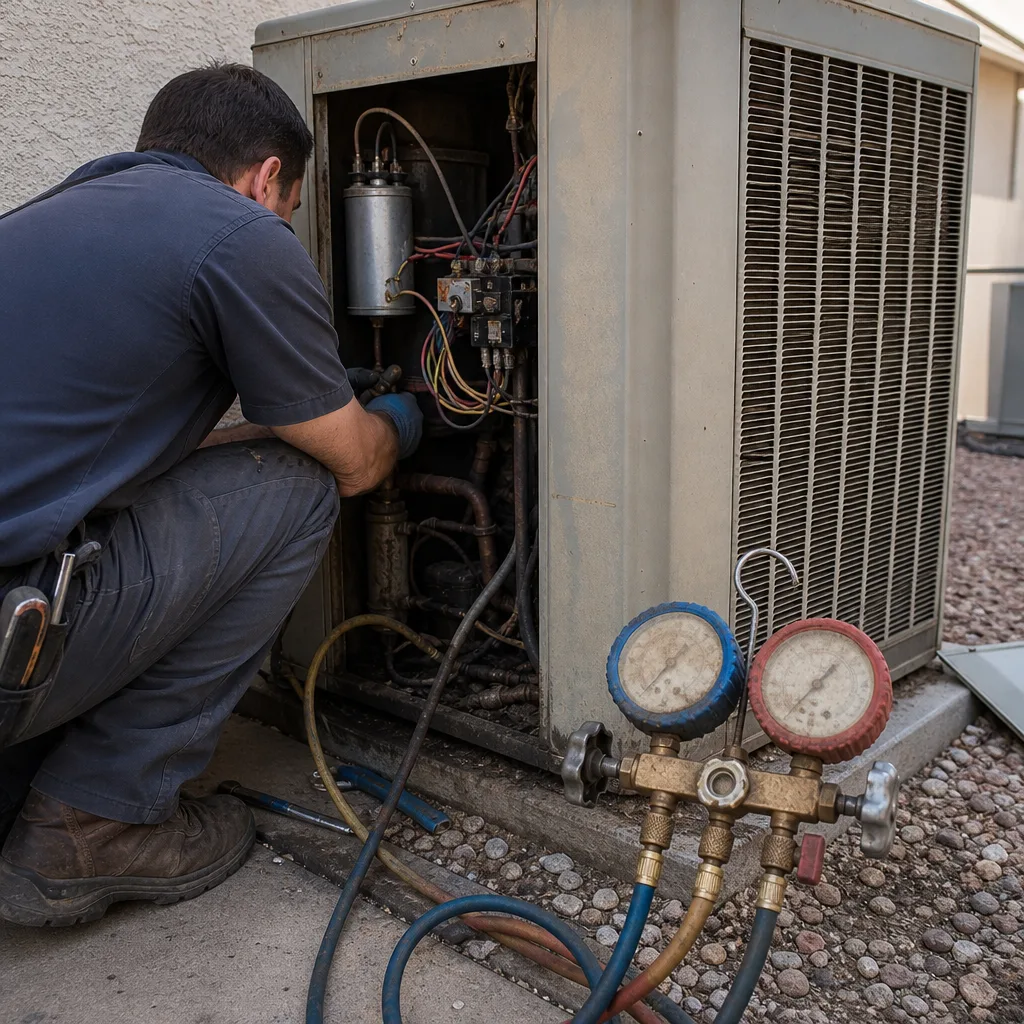 Before
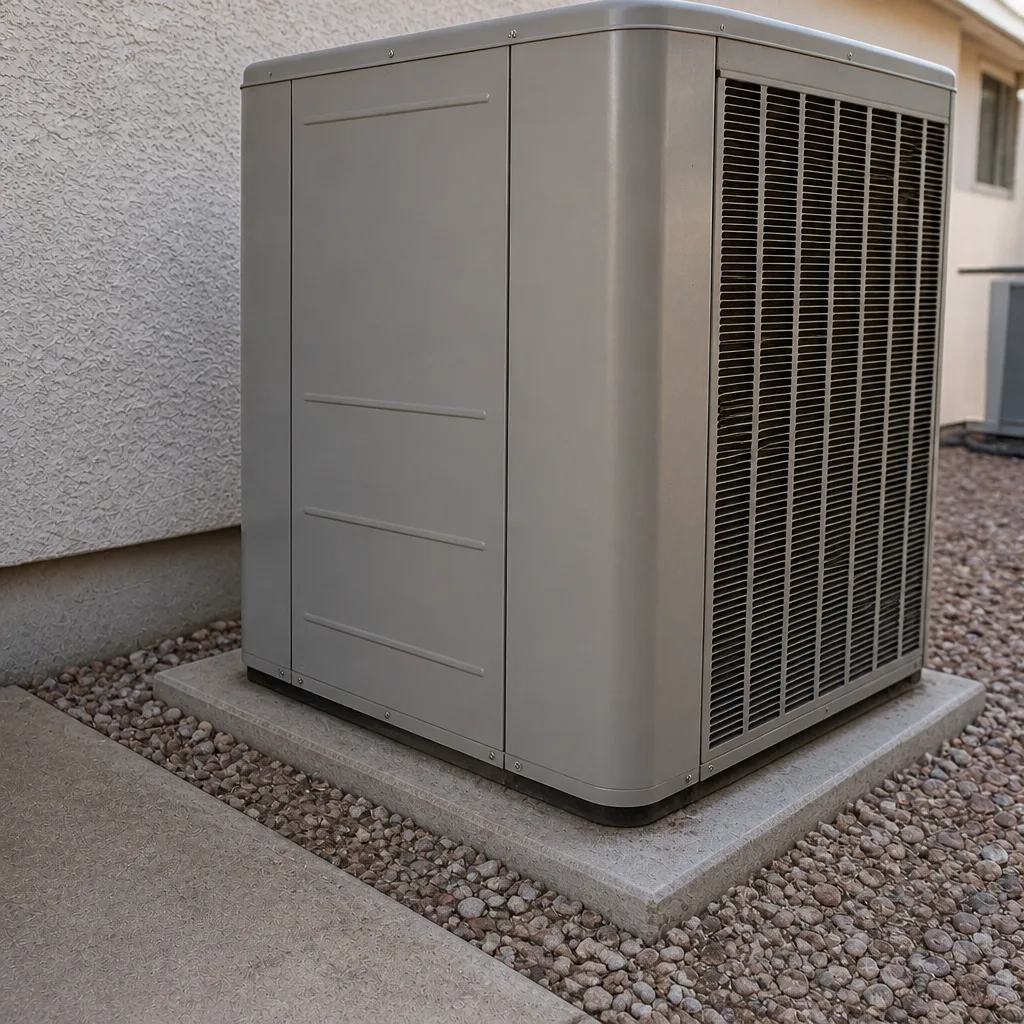 After
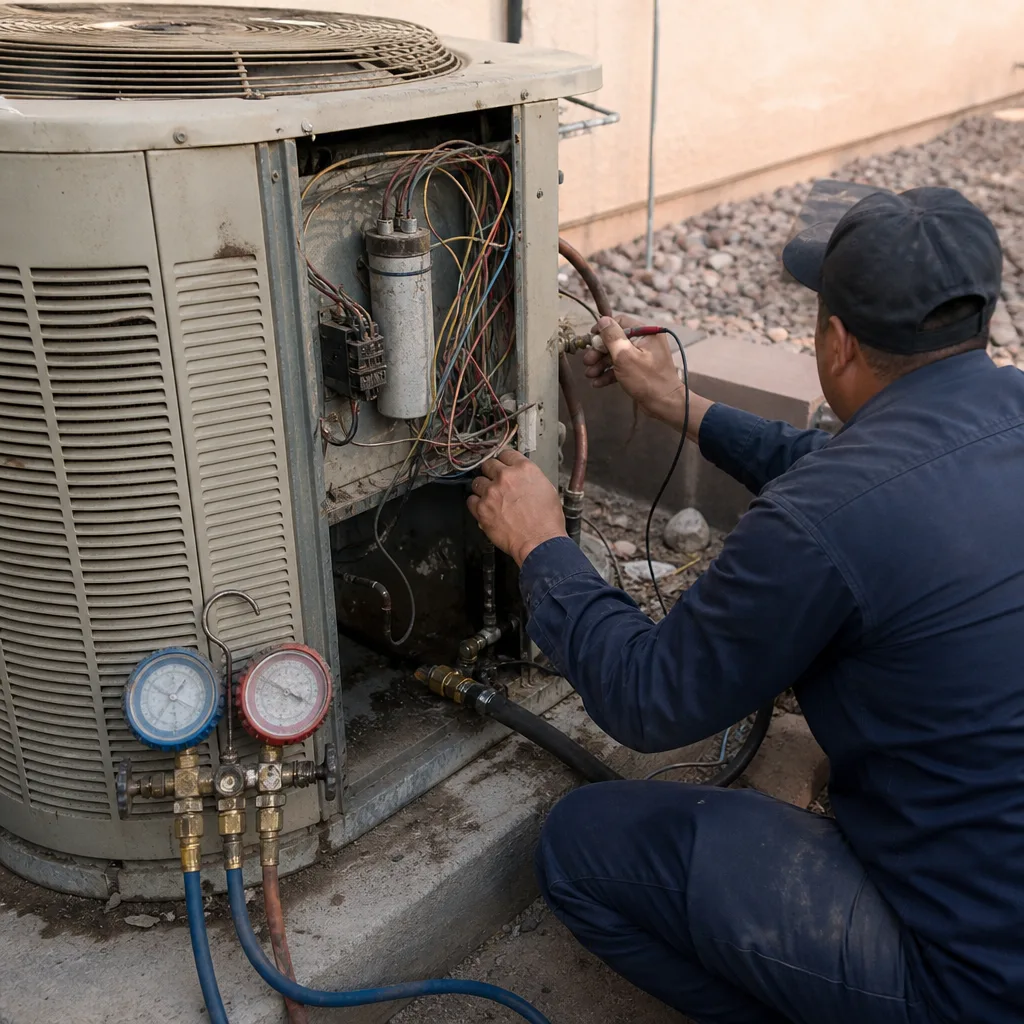 Before
 After
Heat Pump vs Furnace in Boulder City, NV: Which One Fits Your House at 2,500 Feet?
Choose a cold-climate heat pump if your home’s design-day low sits around 28°F and your ductwork and electrical panel can carry it; choose a dual-fuel system (heat pump plus small gas furnace) if you want the efficiency of electric heating in mild months without betting the winter on it. For most Boulder City homes between the historic 1930s core and the newer builds up the slope, dual-fuel is the safer call. Here’s the honest framework behind that answer, and you can talk it through with us at (844) 312-0133.
Most heat-pump-vs-furnace articles are written for Atlanta or Minneapolis. Boulder City, NV sits at roughly 2,500 feet above the Mojave Desert floor, just east of Hoover Dam, and its winter design temperature changes the math. That’s not a marketing line. It’s the single number that decides whether a heat pump alone can carry your house in January or whether you’ll be running auxiliary strip heat on a 30-degree night and watching the meter climb.
What “design-day low” means, and why it’s the number that matters in Boulder City
The design-day low is the outdoor temperature your heating system has to be sized to handle on the coldest few hours of a typical winter. Engineers call it the 99% heating design temperature, meaning 99% of winter hours are warmer than that figure. For Boulder City, that number lands at roughly 28°F. Cold enough that a standard single-stage heat pump loses capacity and efficiency. Warm enough that a modern variable-speed cold-climate heat pump, rated down to -13°F, handles it without breaking a sweat.
That combination is unusual. In Henderson and the Las Vegas valley floor, winters are milder still, and a modest heat pump sails through. Higher up toward Mount Charleston, you’d want a furnace or a serious dual-fuel setup. Boulder City sits in the narrow band where a properly sized cold-climate heat pump can legitimately replace a gas furnace, if someone actually calculates the design-day low for your address instead of quoting a statewide Nevada average. That’s the whole argument.
The dual-load reality: 108°F summers and 28°F winter nights
Here’s what a lot of comparison pages miss. Your system isn’t doing one job. From May through September it’s fighting dry Mojave heat that regularly pushes past 100°F, and the intense sun hammering south- and west-facing walls on the newer tract and custom homes up the slope makes cooling the dominant load by a wide margin. Then in January it’s heating a house that might see a hard freeze. A single system carries both extremes.
That dual load changes the recommendation. When cooling is the heavy lift and heating is moderate, a dual-fuel hybrid, meaning a heat pump paired with a small gas furnace, often pencils out better than a pure heat pump. The heat pump does the shoulder-season work efficiently, the furnace takes the cold snaps, and the gas side doesn’t have to be sized for a full heating load. You get the summer performance you actually need and a winter safety net without the efficiency loss of slab-on-grade electric resistance heat.
Heat pump vs furnace vs dual-fuel: a straight comparison
| What you’re weighing | Cold-climate heat pump only | Gas furnace (with AC) | Dual-fuel hybrid |
|---|---|---|---|
| Handles Boulder City’s 28°F design low | Yes, if rated to -13°F | Yes, comfortably | Yes, furnace covers the low end |
| Summer cooling performance | Excellent (variable-speed) | Depends on paired AC | Excellent |
| Electrical panel upgrade often required | Frequently | Rarely | Sometimes |
| Cold-snap bill risk | Strip heat can spike usage | Low | Low |
| Best fit for | Newer, well-sealed homes with strong panel | Tight budgets, existing gas service | Most Boulder City homes |
What it costs, and the hidden line items most articles skip
For the 1930s and 40s bungalows in the historic downtown core, switching to a heat pump usually triggers costs a gas-furnace replacement doesn’t. Those dam-worker homes were built before central air existed, so every generation since has squeezed a system in, and a technician working those attics routinely finds undersized or jerry-rigged duct runs and closets retrofitted for air handlers. A heat pump often needs a heavier electrical panel and sometimes new ducts. Those are real dollars and they belong in the comparison.
Our repair ranges in Boulder City give you a sense of the market: AC repair runs $150-$650, furnace repair $150-$700, tune-ups $80-$200, and full AC installation $3,500-$7,500. We quote both heat-pump and dual-fuel configurations upfront on a single visit, so you’re comparing real numbers rather than an estimate that grows at install. The price you hear is the price you pay.
- Panel upgrade: frequently needed for a heat pump in the older core, rarely for a like-for-like furnace swap.
- Duct work: the historic bungalows often need it; newer tract homes usually don’t.
- Strip heat risk: running auxiliary heat on a cold snap with NV Energy’s rates can spike a bill a small gas furnace would avoid.
The oversimplification to ignore: “Nevada is sunny, so heat pumps always win”
That line shows up everywhere and it’s half wrong for Boulder City. Yes, sunny winters help a heat pump’s real-world efficiency. But this town pays commercial-adjacent NV Energy electric rates, and a heat pump leaning on auxiliary strip heat during a cold snap can cost more to run than a small furnace would. The sunny-day efficiency is genuine. The cold-snap bill risk is genuine too. A dual-fuel setup lets you keep the first without owning the second.
Brands matter here. Variable-speed cold-climate equipment from Daikin and Bryant, and well-matched systems from American Standard, behave very differently from a builder-grade single-stage unit. Our technicians are trained to service all nine major residential brands, so we’re not steering you toward one logo. We’re sizing the equipment to your house.
How we’d actually decide for your house
This is the sequence we walk homeowners through, in order, before anyone talks about equipment:
- Calculate your design-day low for the specific address, not a statewide average. At 2,500 feet, small elevation and exposure differences shift it.
- Do a load calculation covering both the heavy summer cooling load and the winter heating load. Cooling usually dominates here.
- Inspect the electrical panel and the duct system. In the historic core this step often surfaces the hidden costs first.
- Price both a pure heat pump and a dual-fuel hybrid on the same visit, upfront, so the comparison is apples to apples.
- Recommend, don’t pressure. You leave with two real numbers and the reasoning, then you decide.
If you’re leaning toward a heat pump, our Heat Pump & Mini Split page covers sizing and equipment in more detail, and you can see how we handle heat pump and mini split work in Boulder City specifically. For the broader picture, start at our home page. Every job we do is backed by the 90-Day Done Right Promise, in writing, no arguing.
FAQs
Installed heat pump systems generally land in a higher upfront range than a straight furnace-and-AC replacement, and the gap widens in the historic core once a panel upgrade or duct work is added. Furnace repair runs $150-$700, AC repair $150-$650, and AC installation $3,500-$7,500 in our market. Call (844) 312-0133 for exact upfront numbers on both configurations – estimates are free.
Yes, if it’s a modern variable-speed cold-climate unit rated to -13°F, because Boulder City’s design-day low sits around 28°F, which is well within that range. The catch is sizing, panel capacity, and whether you want a gas furnace as backup for cold snaps. Call us and we’ll calculate the design low for your address before recommending anything.
Repair is almost always cheaper in the short term, and it’s often the right call if your furnace is otherwise sound. The switch makes sense when the furnace is near end of life and you’re already facing replacement plus panel and duct work. We’ll give you a free second opinion on any written estimate so you can compare honestly – call (844) 312-0133.
Because the 1930s Bureau of Reclamation-era homes downtown were built before central air existed, so the electrical service was never sized for the load a heat pump draws. A furnace swap rarely trips that issue; a heat pump often does. A technician can tell you in one visit whether your panel needs upgrading.
Talk it through before you commit
If you’d rather have it looked at than keep reading, Fireside Heating & Air Co. Boulder City offers a no-pressure assessment in Boulder City. We quote both heat-pump and dual-fuel setups upfront, answer the phone with a live person around the clock, and stand behind the work in writing. Call (844) 312-0133 for a free estimate.
Written by the team at Fireside Heating & Air Co. Boulder City, serving Boulder City, NV.