
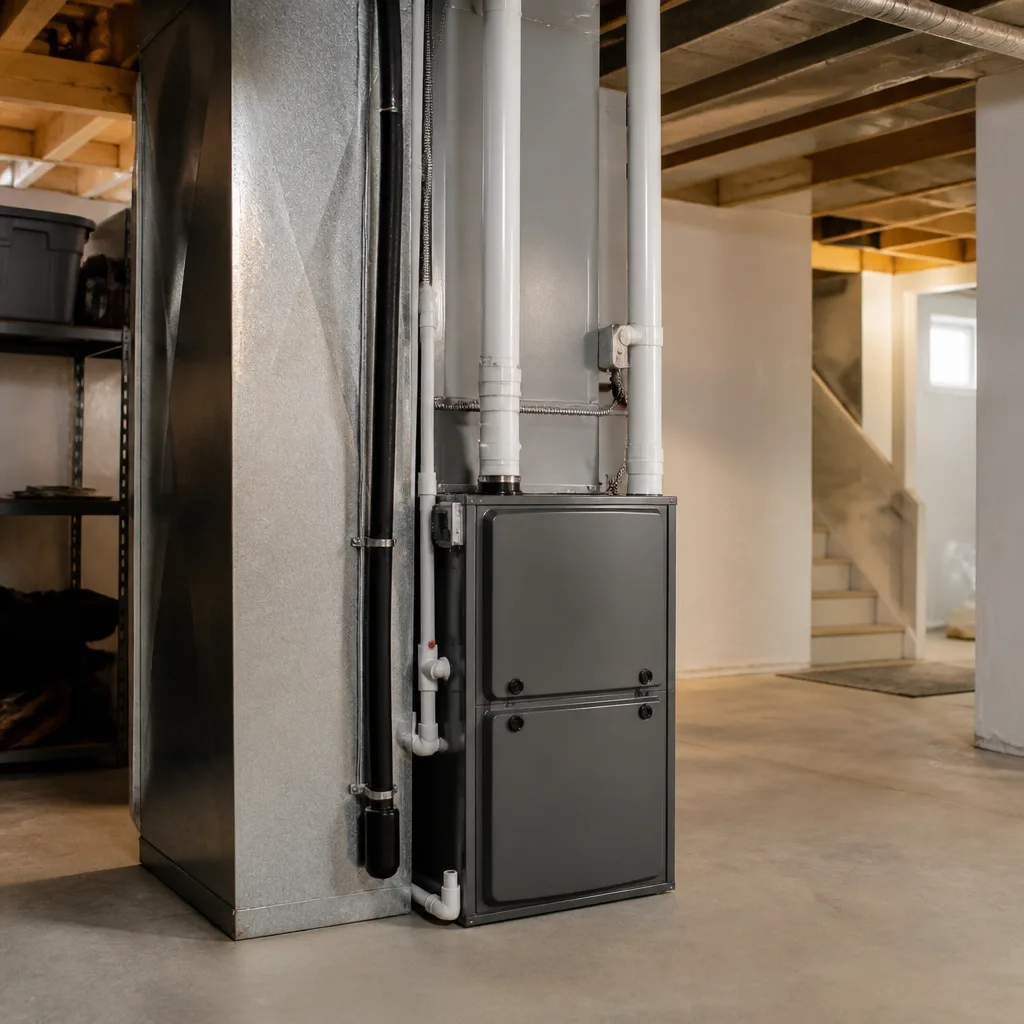
 Furnace & heating
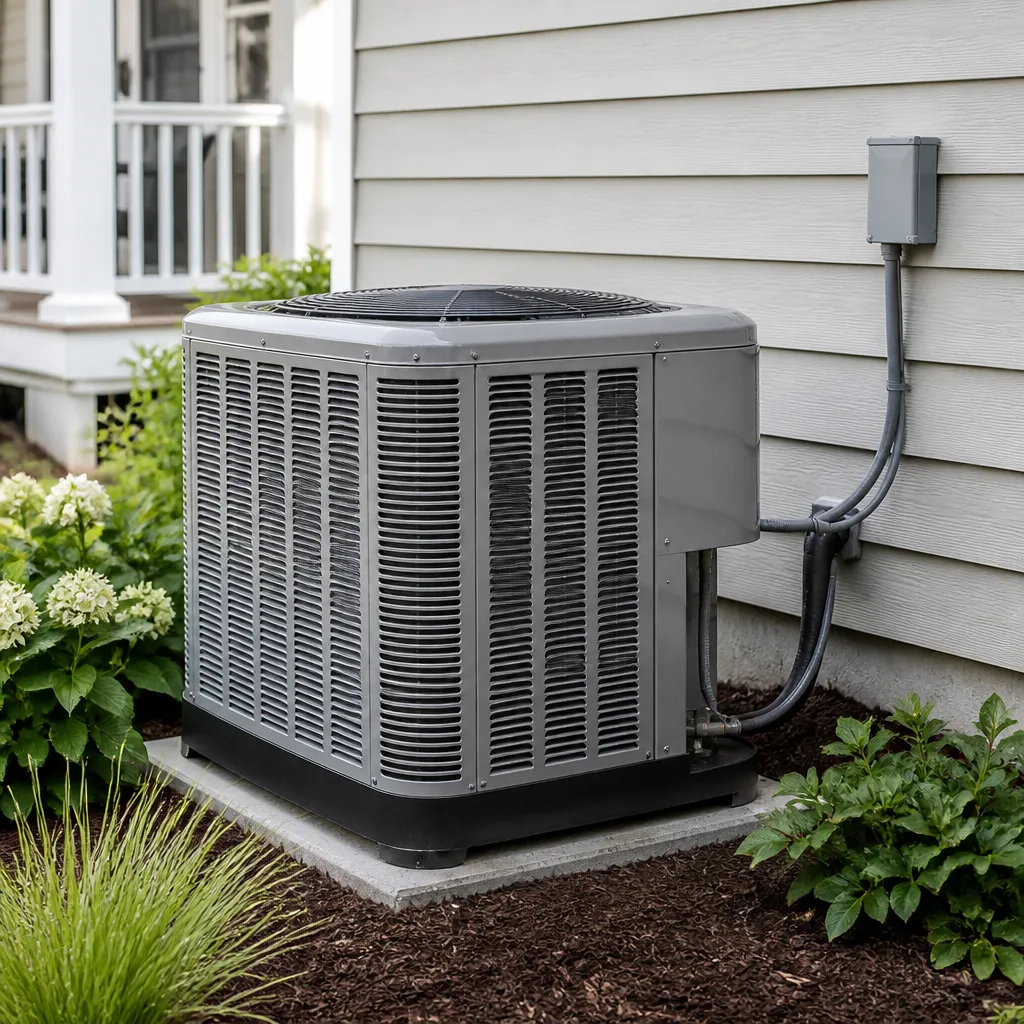 AC repair
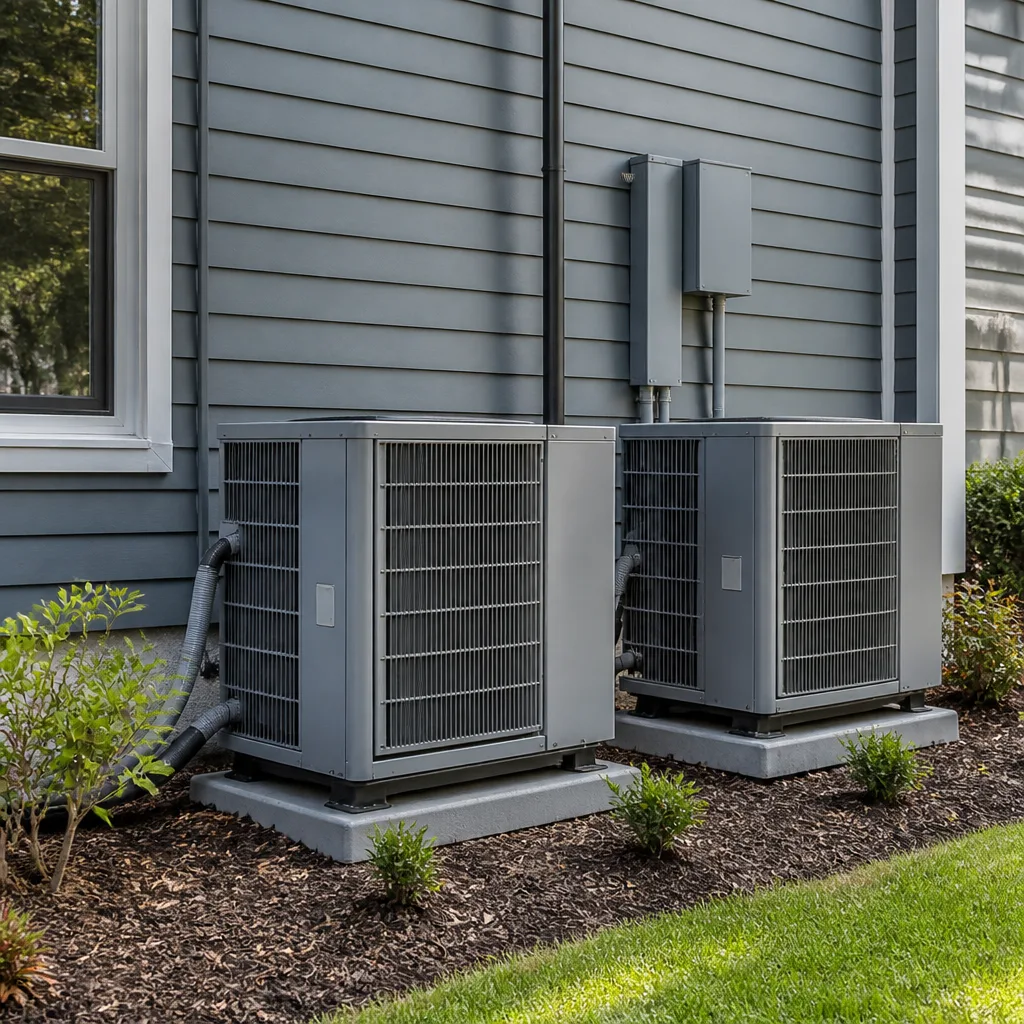 Heat pumps
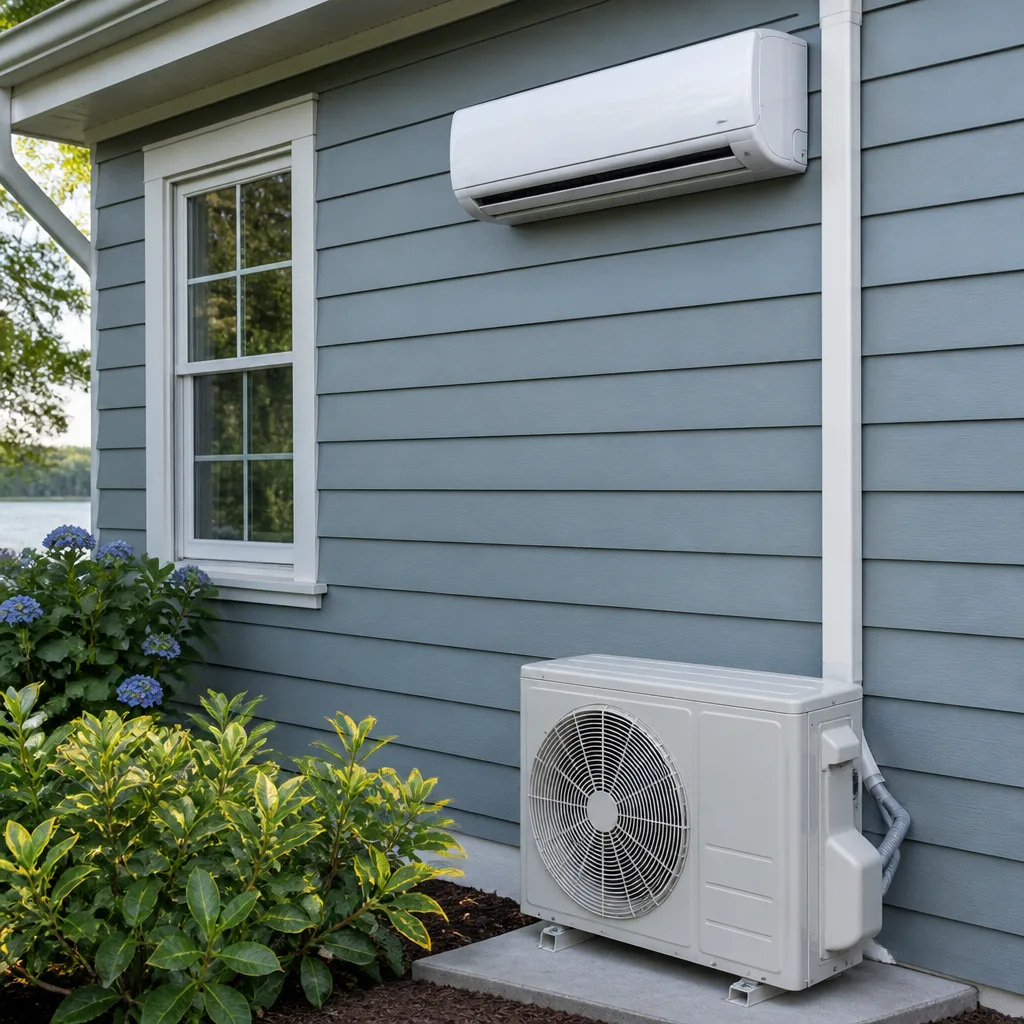 Ductless mini splits
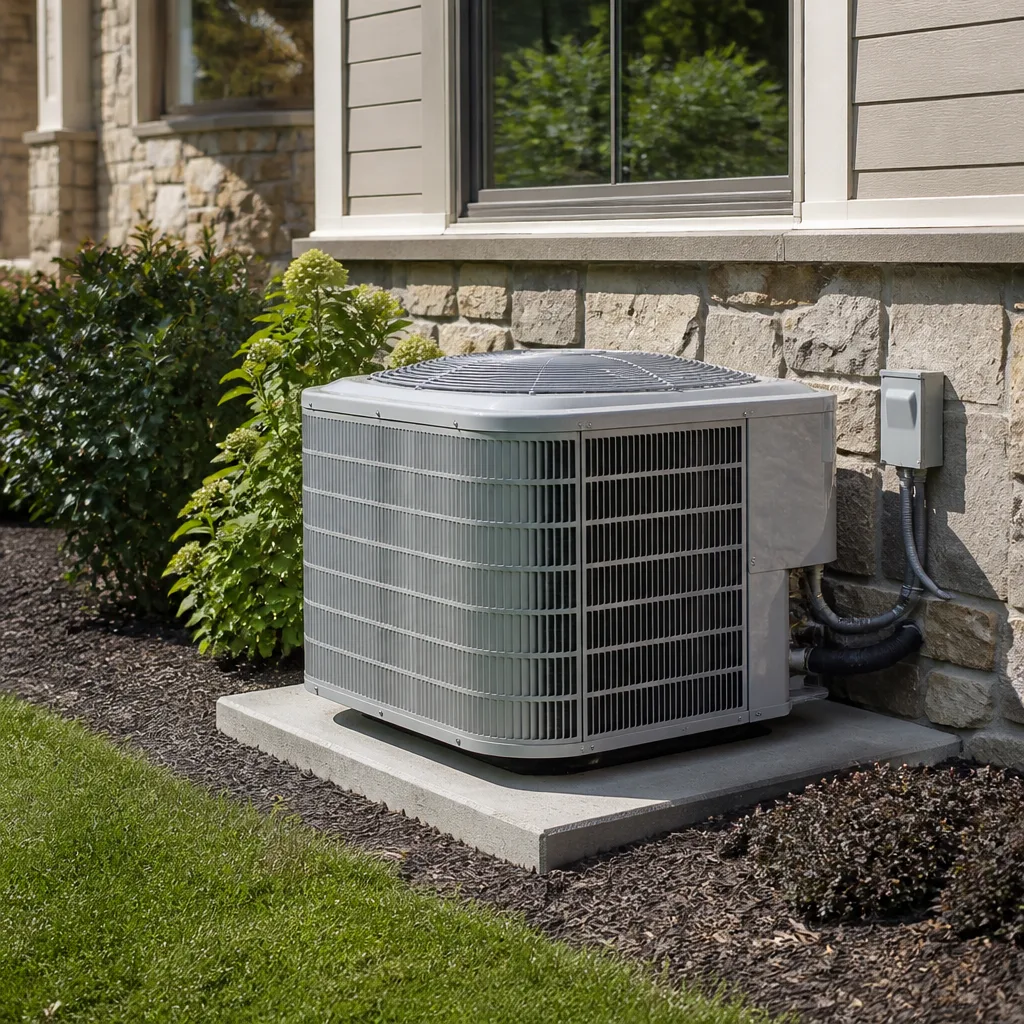 Carrier
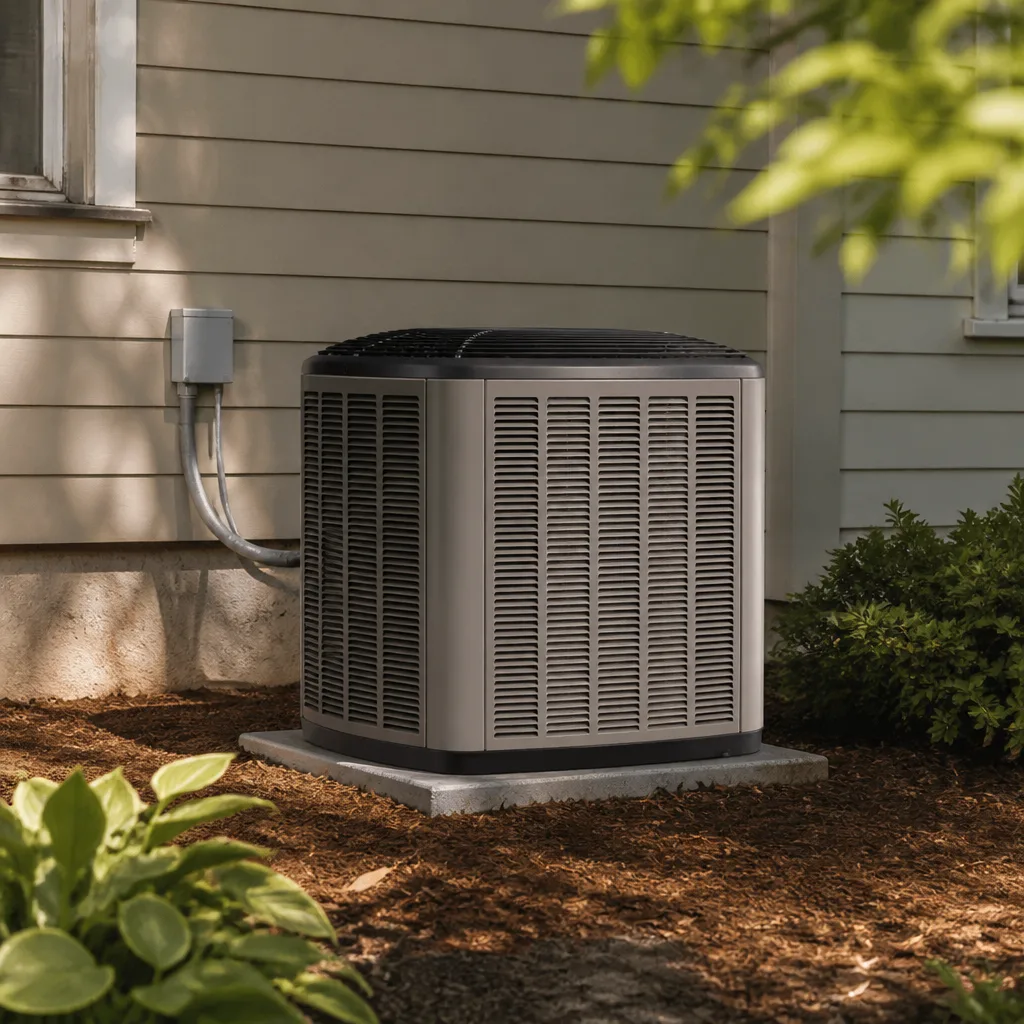 Trane
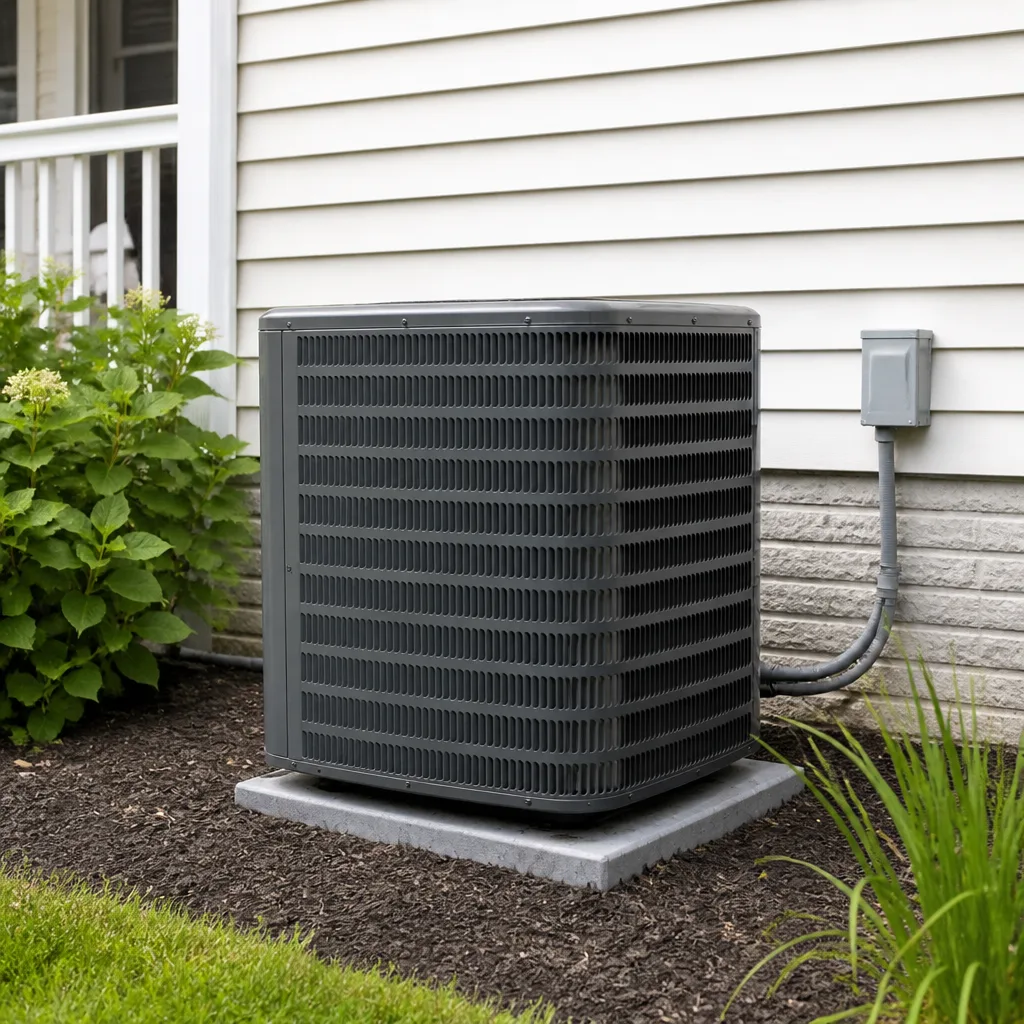 Goodman
Seasonal tune-up and full diagnostic on your Carrier, Trane, or Goodman system - readings shown to you before any repair is proposed
Diagnosis first, numbers second - you approve the repair price before a single part goes in.
Get your free estimateStyles & brands we work with
- AC repair
- Furnace & heating
- Heat pumps
- Ductless mini splits
- Carrier
- Trane
- Goodman
See the difference
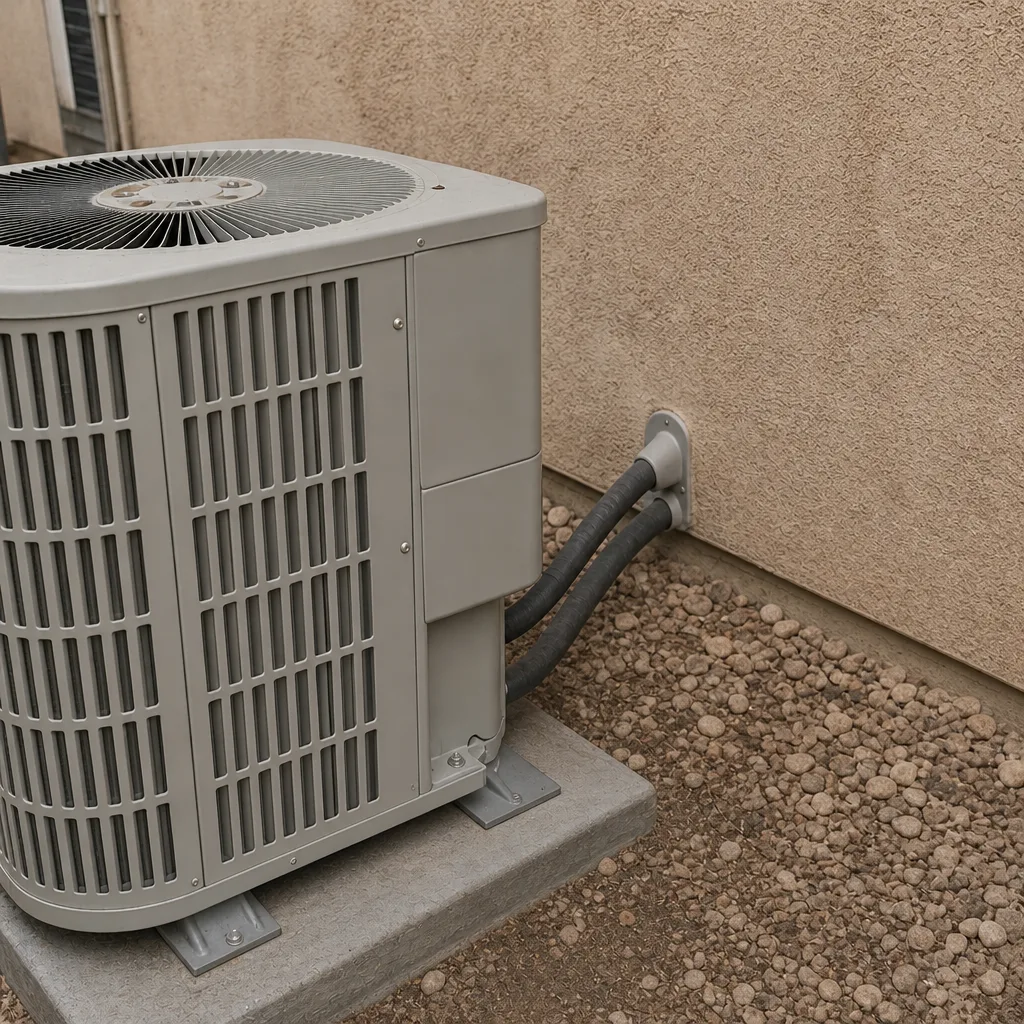
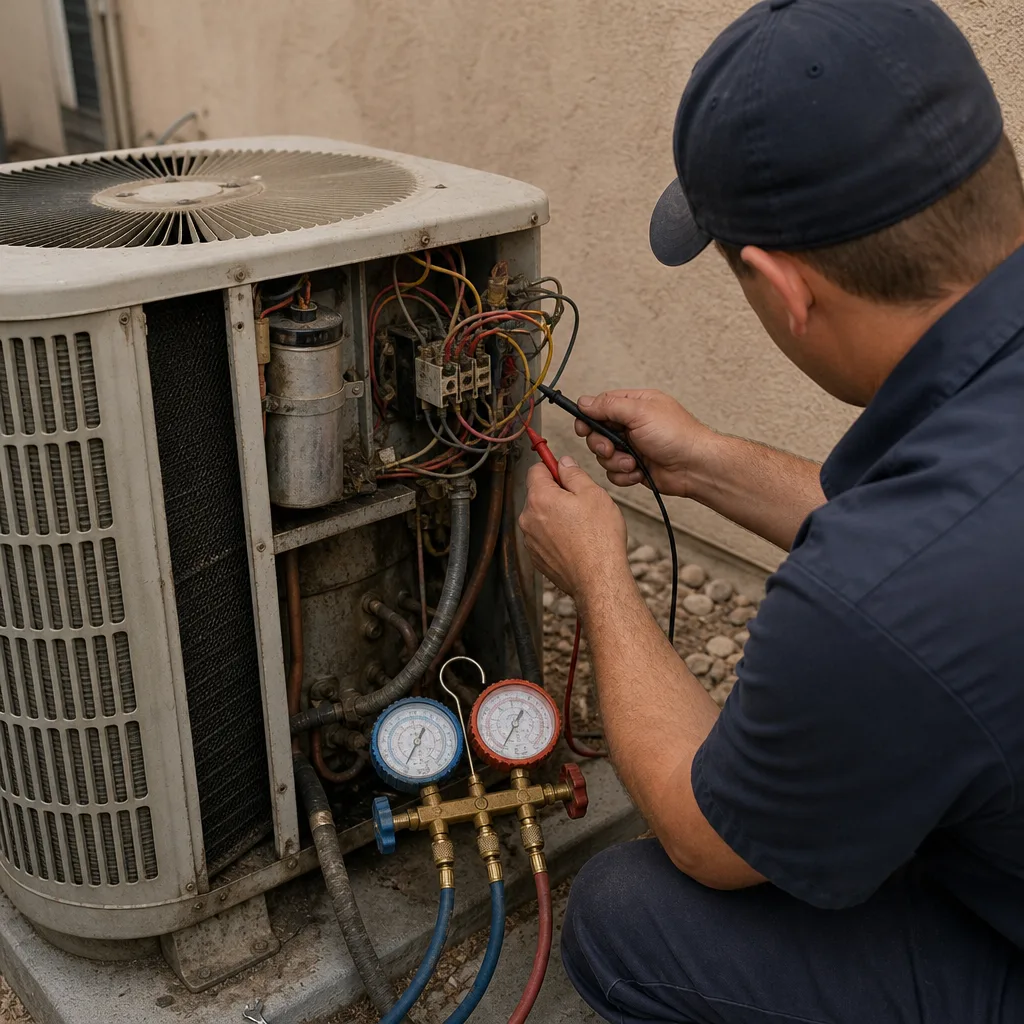 Before
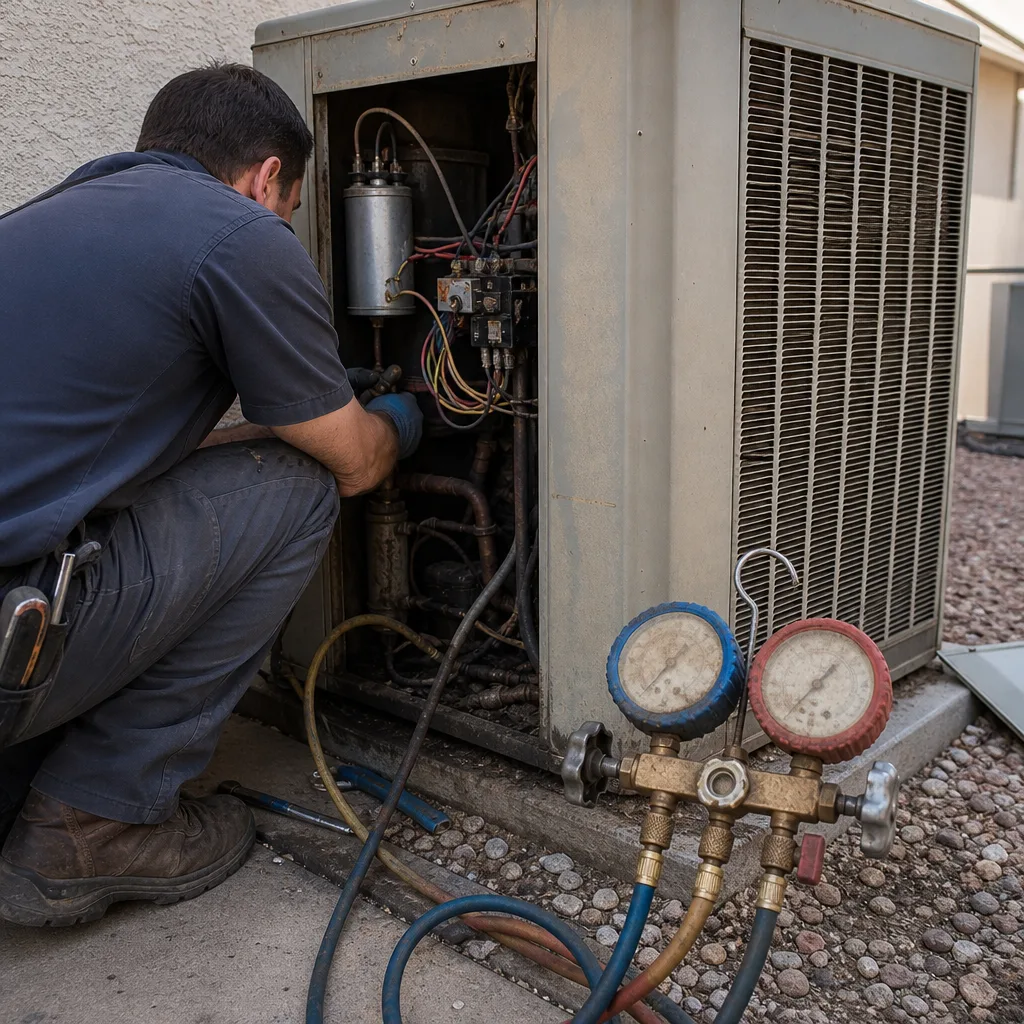
 After
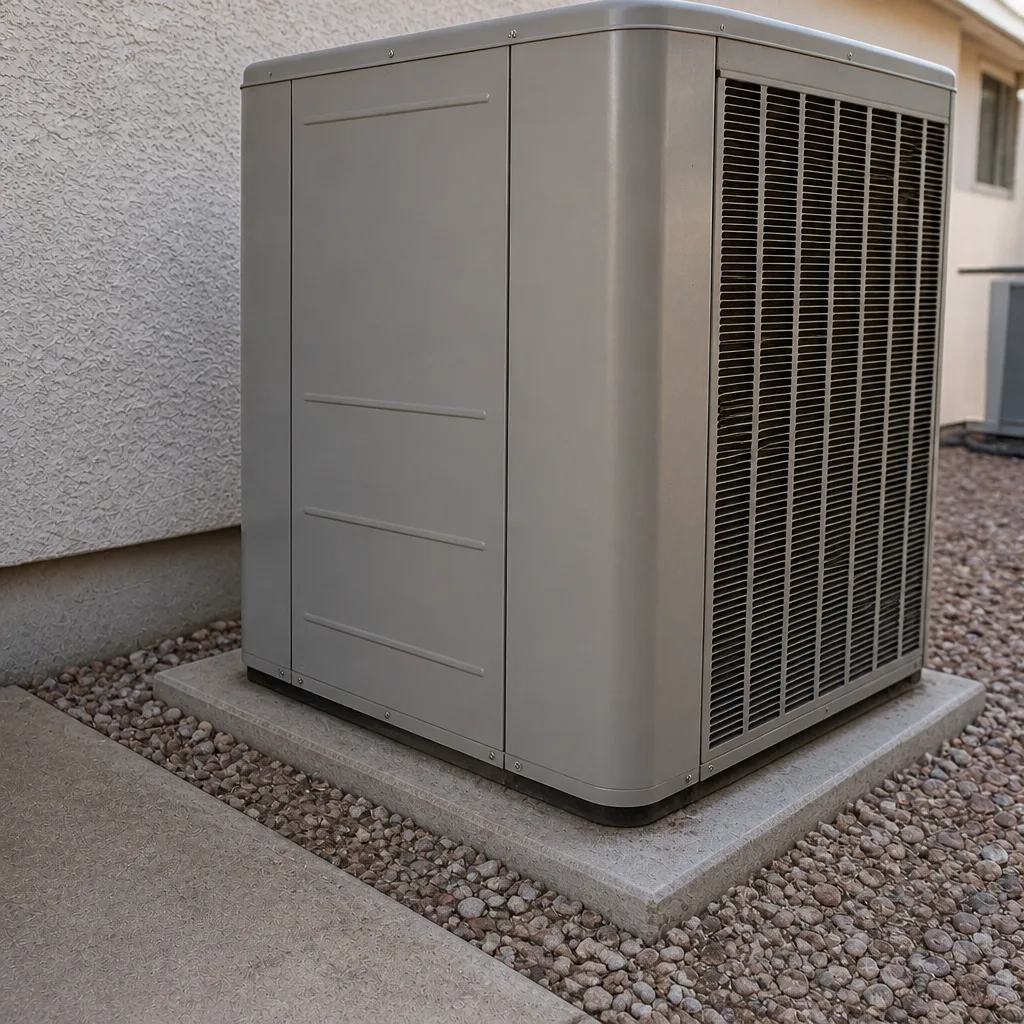
 Before
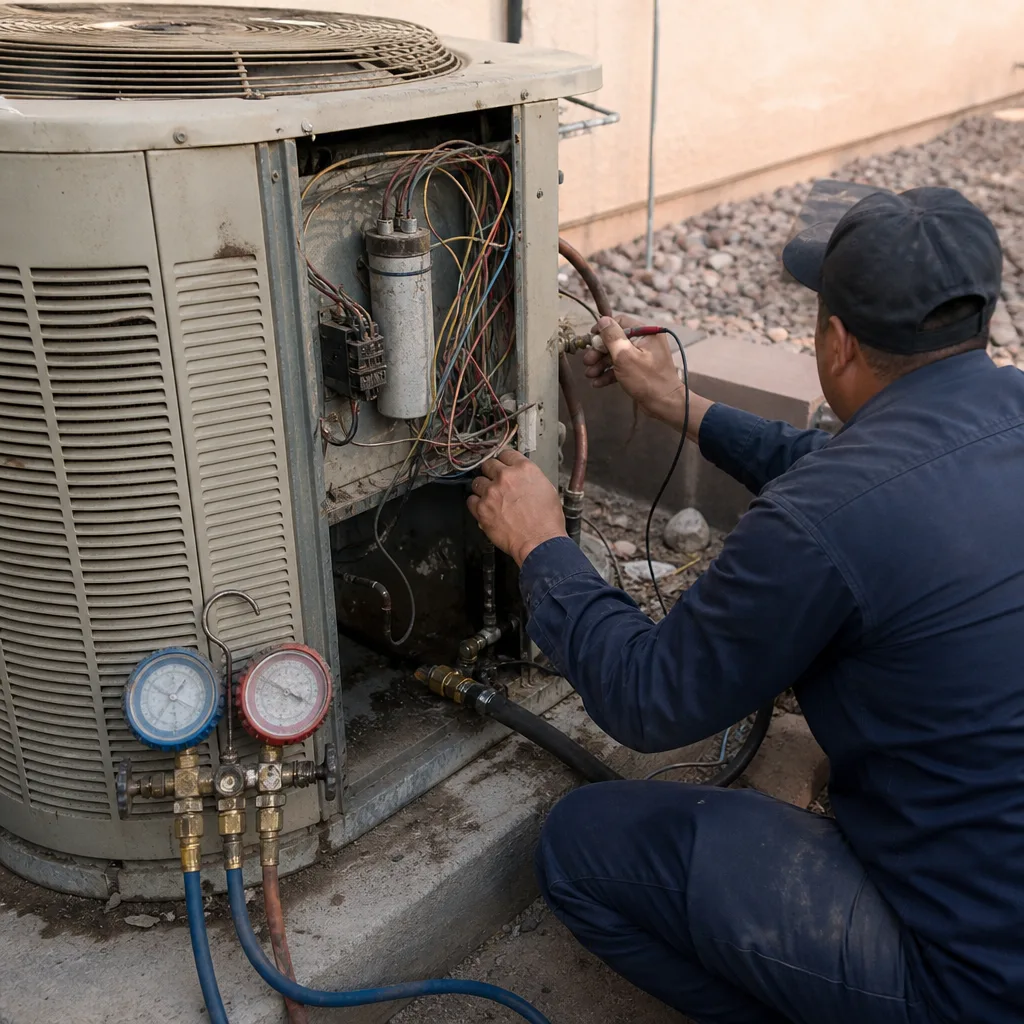
 After
 Before
 After
Mini Split vs. Central Air in Boulder City, NV: Which One Fits Your House?
Choose central air if your Boulder City house already has modern ductwork in good condition and you want to cool the whole place at once. Choose a mini-split if you live in one of the historic downtown bungalows where duct retrofit means cutting your interior apart, or if you want room-by-room control without paying to cool empty rooms. That’s the short answer. The longer answer depends on a few things about your house that most comparisons never mention. For a straight assessment of your own place, call Fireside Heating & Air Co. Boulder City at (844) 312-0133.
Why this question lands differently in Boulder City than in Henderson
Boulder City is one of the few American cities where the federal government owns and controls essentially all the surrounding land, and the historic core is a 1930s-era planned company town built by the Bureau of Reclamation for Hoover Dam workers. That history sits inside your walls. Many of these dam-worker homes were built before residential air conditioning existed, and every generation since has squeezed a system in somehow – undersized attic runs, air handlers stuffed into closets that were never meant for them, ductwork patched so many times the original layout is a guess.
In the historic downtown bungalows, a wall penetration for a mini-split line set is a different conversation with the city than it would be anywhere in Henderson. Exterior changes in the historic core get more scrutiny here, so confirming condenser placement and line-set routing with city planning before you commit to either system is worth the phone call. Our technicians have worked in these homes long enough to know which questions to ask before the job starts, which saves you a surprise after the truck is already in the driveway.
The structural reality: what ductwork actually costs you in a 1930s bungalow
The downtown bungalows and small stucco houses were framed with 2×4 walls and little attic clearance. A full duct retrofit in that kind of house often means surface-mounted ductwork or soffits running through rooms that have kept their original ceiling and wall profiles for nearly a century. You don’t just pay for ductwork. You pay for the change to the character of the interior.
A mini-split’s line set is a single penetration, roughly three inches, and the rest of the system mounts flat to a wall. We can route it so the outside condenser sits where the city will approve it and the inside head lands where the room actually gets hot. Nothing gets channelled through your attic, and your ceiling stays the way the dam workers left it.
Where central air still wins: the newer stucco tract homes and custom builds on the edges of town, closer to the slopes, that already have modern ductwork in good condition. There, replacing a central system is cleaner, less expensive per square foot, and covers the whole house without teaching anyone how to manage zones. If your home was built in the 1990s or 2000s with ductwork that hasn’t been butchered over the years, central replacement is usually the honest recommendation.
Efficiency at 108°F: how each system handles a Mojave summer
Boulder City sits in the Mojave Desert at roughly 2,500 feet, just east of the Colorado River and Hoover Dam. Summers run past 100°F with intense sun that pushes cooling loads hard from May through September, and winter nights at this elevation can dip near or below freezing. A system here has to handle a heavy cooling season and the occasional hard freeze.
Here’s the part that matters in that heat. A properly sized inverter-driven mini-split modulates its compressor speed and holds closer to its rated efficiency as outdoor temperatures climb. A single-speed central system runs full-tilt and then shuts off, short-cycling in extreme heat, which costs you efficiency and wears the compressor. On a 108°F afternoon in Boulder City, that difference is real money on your power bill, particularly in the small bungalows where an oversized central unit cools the house in five minutes and then waits to do it again.
Side-by-side: mini-split vs. central air for a Boulder City home
| Factor | Ductless mini-split | Central air |
|---|---|---|
| Best fit | Historic downtown bungalows, add-ons, room-by-room control | 1990s-2000s tract and custom homes with sound ductwork |
| Ductwork needed | None – single line-set penetration | Full duct system, or retrofit in tight 2×4 framing |
| Interior impact | Wall-mounted head, original profiles intact | Possible soffits, surface runs in older homes |
| Efficiency in extreme heat | Inverter holds rated SEER more consistently | Single-speed short-cycles at peak load |
| Historic-district review | Confirm condenser placement and line-set routing | Confirm any exterior equipment |
| Typical installation range | Varies by zones and brand | $3,500-$7,500 |
Which brings up cost. Central AC installation in Boulder City runs $3,500-$7,500, and repairs run $150-$650 depending on what’s failed. A tune-up is $80-$200. Mini-split pricing depends on how many zones you need and which brand fits the house, which is why we quote both options on the same visit with upfront pricing. The price quoted is the price paid – no add-ons after the fact.
Three common scenarios we see in Boulder City
- A 1941 stucco bungalow near downtown with one window unit and a space heater. The attic has no room for a duct run and the walls are 2×4. A single-zone mini-split in the main living area, with the condenser tucked where the city will approve it, cools the rooms that matter without touching the original ceiling.
- A 1998 tract home up the slope with ductwork in decent shape. The existing central system is at the end of its life. Replacing it with a new Carrier or Daikin unit is the cleaner, less expensive call, and the whole house stays comfortable with one thermostat.
- A custom build with a west-facing wall that bakes every afternoon. The central system struggles to keep up with the afternoon sun load. A single ductless head in that room takes the pressure off the main system, so the compressor stops running itself ragged from 2 p.m. to sunset.
We work across nine major brands – Daikin, Carrier, Bryant, American Standard and others – so the recommendation follows the house, not whatever’s easiest to sell. Because we service both configurations, you get one honest comparison on one visit instead of scheduling two contractors and decoding two bids.
How we compare the two for you, step by step
- We walk the house and look at the walls, attic, and existing equipment.
- We check duct condition and measure the actual cooling load room by room.
- We flag any historic-district questions about condenser placement or line routing.
- We quote both a mini-split and a central option on the same visit, with upfront pricing.
- We recommend the system that fits your house – and we tell you plainly when the cheaper option is the right one.
Most jobs are finished in a single day, and every installation is backed by our 90-Day Done Right Promise – a written guarantee. If it’s not done right, we make it right, no arguing. Our call line is answered by a live person 24 hours a day, every day of the year, so you’re never stuck in a voicemail tree. To see both system types in more depth, visit our Heat Pump & Mini Split page or start at our home page.
Right now we’re running $50 off any repair over $250, a free second opinion on any written estimate, and an $89 seasonal tune-up. Senior and veteran homeowners get 5% off, always.
FAQs
Central AC installation in Boulder City runs $3,500-$7,500, while a ductless mini-split is quoted per zone and brand – so the two aren’t directly comparable until we see your house. Repairs range from $150-$650 and a tune-up is $80-$200 either way. Call (844) 312-0133 for an exact quote – estimates are free, and we’ll price both options on the same visit.
Yes, and it’s often the only practical way to add cooling to a 1930s dam-worker home without cutting into the interior. The line set is a single small penetration, but in the historic core you’ll want to confirm condenser placement and line-set routing with city planning first. Our technicians have worked these homes long enough to ask those questions before the job starts. Call (844) 312-0133 and we’ll walk through it.
Yes, a properly sized inverter-driven mini-split holds closer to its rated efficiency as outdoor temperatures climb, while a single-speed central system short-cycles at peak load. With Boulder City’s cooling season running May through September, that difference shows up on your power bill. Call (844) 312-0133 and we’ll size a system for your actual load.
If your ductwork is sound and modern, central air is the cleaner, less expensive choice to replace. If the house was never built for ducts, a mini-split avoids the retrofit entirely. Either way, staying put means you want a system sized right the first time – a square deal, quoted upfront, backed in writing. Call (844) 312-0133 for a no-pressure assessment.
If you’d rather have it looked at than keep comparing, Fireside Heating & Air Co. Boulder City offers a no-pressure assessment in Boulder City – call (844) 312-0133. We’ll quote both options, tell you which one fits your house, and stand behind the work in writing.
Written by the team at Fireside Heating & Air Co. Boulder City, serving Boulder City, NV.