
Last updated November 18, 2026
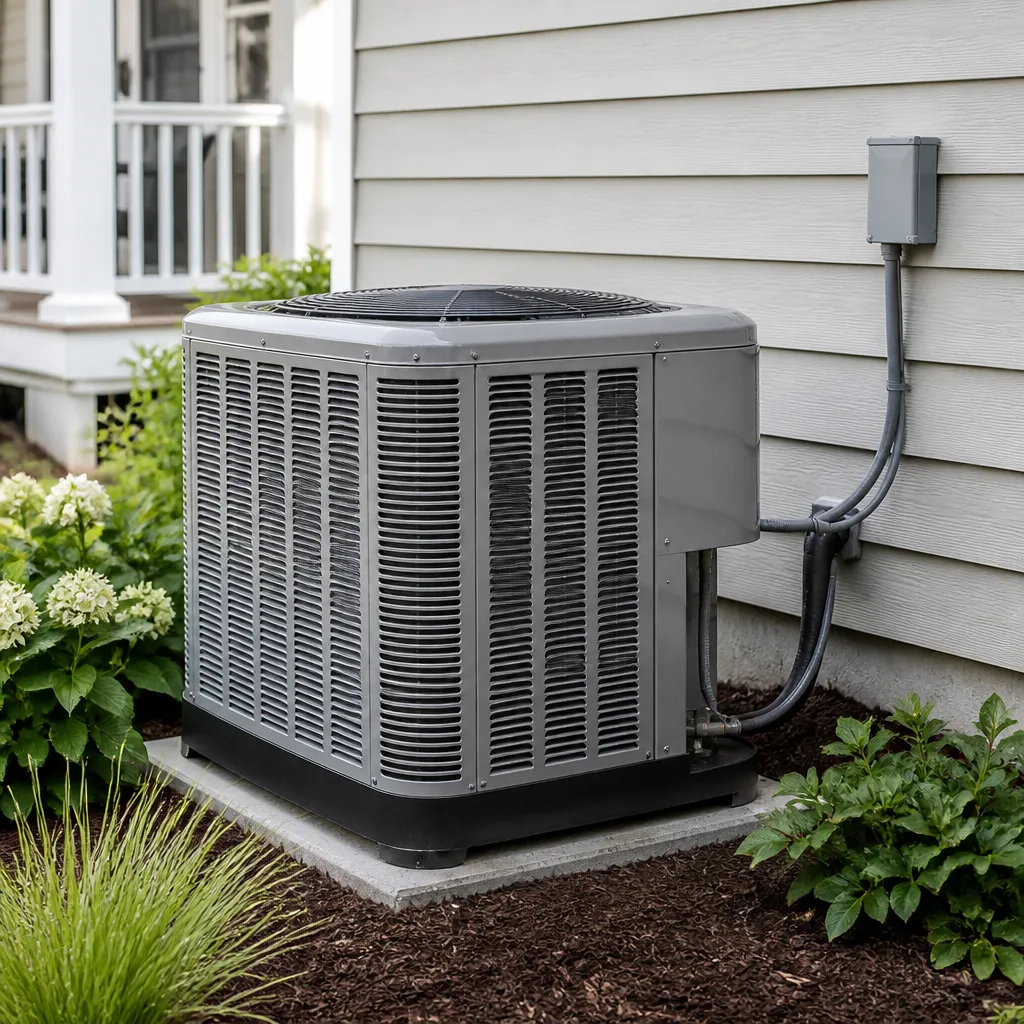 AC repair
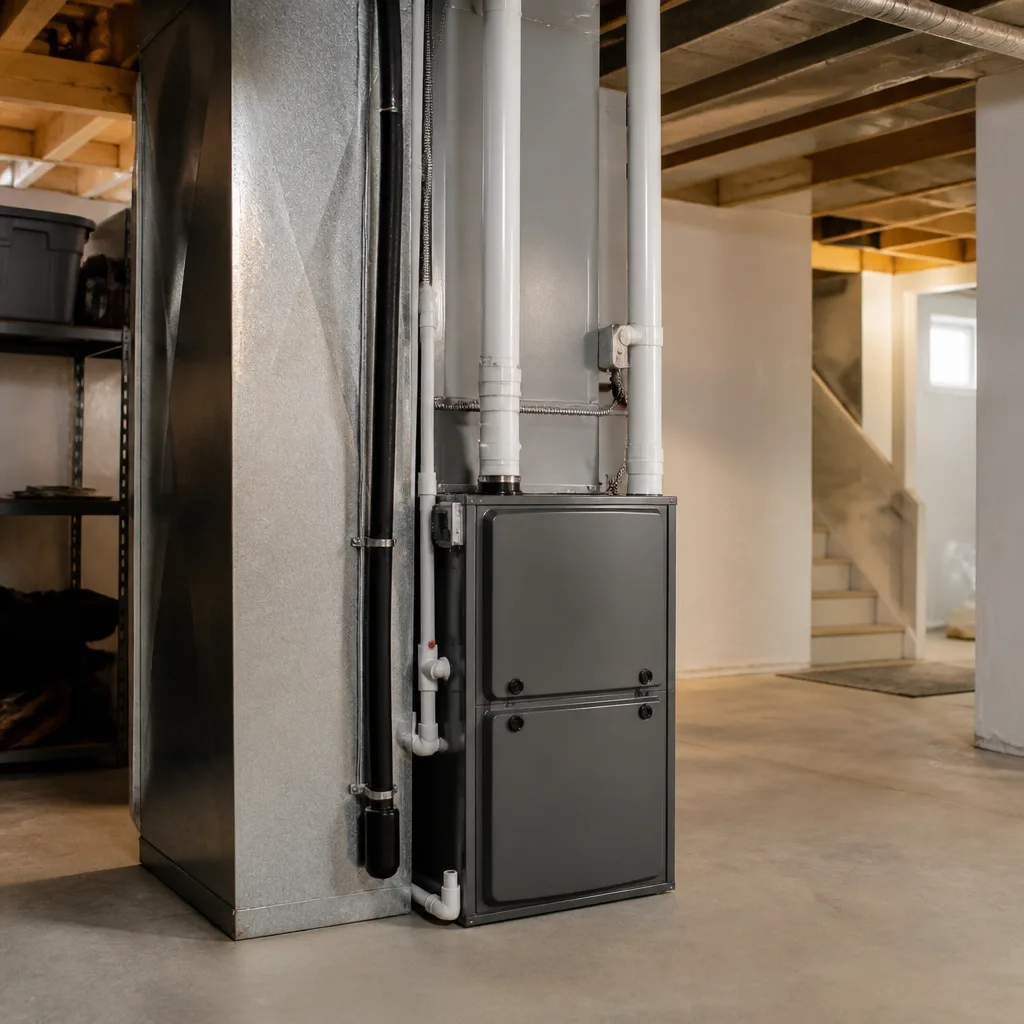 Furnace & heating
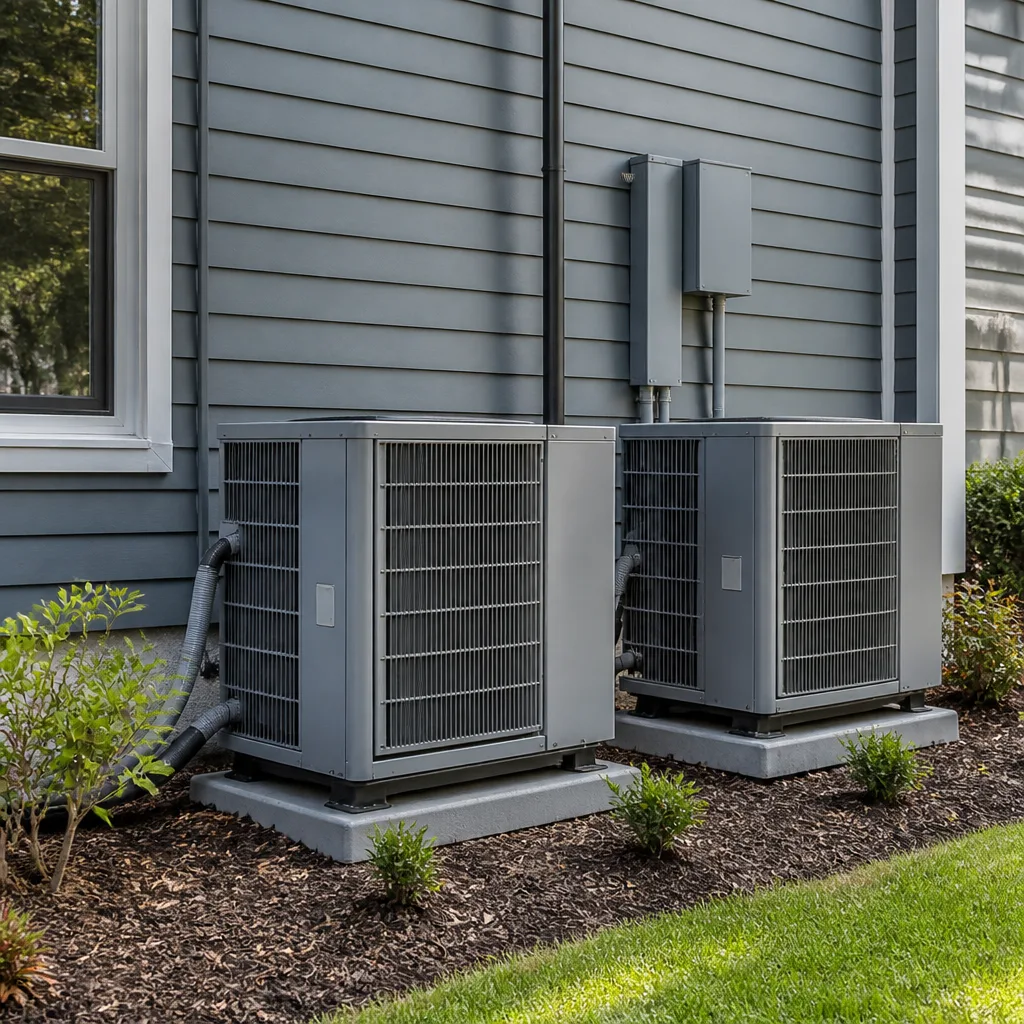 Heat pumps
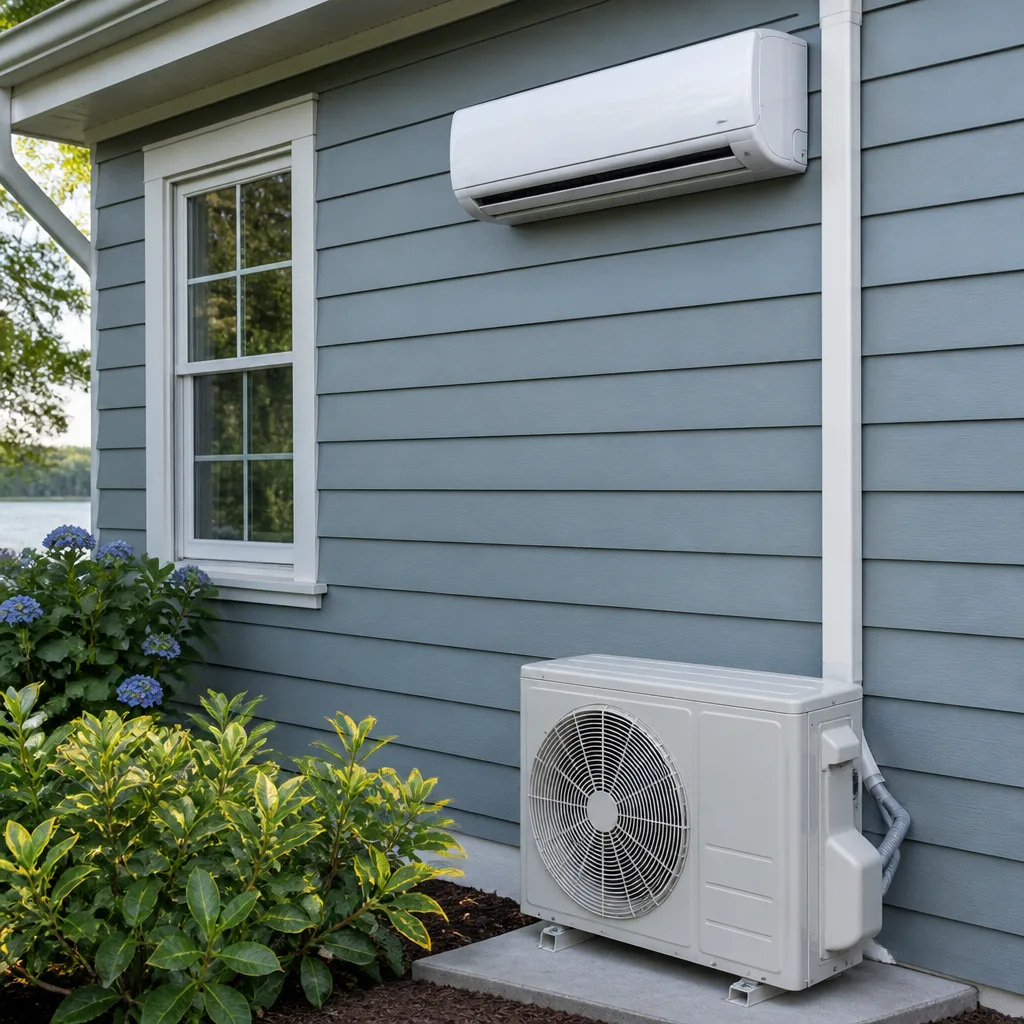 Ductless mini splits
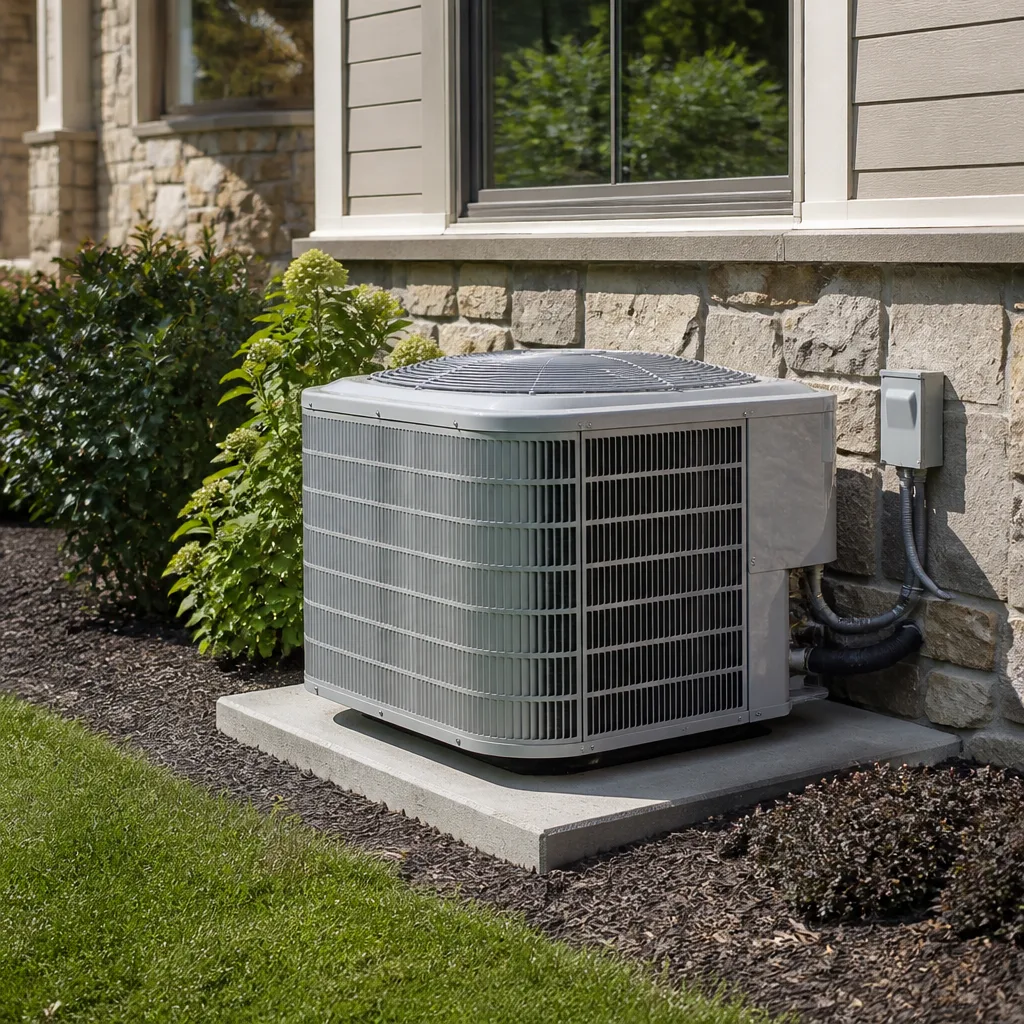 Carrier
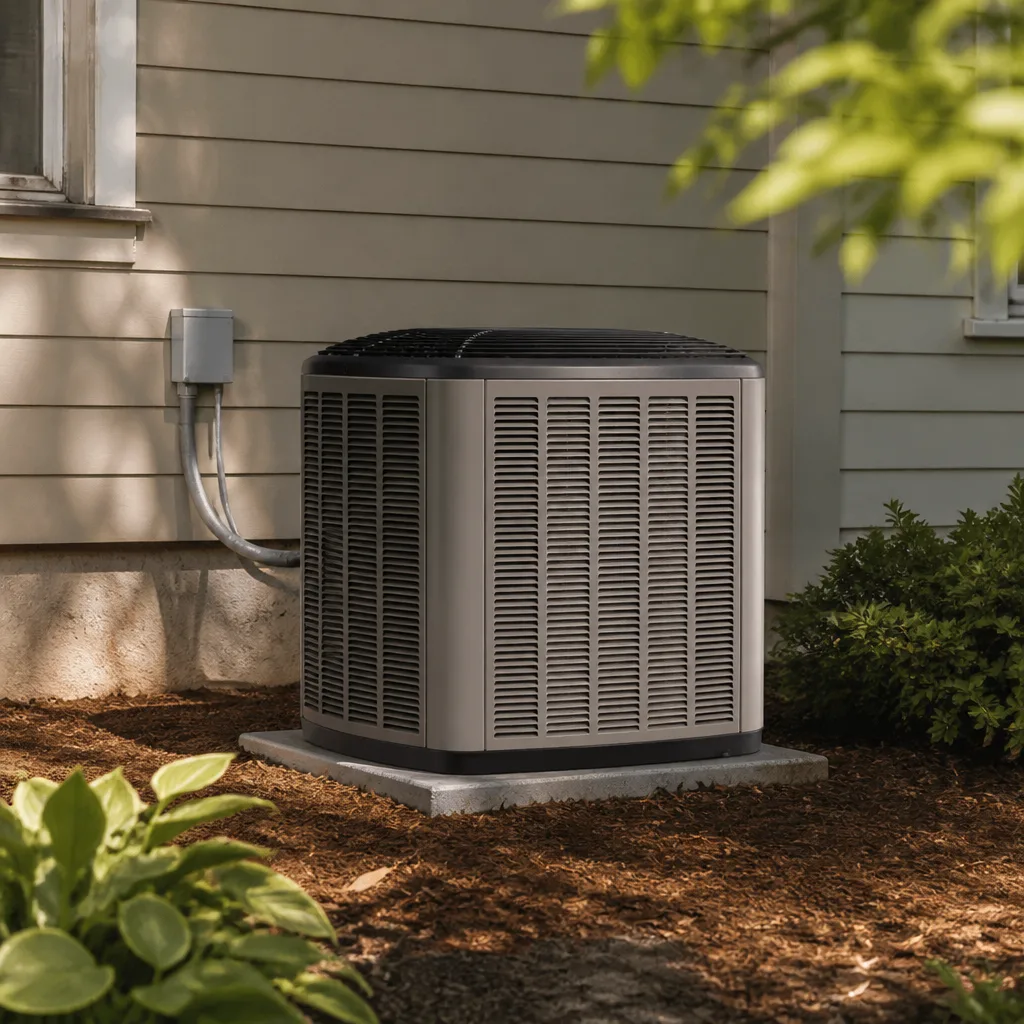 Trane
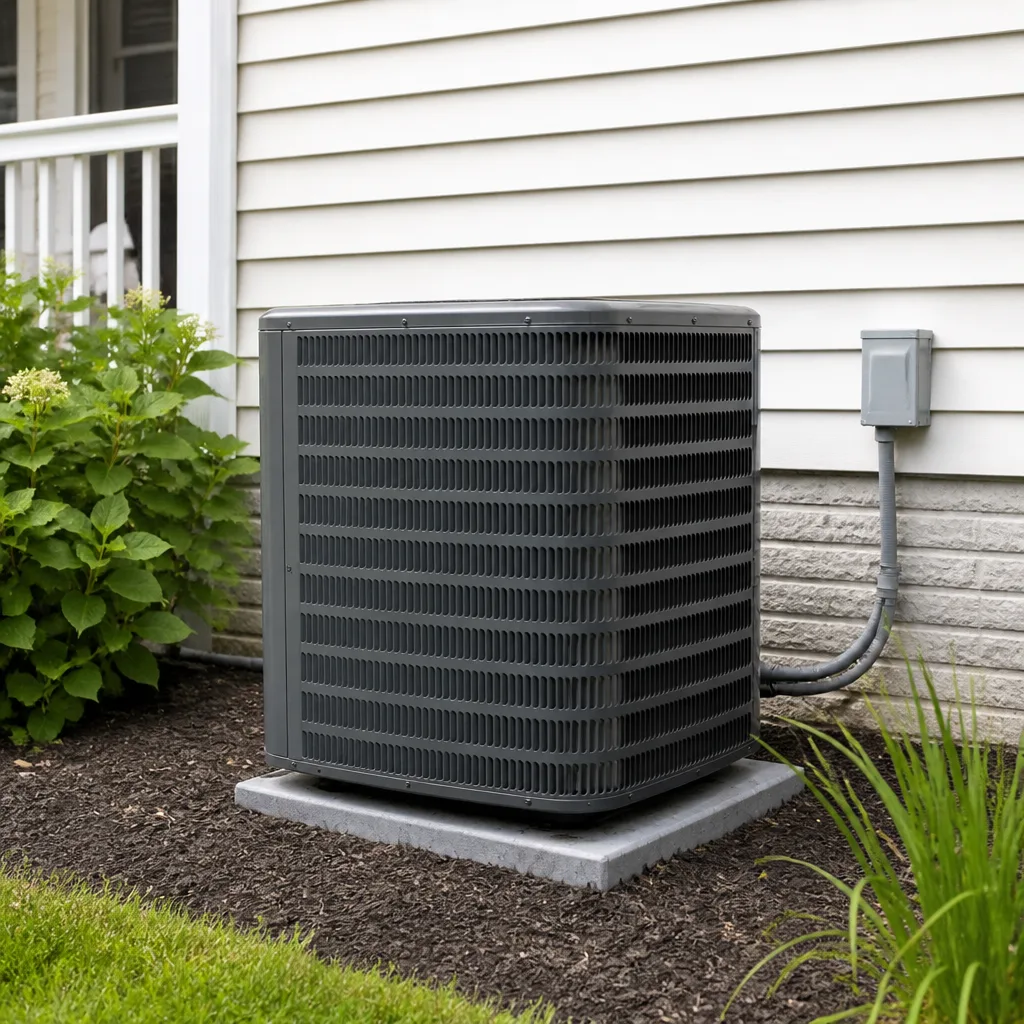 Goodman
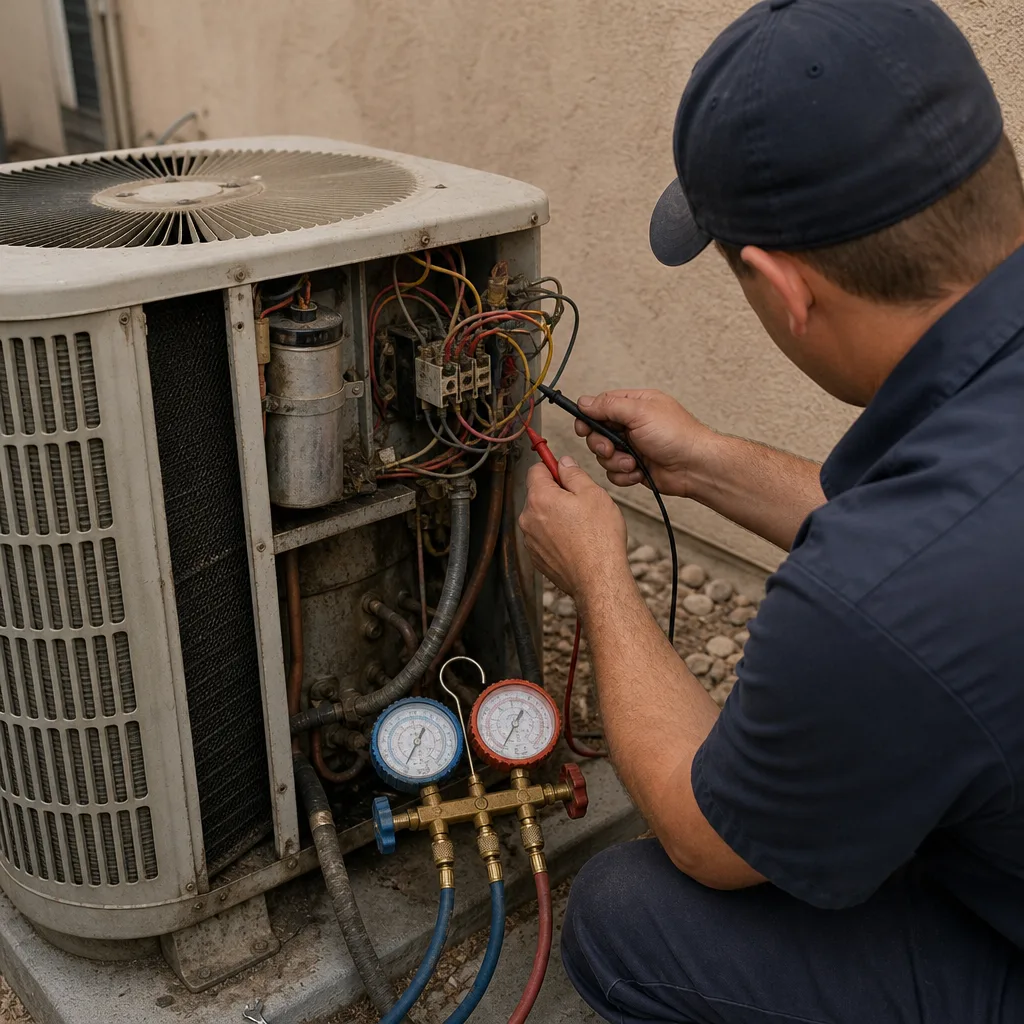
Seasonal tune-up and full diagnostic on your Carrier, Trane, or Goodman system - readings shown to you before any repair is proposed
Diagnosis first, numbers second - you approve the repair price before a single part goes in.
Get your free estimateThe Complete Emergency & Commercial HVAC Guide for Boulder City Homeowners
Here’s a fact that surprises most people: a routine air conditioner replacement in Boulder City can take three weeks before a single box is opened, and it has nothing to do with the equipment. It has to do with where your house sits. If you’re in the Historic District, the same rules that protect the look of your street also shape what equipment you’re allowed to install and where it can go. When a system dies in August and the outdoor unit needs to be swapped, that detail turns a two-day job into a multi-week approval process. This guide is what we want you to have read before that morning comes. We’ll walk through the first 30 minutes of a failure, what a genuine written guarantee should say, and the exact math that decides repair versus replace.
Quick Answer
If your HVAC fails when it’s over 100°F outside, the first hour is about protecting your household, not your equipment. Shut the system off at the thermostat, get people and pets into the coolest room in the house, and call a company that answers with a live person around the clock rather than a voicemail tree. Then confirm two things before anyone drives out: whether there’s a diagnostic fee, and whether the price you’re quoted is the price you’ll pay. In Boulder City, the answer to “can someone come tonight?” depends less on how broken your system is and more on where it sits in the Historic District and how far out the nearest crew has to travel.
Styles & brands we work with
- AC repair
- Furnace & heating
- Heat pumps
- Ductless mini splits
- Carrier
- Trane
- Goodman
Table of Contents
- The First 30 Minutes of an HVAC Failure in 100°F Heat
- Why Boulder City After-Hours Service Works Differently Than Las Vegas
- The Historic District Problem Every Boulder City Homeowner Should Know
- The Real Math on Emergency Repair vs. Emergency Replacement
- Emergency and Light Commercial Systems: Where the Two Diverge
- What a Written Emergency Guarantee Should Actually Say
- How to Evaluate a Company Before You Need One
The First 30 Minutes of an HVAC Failure in 100°F Heat
The order you do things in matters more than most homeowners realize. A house in Boulder City can climb from 78°F to 95°F indoors in under two hours once the compressor quits on a 110°F afternoon. What you do in that window protects your family and keeps a small problem from becoming a big one.
- Turn the system off at the thermostat. Don’t let it keep trying to run. A compressor short-cycling against a failing component turns a $200 repair into a $2,000 one.
- Move everyone to the coolest room. Usually the lowest floor, away from west-facing glass. Close interior doors to concentrate what cool air you have left.
- Check the breaker once, then stop. If the outdoor unit’s breaker is tripped, reset it a single time. If it trips again, leave it alone and call. Repeated resets cause more damage than the original fault.
- Check the filter. A filter clogged with desert dust can shut a system down on high-limit. If it’s gray and matted, swap it. This is the one thing you can safely do yourself.
- Call a company that picks up with a person. Not a scheduling portal, not a callback form. A live voice who can tell you whether a technician is available tonight.
- Ask two questions before you hang up. What’s the after-hours diagnostic fee, and is that the final price? Get it stated plainly.
If anyone in the home is over 70, on medications that affect heat regulation, or has an infant in the house, treat it as a health call, not a comfort call. Call the paramedics if someone shows confusion, stops sweating, or faints. That’s not dramatic; it’s the correct order of operations.
Why Boulder City After-Hours Service Works Differently Than Las Vegas
Boulder City is not a suburb of Las Vegas with a different zip code. It’s an incorporated city with its own utility structure, which is directly connected to Hoover Dam and the way power is generated and distributed here. That has two practical consequences for anyone needing after-hours HVAC help.
First, the pool of contractors who actually cover Boulder City after dark is far smaller than the pool that covers the Las Vegas Valley. Most of the larger valley companies route their night dispatch by zone, and Boulder City sits at the edge of the routes. When you call at 11 p.m. in August, you may be told someone can come “first thing tomorrow” by three different companies before you find one that can be there tonight. Knowing this ahead of time changes how you shop.
Second, the distance matters. A crew dispatched from Henderson or the south valley has a longer drive out than one already servicing the area. That’s not an excuse for a slow response; it’s a fact that shapes which companies are genuinely reliable here.
What to confirm when you call a Boulder City number in an emergency:
- Does a live person answer, or does the call route to a voicemail system after hours?
- Is there an after-hours call premium, and what is it exactly?
- Can the dispatcher give you a realistic arrival window, not a promise they can’t keep?
- Do they service your brand? Not every company stocks or is trained on every major make. Daikin and Rheem, for example, each have their own parts quirks.
- Do they know where your street is? A company that asks “which exit?” for a house near the Historic District hasn’t been out here enough.
Fireside answers every call with a live person, 24 hours a day, seven days a week, including holidays. That’s not a marketing line; it’s how a 2 a.m. no-cooling call gets handled. If you want to know more about what same-day cooling service looks like in Boulder City, our AC repair and installation page lays out the details.
The Historic District Problem Every Boulder City Homeowner Should Know
The Boulder City Historic District is one of the reasons this town looks the way it does. The houses near Nevada Way and the streets radiating from the old commercial core were built for a very different era of comfort. Many date to the 1930s and 1940s, and their original construction assumed window units, swamp coolers, or nothing at all. When the original system fails, the replacement can’t always go where the old one sat.
Here’s the specific tension. Historic District design guidelines generally affect what’s visible from the street: rooflines, exterior equipment placement, additions, and sometimes the equipment itself. A standard modern condenser unit placed on a side yard that’s visible from a public way can require a review that a homeowner didn’t know existed. That review is not unreasonable, and it’s not the enemy. But it takes time, and time is the one thing an August emergency doesn’t give you.
How Boulder City homeowners navigate this without delaying an emergency repair:
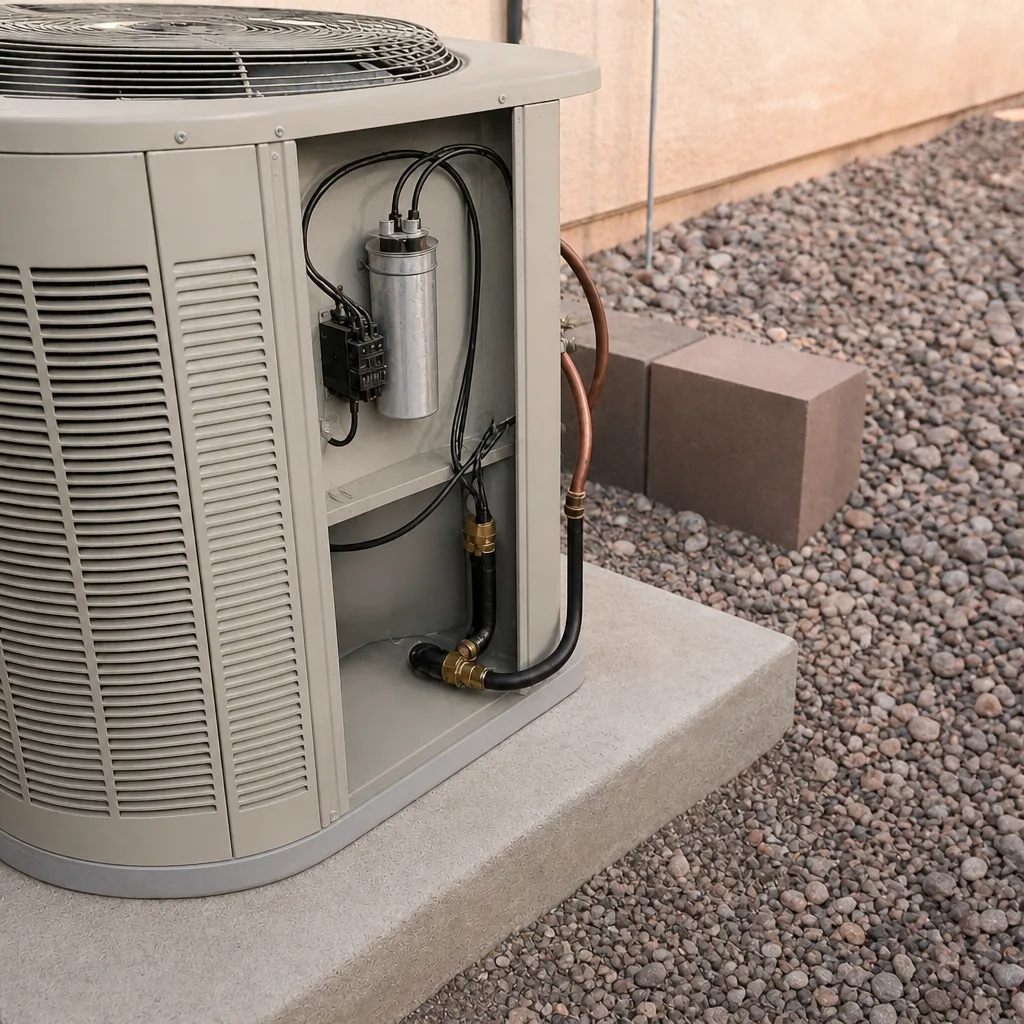
- First, confirm whether a repair gets you through the summer. A failed capacitor, contactor, or blower motor is a repair and stays a repair. No review needed. No guideline triggered.
- If replacement is truly unavoidable, ask the contractor what placement options exist behind the line of sight. Side-yard and rear-yard positions that aren’t visible from the street often avoid a lengthy review entirely.
- Ask whether a mini-split or ductless system solves the problem with less exterior footprint. These have become a practical answer for older Boulder City homes because they need less space and less ductwork. Our heat pump and mini split page explains how these systems fit tight lots and older construction.
- Get the written scope before you agree to anything. A contractor who’s done this in Boulder City will know the general shape of the process. A contractor who hasn’t will tell you it’s not a problem right up until it is.
If you’ve owned your home for twenty years and you’re hearing about this for the first time, you’re not alone. The rules aren’t new. They just never mattered to you until your system failed.
The Real Math on Emergency Repair vs. Emergency Replacement
There’s a moment during every emergency call where the technician tells you the number and you have to decide. Here’s how we think about it, in plain terms.
Repair makes sense when:
- The system is under 12 years old and hasn’t had major failures before.
- The failed part is a single component (capacitor, contactor, blower motor, thermostat, igniter, flame sensor) rather than a compressor, heat exchanger, or coil.
- The repair costs less than 25% of a new system and buys you at least three more years of reliable service.
- The rest of the system tested healthy on the same visit.
Replacement makes sense when:
- The system is 15 years or older and this is the second or third major failure in two years.
- The compressor or heat exchanger has failed. Those are the two parts that cost almost as much as a new system to replace in isolation.
- The refrigerant is R-22, which is no longer produced and is priced accordingly.
- You’re planning to stay in the home, and the numbers over the next five years favor replacement.
The rough math: a Boulder City homeowner heating and cooling a 1,800-square-foot home typically spends $300-$650 a year on service calls and repairs for an aging system, and often more in a bad year. A replacement isn’t free either, but it comes with a warranty and predictable costs. When the repair estimate crosses roughly half the cost of replacement, in our experience most homeowners are better served by replacing and putting the money into something they’ll never revisit.
One thing we always counsel: don’t let a 2 a.m. decision get rushed. If a technician tells you that you have to replace tonight or face a dangerous night, ask why in plain language. A failing compressor is uncomfortable; it’s not an emergency requiring an immediate signature. If the failure involves a cracked heat exchanger, a gas smell, or visible electrical damage, that’s a different call. Turn the system off and call for repair help or emergency evaluation, and don’t run it. Our heating and furnace service covers the safety-side evaluation of these failures.
If it’s a heating failure in the middle of a cold snap, the stakes go up. Boulder City winters are mild compared to most of Nevada, but overnight lows in the 20s do happen, and a house without heat overnight is a real risk for older residents.
Emergency and Light Commercial Systems: Where the Two Diverge
Homeowners who also own or manage a small commercial property in Boulder City sometimes assume the same company will handle both. It’s worth understanding why commercial calls get handled differently.
Residential emergency calls typically involve a single system serving one household. The priority is comfort and safety of the occupants, and the fix is usually within reach of one technician and a standard parts bag. Diagnostics run fast, and a first-visit repair is common.
Light commercial calls (small retail, restaurants, offices, and mixed-use spaces near the Historic District) involve larger systems, packaged rooftop units, and often multiple zones. The stakes shift from comfort to business interruption. A failed rooftop unit in a Boulder City restaurant in August isn’t uncomfortable; it’s a shutdown.
What light commercial customers should expect to confirm on the call:
- Does the company service commercial equipment, or only residential? The two disciplines use different parts, tools, and skills.
- Can they handle rooftop access and packaged-unit work?
- Are they trained on the brands your building already has? York and Goodman both show up in older light-commercial stock, and parts availability varies.
- Is there a written fixed price before work begins, and is it the price you’ll pay?
If you’re managing commercial property in or around Boulder City, treat the emergency plan like you treat insurance. Know the number before you need it. Have the fixed-price expectation set. And confirm your after-hours contact actually answers, because a voicemail tree at 2 a.m. on the night before inventory day is a costly discovery.
What a Written Emergency Guarantee Should Actually Say
A verbal assurance from a dispatcher at 2 a.m. is not worth the air it traveled on. It is not a contract. It is not enforceable. It is a nice thing to hear when you’re panicked, and it means nothing when the technician doesn’t show, or shows and doesn’t fix it, or fixes it and it fails again next week.
A written guarantee worth relying on has these pieces:
- A defined warranty period. How long after the repair is the work covered? Days, weeks, months? A good policy says so plainly in writing.
- A defined remedy. If the repair doesn’t hold, the company returns to fix it. At no charge. In writing, no arguing.
- A covered scope. The parts and labor that failed within the window, and what specifically isn’t covered (like a new problem elsewhere in the system).
- A signature or company seal. Something you can point to and say “this is what you agreed to.”
- No paperwork burden on you. If you have to chase the company to have it honor its own guarantee, the guarantee didn’t exist.
Fireside backs every job with the 90-Day Done Right Promise: if it isn’t done right, we make it right, in writing, no arguing, no paperwork. The reason that matters at 2 a.m. is simple. It’s the difference between calling a company that will return because it promised to, and calling one that might.
The other half of the equation is the price. A guarantee on a job you were overcharged for is a consolation prize. Fireside quotes upfront and stands behind the number. The price quoted is the price paid. If it’s a written estimate you already have from someone else, we’ll give you a free second opinion on it, without a charge and without a hard sell.
How to Evaluate a Company Before You Need One
The best time to choose an HVAC company is not during an emergency. It’s on a Tuesday afternoon with the system running fine and no pressure. Here’s the checklist we’d want any Boulder City homeowner to run through.
- Call the number and see who answers. If nobody picks up at 11 a.m. on a weekday, they won’t pick up at 2 a.m. on a weekend.
- Ask for a written estimate for something small. A tune-up or a filter-and-check visit. See how they price, how they schedule, and how they communicate.
- Ask what brands they service. A company trained on nine major brands is in a different category than one that handles two. Fireside works on Carrier, Trane, Lennox, Goodman, Rheem, York, Daikin, Bryant, and American Standard.
- Ask for the guarantee in writing. Not a verbal “we stand behind our work.” The actual document.
- Ask about technician background checks and appearance. Background-checked, uniformed technicians who put shoe covers on without being asked is a fair minimum in your home.
- Ask the price of a season tune-up. A company confident in its work prices it plainly. Our seasonal tune-up is $89, and the technician writes up what they found rather than what they think you should buy.
A company that passes this checklist when nothing is wrong is the one you want to call when everything is. For anyone in Boulder City trying to find the right starting point, our Boulder City home page is where to begin.
Common Mistakes to Avoid
- Resetting the breaker more than once. If the system trips it, something is causing it to trip. Repeated resets turn a $200 fix into a $2,000 one.
- Assuming after-hours help is available because you saw a 24/7 icon on a website. Plenty of companies list 24/7 service and route after-hours calls to voicemail. Confirm with a phone call before you rely on it.
- Building the system in the Historic District without checking the guidelines first. A visible exterior unit that triggers a review can add three weeks to a replacement. Ask before you buy.
- Accepting a verbal guarantee on an emergency visit. If it isn’t written, it isn’t a guarantee. It’s a conversation.
- Deciding on replacement in the first five minutes of a diagnosis. A failing compressor is uncomfortable but not an emergency requiring a signature tonight. Ask for the numbers in writing and sleep on it if you can.
- Skipping the seasonal tune-up because “it’s working fine.” Most of the emergency calls we handle in Boulder City trace back to a small failure that a tune-up would have caught in April. A $89 tune-up is a cheaper way to spend a summer than a $400 emergency call.
- Ignoring the filter. A clogged filter in a dusty Southern Nevada summer is the single most common cause of high-limit shutdowns. Check it monthly during cooling season.
See the difference
 Before
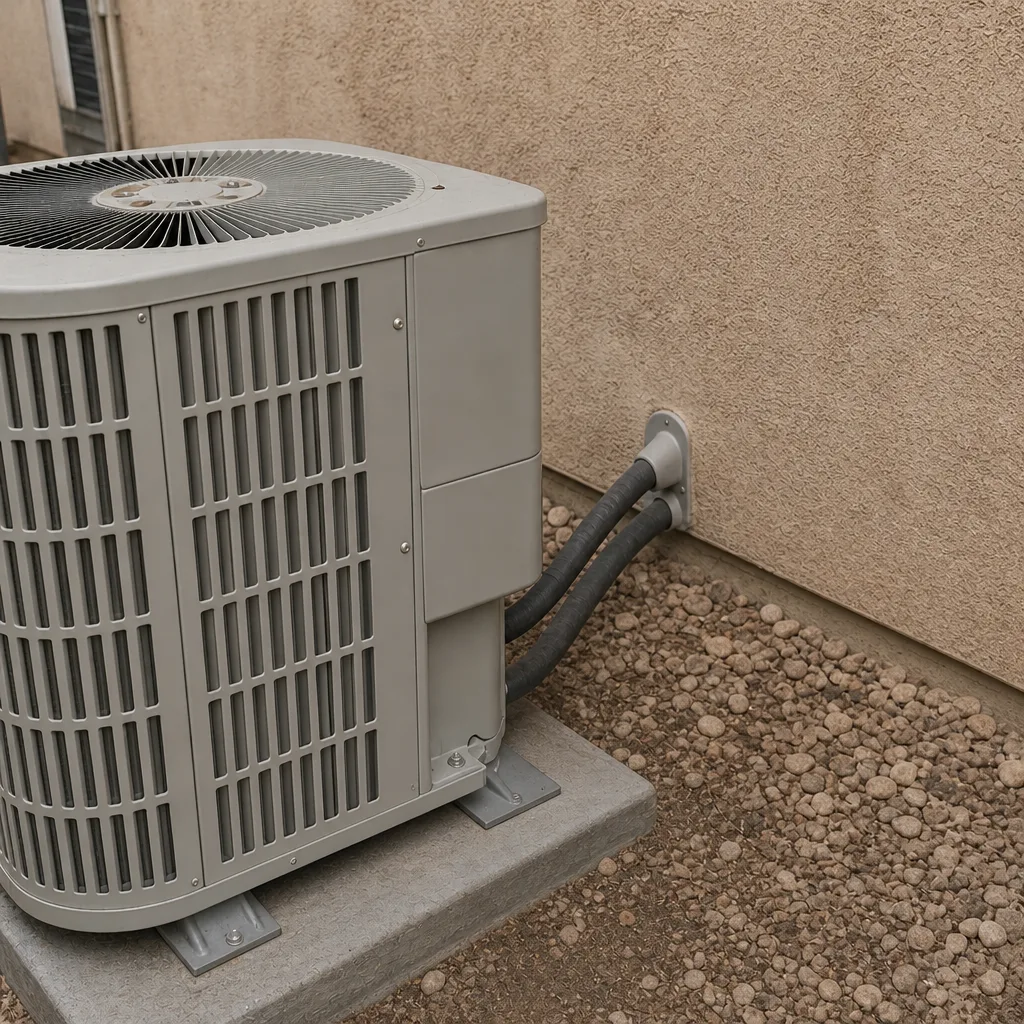 After
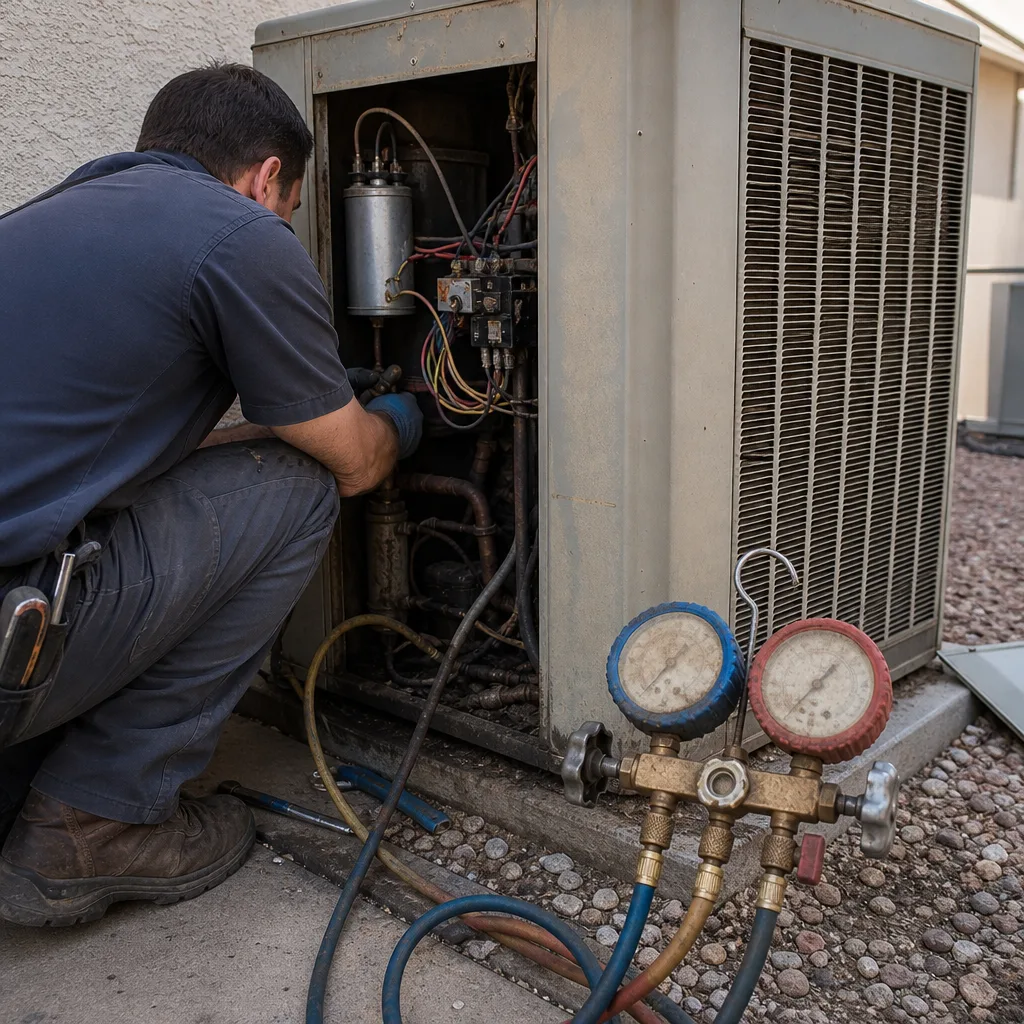 Before
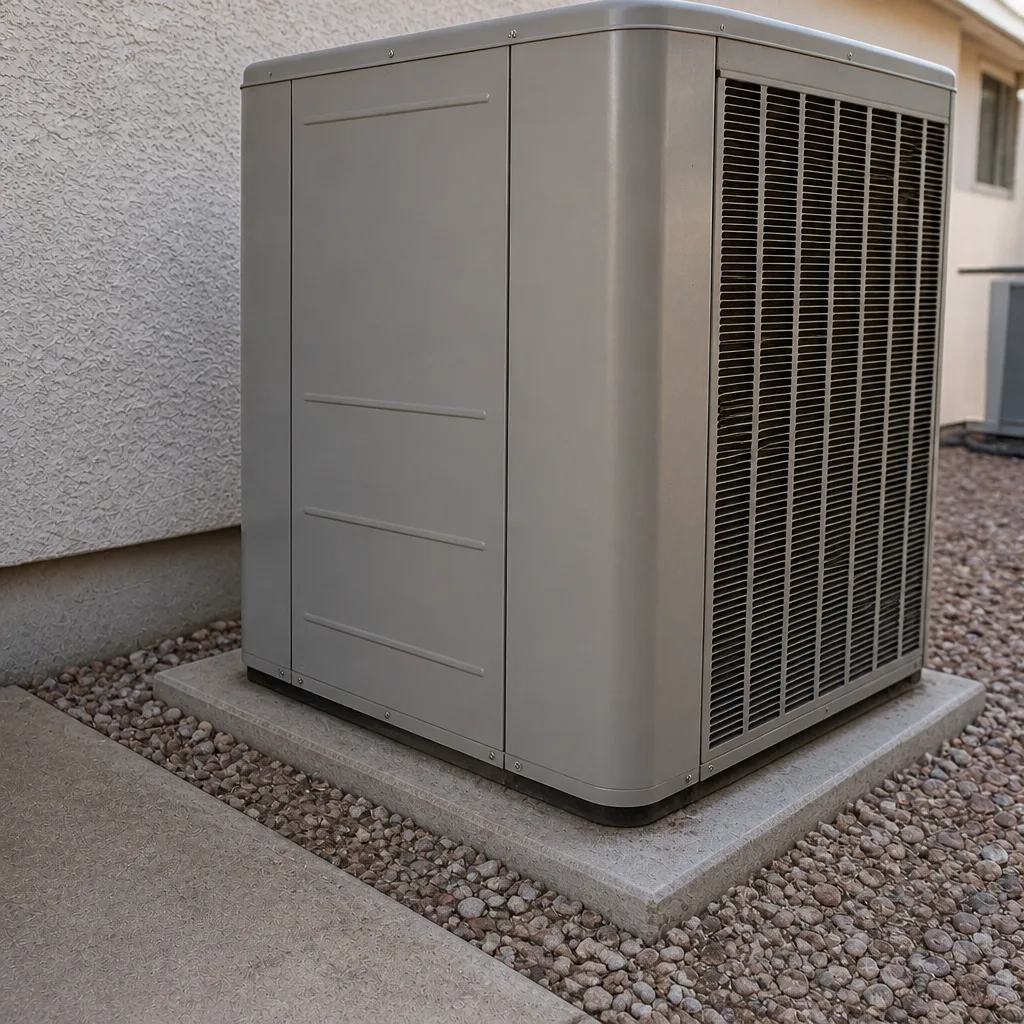 After
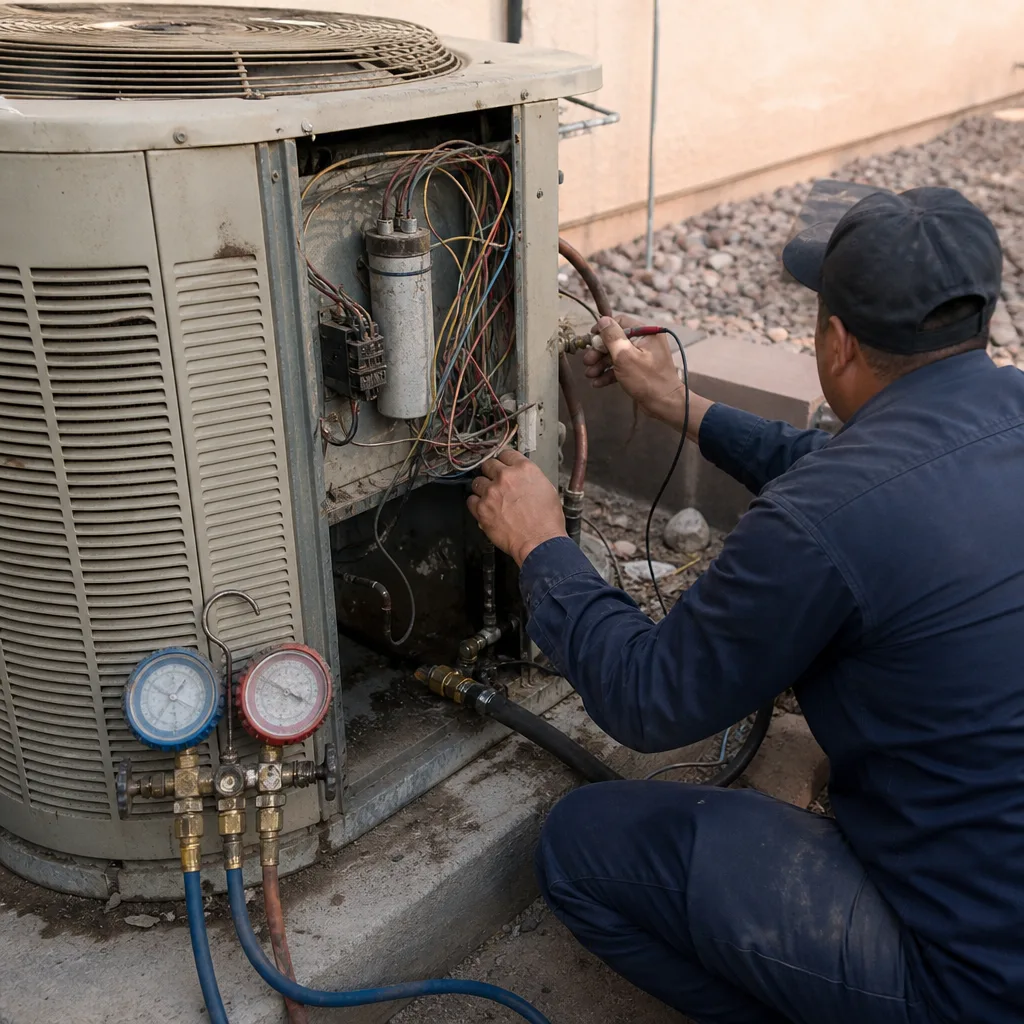 Before
 After
When to Call a Professional
Any time the system is off and it matters, call. Same day. That’s a low bar, and it’s the right one. Beyond that: any smell of gas, any burning or scorched smell near the furnace or air handler, any visible water leaking from the indoor unit, any time a breaker trips more than once, any time the system stops cooling on a day over 100°F, and any time the outdoor unit makes a screeching, grinding, or repeating loud click sound. Those are not things to watch overnight. Fireside Heating & Air Co. Boulder City offers free estimates in Boulder City and answers with a live person around the clock. Call (844) 312-0133. If it’s winter and the heat’s failed, the same rule applies, and our heating and furnace service is the place to start.
Frequently Asked Questions
Turn the system off at the thermostat, get everyone into the coolest room, and call a company that answers with a live person. Don’t keep resetting the breaker if it trips more than once. Reset once, and if it trips again, leave it off and call. If anyone in the household is elderly or has a medical condition affected by heat, treat it as a health emergency and consider calling for medical help before calling for HVAC help.
Usually yes, but not always where the old one sat. Historic District guidelines can affect the placement and sometimes the type of exterior equipment visible from the street. Many Boulder City homes avoid a lengthy review by placing equipment in a side or rear yard out of public sight, or by using a ductless mini-split that takes up less exterior footprint. Ask your contractor about placement before you buy.
Nighttime service is available in Boulder City, but the pool of companies that actually covers it after dark is smaller than most homeowners assume. The best way to confirm is to call a company during the day and ask what happens to a 2 a.m. call. If the answer is a live person, you’ve found your company. Fireside answers every call with a live person, 24 hours a day, seven days a week, including holidays.
Most emergency diagnostic calls in the Boulder City area run $99-$189 depending on the after-hours premium, with repairs typically starting around $180-$340 for common component failures. Compressor, heat exchanger, or coil work runs much higher. Fireside quotes upfront and the price quoted is the price paid. Call (844) 312-0133 for an exact quote, and mention if you have any written estimate from another company so we can give you a free second opinion.
It depends on the age of the system and what failed. A single-component failure on a system under 12 years old is almost always a repair. A compressor or heat exchanger failure on a system over 15 years old is usually a replacement. In our experience, once a repair estimate crosses roughly half the cost of a new system, replacement tends to be the better long-term choice for a Boulder City homeowner planning to stay in the home. Call us for a free second opinion on any written estimate if you’re not sure.
A defined warranty period, a defined remedy, a covered scope, and something signed by the company. If it isn’t written, it isn’t a guarantee. Fireside backs every job with the 90-Day Done Right Promise: if it isn’t done right, we make it right, in writing, no arguing, no paperwork.
The Bottom Line
An HVAC emergency in Boulder City unfolds faster and with fewer options than most homeowners expect. The extreme heat, the older housing stock near the Historic District, and the smaller pool of after-hours contractors all combine to make the first hour the most important. Turn the system off, protect the household, call a live person, and confirm two things in writing: the price and the guarantee. If you’re in the Historic District, know the placement question ahead of a replacement. If you can’t get a straight answer from a company, call a different one. Fireside Heating & Air Co. Boulder City has done this work for over 42 years, and we’d rather help you plan for the failure than talk you through it at 2 a.m. But we’re here for that call too.
If your system is running and you’d like a tune-up or a second opinion before summer, call (844) 312-0133 for a free estimate in Boulder City. A live person answers every time.
Written by the team at Fireside Heating & Air Co. Boulder City.