
Last updated November 18, 2026
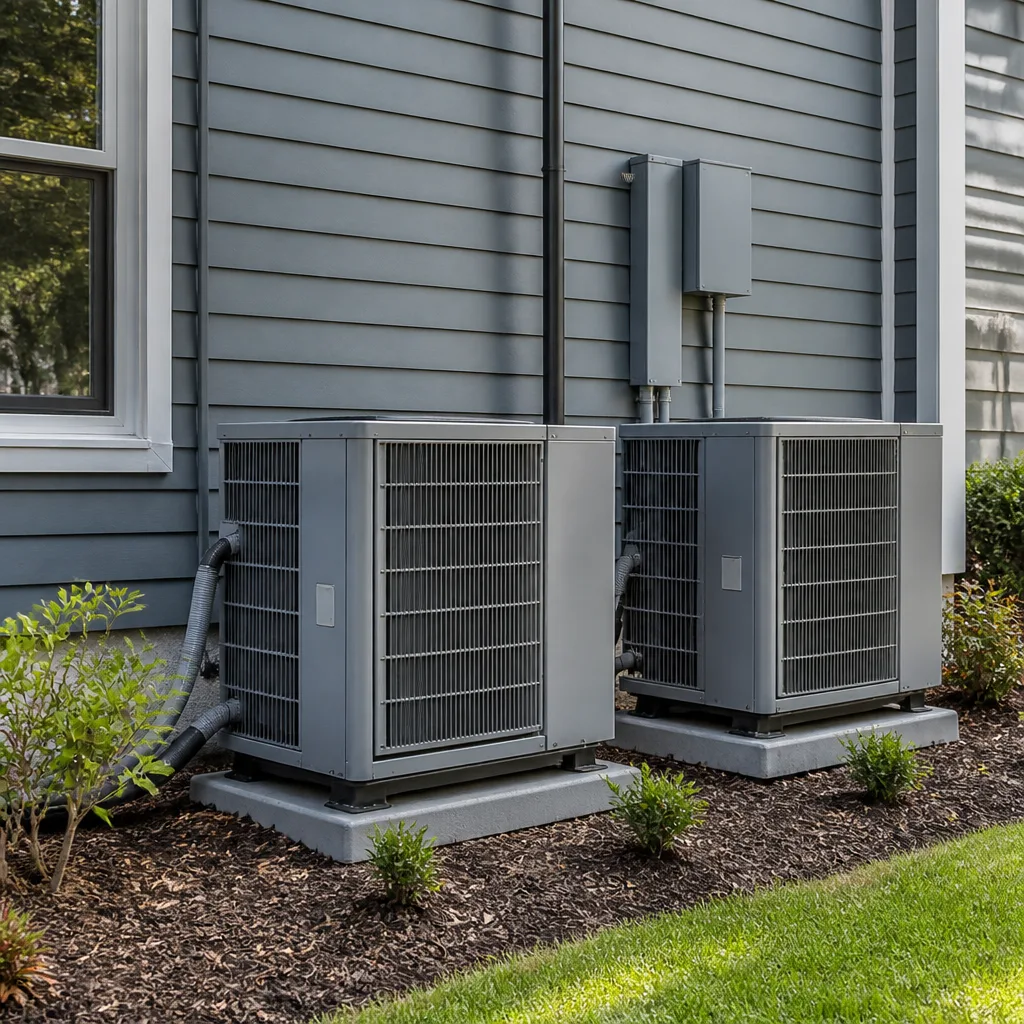 Heat pumps
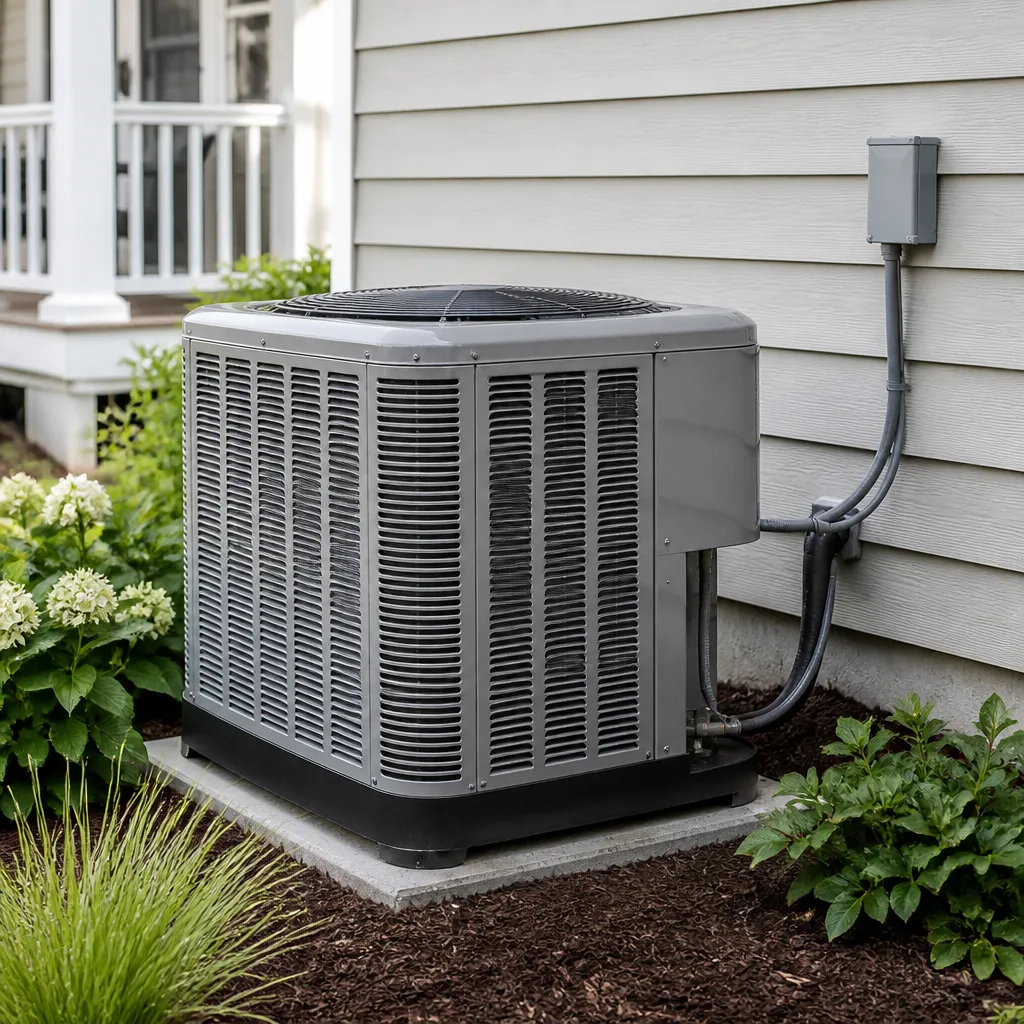 AC repair
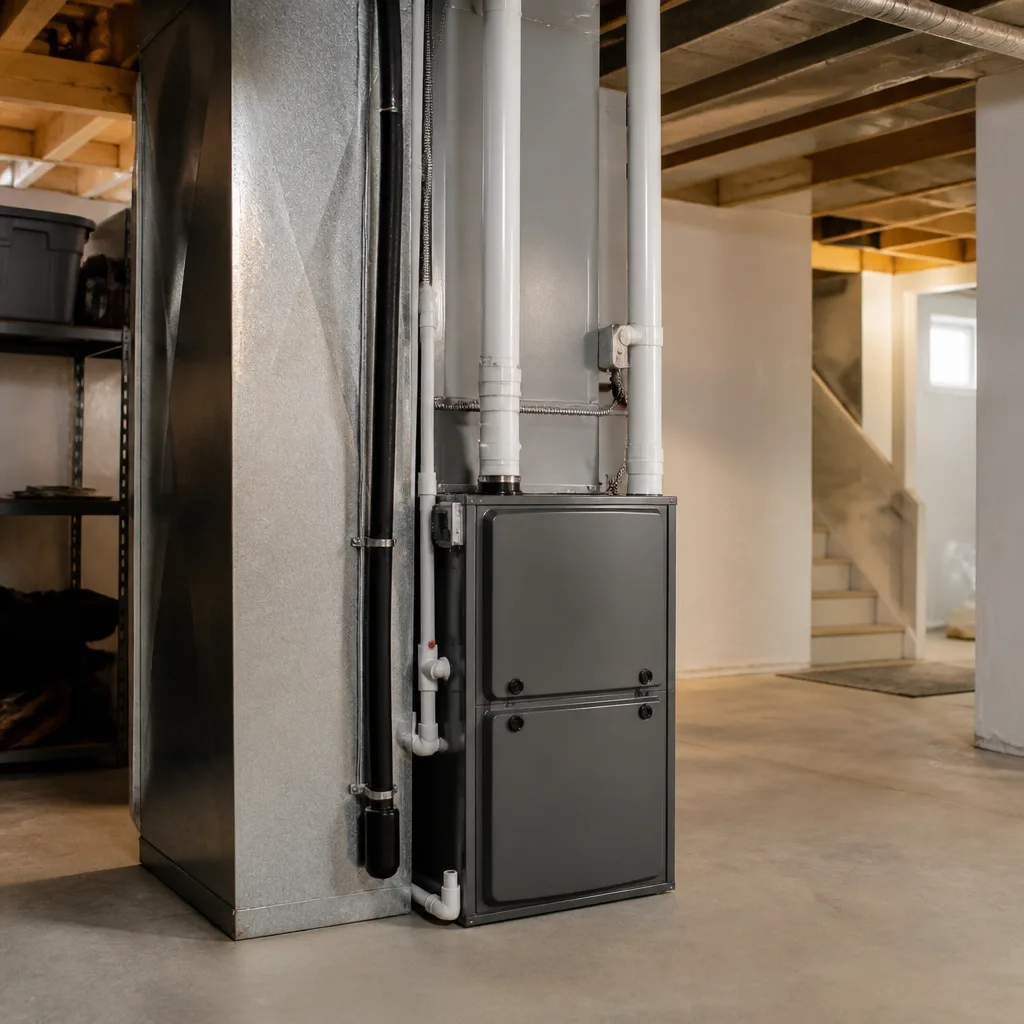 Furnace & heating
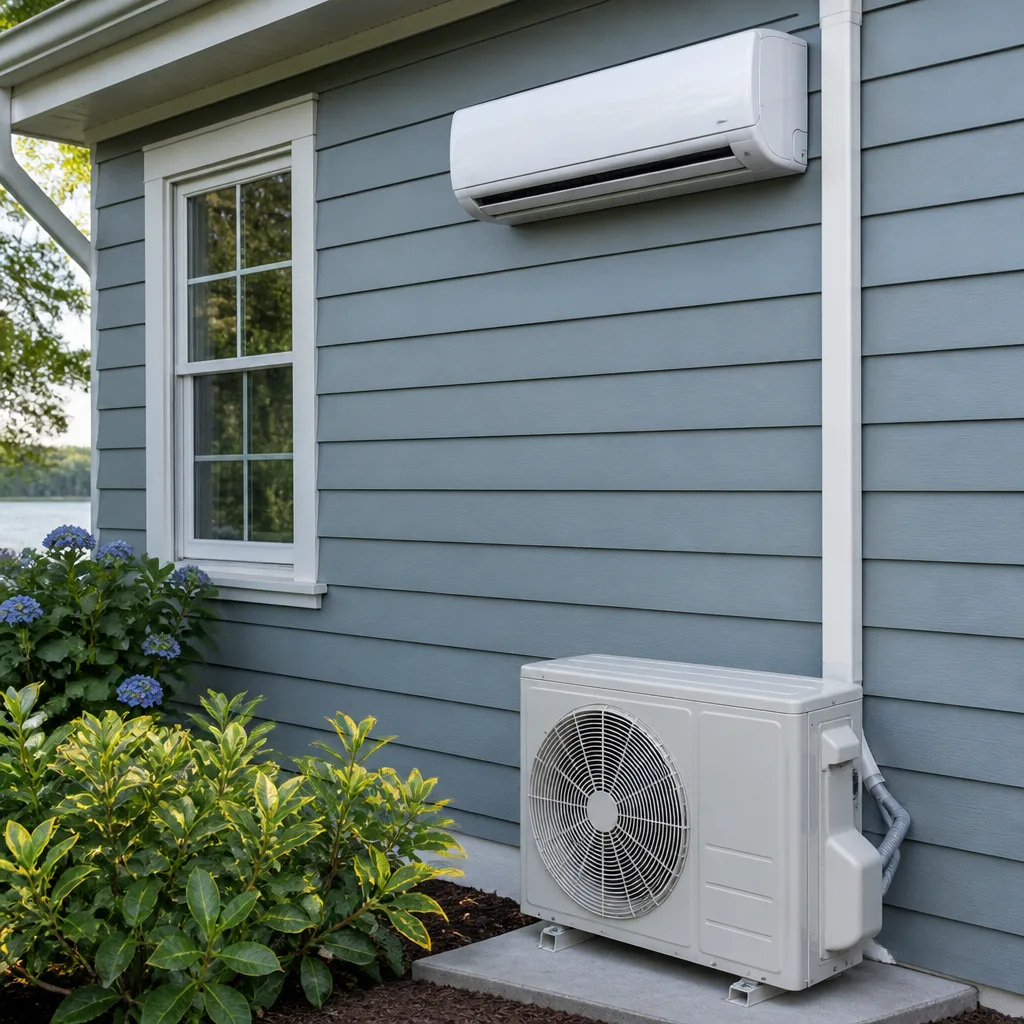 Ductless mini splits
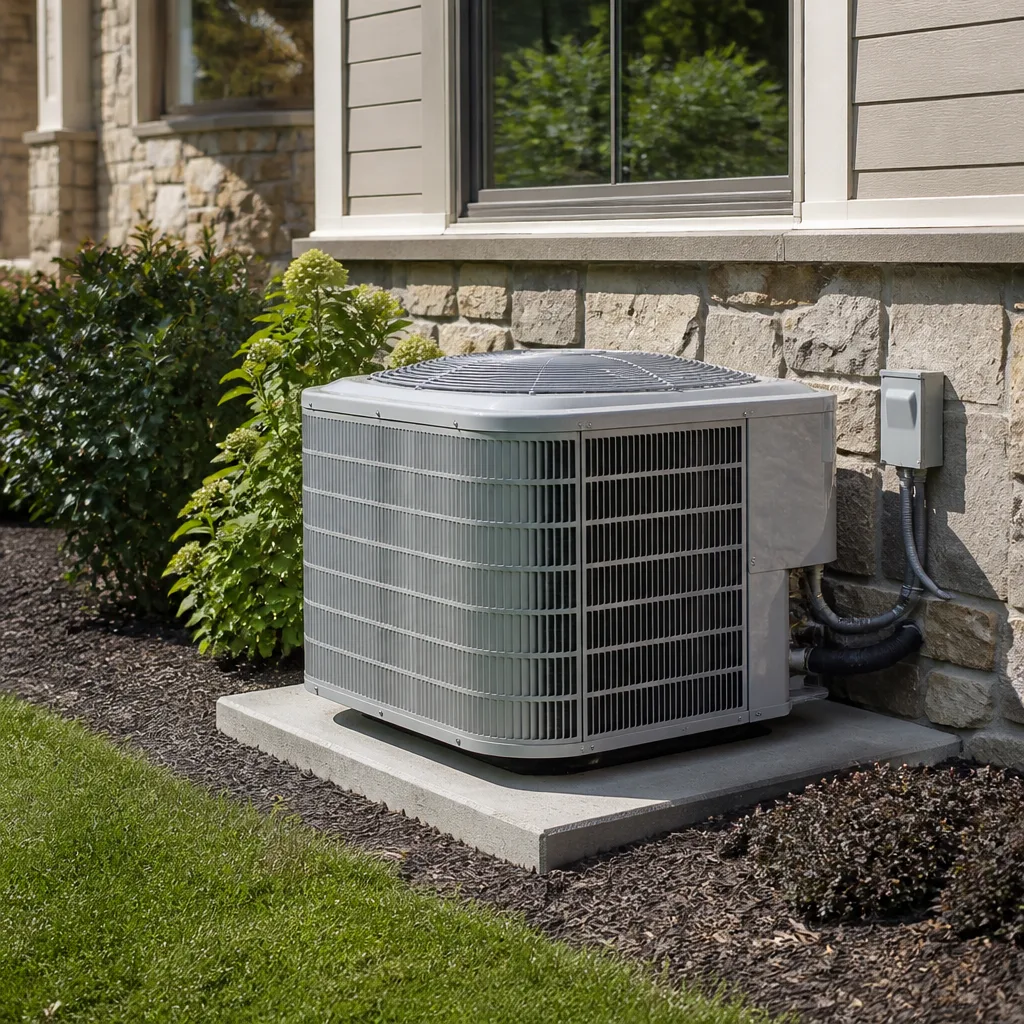 Carrier
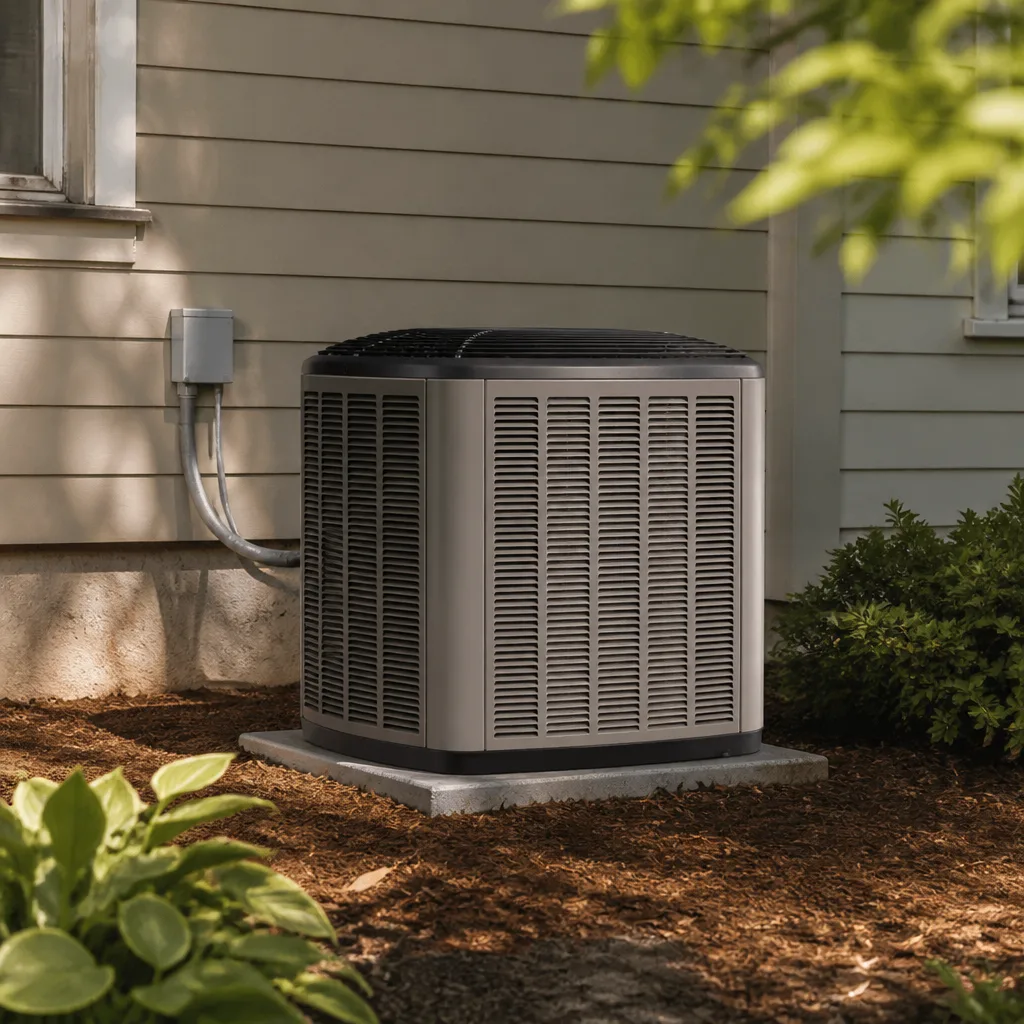 Trane
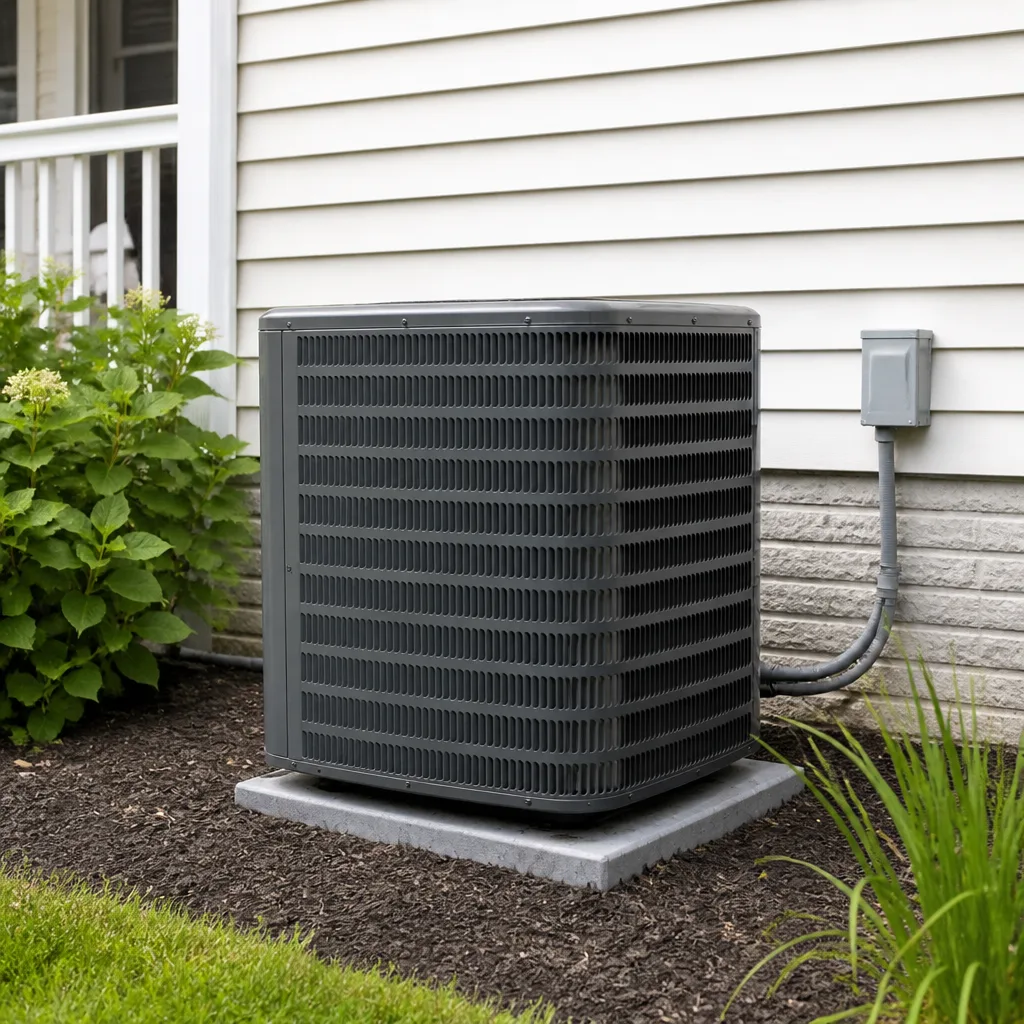 Goodman
Seasonal tune-up and full diagnostic on your Carrier, Trane, or Goodman system - readings shown to you before any repair is proposed
Diagnosis first, numbers second - you approve the repair price before a single part goes in.
Get your free estimateHeat Pump & Mini Split Troubleshooting: Common Problems and How to Fix Them
Resetting a mini split that’s throwing a refrigerant fault code doesn’t clear the fault. It restarts the clock on a problem that will come back within hours, and it can complicate a warranty claim if a technician later finds the unit was run in a known fault state. Here’s the part most homeowners never hear: the same error code doesn’t always mean the same thing. On a Boulder City wall unit, an E6 that appears at startup, an E6 that shows up mid-cycle, and an E6 that flashes after a power surge are three different stories. This guide walks you through a symptom-first way of thinking about heat pump and mini split problems, so you know what you can safely handle and what needs a trained hand.
Quick Answer
Most mini split and heat pump problems fall into two buckets: things a homeowner can safely fix (a clogged filter, a tripped breaker, dead remote batteries, a blocked outdoor unit) and things that need a technician (refrigerant charge, condensate drain blockages, control board faults, compressor issues). If your unit blows air that isn’t cold or hot, check the filter and the breaker first. If the problem persists past that, or you see a fault code on the display, it’s time to call. In Boulder City’s dusty climate, filters clog faster than manufacturer schedules suggest, and that alone accounts for a large share of “my mini split stopped working” calls.
Styles & brands we work with
- AC repair
- Furnace & heating
- Heat pumps
- Ductless mini splits
- Carrier
- Trane
- Goodman
Table of Contents
- The Symptom-First Troubleshooting Tree
- Blows Air But Doesn’t Heat or Cool: The Most Common Call
- What Error Codes Actually Tell You (And What They Don’t)
- Owner-Fixable vs. Looks-Simple-But-Isn’t
- Why Boulder City Dust Changes Your Filter Schedule
- What to Have Ready Before You Call a Technician
- Common Mistakes to Avoid
- When to Call a Professional
The Symptom-First Troubleshooting Tree
Error codes get all the attention, but most homeowners don’t have their unit’s code list handy, and even when they do, the code often points to a category of problem rather than a single cause. So start with what the system is doing, not what number is flashing. The symptom tells you where to look.
Work through this in order. It’s the same logic our technicians use on a first-visit diagnostic, just stripped of the meter and the gauges.
- Is the indoor unit completely dead? No lights, no fans, no response to the remote. Check the breaker at the panel first. Then check the remote batteries. Then check whether the unit is in a locked mode or schedule hold.
- Does the indoor fan run but the air is room temperature? This points to the outdoor unit, the refrigerant circuit, or the compressor. Check the outdoor unit for obstruction, confirm the breaker is on, and look for ice on the lines. This is the most common “blows air but doesn’t heat or cool” call.
- Is the unit short-cycling? Running for a few minutes, then stopping, then starting again. This often traces to a dirty filter, a blocked coil, low refrigerant, or a sensor fault.
- Is there water where water shouldn’t be? That’s the condensate drain. A blocked drain is common in dusty climates and needs a technician to clear properly, not a shop vac on the line.
- Is it noisy? Rattle, hum, or screech. Each points somewhere different: loose panels, a failing fan motor, or a compressor issue.
- Is it showing a fault code? Note the code, note when it appeared (startup, mid-cycle, after a power blip), and write it down. That context matters more than the code itself.
If you get through step two and the problem is still there, you’ve done the safe part of the work. Everything past that point involves refrigerant, electrical components, or sealed systems where a mistake can cost far more than a service call. Heat pumps and mini splits are covered under our Heat Pump & Mini Split in Boulder City service, and if you’re in the middle of triage and not sure which way to go, a phone call is cheaper than a wrong guess.
Blows Air But Doesn’t Heat or Cool: The Most Common Call
This is the complaint we hear more than any other: the unit is running, the fan is moving, the air coming out feels like nothing. It’s not hot, it’s not cold, it’s just room temperature. In Boulder City, this complaint spikes in July and again in January, when a system that’s been coasting through mild weather suddenly has to work.
Here’s what to check, in order, before you pick up the phone:
- The filter. Pull it, hold it up to the light. If you can’t see through it clearly, it’s restricting airflow and the system can’t move enough air across the coil to condition it. Wash it or replace it. This alone resolves a surprising share of complaints.
- The mode setting. Confirm the remote is actually set to cool or heat, not fan-only or auto. It sounds obvious. It isn’t, especially after a power interruption resets the remote to a default.
- The breaker. Both the indoor and outdoor units have their own circuits in most installations. A tripped outdoor breaker lets the indoor fan run while the compressor sits dead.
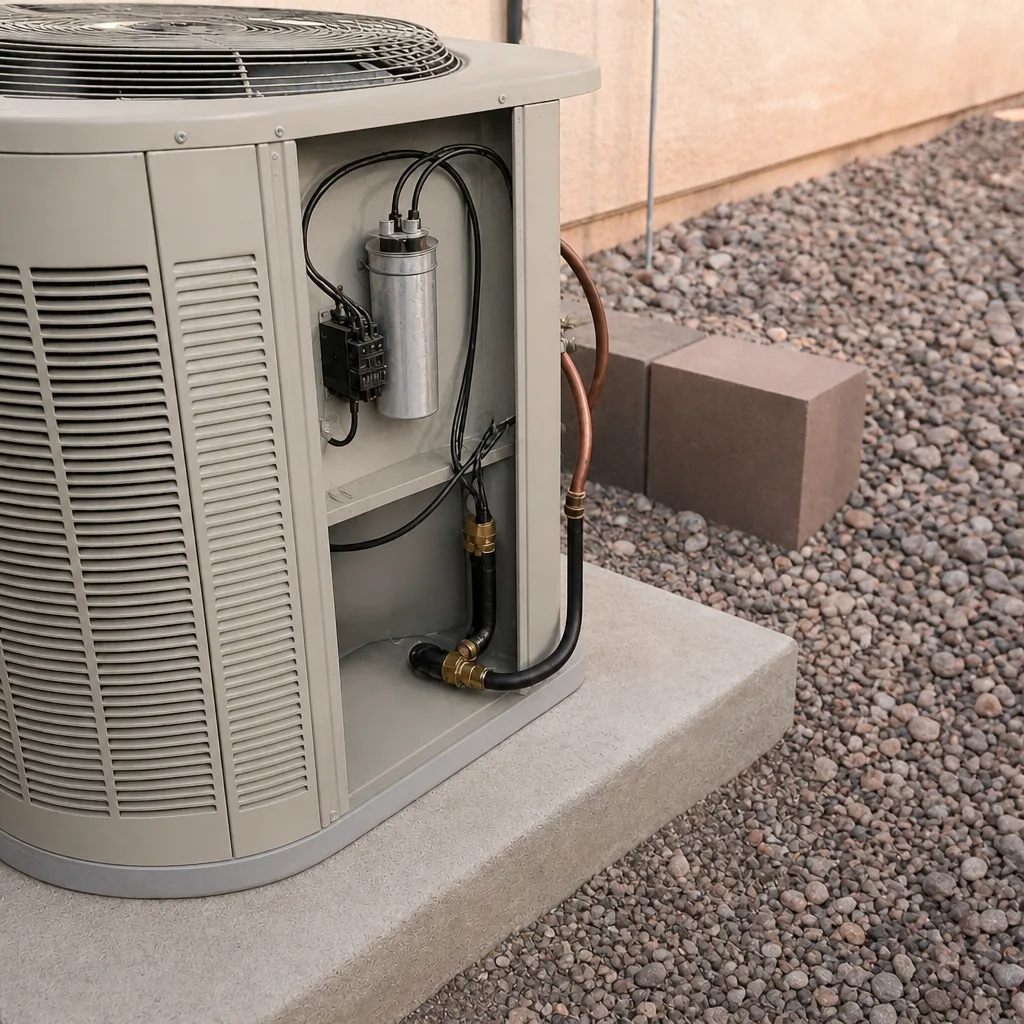
- The outdoor unit. Is it running? Is there airflow? Is the fan turning? Is there ice on the copper lines or the coil? Ice on the lines during cooling usually means low refrigerant or restricted airflow. That’s a technician job.
- The setpoint. Make sure the setpoint is at least a few degrees away from room temperature in the direction you want. A thermostat set two degrees from ambient will let the unit run forever without satisfying.
If the filter is clean, the breaker is on, the mode is correct, and the outdoor unit is either dead or iced up, stop there. Running a system with low refrigerant or a blocked coil can damage the compressor, and compressor replacement on a mini split often approaches the cost of a new unit. Our AC Repair & Installation in Boulder City team handles exactly this diagnosis, and in the cooling season it’s the fastest way to know whether you’re looking at a repair or a replacement.
What Error Codes Actually Tell You (And What They Don’t)
Error codes on a mini split or heat pump are written by engineers, for service technicians, not for homeowners. They tell you a category, not a cause. The same code can point to a dozen different underlying issues depending on the brand, the model, and the conditions under which it appeared.
Take a common one, the E6 on many wall units. On some brands it’s a communication fault between the indoor and outdoor units. On others it points to a fan motor issue. On others it’s a low-voltage or board problem. Without the model’s specific service manual and a technician’s meter, you’re guessing. And guessing wrong is expensive.
What matters more than the code itself is the context. When you write down your fault code, note these three things:
- When it appeared. At startup? Mid-cooling cycle? After a power flicker? Startup codes often point to communication or sensor problems. Mid-cycle codes often point to high-pressure or temperature-related faults. Codes after a power event often point to control board or voltage issues.
- What the unit was doing at the time. Was it running hard on a 110-degree Boulder City afternoon, or was it on a mild morning? High-load conditions change the picture.
- How many times you’ve seen it. A one-time code after a lightning storm is different from a code that returns every cooling cycle. Recurrence is the signal.
Clearing a refrigerant fault code by cutting power and restarting the unit doesn’t fix anything. It restarts the clock on a problem that will return, and if the manufacturer’s warranty investigation shows the unit was repeatedly run in a known fault state, that can complicate the claim. If a code comes back within a day, call. Our team is trained across nine major brands including Carrier, Trane, Bryant, and American Standard, and every job is backed by our 90-Day Done Right Promise if the first visit doesn’t settle it.
Owner-Fixable vs. Looks-Simple-But-Isn’t
Knowing which bucket a problem falls into saves money and, in a few cases, prevents real trouble. Here’s the split, drawn from years of first-visit diagnostics.
Genuinely Owner-Fixable
- Clogged or dirty filter. Pull it, clean it, reinstall. In Boulder City’s dust, this is the single most useful maintenance step you can take. If you can’t see light through it, it’s overdue.
- Tripped breaker. If a breaker has tripped, reset it once and see if it holds. If it trips again, stop touching it and call. A breaker that keeps tripping is telling you something upstream is wrong.
- Remote batteries. A dead remote looks a lot like a dead system. New batteries, or try the unit’s manual on/off button if it has one.
- Blocked outdoor unit. Clear leaves, tumbleweeds, and debris from around the outdoor unit. It needs two feet of clearance on all sides to move air. In Boulder City, spring winds push debris into every corner, and we routinely see outdoor units strangled by tumbleweed in April and May.
- Outdoor unit off a level pad or vibrating against a wall. If it’s rattling, check that it’s sitting level and not touching the house. Don’t shim it while it’s running.
Looks Simple But Isn’t
- Low refrigerant. This is not a top-off job. A heat pump or mini split is a sealed system. If it’s low, it’s leaking. Adding refrigerant without finding and fixing the leak just buys a few months before the same problem comes back, and it can damage the compressor along the way. Refrigerant service requires EPA-certified handling, recovery equipment, and gauges. This is a technician job, full stop.
- Condensate drain blockage. It sounds like a plumbing task, but the drain on a mini split runs on a specific pitch through the wall sleeve, and clearing it with a shop vac on the wrong end can push water into the indoor unit or spill it into a wall cavity. A proper clear involves checking the trap, confirming pitch, and verifying the float switch. When a drain backs up in Boulder City, it’s often because fine desert dust has formed a paste in the line, which needs a different clear than leaves or slime.
- Electrical troubleshooting. Control boards, capacitors, and contactors hold a charge and can deliver a serious shock even after power is off. If you don’t own a meter and know how to use it safely, this is not the place to learn.
- Anything involving the compressor. Small sealed compressor systems on mini splits demand specific charge and pressure knowledge. A wrong guess can cost you a compressor or a whole system.
Our technicians have up to 8 years of experience on this equipment, and they carry the tools to diagnose a sealed system safely. That’s the line between owner-fixable and technician-fixable: whether it needs a meter, gauges, or a recovery machine.
Why Boulder City Dust Changes Your Filter Schedule
Manufacturer filter-check intervals are written for a generic climate. Boulder City isn’t generic. The combination of desert wind, dry air, and construction dust from ongoing development across the valley means airborne particulate loads here run higher than the average the manufacturer had in mind. A mini split in a home near the dry lake bed or along the dirt access roads off the historic district is breathing more dust than the same unit in a leafy suburb somewhere else.
Practically, this means the “check every 30 days” guidance on the box is too loose for most Boulder City homes during spring and summer. We tell homeowners to check the indoor filter every two weeks during wind season, and every three to four weeks the rest of the year. If you have pets, add a week to that. If you’re near open desert on the edges of town, add another.
The outdoor unit matters here too. Dust and fine grit coat the outdoor coil, and a coated coil can’t reject heat. That’s why we see so many “my mini split is running but not cooling” calls in July after a windy April and May. Washing the outdoor coil down with a garden hose at low pressure once before cooling season is a reasonable homeowner step. Doing it with a pressure washer is not: high pressure bends the coil fins and creates a bigger problem than it solves.
If you’ve been on the manufacturer’s schedule and your filters are showing heavy buildup every time you check, your schedule needs adjusting. Our Heating & Furnace in Boulder City team will take a look at your filter loading during a routine seasonal tune-up and set a schedule that fits the actual dust load in your neighborhood, not the one on the box.
What to Have Ready Before You Call a Technician
A well-prepared call is a shorter call, and a shorter call is a smaller bill. Before you dial, gather these details. It’s the difference between a diagnostic visit that resolves in one trip and one that requires a second.
- Brand and model number of both indoor and outdoor units. On the data plate, usually on the side or back of the indoor head and on the outdoor unit’s panel. If you can’t read it, snap a photo.
- Age of the system. Approximate is fine. “Five years old” is enough.
- The exact symptom in plain language. “Blows air but not cold” is more useful than “it’s broken.” “Runs for three minutes then stops, comes back two minutes later” is more useful still.
- Any fault code on the display, and when it appeared. At startup, mid-cycle, or after a power event.
- What you’ve already tried. Filter cleaning, breaker resets, remote battery replacement. Write it down so the technician doesn’t repeat the steps.
- Recent history. Has it been serviced this season? Any recent power outages or surges? Any prior repairs?
- Whether the system is under manufacturer warranty. If so, have the paperwork ready. Warranty work sometimes requires manufacturer approval before certain repairs.
One call to (844) 312-0133 gets a live person, 24 hours a day, 7 days a week. That’s a real person, not a voicemail tree, whether it’s 2 p.m. or 2 a.m. So even if it’s late and you just want to know whether you can wait until morning, the call gets you an answer.
Common Mistakes to Avoid
- Resetting a fault code and calling it fixed. Cutting power clears the code but doesn’t clear the problem. If the code returns the next day, you’ve lost a day and possibly strained the system. Note the code instead, and call when it repeats.
- Adding refrigerant without finding the leak. A sealed system that’s low is leaking somewhere. Topping it off is a stopgap that masks the real problem and can leave you with a bad compressor six months later. Refrigerant service means leak detection first.
- Running the system with a clogged filter because it “still works.” A restricted filter forces the system to work harder than it was designed to, and on a Boulder City summer afternoon, that’s when compressors fail. A dirty filter left in place is a slow-motion repair bill.
- Pressure-washing the outdoor coil. Fin damage from a pressure washer takes minutes to cause and hundreds to repair. Low-pressure hose only. If the coil is heavily clogged, a technician will clean it properly with the right coil cleaner and water pressure.
- Following a YouTube repair on a refrigerant system. Venting refrigerant is illegal without certification, and working on a live electrical enclosure without training can be genuinely dangerous. The line between owner-fixable and technician-fixable is defined by certification and safety, not by whether the part is available online.
- Ignoring a slow drip or a wet spot near the indoor head. A blocked condensate drain doesn’t stay small. It finds its way into drywall, framing, and ceilings. In a Boulder City home that’s been through a spring dust season, a wet spot under a mini split head is a call now, not in two weeks.
- Replacing the whole system on the first diagnosis. Not every failure means replacement. A failed capacitor, a stuck float switch, or a dirty outdoor coil can look like a dead system to a homeowner. Get a second opinion in writing before you commit to replacement. We offer a free second opinion on any written estimate.
When to Call a Professional
Call us when the fan is running but the air isn’t conditioned, when a fault code returns more than once, when there’s water near the indoor unit, when the outdoor unit is dead or iced up, or when you’ve reset the breaker twice and it keeps tripping. Call us when you can see the outdoor coil is matted with dust and the system is struggling, but you’re not sure whether a coil cleaning will be enough. Call us if you’re hearing a noise that wasn’t there last season: a hum, a screech, a rattle. And call us if you’re not sure you should be touching it yourself.
Fireside Heating & Air Co. Boulder City offers free estimates in Boulder City. Call (844) 312-0133. Every job is backed by our 90-Day Done Right Promise, meaning if it isn’t done right, we make it right, in writing. Straight talk, upfront pricing, and a live person on the other end of the line any hour of the day. Most jobs we complete in a single visit. If yours is one of the small number that needs a part, we say so, and we come back when we said we’d come back.
See the difference
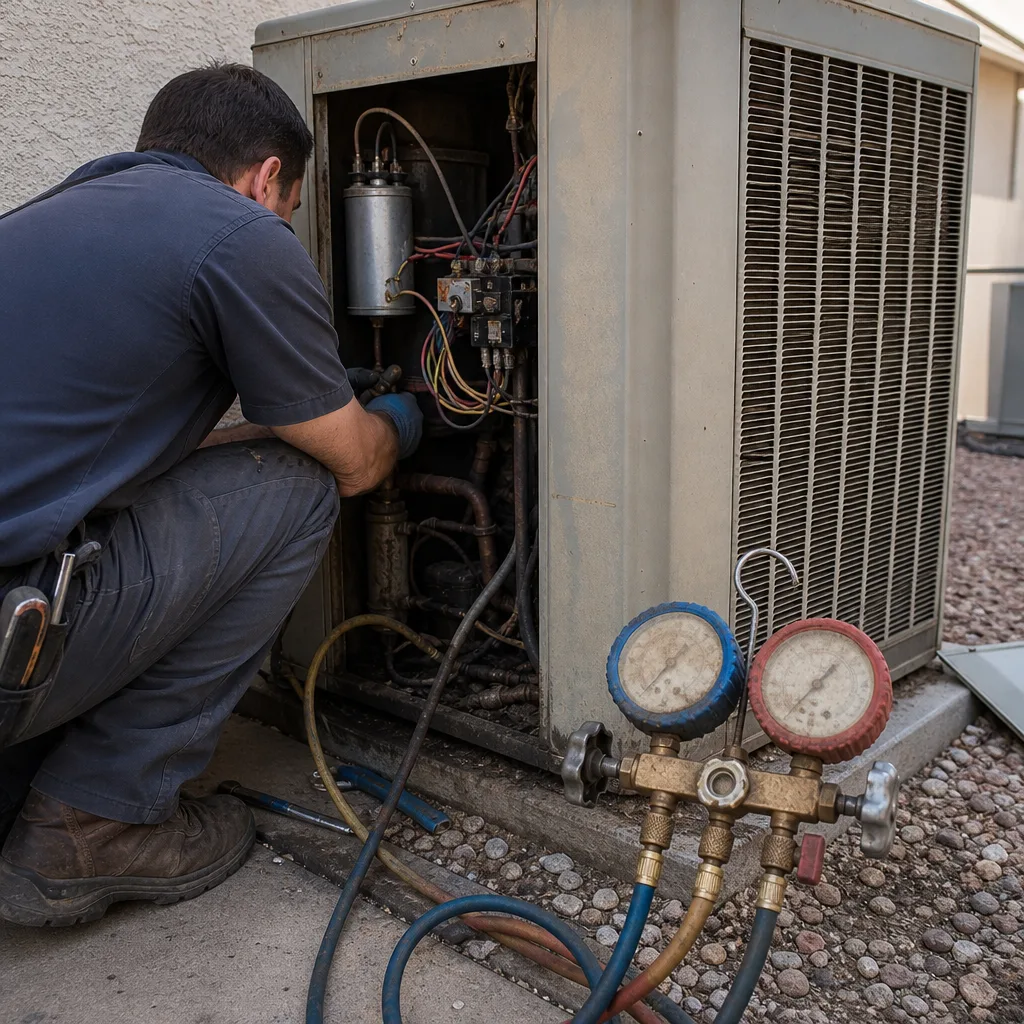
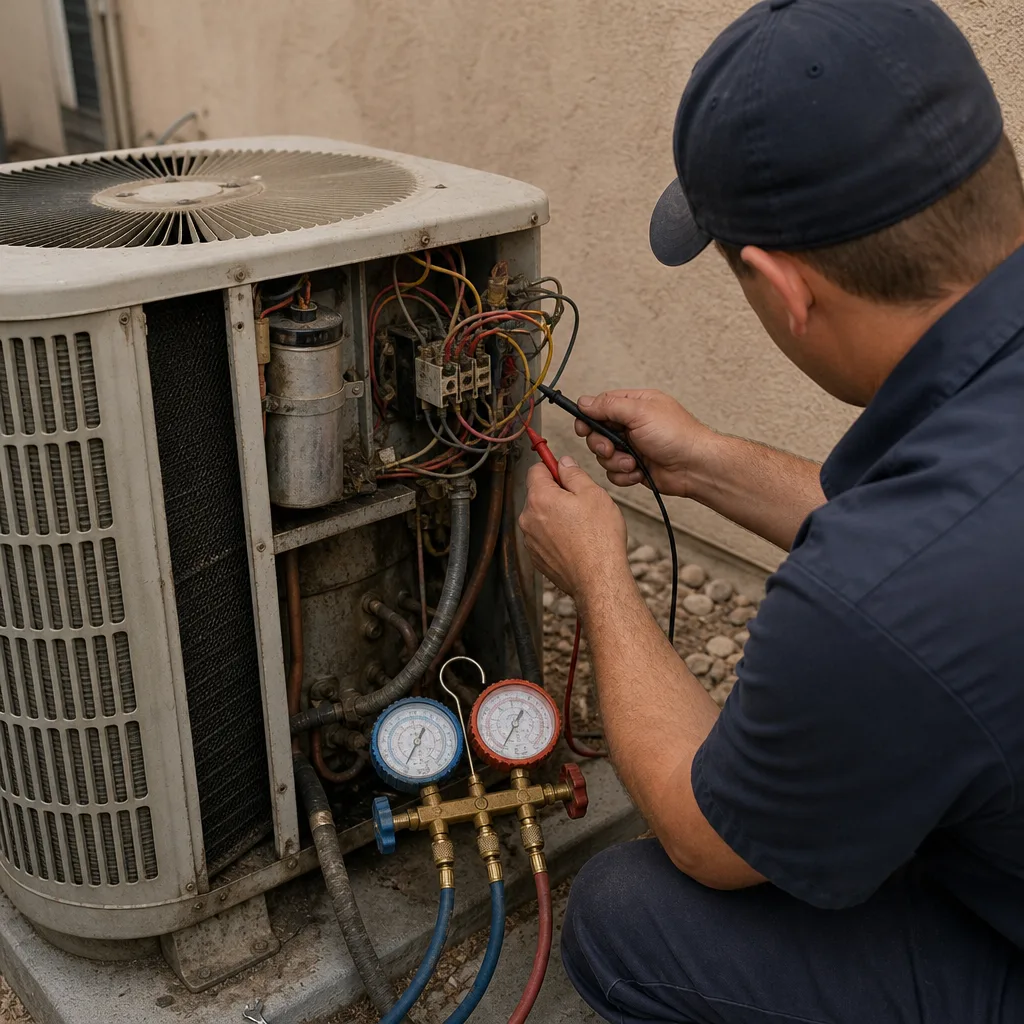 Before
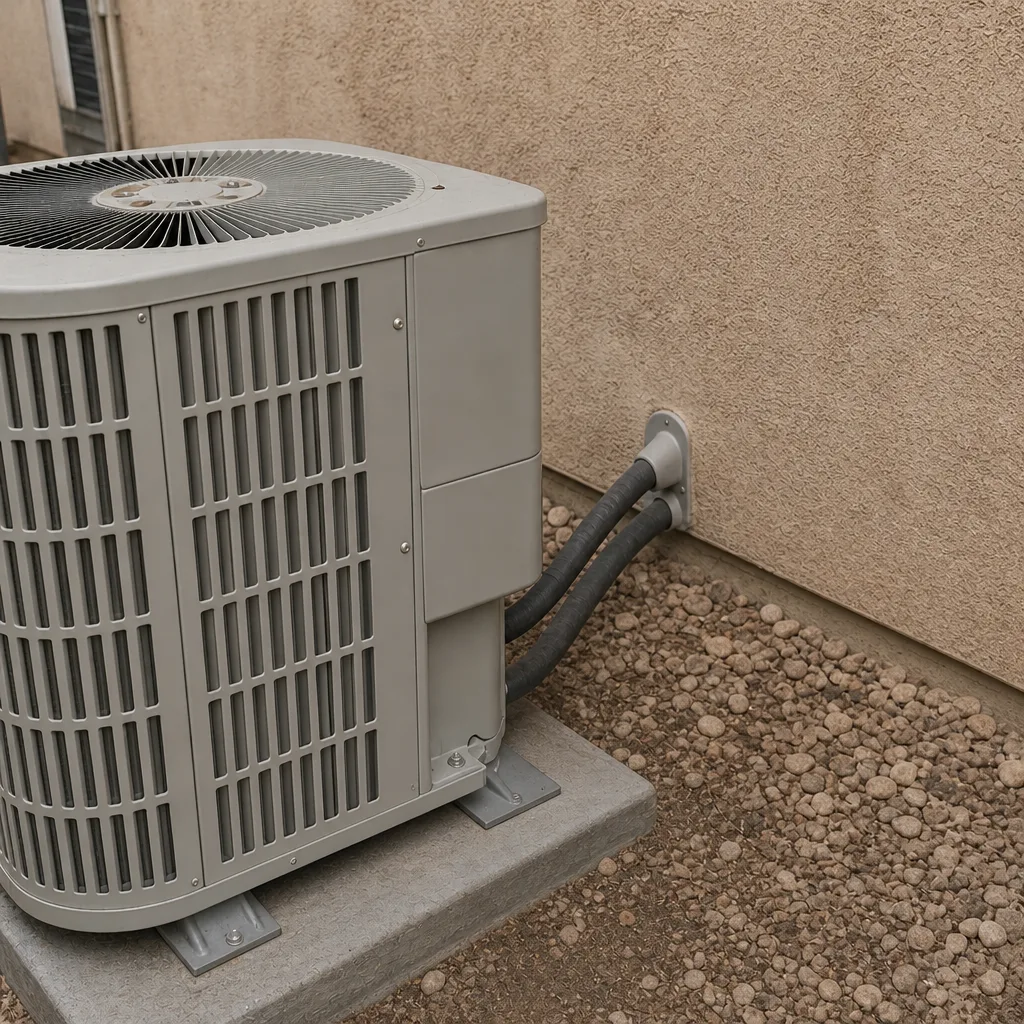 After
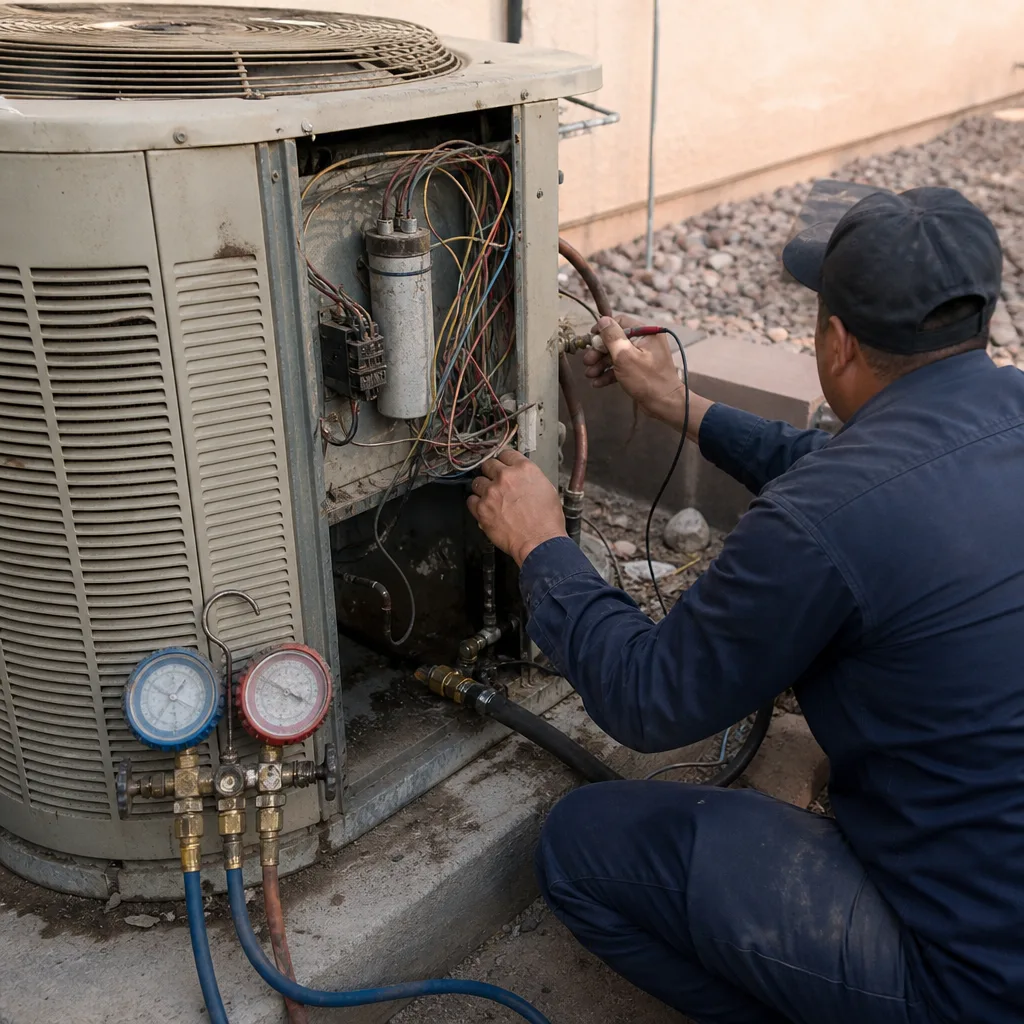
 Before
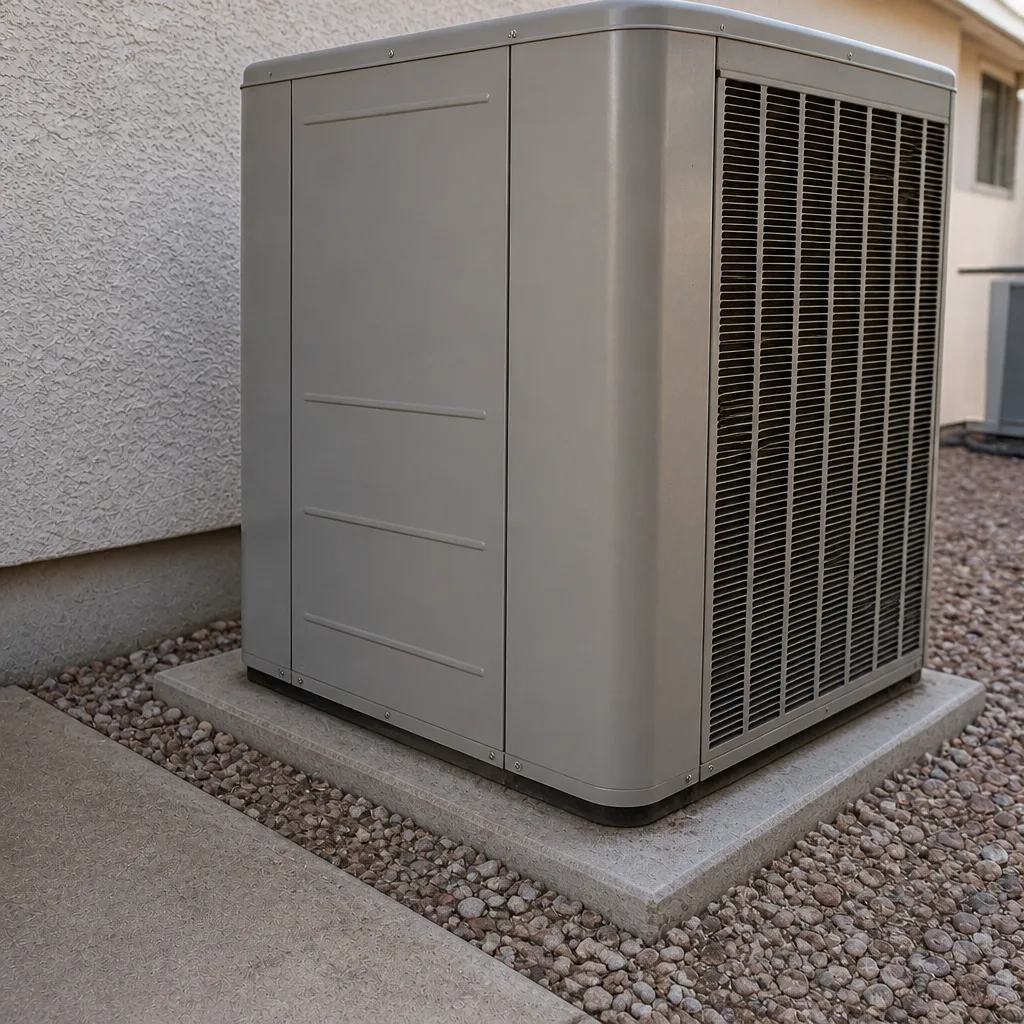 After
 Before
 After
Frequently Asked Questions
You can clear the code that way, but clearing the code isn’t the same as fixing the problem. The minisplit will restart with a fresh fault timer, and the underlying issue (if it’s refrigerant, a sensor, or a board) will trigger the same code again within hours or days. The safe move is to write down the code, note when it appeared, and call if it returns. Call (844) 312-0133 for a diagnostic visit; our technicians are trained across all nine major brands and can tell you what the code actually means on your model.
The most common cause is a restricted air filter or a clogged outdoor coil, both of which prevent the system from rejecting heat. In Boulder City’s dusty environment, filters load faster than manufacturer schedules account for, and outdoor coils mat with fine dust through spring and early summer. If the filter is clean and the coil is clean and the unit still isn’t cooling, the next step is to check the refrigerant charge and compressor, which is a technician job. Call (844) 312-0133 to schedule a diagnostic; free estimates on any required repair.
Every two weeks during wind season and every three to four weeks the rest of the year, not the 30-day interval printed on the box. Boulder City’s dust load, especially near open desert or construction areas, runs higher than the generic climate the manufacturer wrote the schedule for. If you have pets, check a week sooner. If the filter looks grey or you can’t see light through it, wash or replace it immediately. Our $89 seasonal tune-up includes a filter and coil inspection, and we’ll set a schedule that fits your neighborhood’s actual dust load.
No. A mini split condensate drain runs at a specific pitch and is often routed through a wall sleeve or ceiling cavity. Clearing it with a shop vac on the wrong end can push water into the indoor unit or spill into drywall. In Boulder City, the blockage is usually fine desert dust that has formed a paste inside the line, which needs a specific kind of clear, not a plunger. Call a technician. A $150 drain service is much cheaper than a drywall repair. Call (844) 312-0133 to schedule.
An E6 doesn’t have one meaning. On some brands it’s a communication fault between the indoor and outdoor units, on others it’s a fan motor or low-voltage problem, and on others a board or sensor issue. What matters most is when it appeared: at startup, mid-cycle, or after a power event. A technician with the model’s service manual and a meter can tell you in minutes; a homeowner without the manual and meter is guessing. Call (844) 312-0133 and have the model number ready. We’ll tell you whether it needs a visit or whether there’s a safe step you can try first.
If the system is under about 10 to 12 years old, a repair is usually the right call unless the compressor has failed or the refrigerant circuit is leaking at multiple points. If it’s older than 15 years and the repair is over a certain threshold relative to a new system cost, replacement can pencil out. The deciding factors are age, refrigerant type, repair cost as a fraction of replacement, and whether the system has had repeated repairs. We’ll give you both numbers in writing so you can decide. Free second opinion on any written estimate. Call (844) 312-0133.
The Bottom Line
Most mini split and heat pump problems come down to a handful of causes, and most of them start with airflow or electrical supply. A clean filter and a confirmed breaker handle a large share of “my unit isn’t working” calls. Everything past that point, meaning refrigerant, condensate drains, control boards, and the compressor, belongs in a trained technician’s hands. Error codes tell you a category, not a cause, and the context matters more than the number. In Boulder City, dust is the hidden variable, and it changes how often filters and coils need attention. Do the safe part yourself. Call a professional for the rest. That’s the honest split, and it’s the one that saves money over time. For service from a team that answers the phone any hour of the day, backs the work in writing for 90 days, and quotes a square price up front, call Fireside Heating & Air Co. Boulder City at (844) 312-0133, or start at the Fireside Heating & Air Co. Boulder City home page.
Written by the team at Fireside Heating & Air Co. Boulder City.