
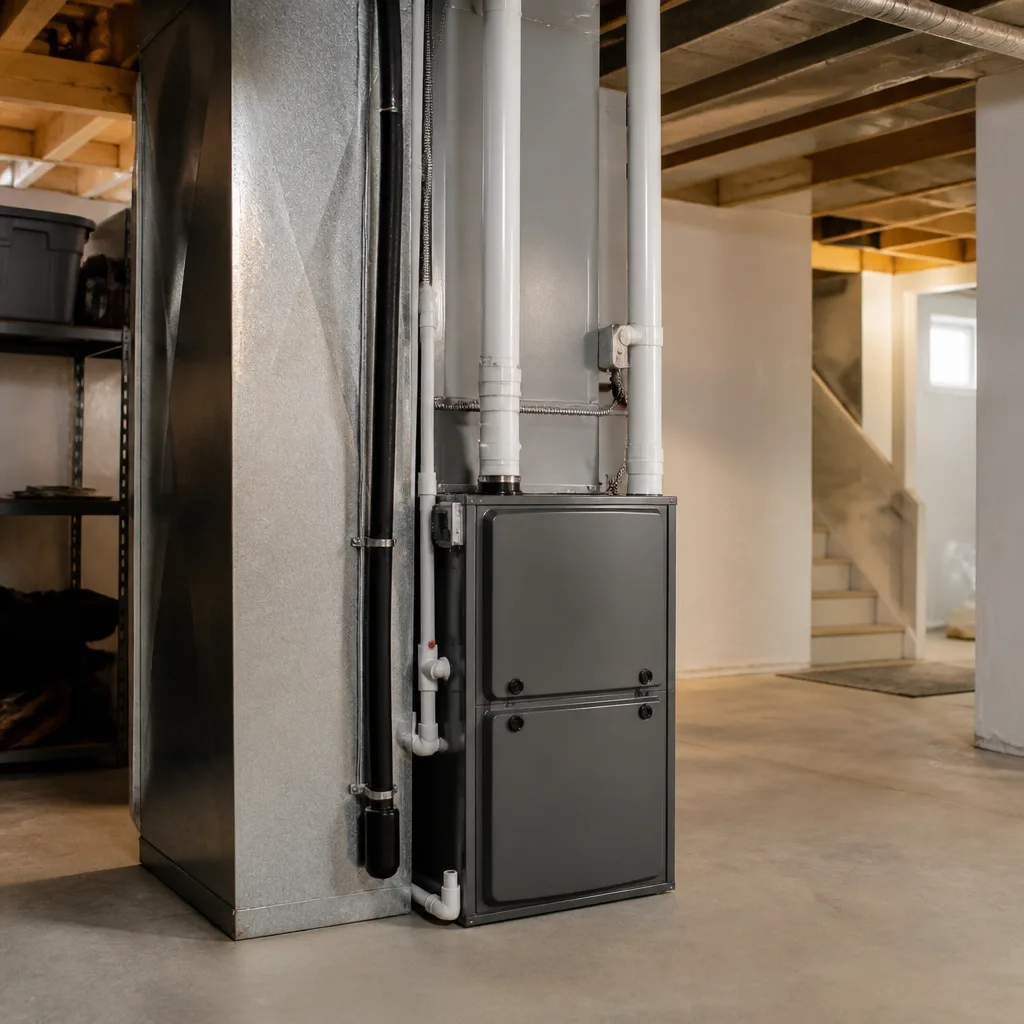
 Furnace & heating
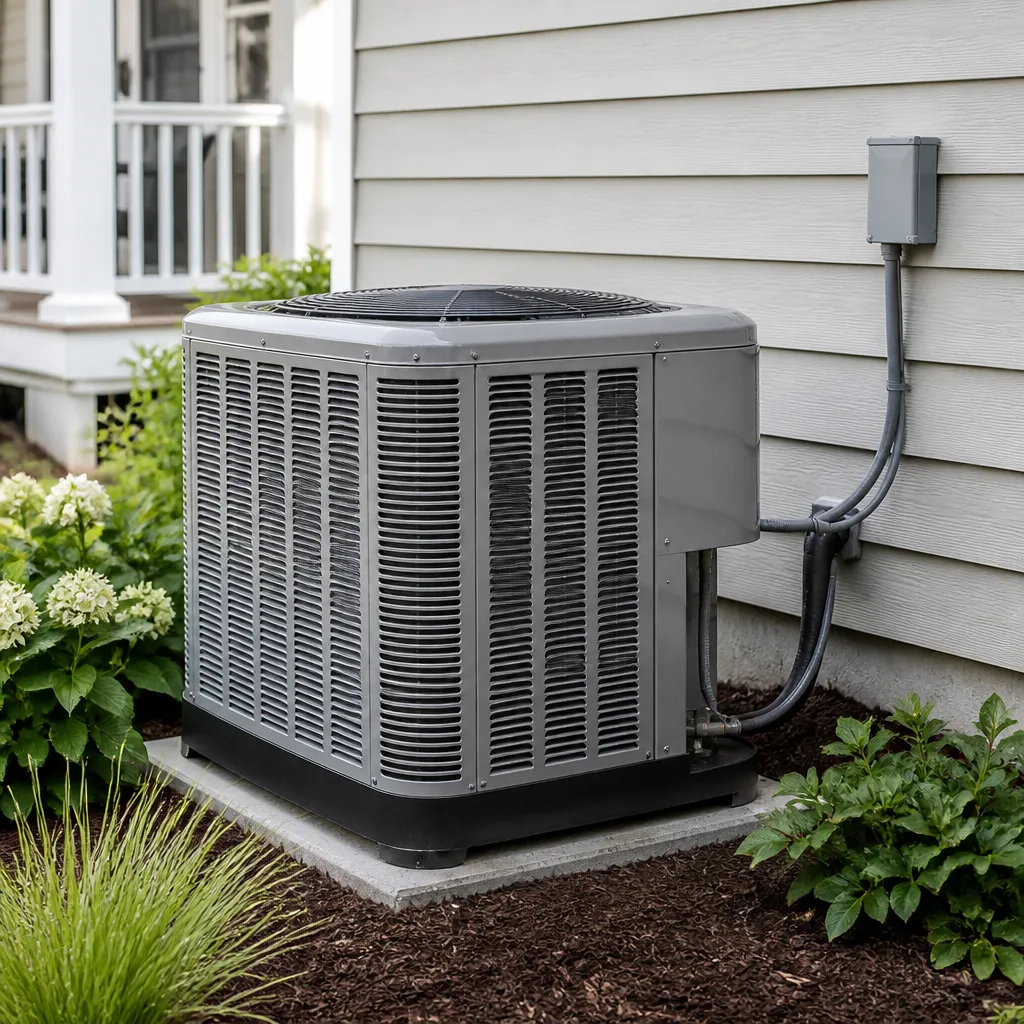 AC repair
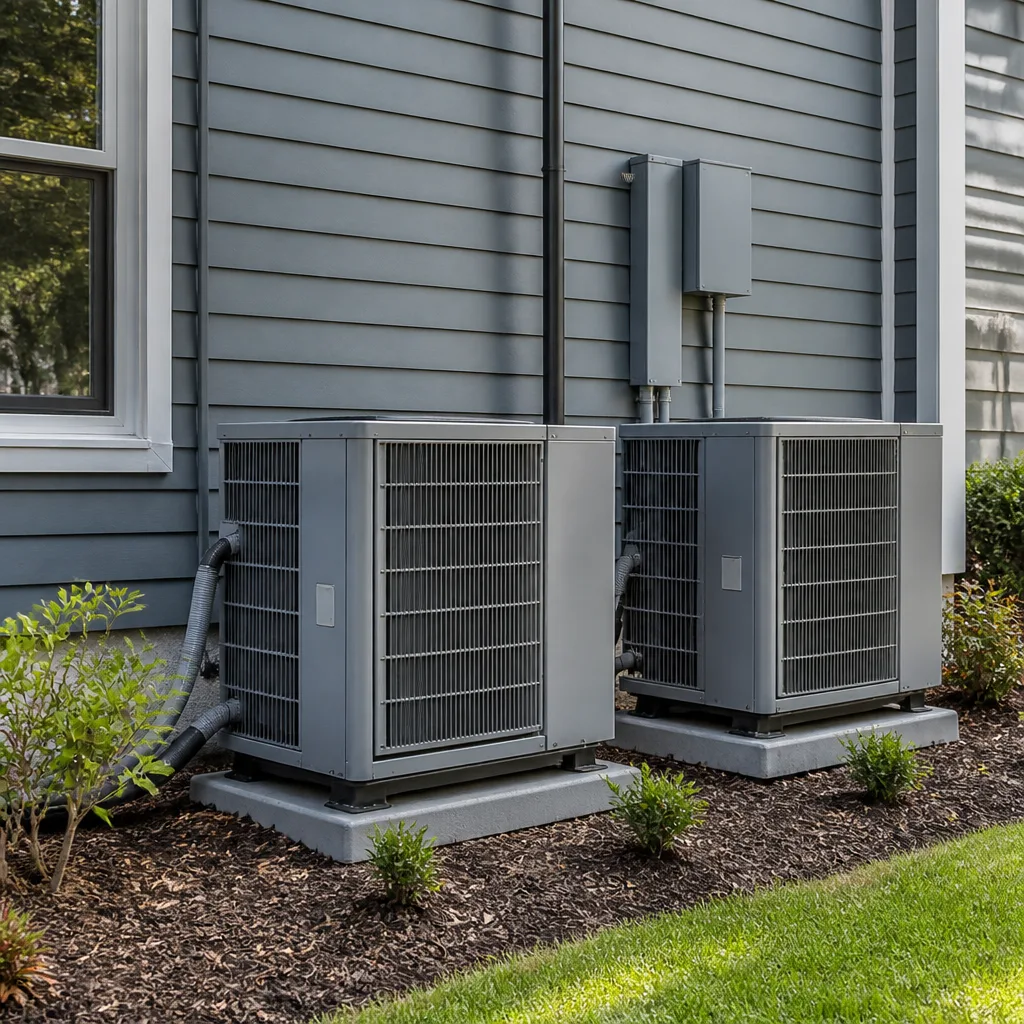 Heat pumps
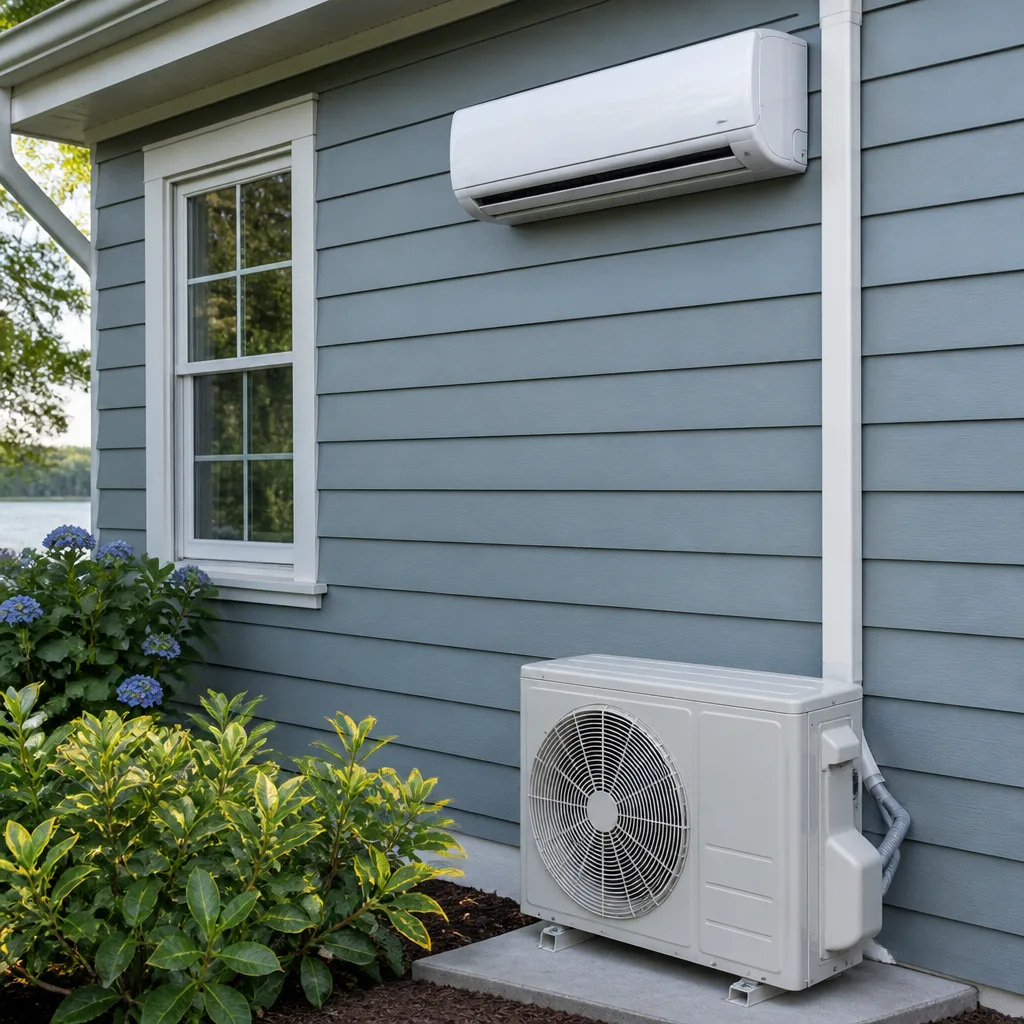 Ductless mini splits
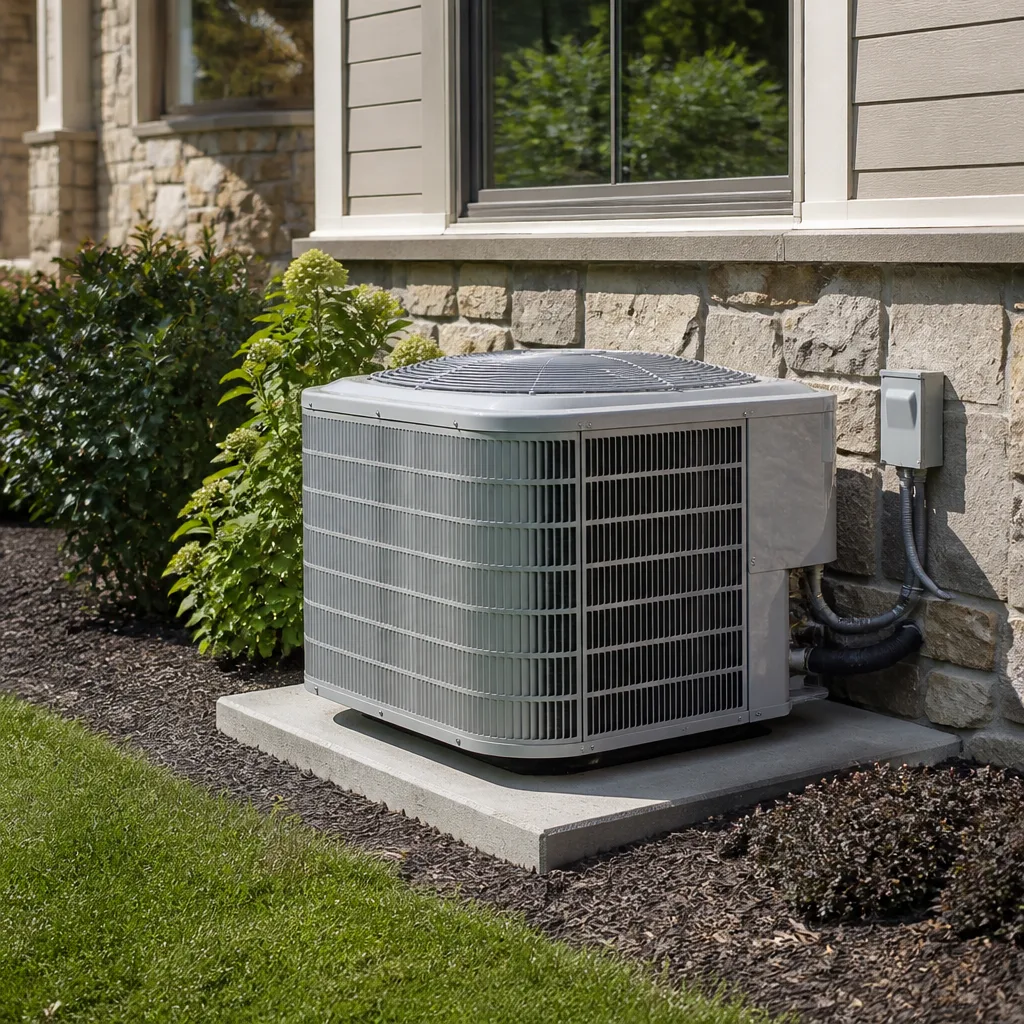 Carrier
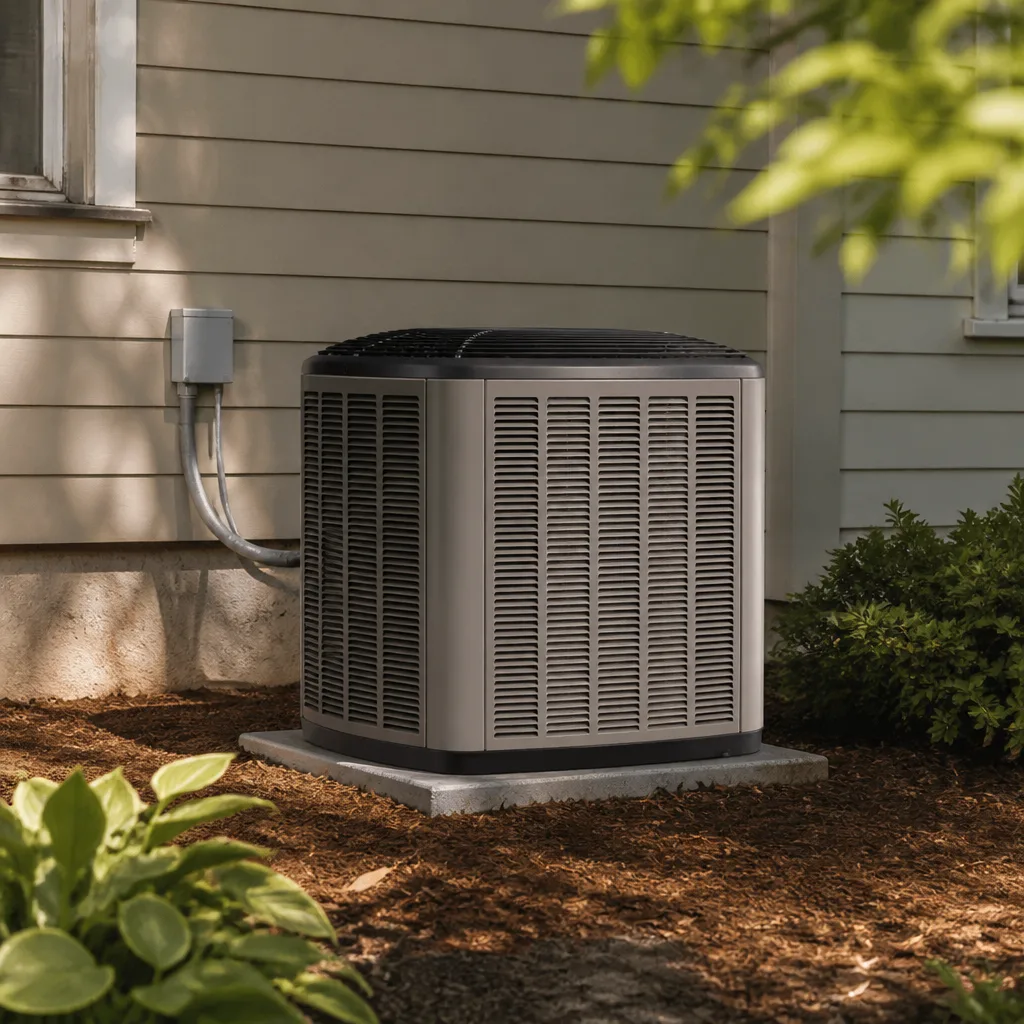 Trane
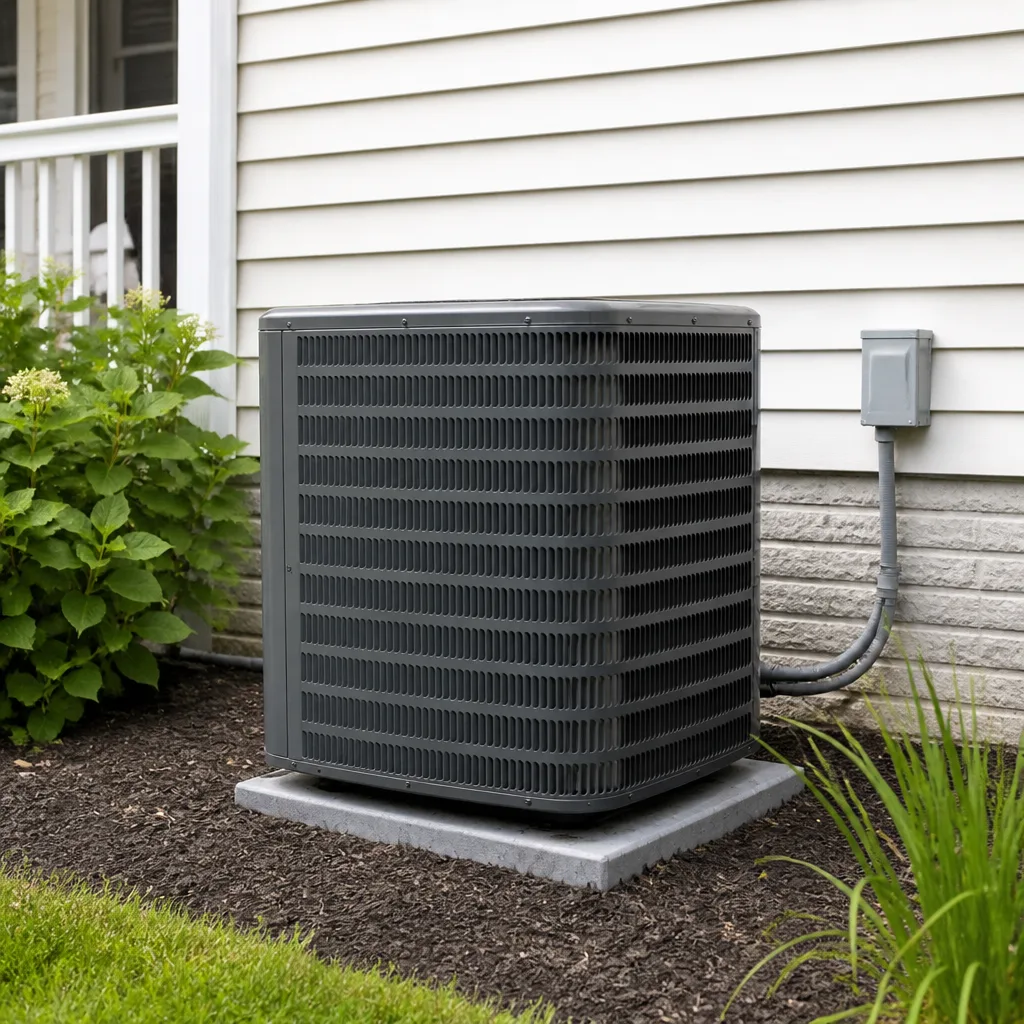 Goodman
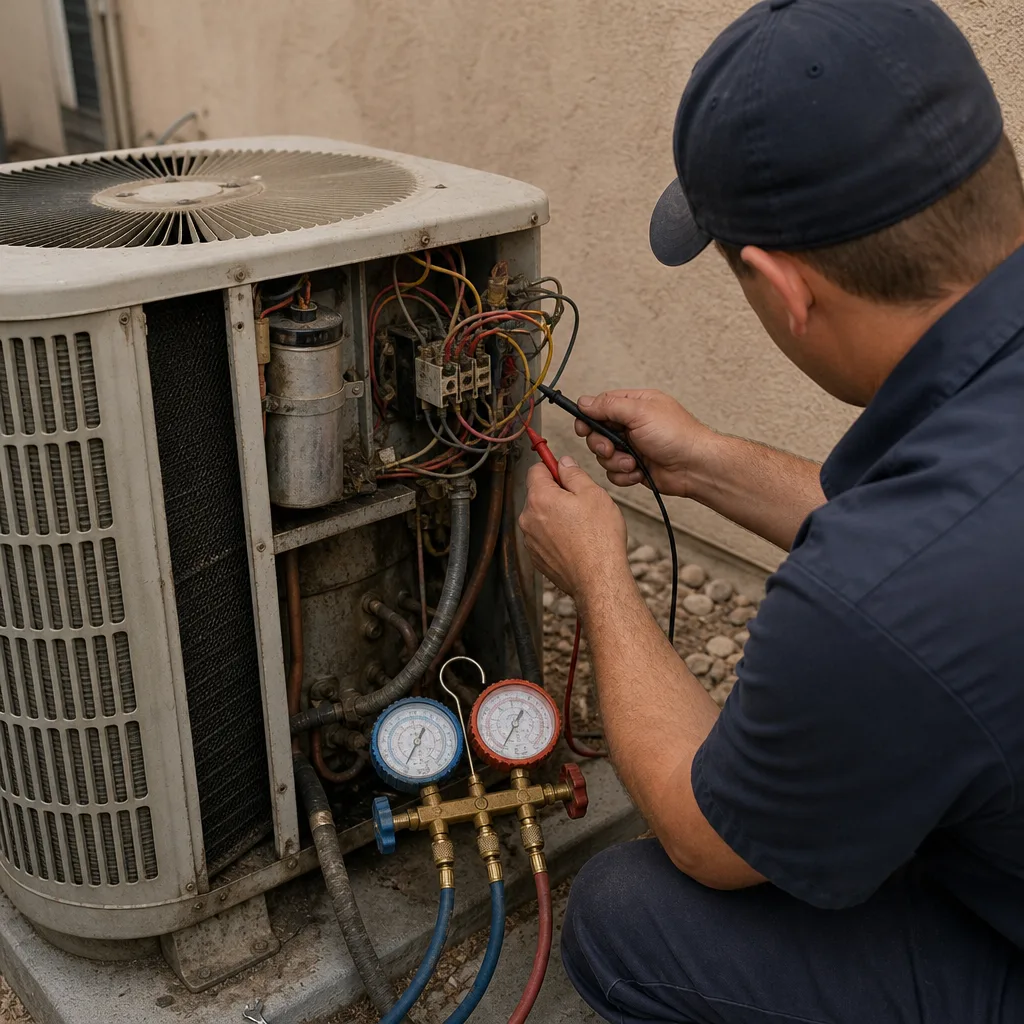
Seasonal tune-up and full diagnostic on your Carrier, Trane, or Goodman system - readings shown to you before any repair is proposed
Diagnosis first, numbers second - you approve the repair price before a single part goes in.
Get your free estimateStyles & brands we work with
- AC repair
- Furnace & heating
- Heat pumps
- Ductless mini splits
- Carrier
- Trane
- Goodman
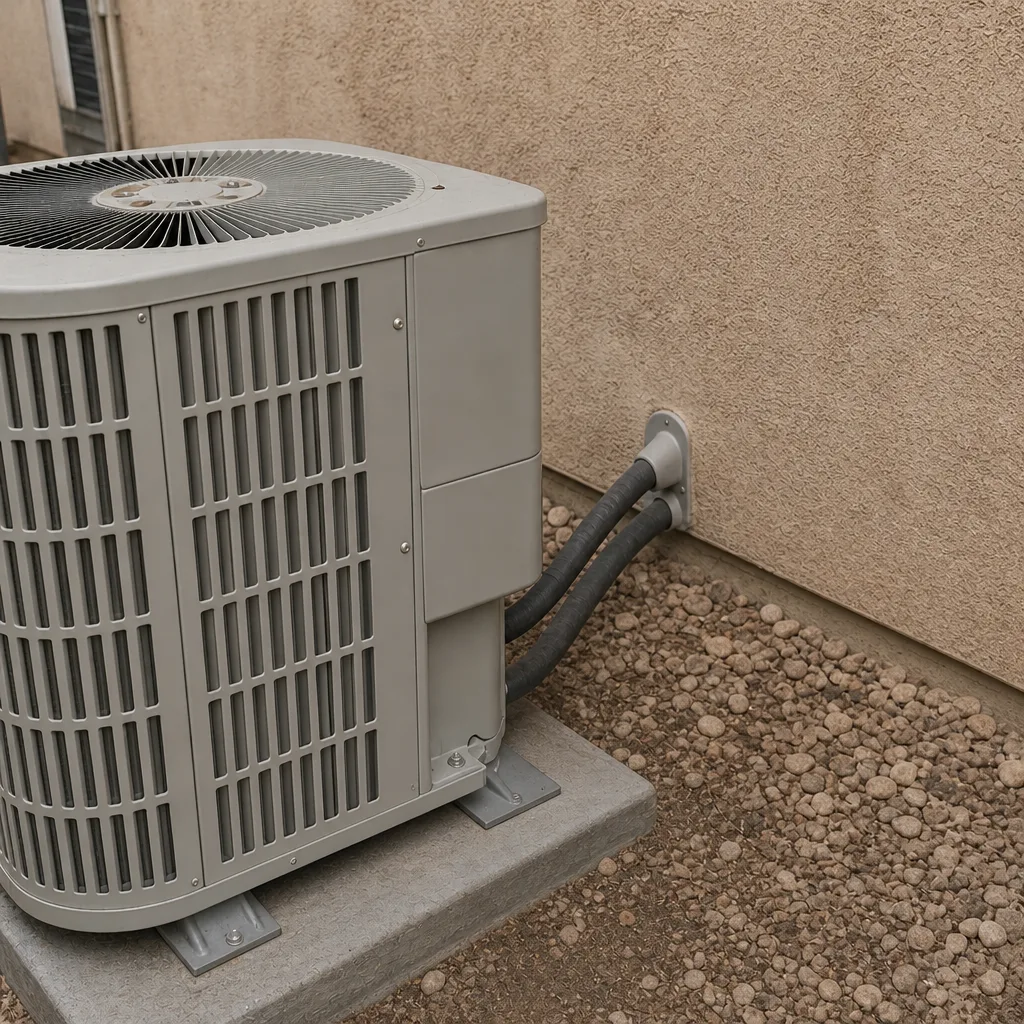
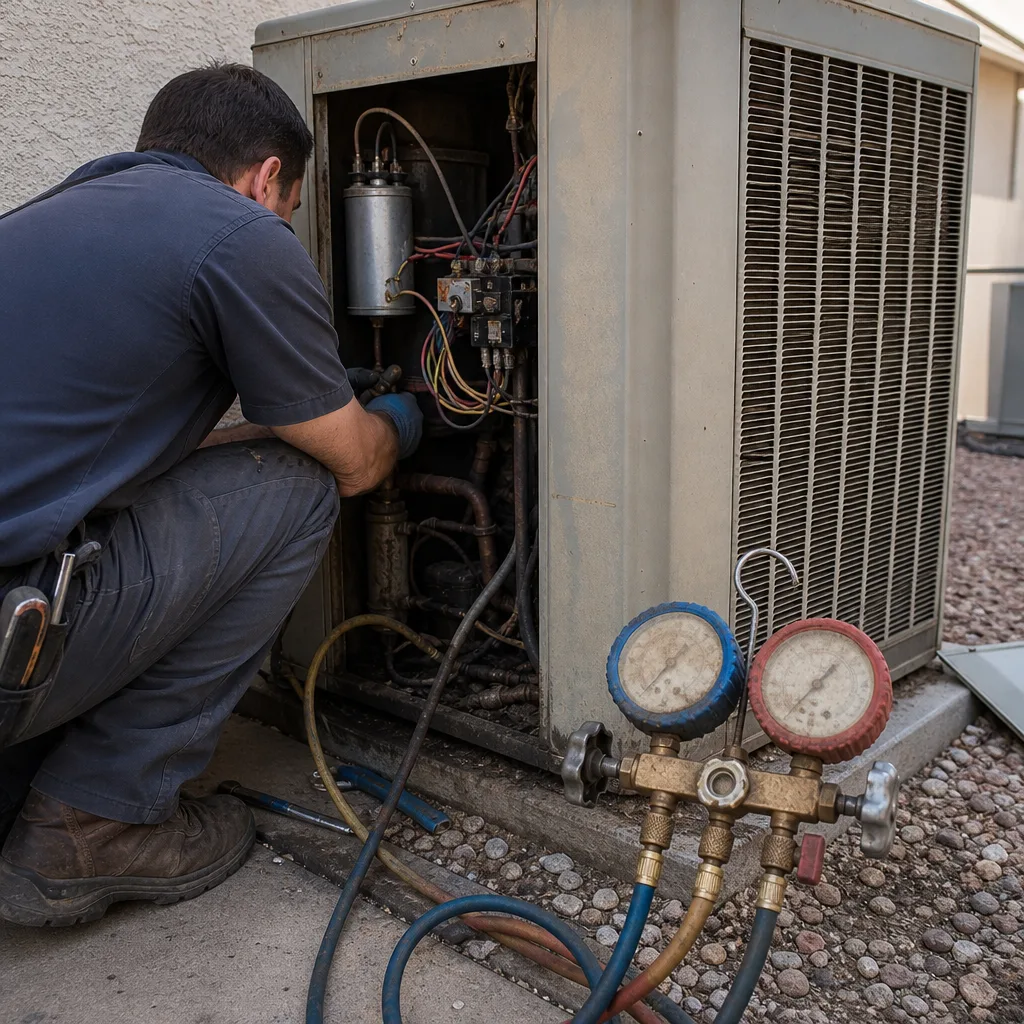
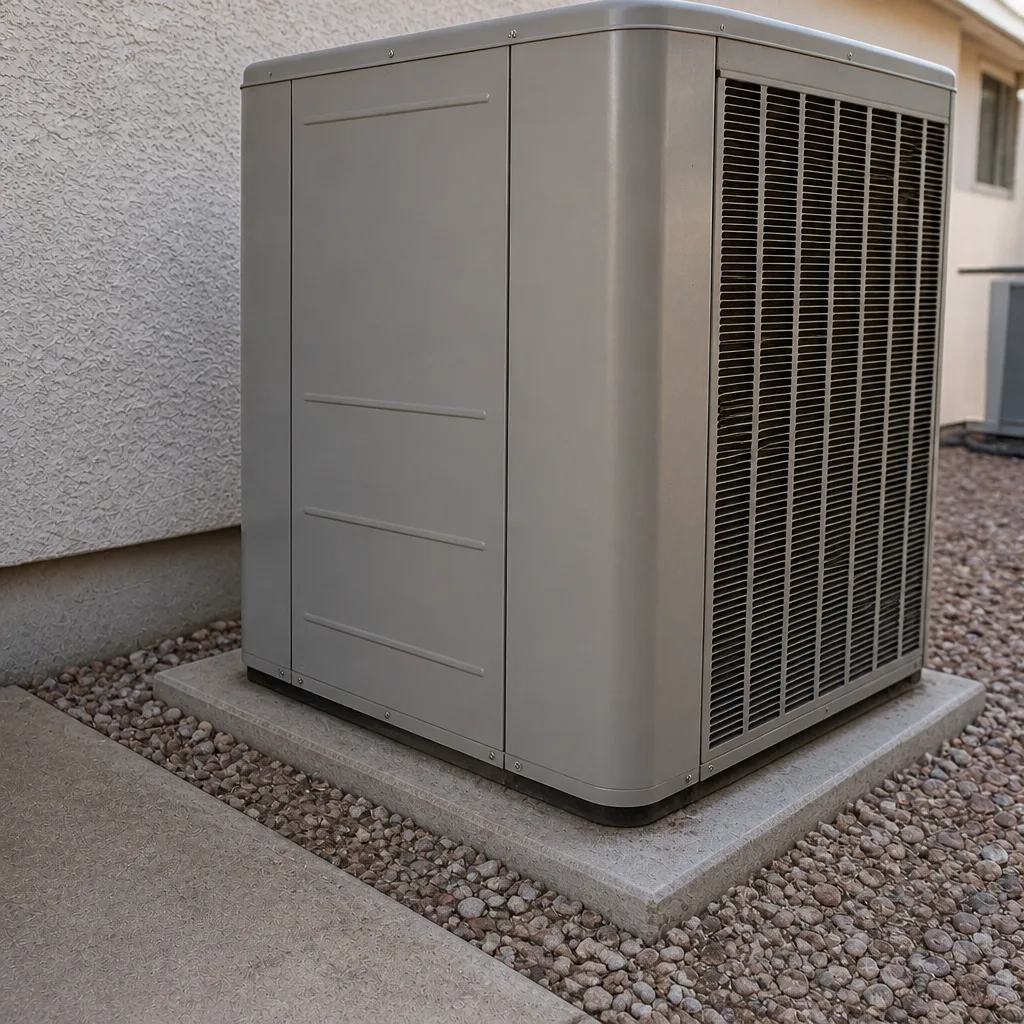
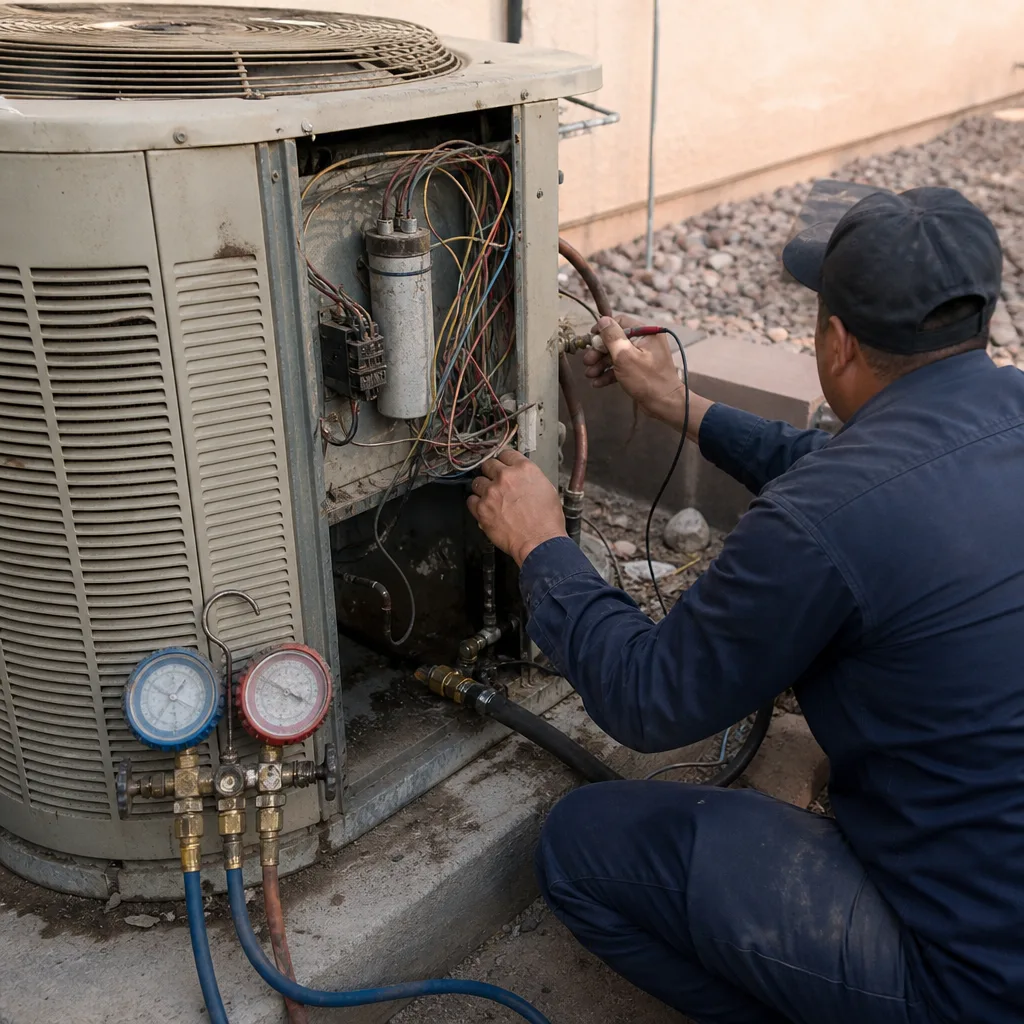
See the difference
 Before
 After
 Before
 After
 Before
 After
Why Is My AC Blowing Warm Air in Boulder City, NV? Start Outside, Not at the Thermostat
The most common reason an AC blows warm air in Boulder City is a condenser that has locked itself out on high pressure, not a thermostat problem. In Mojave summer heat, an outdoor unit sitting against a sun-baked south or west wall can run 20-25°F above ambient air temperature, push past its design range, and trip a safety cutoff that feels like warm air inside. Before you touch the thermostat, walk outside and look at where your condenser lives. If you’d rather have someone who does this daily sort it out, call Fireside Heating & Air Co. Boulder City at (844) 312-0133 and a live person will pick up.
Key Takeaways
- A system that cools fine before noon but blows warm from 2 to 5 p.m. usually points to a charge or sizing problem masked by cooler morning air.
- Condenser placement on a west- or south-facing stucco wall is the first thing to check in Boulder City, not the last.
- Typical AC repair here runs $150-$650, and most jobs finish in a single visit.
- Four safe homeowner checks exist. Beyond those, waiting can cost you a compressor.
Why Boulder City Condensers Overheat in the Afternoon
Boulder City sits in the Mojave at roughly 2,500 feet, just east of the Colorado River, and from May through September the cooling load is relentless. Newer stucco tract homes up the slope toward the town’s edges often have their condensers set on south- or west-facing walls by builder default. That placement is fine in a mild climate. Here it’s a problem, because those walls soak up radiant heat all afternoon and the unit pulls in air far hotter than the ambient reading. The compressor works harder, pressures climb, and the high-pressure switch cuts the system to protect it. From inside, that safety lockout just looks like the AC is blowing warm.
The same heat tests the older homes in the historic core near downtown, where 1930s-40s Bureau of Reclamation-era bungalows were built for Hoover Dam workers long before central air existed. Every generation since has squeezed a system into houses that never had the wall cavity or attic space for one, so you’ll find undersized or patched duct runs and air handlers stuffed into closets. When a system like that meets a 108°F afternoon, marginal airflow becomes a real failure. That’s why our AC Repair & Installation calls here start with a look at the whole setup, not just the refrigerant gauge.
What Are the Five Most Likely Causes, in Order?
For a Boulder City home in peak summer, we work through these roughly in order of how often we find them:
- High-pressure lockout from heat or restricted airflow. A dirty condenser coil, a blocked unit, or a condenser in direct afternoon sun can trip the safety switch. The system shuts off, then restarts when it cools, which is why it can feel intermittent.
- Low refrigerant from a slow leak. A small leak can hide for months and only show up when demand peaks. The system cools in the morning, then can’t keep up in the heat.
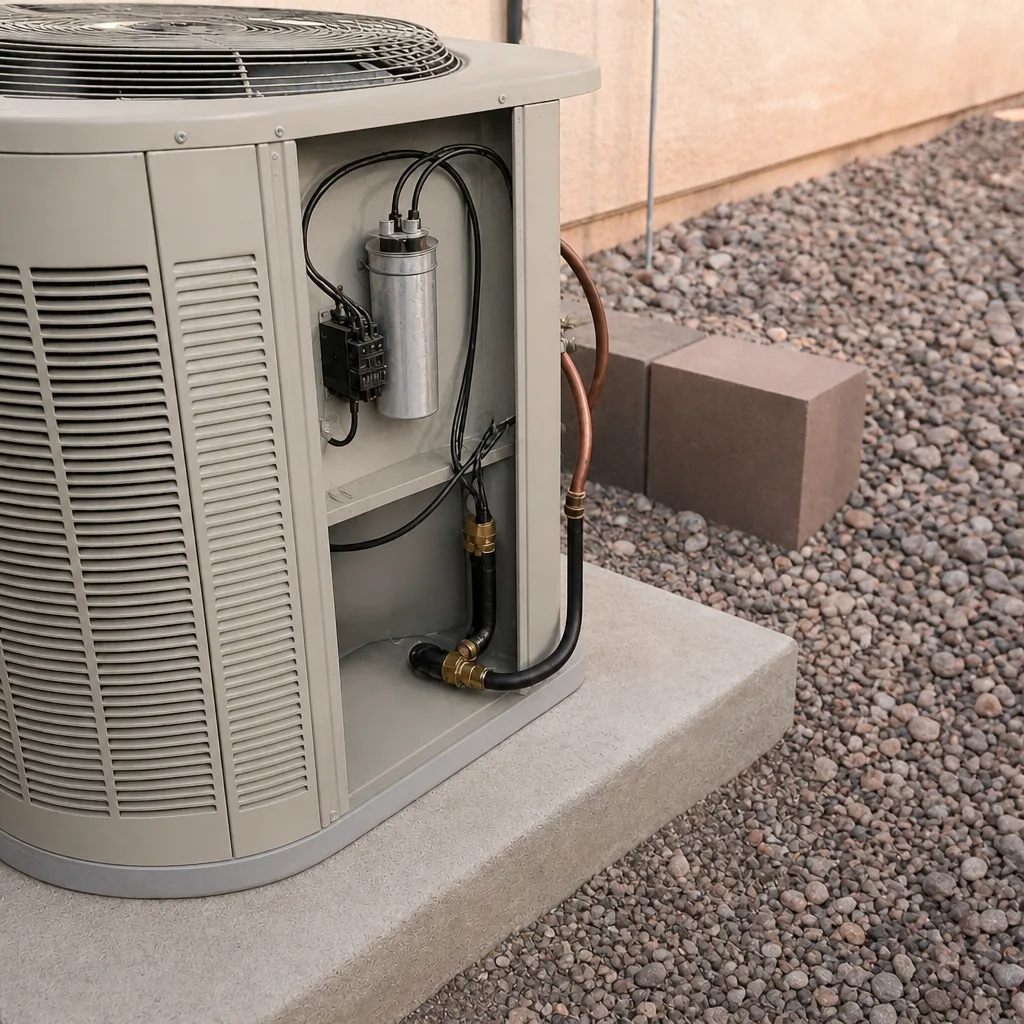
- A failed run capacitor. This small part gives the compressor its starting jolt. When it weakens, the compressor won’t kick on and you get warm air moving but no cooling.
- A dirty evaporator coil. A filter ignored all winter coats the indoor coil, chokes airflow, and leaves the air lukewarm.
- A refrigerant metering device failure. The valve controlling refrigerant flow stops working right, and the system loses its ability to cool even with a full charge.
Notice the pattern: four of the five trace back to heat, airflow, or a part pushed past its limit by the climate. Boulder City’s dry, dusty summers don’t just make the house hot. They load the equipment itself.
Why “Fine in the Morning, Warm in the Afternoon” Is a Clue
A system that cools well before noon but fails in the 2-5 p.m. heat peak is telling you something specific. It usually means the unit is undersized for the house or has a refrigerant charge problem that cooler morning temperatures hide. A marginal charge that works fine at 85°F outdoor temp collapses at 108°F. The unit isn’t broken in the morning. It’s just barely working, and the afternoon heat exposes the shortfall.
That timing matters for diagnosis. If Boulder City gets an overnight hard freeze and your heat quits instead, that’s a separate call, and our heating repair and installation team handles those the same way. But if your warm-air complaint is a July afternoon thing, tell us the timing. It points us toward a charge or sizing issue before we set foot on the property, and it’s the kind of detail we narrow down in a few minutes of questions.
What Can You Safely Check Yourself?
A few checks are safe and worth doing before you call. Anything past this list involves refrigerant, electrical components, or the compressor, and those need a trained technician. Refrigerant runs at high pressure, and capacitors store a charge even after the power is off. This isn’t a job to improvise.
- Check the outdoor disconnect breaker. Look for the breaker panel or disconnect box near the unit. If it’s tripped, reset it once.
- Check the air filter. A clogged filter chokes airflow and can mimic a bigger problem. Replace it if it’s gray.
- Confirm the thermostat is set to COOL, not FAN. On FAN only, the blower runs without the compressor, and you get warm air moving.
- Give it 30 minutes after a reset. Let the system settle, then feel the air at a vent. If it’s still warm after half an hour in the afternoon heat, stop guessing and call.
Here’s the honest line: waiting on a genuinely failing system in Boulder City summer can cost you a compressor, and a compressor is the expensive part. A $150-$650 repair becomes a far bigger bill if a small leak or a bad capacitor runs unchecked for a week of 110°F afternoons.
What Does Warm-Air Diagnosis and Repair Cost in Boulder City?
Most warm-air repairs in Boulder City land in the $150-$650 range, depending on the cause. A basic diagnostic and a capacitor swap sit at the low end. A refrigerant leak search, recharge, and metering device repair climb toward the top. Here’s how the numbers usually break out:
| Service | Typical Range |
|---|---|
| AC repair (diagnosis plus common fix) | $150-$650 |
| Seasonal tune-up | $80-$200 |
| AC installation (if replacement is the honest answer) | $3,500-$7,500 |
| Furnace repair (winter side) | $150-$700 |
We quote upfront and the price quoted is the price paid. No surprise line items. Our technicians have up to 8 years of experience and are trained on the major brands, including Goodman, Rheem, and Daikin, which covers most of what we find in Boulder City homes. Every job is backed by the 90-Day Done Right Promise: if it isn’t right, we make it right, in writing, no arguing.
Why Talking to a Live Person Saves You Time
Warm-air calls are the ones we handle most in June and July, and the person on the other end of the phone can often narrow the likely cause in five minutes of questions. That’s the difference between a same-day service call and a wasted afternoon. Our phones are answered by a live person around the clock, every day of the year, so a 2 a.m. no-cool emergency gets a real conversation, not a voicemail tree. We’ll tell you straight whether it’s a quick DIY check, a same-day call, or something you can wait on until morning. If it’s a system that’s finally aged out after decades in this heat, we’ll give you the same honest talk about repair versus replace that we would give our own family, and point you to AC repair and installation in Boulder City when a fix no longer makes sense.
FAQs
A system that’s cold in the morning and warm by afternoon most likely has a refrigerant charge problem or is undersized for the house, both masked by cooler morning temperatures. A charge that holds at 85°F can’t keep up at 108°F. Call (844) 312-0133 for an exact diagnosis, the estimate is free.
Yes, a clogged filter restricts airflow and can leave the air lukewarm, especially on the indoor coil. Check and replace the filter first, it’s the cheapest thing to rule out. If the air is still warm after 30 minutes, call (844) 312-0133.
No. Turn it off if you suspect a high-pressure lockout or a failing compressor, because running it can turn a small repair into a much larger one. Call us at (844) 312-0133 and we’ll help you decide whether to shut it down.
Most warm-air repairs here run $150-$650, depending on whether it’s a capacitor, a refrigerant leak, or a metering device. We quote upfront, so you know the price before we start. Call (844) 312-0133 for a free estimate.
If the unit is well into its later years and facing a major compressor or leak repair, replacement at $3,500-$7,500 often wins over the long run, but a single affordable repair is usually worth it first. We’ll give you a straight comparison, not a push. Call (844) 312-0133 for a no-pressure assessment.
If you’d rather have it looked at, Fireside Heating & Air Co. Boulder City offers a no-pressure assessment in Boulder City. Call (844) 312-0133 and talk to a live person who knows this heat.
Written by the team at Fireside Heating & Air Co. Boulder City, serving Boulder City, NV.