
Last updated November 18, 2026
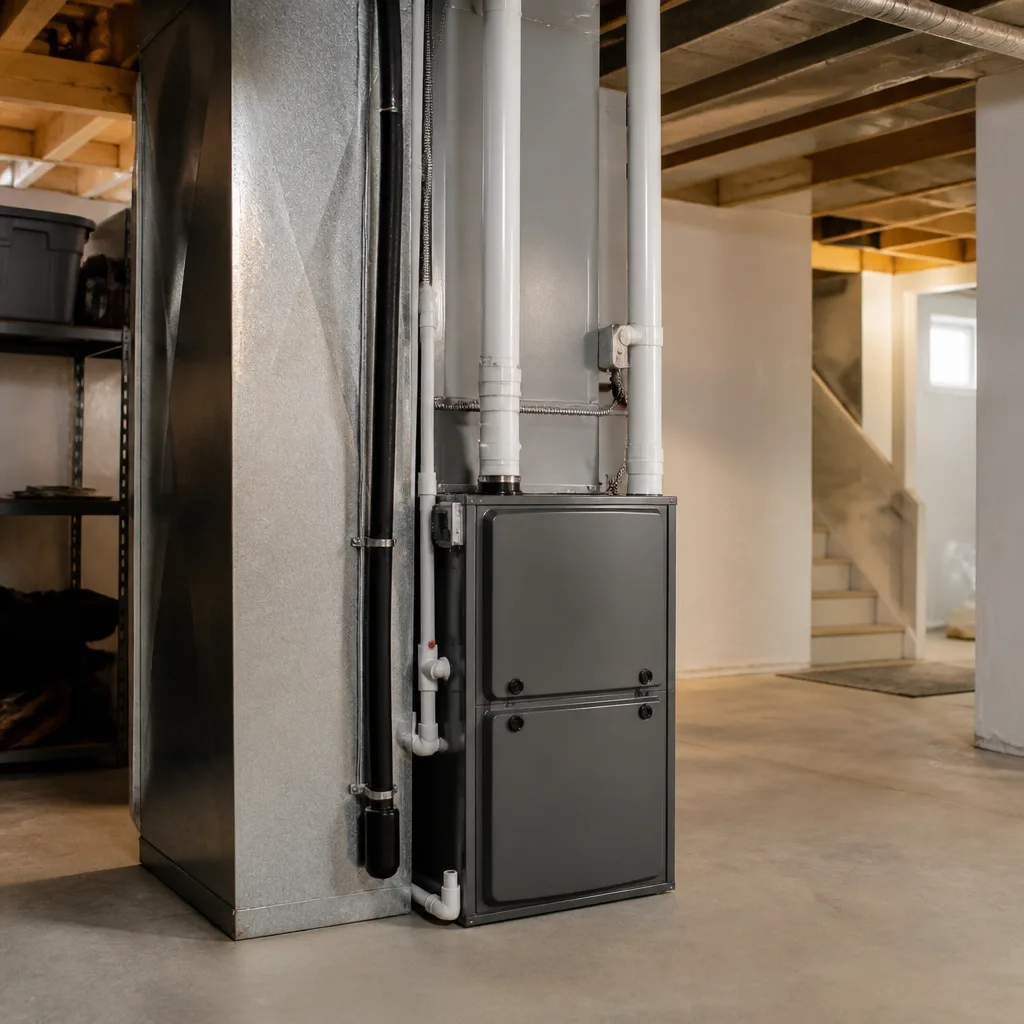 Furnace & heating
 AC repair
 Heat pumps
 Ductless mini splits
 Carrier
 Trane
 Goodman
Seasonal tune-up and full diagnostic on your Carrier, Trane, or Goodman system - readings shown to you before any repair is proposed
Diagnosis first, numbers second - you approve the repair price before a single part goes in.
Get your free estimateHeating & Furnace Troubleshooting: Common Problems and How to Fix Them
A furnace flue that collected a paper wasp nest between May and October will trip a pressure switch within the first five minutes of its first November run. It looks exactly like an ignition failure. Homeowners in Boulder City hear the inducer motor spin up, hear it stop, hear it try again, and assume the control board is dead. A technician who knows desert-idle patterns pulls the flue cap, clears the nest with a stiff brush, and the furnace fires clean. That repair costs less than the diagnostic fee on a misdiagnosed board replacement. This guide covers how to tell those failure modes apart, what to check before you call anyone, and when the answer is genuinely a technician’s job.
Quick Answer
Most furnace failures in Boulder City fall into six categories: no power, thermostat trouble, a clogged filter, a blocked flue or pressure switch trip, failed ignition (hot surface igniter or flame sensor), or a gas supply problem. Read the blinking error code on the control board first. Then check the filter, the breaker, and the flue cap before calling. Anything involving gas odor, a cracked heat exchanger, or repeated lockouts is a same-day professional call, not a homeowner project.
Styles & brands we work with
- AC repair
- Furnace & heating
- Heat pumps
- Ductless mini splits
- Carrier
- Trane
- Goodman
Table of Contents
- Why Desert Furnaces Fail Differently
- The First-Fire-of-the-Season Checklist
- How to Read Your Furnace Error Codes
- Runs But Doesn’t Heat Adequately? Check Ducts First
- The Smell Taxonomy: Dust, Plastic, and Gas
- What a Technician Should Check on the First Visit
- Repair or Replace? Straight Talk
- When to Call a Professional
Why Desert Furnaces Fail Differently
Cold-climate troubleshooting guides assume your furnace runs eight months a year. In Boulder City, it runs maybe three. That idle stretch is where most of the trouble gets built.
Between April and October, a furnace sits in a garage, closet, or attic collecting the fine silica dust that blows off the McCullough Range and settles on everything in Boulder City. That dust packs into the burner compartment, coats the flame sensor, and clogs the draft inducer. Wasps, mud daubers, and pack rats find the flue and the outdoor vent terminations irresistible. The gas valve sits closed so long that corrosion can stiffen the diaphragm. None of this shows up as “wear” in the conventional sense. The parts haven’t worn at all. They’ve been idle in an environment that punishes idleness.
That changes the diagnostic order. A cold-climate technician checks heat exchanger cracks and blower wear first. In Boulder City, we check airflow, flue obstruction, and ignition components first, because those are what actually fail here. A furnace that ran perfectly last February and won’t fire in November is almost always telling you something got in, dried out, or seized while it sat.
Our Heating & Furnace in Boulder City service handles these seasonal wake-up calls all through the first cold snap, and the pattern holds for Carrier, Trane, Lennox, and Goodman units alike.
The First-Fire-of-the-Season Checklist
Before you pick up the phone, run these five checks in order. They eliminate the five most common desert-idle failure modes, and they take about fifteen minutes.
- Replace the air filter. A filter that sat through a dusty Boulder City summer is a clogged filter. A restricted filter starves airflow and can overheat the furnace within minutes. Swap it before the first run.
- Confirm power at the furnace switch. There’s a light-switch-style disconnect near most furnaces. Check it’s on, then check the breaker. A tripped breaker after a long idle is common.
- Inspect the flue and outdoor vent cap. Look for wasp nests, mud dauber plugs, bird nests, and rodent debris. Clear anything blocking airflow. If you see a nest packed deep in the flue, stop and call a technician rather than digging it out blind.
- Check the thermostat batteries and settings. Put it in heat mode, set the temperature five degrees above room temperature, and listen. You should hear the inducer motor start within seconds. If you hear nothing, the issue is power or thermostat, not the furnace.
- Open the burner compartment and look, don’t touch. You’re checking for obvious dust buildup, insect activity, or a soot streak. You are not disassembling anything. The burner assembly and gas train stay hands-off.
If all five check out and the furnace still won’t fire, the next move is the error code.
How to Read Your Furnace Error Codes
Nearly every modern furnace has a small LED on the control board that blinks in patterns. You don’t need the manual to start narrowing down the fault. The pattern matters more than the exact code.
- A steady blink, flash-pause-flash, or repeating short series: The board is usually reporting a normal heartbeat or a stored fault. Count the flashes between pauses and write the number down for the technician.
- Three flashes, repeat: On many Carrier and Bryant boards, this is a pressure switch fault. In Boulder City, that’s a flue obstruction or a failed inducer, not necessarily a bad switch.
- Four flashes, repeat: Often an open limit or high-limit trip. Restricted airflow, clogged filter, or blocked return.
- Rapid continuous blink or solid light: On most Trane and Lennox boards this points to a lockout after repeated failed ignition attempts. The board is telling you it gave up. Reset power once, watch what happens, and don’t reset it a second time if it locks out again.
- Long-short combination after a flame establishes: Often a flame sensor fault. The flame lit, then the sensor failed to confirm it. Cleaning the sensor is a technician task, not a homeowner one.
Write the pattern down before you call. A technician who walks in knowing the flash sequence saves you diagnostic time. On top of that, if you’ve already had another company quote a control board, we’ll give you a free second opinion on any written estimate before you spend on a part that might not be the actual fault.
Runs But Doesn’t Heat Adequately? Check Ducts First
A furnace that runs, throws warm air at the register, and still leaves the back bedrooms cold is often not a furnace problem. In Boulder City, it’s a duct leakage problem more often than a burner problem.
Homes built here in the 1980s and 1990s commonly have attic ductwork with failing mastic at the joints, disconnected flex runs to the far bedrooms, or crushed sections where a remodel or a storage box pressed the duct flat. The desert heat bakes that duct sealant brittle over twenty-plus summers. By the time the first cold snap arrives, you’re losing a meaningful share of your heated air into the attic before it ever reaches the room.
Signs it’s ductwork and not the furnace:
- Some rooms are warm, others barely warm
- The furnace runs long cycles but the house never quite reaches setpoint
- You hear whistling or feel air movement in the attic or garage
- The filter stays cleaner than you’d expect (air is escaping before the return)
Before you replace the furnace, ask for a static pressure measurement. It tells you whether the system is starved for airflow before the air ever leaves the equipment. Our Heat Pump & Mini Split in Boulder City team runs the same static pressure test on ducted heat pump systems, because the duct is where desert homes leak the most.
The Smell Taxonomy: Dust, Plastic, and Gas
Smells during the first cold snap are normal. Smells in February are not. Here’s how to tell the three you’ll actually encounter apart, and what to do in the first sixty seconds.
Burning dust
A light, dry, slightly acrid smell in the first ten minutes of the first fire of the season. That’s dust burning off the heat exchanger. It fades within fifteen minutes. You’ll smell it every fall in Boulder City, especially after a windy spring. Normal.
Burning plastic or electrical
Pungent, chemical, and persistent. Smells like hot wire insulation or melted PVC. This can indicate a wiring short, a failed blower motor capacitor, or an overheated control board. Shut the furnace off at the thermostat, switch the breaker off, and call a technician. Do not run it and “see if it goes away.”
Gas odor
The unmistakable rotten-egg smell of mercaptan. Do not touch light switches, do not use your phone inside, do not unplug anything. Get everyone outside, leave the door open, and call your gas utility and a technician from outside the home. If you can’t reach anyone, call the fire department. This is not a troubleshooting scenario.
If you smell gas and then it clears on its own, do not assume the problem resolved itself. A gas valve that leaked once will leak again.
What a Technician Should Check on the First Visit
A thorough first-visit diagnostic takes about an hour. Ask what your technician is checking. A professional will tell you plainly, and three items should always be on that list.
- Heat exchanger visual inspection. A cracked heat exchanger can leak carbon monoxide into your living space. The technician inspects the visible surfaces, particularly near the burner and the inducer. This is one of the most important reasons to call a professional instead of continuing to reset the furnace yourself. A cracked exchanger is a safety issue, not a homeowner project.
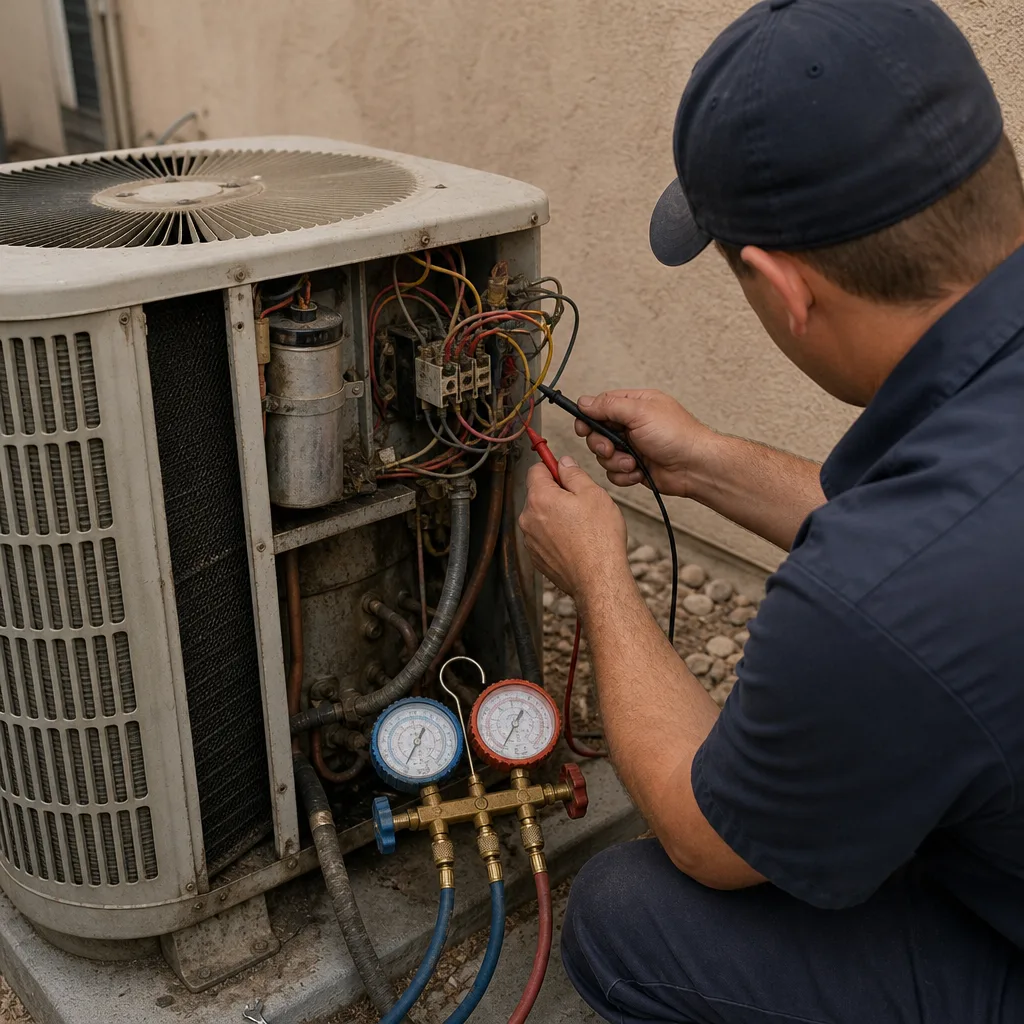
- Carbon monoxide reading at the register. A combustion analyzer at the nearest supply register measures CO in the airstream. A clean furnace reads near zero. A furnace with a compromised exchanger or poor combustion will read higher. In Boulder City, this matters more than most homeowners realize because furnaces here live longer between tune-ups than in colder markets.
- Static pressure measurement. This tests whether the duct system is delivering the airflow the furnace needs. High static pressure starves the furnace and shortens its life. Low static pressure leaks the air into the attic. Either one shows up in a thirty-second reading.
Many technicians skip the static pressure test because it takes a couple of minutes and doesn’t sell a repair. Ask for it. We perform it on every diagnostic as part of the standard walk-through, because it tells us more about how the system will behave through February than any single component test.
Our technicians bring the right tooling for the brands we work on most, including Carrier, Trane, Lennox, Goodman, Rheem, York, Daikin, Bryant, and American Standard. Every job is completed within the 90-Day Done Right Promise, which we put in writing. If we missed something, we make it right.
Repair or Replace? Straight Talk
Nobody wants to hear a sales pitch on a repair call. Here’s the honest framework we use.
Repair is usually the right call when:
- The furnace is under roughly 15 years old and the repair is a component (igniter, flame sensor, inducer, capacitor, board)
- The repair cost is a small fraction of a replacement
- The heat exchanger passes inspection
- The duct system is intact
Replacement deserves a real conversation when:
- The heat exchanger is cracked or compromised
- The same major component has failed twice in a season
- The furnace is over about 18 to 20 years old and the repair approaches half the cost of replacement
- Parts availability on an obsolete model becomes a problem
We don’t fabricate urgency. If the honest answer is repair, we repair. If the honest answer is replacement, we’ll tell you directly and put the number in writing before any work begins. Upfront pricing on every job means the quoted price is the price, full stop. You can also use the free second opinion on any written estimate to sanity-check a quote from another company. And when a replacement is the right answer, AC Repair & Installation in Boulder City runs through the full equipment selection process so the new furnace and existing cooling system actually match.
Common Mistakes to Avoid
- Resetting the breaker three times in a row. A reset once or twice tells you what’s happening. Repeated resets on a lockout condition can damage the inducer or the board. Reset once, watch, then call.
- Replacing the control board before confirming the igniter. In desert-idle failures, the igniter or flame sensor is the more common culprit. Boards get replaced on suspicion far more often than they actually fail.
- Running a furnace with a clogged filter. A starved furnace overheats the heat exchanger. That turns a $20 filter into a several-hundred-dollar repair.
- Ignoring the wasp nest because it’s outside the furnace. A flue blocked by a mud dauber nest will trip the pressure switch every time. Clear the outdoor cap, not just the inside of the unit.
- Assuming “some rooms warm, some cold” is a furnace problem. In Boulder City homes, it’s more often duct leakage. Ask for a static pressure test before authorizing a furnace replacement.
- Letting the tune-up slide because the winter was mild. A furnace that ran well last year has had eleven months of dust and insects settling into it since. The $89 seasonal tune-up catches most of these failures before the first cold night.
- Not writing down the error code before calling. The flash pattern is useful. Write it on the back of an envelope. A technician can act on that information faster than a broad “it won’t fire” description.
See the difference
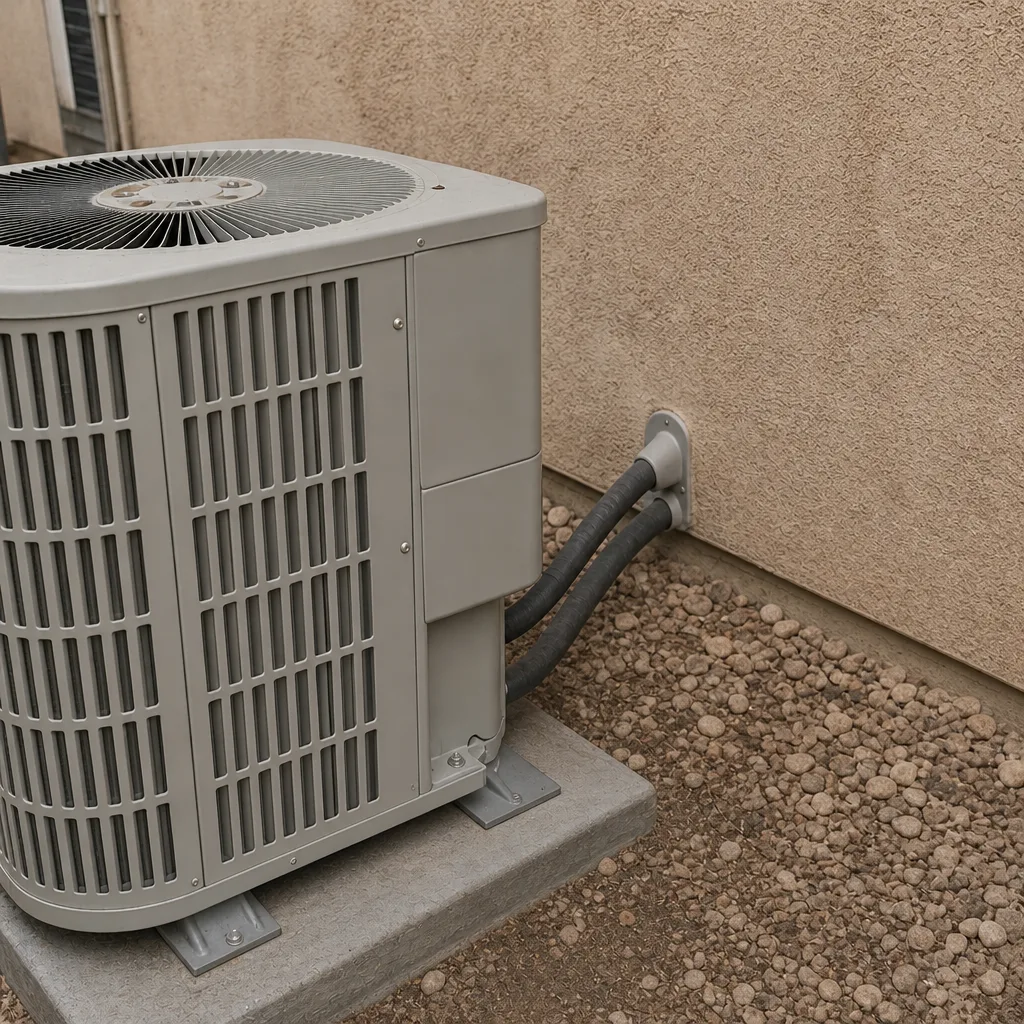
 Before
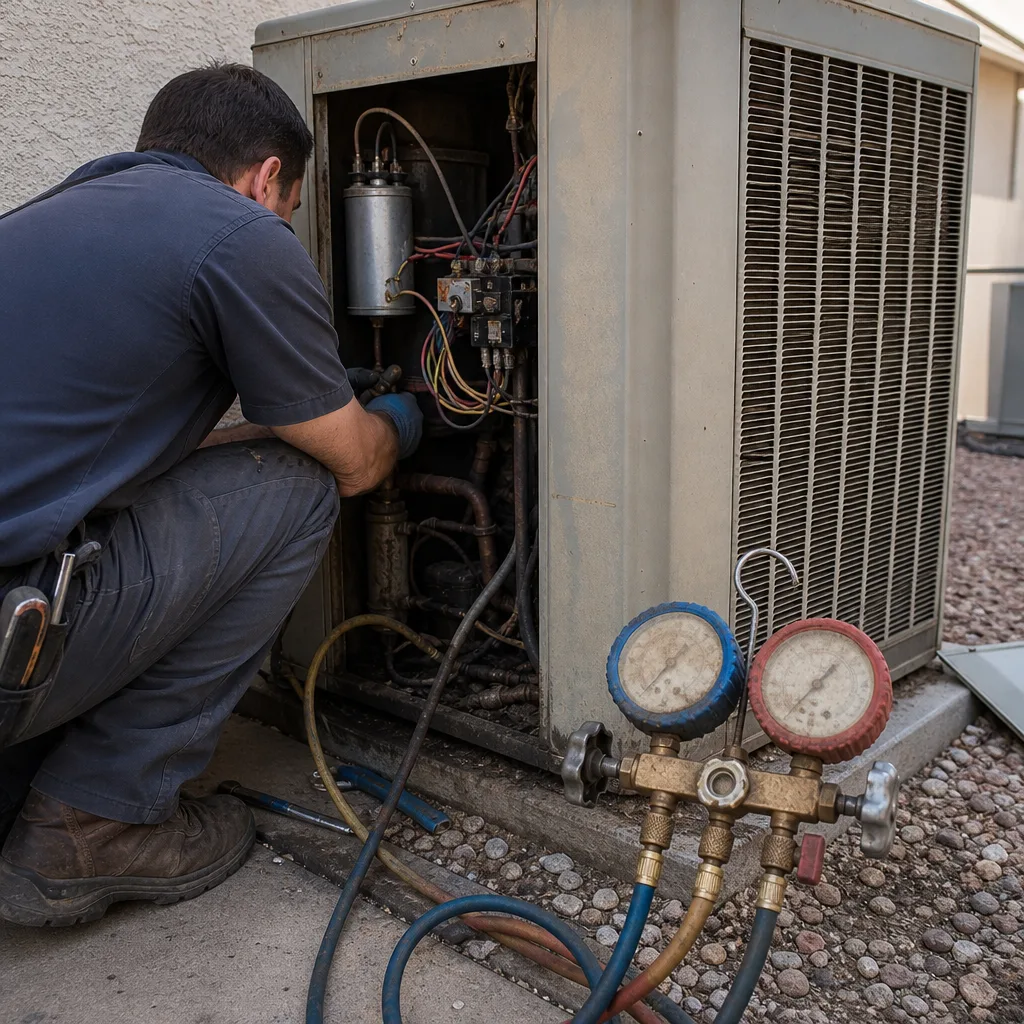
 After
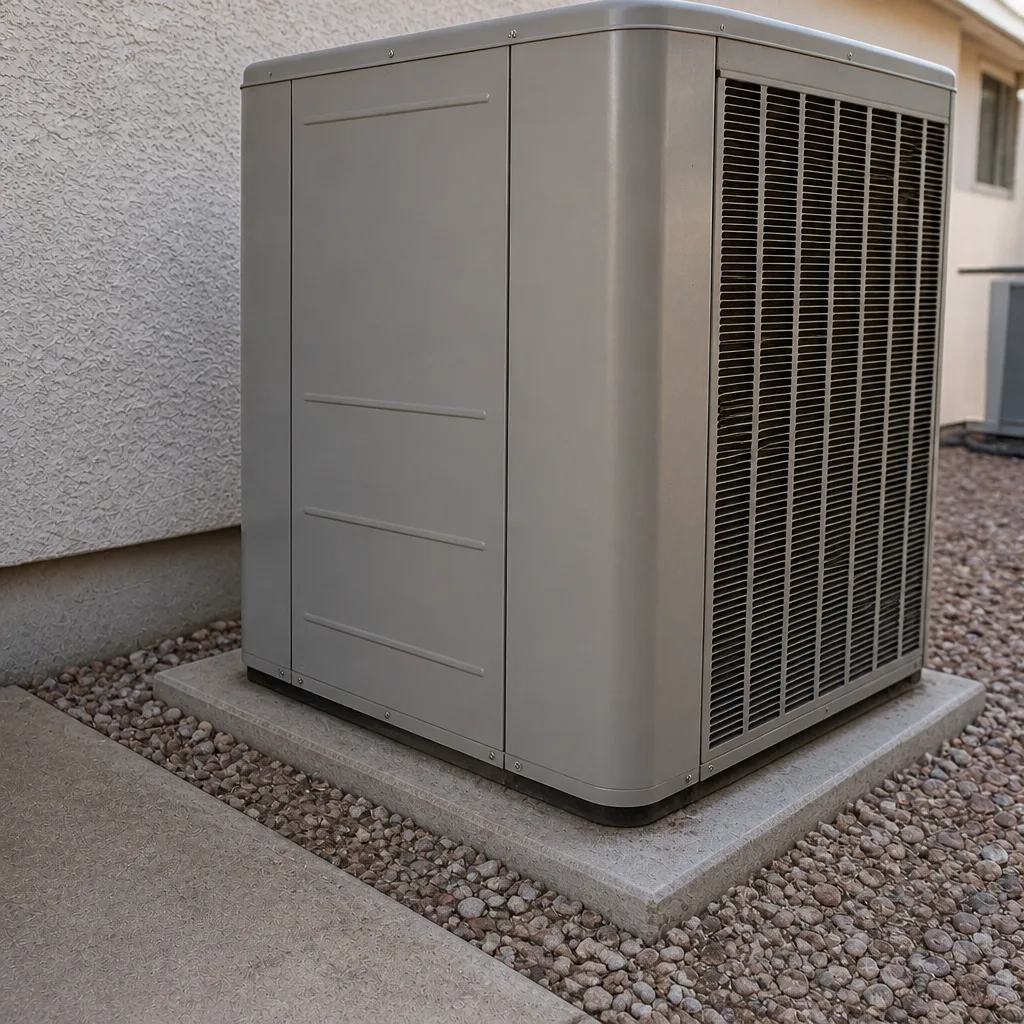
 Before
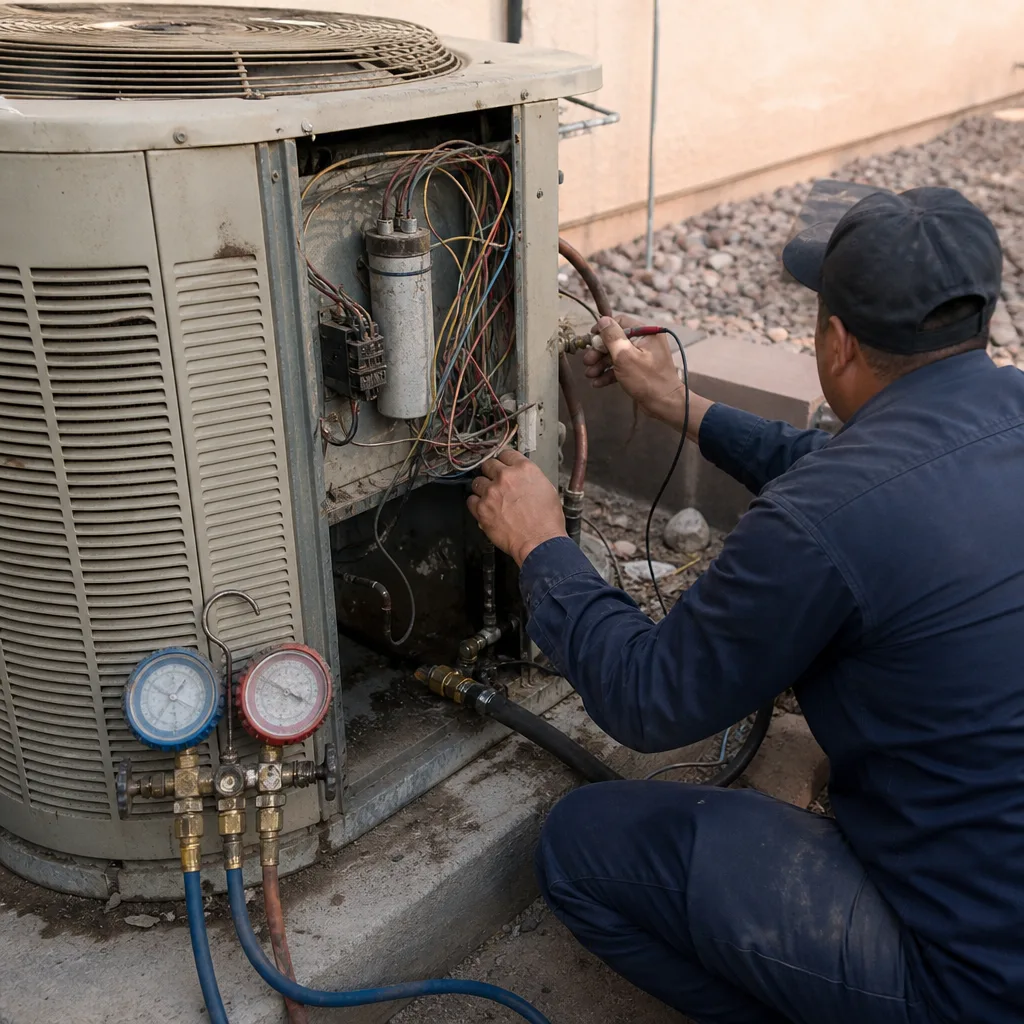
 After
 Before
 After
When to Call a Professional
Call a professional any time the fault involves gas, carbon monoxide, a heat exchanger, or electrical wiring inside the furnace cabinet. Specifically: a gas odor anywhere in the home, a repeating lockout on the same furnace, a smell of hot plastic or electrical burning, a burner flame that’s yellow or lifting off the burner rather than a steady blue, a visible soot streak near the burner, or a CO detector in the home that has alarmed. Call if the furnace won’t fire after the five-day seasonal checklist, or if a technician hasn’t looked at the heat exchanger in over two years. Our technicians have up to eight years of experience, and we recommend scheduling a diagnostic visit rather than continuing to reset the system.
Fireside Heating & Air Co. Boulder City offers free estimates in Boulder City. Call (844) 312-0133. Phones are answered by a live person around the clock, every day of the year, including the 2 a.m. no-heat call. Our daily work starts at the Fireside Heating & Air Co. Boulder City home page and ripples out from there.
Frequently Asked Questions
The most common cause is an obstruction or dust buildup that developed while the furnace sat idle through the Boulder City summer: a wasp nest in the flue, a clogged filter, or a flame sensor coated in silica dust. Run the five-item seasonal checklist first, note the error code, then call. A pressure switch trip from a blocked flue looks like an ignition failure but is often a cheap fix.
Most Boulder City furnace repairs fall in the $180 to $450 range for common faults like igniters, flame sensors, inducers, and pressure switches. Control board replacements run higher. We quote the price before any work begins, and the price quoted is the price paid. Call (844) 312-0133 for an exact quote – estimates are free, and we have $50 off any repair over $250 in the standing offers.
Yes. We answer the phone 24 hours a day, including nights, weekends, and holidays, and we schedule same-day diagnostic visits whenever inventory and routing allow. A furnace that’s completely out during a cold stretch is urgent, and we treat it that way. Call (844) 312-0133.
A light, dry burning-dust smell in the first fifteen minutes of the first fire of the season is normal. It’s dust burning off the heat exchanger. A burning-plastic or electrical smell is not normal, and you should shut the furnace off at the breaker and call. A gas odor means get everyone outside and call your gas utility and a technician from outside the home.
Yes, running the fan on low continuously during heating season is a good practice in most Boulder City homes. It equalizes temperature between rooms, filters the air more consistently, and takes strain off the furnace during cold snaps. It does increase filter change frequency, so plan to swap filters every six to eight weeks through the winter months.
Once a year, in early fall, before the first cold night. Annual tune-ups catch pressure switch trips, dirty flame sensors, and dust-choked burners before they become no-heat calls, and they keep the heat exchanger inspectable. The furnace idle season here is long enough that skipping a year is riskier than it sounds. Our $89 seasonal tune-up covers the standard inspection and cleaning, and seniors and veterans get a standing 5% off, always.
The Bottom Line
Furnace failures in Boulder City trace back to the desert summer more often than to worn parts. Dust, insects, and idle corrosion create the failures cold-climate guides don’t warn you about. Read the error code, run the five-item seasonal checklist, replace the filter, and clear the outdoor flue cap. If the fault involves gas, a cracked heat exchanger, or a repeating lockout, stop troubleshooting and call. The honest answer on repair versus replace usually shows up when a technician puts a combustion analyzer on the register and a static pressure gauge on the duct. That diagnostic is worth scheduling every fall rather than waiting for the coldest night of the year.
Fireside Heating & Air Co. Boulder City has served local homeowners for over 42 years. We answer the phone with a live person around the clock, we quote the price before we start, and we back every job with the 90-Day Done Right Promise. If another contractor has left you staring at a written estimate and you want a second set of eyes on it, we’ll give you a free second opinion. Call (844) 312-0133 for a free estimate and we’ll get a technician out to your home.
Written by the team at Fireside Heating & Air Co. Boulder City.